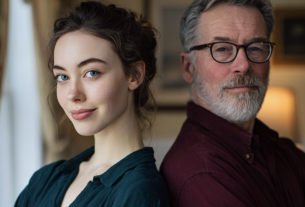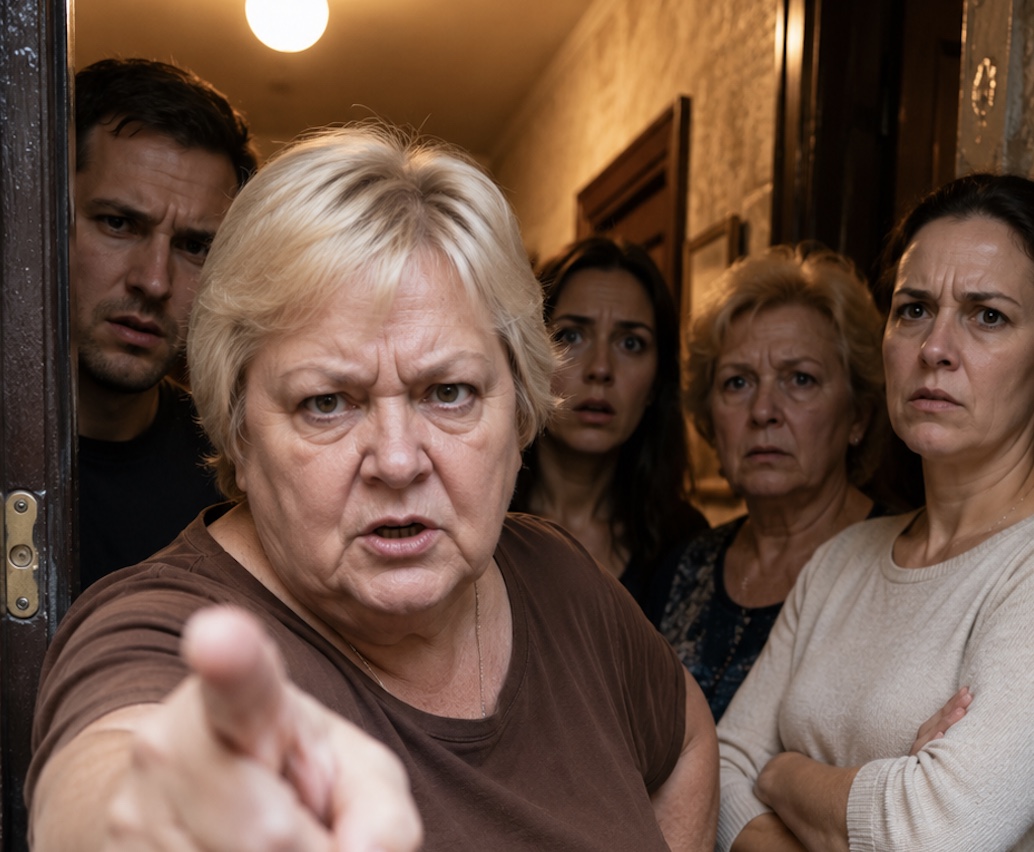
Valya stood by the window and watched as the familiar gray car crawled along the dirt road, raising a dusty tail behind it. Her heart tightened — not from joy, but from that sharp, almost physical exhaustion that had become her constant companion over the past few months.
She knew that car.
She knew who was inside it.
And she knew exactly what would happen next: the noisy arrival in the yard, the slamming doors, the loud voices, hugs smelling of expensive perfume and cigarettes, and then the inevitable — the refrigerator door would be flung open, and someone else’s hands would begin rummaging around in her kitchen.
Valya stepped away from the window, adjusted her apron, and smiled — but not the soft, guilty smile with which she had grown used to greeting guests.
This was a different smile.
The kind she had been storing inside herself for a long time, gathering it piece by piece, the way people save money for something important.
Today, everything would be different.
And it had all started with the apartment.
Valentina Sergeevna Morozova had lived in a two-room Khrushchev-era apartment on Stroiteley Street for more than fifty years. The place was small, with windows facing a courtyard where other people’s dogs barked endlessly, and neighbors behind the wall who listened to the television so loudly it seemed they were half-deaf themselves.
But Valya loved that apartment with the special kind of love people have for the home where they were born — not because it was beautiful, but because it was hers.
When she turned fifty-five and retired, she suddenly realized that the city she had tolerated all her life had become unbearable. The noise, the traffic jams, the lines at the clinic, the neighbor’s children running overhead. At night she would lie awake, listening to her knees ache, and wonder: was this really all that remained of life?
So she sold the apartment.
The decision was not easy. Tamara, the real estate agent — a heavyset woman with fake nails — kept telling her she was taking a risk, that the market was unpredictable, that she should wait.
But Valya did not wait.
She had already found what she had been looking for: a solid country house forty kilometers outside the city, with a large plot of land, an old garden, a bathhouse, and a sturdy log house with a veranda. The owners were moving abroad to live with their children and were selling urgently, almost for nothing compared to city housing prices.
Valya bought it.
She moved in at the end of April, when the garden was only beginning to wake up — buds swelling on the branches, the smell of damp soil and something new in the air. She walked around the property and could hardly believe her happiness.
Here were apple trees — old, crooked, but alive.
Here was a raspberry patch along the fence.
Here were garden beds waiting for her hands.
And here was silence.
Real silence.
No cars, no televisions blaring through the walls — only birds and the wind moving through the leaves.
She was happy.
For the first time in a very long while.
Her relatives found out quickly.
Valya had never been at the center of family life. She had never married, had no children, and had worked all her life as an accountant in a consulting firm — a boring fate, as everyone seemed to think. At family holidays, she was seated at the edge of the table. People rarely called her, usually only on birthdays, and sometimes they forgot even those. Her cousin Nina, who always behaved as if her very existence was a favor to everyone around her, had not visited in years. Her nephew Kostya and his wife Svetlana lived in a nearby district and saw Valya only on New Year’s Eve — and even then, not every year. There were also more distant relatives on her mother’s side, whose names she could barely remember.
And suddenly, everyone remembered Valya.
Nina called first. Her voice was so warm, so full of family feeling, that Valya was even taken aback.
“Valyechka, we heard you bought a little country place! How wonderful, just wonderful. We’d love to come and see how you’ve settled in. Could we visit this weekend?”
Of course, Valya said yes.
Because she still did not understand.
Nina did not come alone. She brought her husband Gennady, her daughter Allochka with a boyfriend no one really knew, and a little grandson whom Valya had seen only once before in her life. Five people — with bags, but not bags of food. Bags of clothes. Swimsuits, an inflatable mattress for a pool that had never existed on the property, and a guitar.
Valya set the table. She tried her best: aspic, pies, sauerkraut from her old supplies. The guests ate with appetite, praised the food, and asked for more. Gennady drank three shots and fell asleep in an armchair on the veranda. Allochka’s boyfriend cut a bunch of dill from the garden without asking, and then cut several peonies as well.
“You have plenty,” Alla said when Valya gasped. “Don’t be so upset. They would have withered anyway.”
They left on Sunday evening, leaving behind a mountain of unwashed dishes, scattered towels, and one broken — accidentally, of course — porcelain teapot that Valya had brought from her parents’ apartment.
Valya cleaned up and told herself: it’s all right, they’re family after all. It’s nice not to be alone.
A week later, her nephew Kostya arrived. He also came with his wife and two children. The children immediately rushed into the raspberry patch and began eating berries by the handful until Valya came out and asked them to stop — there was almost nothing left.
“Well, Valentina Sergeevna,” Svetlana said with a hint of offense in her voice, as though she were the one who had been wronged, “children love fresh berries. Vitamins, you know.”
At the table, Svetlana hinted that it would be nice to grill some meat. Valya took from the freezer a chicken she had marinated the day before for herself.
She cooked it.
As they were leaving, Kostya said cheerfully:
“Hang in there, Aunt Valya. We’ll come again!”
He said it like a promise.
Valya heard it like a threat.
And they came.
Not only them.
Summer unfolded like an endless parade of guests. Distant cousin Lyudmila arrived with her fisherman husband, who spent the whole day sitting by the pond across the road and then ate half of Valya’s cheese that evening. Nina brought her neighbor without warning. A former colleague of Kostya’s, whom Valya had never seen before, somehow decided she had the right to spend the night.
Everyone knew about the money from the apartment sale.
No one said it directly, but it hung in the air like a smell. Apparently, each of them thought more or less the same thing: Valya has money. She is alone. What does she need so much for? And besides, a country house is for guests, isn’t it?
At night, Valya counted her expenses while staring at the ceiling. The food she bought before every visit disappeared in a single day. The wine she opened for guests was drained to the last drop. The jam she had made from last year’s berries vanished at one tea gathering. The strawberries she had been saving for herself were eaten by the children. The flowers she had planted with love were cut for bouquets. Once, one of Kostya’s guests broke a jar of honey and said nothing — simply wiped it up carelessly, smearing sticky sweetness across the floor.
And not once — not once — did anyone arrive with groceries.
No one called in advance and asked, “Valya, what should we bring?”
At most, they brought a cheap bottle of wine or juice, and even that was rare.
One evening at the end of July, Valya sat on the veranda with a cup of tea and looked at her garden. The apple trees bent under the weight of still-green apples. Phlox bloomed pink and white along the path. Pushok, the cat she had picked up near a shop in spring, dozed on the steps. The silence was so deep she could hear a grasshopper chirping in the grass.
This was why she had bought the country house.
This was what she had wanted.
And instead, she had gotten an endless dining hall for strangers who treated her home like their personal holiday resort.
Something inside her clicked during that quiet evening.
Not anger — she had felt anger before.
This was something else.
Something calmer.
Something firmer.
She would no longer pretend.
Nina called the following Friday.
“Valyechka, we’ll come on Saturday, all right? Gennady misses your aspic so much. You know how much he loves it.”
Valya was silent for a second.
“Come,” she said evenly.
And she bought nothing.
For the first time all summer — nothing.
The refrigerator stood almost empty: leftover buckwheat, butter, two eggs, half a packet of cottage cheese, and a jar of tea. Her own modest and honest supplies.
On Saturday morning, the gray car pulled into the yard again. Nina, Gennady, Allochka — this time without the boyfriend, but with a friend Valya had never heard of before.
“Valyechka!” Nina kissed her on both cheeks. “It’s so wonderful here! You breathe differently out here. So, what are we having for lunch?”
Valya led them into the house. She opened the refrigerator and gestured toward it.
“Here. See for yourselves. I didn’t buy any groceries. I thought you would bring some.”
Silence fell.
Nina stared at the almost empty shelves with the expression of a person who had been cheated in line at a store. Gennady cleared his throat and scratched the back of his head. Allochka exchanged glances with her friend.
“But… we came as guests,” Nina finally said, and there was such genuine confusion in her voice that Valya almost laughed.
“Yes,” Valya agreed calmly. “That’s what I thought too. Guests are coming, so they’ll bring something. That’s how it usually works when people visit someone.”
Nina opened her mouth, closed it, and then opened it again.
“But we thought…”
“That I would cook?”
Silence.
Valya smiled — that very smile she had been saving.
“No matter. The shop is five kilometers away. Gennady, you came by car, didn’t you?”
Gennady went to the shop.
Alone.
He came back with chicken, bread, tomatoes, and, for some reason, two bags of chips. Lunch turned out modest and slightly tense. Nina tried several times to say something, but each time she stopped herself. Allochka’s friend stayed silent the whole evening, staring at her phone.
They left earlier than usual.
Without any talk of “we’ll come again.”
When the car disappeared around the bend, Valya stepped onto the veranda and slowly exhaled.
Two weeks later, Kostya arrived.
Alone, without Svetlana or the children — which was already a suspiciously good sign, but Valya did not relax. Kostya was cheerful, tanned, and empty-handed.
“Hi, Aunt Valya! Haven’t seen you in ages. I was just passing by, thought I’d stop in for the day.”
“Come in,” Valya said.
“Are we having lunch?”
“We can. But I didn’t buy any groceries. I thought you would bring some.”
Kostya stopped in the kitchen doorway.
“Who do you mean by ‘you’? I came alone.”
“Well,” Valya shrugged. “Then you can bring something. The shop is five kilometers away. I can tell you the way.”
Kostya looked at her for a long time.
Then he said:
“Aunt Valya, are you upset about something?”
“No,” she answered, completely honestly. “There’s simply no food. You didn’t call in advance, so I didn’t know you were coming.”
That was also true.
He had not called.
Kostya drove to the shop. He did not buy much, but still, he bought something. They had lunch together, almost in silence. After eating, Kostya left, saying he still needed to stop by a friend’s place. Valya watched him drive away and went to water the phlox.
August was nearing its end.
Lyudmila and her fisherman husband called and hinted at visiting. Valya said, “Of course, come. Only my refrigerator is empty right now, I haven’t had time for shopping.”
They replied vaguely that they would see how things went.
They never called back.
At the end of August, Nina sent a message: “Valyechka, maybe we’ll come next week? The apples must be ripe by now?”
Valya answered: “They are. But I’ve already picked one bucket, and I’m saving the rest for compote. If you want to come, bring something for the table. I don’t have much right now — mostly what grows in the garden.”
Nina wrote, “All right, we’ll see,” and did not appear again.
Kostya called in September and asked how she was. The conversation was short and meaningless. He said nothing about visiting.
September turned out to be the best month of Valya’s new life.
She got up at sunrise, when the grass was still wet with dew. She made coffee, stepped out onto the veranda, and sat in silence, listening to the garden wake up. Pushok settled beside her, squinting in the morning sun. Then Valya walked around the property, gathered apples, made jam, and picked flowers. In the evenings, she read — the stack of books she had brought from the city finally got its turn.
Sometimes she went to her neighbor Zinaida Petrovna for tea. Zinaida was a quiet, grounded woman, the kind of person who knew how to simply sit beside someone without demanding anything in return.
Valya no longer spent the money from the apartment sale on other people’s feasts. It stayed where it was, and sometimes she thought about planting currant bushes in spring, and maybe making another small flower bed by the gate.
Slowly.
Without hurry.
One day in October, Nina called — just because. No hints. They talked about the weather and about Allochka changing jobs. Nina asked how Valya was preparing for winter. The conversation was even, almost normal.
Without the word “coming.”
Valya hung up and was surprised by how light she felt.
She sat by the window, watching the last leaves fall from the apple tree, and thought about how all her life she had expected something from people, and they had not given it — so she had grown quietly angry, endured, and collected resentment inside herself.
And then she simply stopped expecting.
And it turned out to be so simple.
Not to give what people do not ask for, but demand.
Not to open the door to those who knock only because it is warm and well-fed inside.
Pushok jumped onto her lap and began to purr. Outside the window, leaves were falling. The house smelled of apples and cinnamon — she had put compote on the stove.
Valya stroked the cat and smiled.
That same smile.
Calm and peaceful.