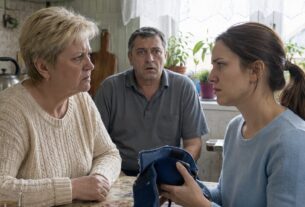
Sergey honestly could not understand at what exact moment his younger brother Dmitry had managed to rise so spectacularly. It felt like only yesterday they had been sharing a cramped room in their parents’ apartment, and Dima had been borrowing a couple of thousand rubles from him until payday just to put gas in his car. But over the past three years, reality had changed beyond recognition.
First, Dmitry had casually arrived at a family dinner in a brand-new business-class foreign car with an expensive leather interior. Six months later, he had nonchalantly tossed the keys to a spacious apartment in an elite residential complex with a gated territory onto the table. And another year after that, he became the full owner of a luxurious country house.
What exactly his brother did for a living, Sergey never fully understood. Something about tenders, investments, consulting. The words sounded impressive, empty, and smelled strongly of big money.
Sergey was not jealous. Envy was a destructive feeling, and as a doctor, he knew he could not afford to destroy himself from within. But every time the family gathered at their parents’ place, an unpleasant feeling crept over him.
The reason was their mother, Evgenia Petrovna.
She had always adored the younger son, but now that love had become almost boundless. She allowed Dmitry to behave in ways that were, at times, deeply unpleasant.
“Dimochka is a genius,” his mother would chirp, placing the best slice of pie on the younger son’s plate. “He did everything himself, with his own mind! What a sharp businessman!”
And it was not just ordinary maternal boasting. Over the past year, thanks to Dmitry, Evgenia Petrovna had gone to the seaside twice: first to Turkey, to a five-star hotel, and then to the Maldives. All her friends, acquaintances, and coworkers had heard about Dima so many times that it had become unbearable. Her son had made millions and showered his parents with wealth.
Unlike certain others.
At moments like that, Sergey simply kept silent. He quietly drank his tea, looked at his hands, dry and cracked from antiseptic, and listened to his mother’s speeches.
Sergey worked as an ambulance doctor and also took shifts at the hospital. He wanted to become a surgeon. He was drawn to the operating table with the passion of someone who had found his calling. The profession was noble, exhausting, and brutally demanding, but financially, it was anything but profitable.
His life consisted of night shifts, adrenaline, the smell of iodine, other people’s pain, and constant lack of sleep. Sergey read a lot, studied new medical techniques, and regularly attended seminars. He simply could not live any other way. People say the world rests on the shoulders of those who burn for their work like that.
But Evgenia Petrovna did not see it.
For her, success was measured in vacations, square meters, and money. A lot of money.
Sergey had even met his wife, Irochka, at work. Where else could he have met her, when eighty percent of his life was spent in hospital corridors and ambulances with flashing lights?
Irina was a miracle.
Thin, delicate, bright, with huge intelligent eyes, she had come to work as a paramedic. They had found each other in the middle of the same insane rhythm, saving other people’s lives while forgetting about their own.
But after three years, Irochka broke down. The pace of ambulance work, night calls to dangerous neighborhoods, aggressive patients, and endless stress drained her nervous system completely.
Sergey himself insisted that she leave.
She finished her studies, completed her residency, and became a cardiologist. Now, half the day she saw elderly women at a state clinic for laughably low pay, and the other half she worked at a private medical center, which at least helped keep their family budget afloat.
They were young, passionate, and deeply in love. They were not thinking about children yet. First, they needed experience, stability, and at least some kind of foundation under their feet. Besides, they did not want to raise a baby in their tiny one-room apartment.
Money was tight. They lived from paycheck to paycheck.
But when Sergey came home after a twenty-four-hour shift, washed the hospital smell off his body, and slipped into bed where Irochka, half-asleep, wrapped her warm arms around him, he felt like the happiest man on earth.
Since Dima had become rich, he had almost stopped communicating with his older brother. Their worlds had drifted apart. Phone calls became rare, and they only saw each other on holidays at their mother’s house.
So when Dmitry suddenly called and, in a condescending tone, invited Sergey and his wife to his new country house to celebrate his thirtieth birthday, Sergey was stunned.
“Come,” his brother said into the phone. “Important people will be there. You’ll see how normal people relax.”
Sergey wanted to refuse. He had just finished an incredibly difficult shift. But Irochka gently touched his shoulder.
“Seryozha, he’s your brother. It’s his anniversary. It would be awkward not to go. Let’s visit, congratulate him, and leave.”
Sergey sighed and agreed.
For the occasion, he took money from their modest savings. He gave Irina some of it so she could go to a good beauty salon, have her hair styled, and get her makeup done. He wanted his wife to feel confident despite their income.
He took out his only formal suit, the one he had bought for their wedding, and carefully ironed it. Into a gift envelope they placed twenty thousand rubles — an enormous amount for their budget.
On Saturday evening, they arrived at the given address.
Even as they approached the cottage settlement, Sergey began to feel out of place. His old, worn-out Toyota looked miserable next to the Porsches, Mercedes, and huge black SUVs parked near the mansion. Against all that luxury, their car looked like a rusty relic from another era.
The door was opened not by the host, but by a man in uniform.
A servant.
The moment Sergey and Irina stepped into the enormous hall flooded with light from designer chandeliers, Evgenia Petrovna hurried toward them. His mother looked excited. She was wearing a dress covered in sequins, and a massive necklace glittered around her neck.
She did not embrace her eldest son.
Instead, she looked sharply over Sergey’s suit and Irina’s simple, though elegant, dress, then hissed:
“Seryozha, I’m begging you. There are very important people here. Dimochka’s partners. Investors. Please keep quiet and don’t blurt out anything about your illnesses and poverty. Don’t embarrass your brother.”
Sergey closed his eyes for a moment and swallowed the bitter lump of hurt in his throat.
“Hello, Mom. Good evening to you too,” he replied quietly.
The living room was enormous, with panoramic floor-to-ceiling windows, a fireplace, and marble floors. There was no familiar table loaded with salads and hot dishes. The event was organized as a buffet. Waiters moved silently around the room carrying trays filled with glasses of champagne. Along the walls stood elegant tables covered with tiny but insanely expensive appetizers: tartlets with black caviar, marbled beef carpaccio, exotic oysters, and various cheeses.
Irina felt deeply uncomfortable.
Around them, heavily made-up blondes with overfilled lips laughed, clinked glasses, and discussed buying property in Dubai. Men with cold, assessing eyes spoke in low voices. These people seemed to have only numbers on their minds.
Irina modestly stood in a corner, took a small plate, and placed a couple of salmon canapés on it, simply to have something to do with her hands.
Meanwhile, Sergey made his way through the crowd toward his brother.
Dmitry looked like a man from a magazine cover: custom-tailored tuxedo, perfect hairstyle. But his eyes were empty and unbearably tired. He did not even try to smile sincerely at his own brother.
“You came?” Dmitry said through his teeth, shaking Sergey’s hand as though fulfilling an unpleasant obligation.
Sergey handed him the envelope.
“Happy birthday, Dim. I wish you good health. As for everything else, it seems you already have it.”
Surprisingly, Dmitry did not refuse. With the practiced movement of a magician, he accepted the envelope and slipped it into the inside pocket of his jacket.
“Thanks. Help yourselves. I need to go speak with Ivan Stepanovich,” he said, then disappeared into the crowd.
They did not exchange another word that evening.
Sergey, who had not slept the night before because of two emergency operations during his shift, dreamed of only one thing — lying down. His aching legs could barely hold him up.
Out of politeness, he and his wife stayed at this celebration of vanity for another two hours. When the music grew louder and the guests became drunker, Sergey took Irina by the hand.
“Let’s go home, Irish.”
They were already near the exit, putting on their coats, when Dmitry suddenly emerged from the corridor. He came right up to Sergey. He smelled of expensive cognac.
Then he leaned close to Sergey’s ear and whispered quietly, but very clearly:
“Listen, brother. Here’s the thing… My staff saw your wife hanging around the food tables. Eating one thing after another. Caviar, fish… All of that is very expensive. You should transfer me ten thousand for your dinner. Besides, you ought to be grateful I even invited you to such a high-class event. At least you got to eat like decent people.”
Sergey froze.
His eyes widened. He looked at his brother, trying to find even the smallest hint of a joke in his expression. But Dmitry was serious. Arrogant. Looking down at him.
In that moment, something inside Sergey cracked.
The desire to punch his brother in his well-groomed jaw was so strong that his hands began to itch. But he was a doctor. He knew how to control himself in the most critical situations. And Sergey was too proud to explain or justify the fact that Irochka had eaten two tartlets.
He was not going to throw pearls before this creature who had once been his brother.
“All right, Dima. I’ll transfer it,” Sergey said calmly. “Thank you for your hospitality.”
On the drive home, silence hung inside the car. Only the whisper of tires on wet asphalt could be heard. Sergey gripped the steering wheel tightly. Finally, he could not hold it in and told Irina everything.
Irina stared at her husband in horror. Tears glittered in her huge eyes — tears of burning, unfair humiliation.
“Seryozha… How could he? I barely ate anything! I had one piece of cheese and two fish canapés! I could hardly swallow anything under the stares of those people! What arrogance…”
“I know, my love. I know,” Sergey answered heavily. “This isn’t about you. It’s about the fact that money has pushed the soul out of my brother.”
When they returned to their cramped but beloved apartment, Sergey silently took out his phone, opened his banking app, and transferred ten thousand rubles to Dmitry with the note:
“For dinner. Don’t deny yourself anything.”
There were only a few thousand left on the card. Payday was almost a week away.
But his soul felt crystal clear.
He owed that man nothing.
Three days later, on Wednesday night, Sergey was on duty in the emergency surgery department. The shift had been surprisingly calm. He was sitting in the doctors’ room, filling out patient charts, when his mobile phone suddenly burst into a frantic ringing.
It was Evgenia Petrovna.
“Seryozhenka!” his mother sobbed into the phone so loudly it hurt his ear. “Seryozha, save him! Dimochka is dying! His stomach… He’s screaming! We called an ambulance…”
Sergey instantly straightened. His exhaustion vanished as if someone had switched off a light. His brain shifted into professional mode.
“Mom, calm down. What happened? What symptoms does he have?”
“He had been complaining about pain since his birthday. He was taking painkillers, thought he had just overeaten. He didn’t go to the doctor because he had deals, meetings! And an hour ago he lost consciousness. His temperature is almost forty, and his stomach is hard as stone!”
Peritonitis, Sergey diagnosed instantly.
And an advanced case at that. Every minute mattered.
“Tell the paramedics to bring him to me. To First City Hospital. Fast. I’ll meet them.”
Twenty minutes later, Dmitry was rolled into the emergency room on a stretcher. His skin had a greenish tint, he was covered in sticky sweat, and he had not regained consciousness. The polished, arrogant millionaire was gone. On the stretcher lay a suffering piece of human flesh whose life now depended not on investments or bank accounts, but on the hands of a man in a white coat.
“To the operating room. Immediately,” Sergey ordered.
His colleagues knew this was the brother of Sergey Vladimirovich. The head of the department offered to replace him.
“Seryozha, he’s your relative. Your hand might shake.”
But Sergey refused. He knew no one would do it better than him.
The surgery lasted almost three hours.
Sergey cleaned, washed, cut away damaged tissue. He pulled his brother back from the other side, millimeter by millimeter. Under the bright operating lights, there were no poor and rich, no bills for canapés, no elite cottages. There was only life — thin as a thread — and Sergey held that thread in his gloved surgical hands.
He made sure his brother received the very best: the best room, the most modern medications he could get through his hospital connections. And all of it was completely free.
Dmitry regained consciousness on the second day.
Sergey was standing by his bed, checking the monitor readings. His brother opened his eyes, still cloudy from medication, looked around at the white walls, and finally focused on Sergey.
“Seryoga…” he croaked through dry lips.
“Lie still. Don’t talk. You’ll live,” Sergey answered calmly, adjusting the IV. “You let it go so far that one more hour, and your millions would have gone to Mom as inheritance.”
Dmitry closed his eyes.
Reality slowly reached him. He lay there naked, helpless, with tubes in his body, and his life had been saved by the very brother he had humiliated three days earlier over a plate of appetizers.
A week later, when Dmitry was transferred to a regular room and the crisis had passed, they had their most important conversation.
Dmitry, thinner now and stripped of all his former gloss, looked at Sergey.
“Seryoga. I… I know what you did for me. Mom told me what a mess it was.”
Dmitry reached toward the bedside table and took out his wallet. He had asked his assistant to bring it.
“Name any amount. How much does your work cost? I want to pay you. A lot. You and Ira could buy an apartment, a car…”
Sergey looked at his brother’s trembling hand. There was no anger in his eyes. No resentment. Only the calm certainty of a man who knew his own worth.
“Put that away.”
“But… It’s only fair! I owe you my life!”
“A life has no price, brother,” Sergey said quietly. “I’m a doctor. I did my job. And money… I’m not so low as to take payment from my own brother.”
Dmitry turned pale. He looked away toward the wall, and as Sergey left the room, he heard his brother let out a muffled, childlike sob.
Two years had passed since then.
Out there, beyond the family circle, in business meetings and offices, Dmitry remained the same hard and serious man.
But when the family gathered at his country house — Sergey and Irina did not visit often, but when they did, they were truly welcome guests — an astonishing transformation took place.
All Dmitry’s arrogance disappeared the moment he greeted them.
He became simply Dima again — the younger brother who looked at Sergey with sincere respect and deep gratitude. He offered his brother the best wine and forbade the staff from even approaching Irina, serving her personally instead.
Evgenia Petrovna finally understood how important her eldest son’s work truly was, and she stopped measuring her sons’ success with different rulers.
Dmitry, realizing that Sergey would never accept money directly, still found a way to thank him. He used his connections and, through third parties, arranged for Irina to be offered the position of head of the cardiology department at one of the best private clinics in the city. The schedule was excellent, and the salary was something she had never even dared to dream of.
Dmitry also repeatedly offered Sergey the position of chief physician at an elite private medical center.
But Sergey refused.
He stayed at his hospital and continued taking night shifts, drinking instant coffee in the doctors’ room, and pulling people back from the edge of death.
Because he knew someone had to do that work.
And because there, beside the cold operating table, he was exactly where he belonged — one of those people on whom the world quietly rests.