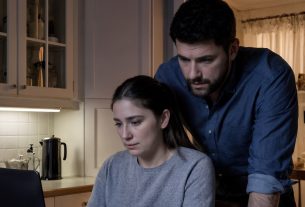
Anna sat in her office chair, mechanically stirring her cold coffee as she stared at the flip calendar hanging on the wall. The red marker was creeping inevitably toward the date circled in bold ink. In one month, she would turn thirty-five.
An anniversary birthday. A beautiful milestone. “Midway upon the journey of our life…” a line from Dante surfaced in her mind. But instead of lofty reflections, Anna felt panic tightening inside her chest.
In their family, where Marina Vladimirovna’s matriarchy stood as unshakable as a cliff, a birthday was never considered a personal celebration for the birthday person. It was a “report before the relatives.” A sacred ritual with a mandatory set of traditions: a table sagging under the weight of food, toasts that began with, “I remember when she was still using a potty,” and endless service to the guests.
Anna closed her eyes and was instantly carried back five years.
She had turned thirty then. She was deep in maternity leave. Money was painfully tight — the mortgage drained every last bit of energy and income, her husband Sergey was working himself to exhaustion, and Anna was trying to survive a never-ending Groundhog Day with their one-and-a-half-year-old daughter Sonya. Sonya was a restless child who slept badly because she was teething, and Anna looked like a shadow of herself: dark circles under her eyes, a messy bun on her head, and a stretched-out T-shirt.
“Turning thirty is not something you ignore!” her mother, Marina Vladimirovna, declared back then in a tone that allowed no argument. “The family won’t understand. Aunt Valya will be offended, your godfather will be upset. We’ll gather everyone at your place.”
And they did.
Fifteen people squeezed into their modest two-room apartment. Anna remembered that day as a nightmare.
She had been on her feet since six in the morning. With one hand she chopped salads; with the other she rocked whining little Sonya. The noisy guests demanded attention nonstop.
“Anyuta, we’re out of bread!” Uncle Petya called from the sofa.
“Anechka, bring some pickles!” one of the aunts chimed in.
“Oh, why is little Sonya crying? Maybe she’s hungry? Do you even feed her properly?” Marina Vladimirovna commented from the head of the table, a glass of wine in her hand.
Anna darted between the kitchen and the living room, changing plates, pouring compote, calming down her daughter’s hysterics as the child grew frightened by the noise and the crowd. Anna did not even get a chance to eat.
When the guests finally left, full and satisfied, leaving behind mountains of dirty dishes and sticky stains on the floor, Anna slid down the kitchen wall and burst into tears.
She did not even have the strength to enjoy the gifts.
The only bright spot was Sergey’s present. Seeing the state his wife was in, he had bought her a dishwasher, spending his entire bonus on it. If it had not been for that miraculous machine, Anna probably would have simply lain down and fallen asleep among the dirty plates.
But the worst part came that night.
Overstimulated Sonya could not fall asleep until four in the morning. She screamed, arched her back, and cried without stopping. Anna rocked her in her arms, swallowing her tears, and hated that “celebration” with every part of her soul.
Since then, she had made a promise to herself: never again.
No more family feasts in the apartment. No more giant bowls of Olivier salad. No more forced joy.
Coming back to the present, Anna exhaled firmly.
Everything was different now. Sonya was already six and a half — a reasonable little person who could be talked to and negotiated with. She and Sergey were standing firmly on their feet, and the mortgage had become a regular payment rather than a noose around their necks.
Anna wanted a celebration. But she wanted her own kind of celebration.
She dreamed of winter like something out of a fairy tale. Crisp white snow, tall fir trees wearing snowy caps, frost pinching her cheeks, and steam rising from an outdoor hot pool.
“Seryozha, I want to go to a holiday resort,” she told her husband that evening. “Lesnaya Skazka. They have skiing, tubing, hot springs. And mulled wine.”
Sergey, who could not stand home gatherings with his mother-in-law and her endless advice about how they should run their household, lit up.
“Anka, that’s a great idea! I’m all for it. No cooking, no cleaning. We’ll ski, relax in the sauna — perfect!”
The plan quickly grew more detailed.
Anna’s best friend, Olya, heard about the idea and immediately wanted to join them.
“Listen, Pasha has some days off saved up anyway. And our Artyom just turned eight. He and Sonya get along really well. We’ll rent two cottages next to each other, go to the sauna in the evenings, and let the kids run wild outside.”
It was perfect.
Two families. Nature. Silence. No need to serve anyone.
Anna booked the cottages, paid the deposit, and began living in sweet anticipation. In her mind, the picture was already complete: the morning of her birthday, she steps out onto the covered terrace in a warm robe, drinks coffee, and looks at the forest. And no one shouts, “Anechka, where’s the salt?”
The only problem left was Marina Vladimirovna.
Her mother called three weeks before the date.
“So, daughter,” her voice sounded cheerful and demanding, “your anniversary is coming up. Where are we celebrating? At a café or at home? If it’s at home, I can make aspic, but the hot dishes and salads are on you. If it’s a café, we need to book now, or there won’t be any tables left. I’ve already made a guest list — about twenty people. Aunt Lyuba and her husband are coming from the village.”
It felt as if someone had poured ice water over Anna.
Twenty people.
Aunt Lyuba, whom she had seen maybe three times in her entire life.
“Mom,” Anna began carefully, “I haven’t decided yet. Sergey and I will think about it.”
“What is there to think about?” her mother asked in surprise. “There isn’t much time. People need to make plans. Don’t drag this out. Thirty-five is a real milestone! You need to show everyone that everything is going well for you, that your family is strong.”
Anna began dodging like a rabbit.
She used vague phrases: “We need to calculate the budget,” “Sergey is swamped at work,” “Maybe we’ll postpone it.” She was terrified of telling her mother the truth. She already knew exactly how Marina Vladimirovna would react: offense, accusations of selfishness, and manipulations involving her health.
But Marina Vladimirovna did not let up. She called every other day.
“Anna, I saw a dinner set I could give you as a present. Twelve place settings. Just perfect for the table.”
“Mom, I already have dishes. Please don’t.”
“You don’t understand anything. Anyway, I’ve decided it’s better to celebrate at home. Cafés are too expensive now, and who knows what they serve there. I’ll come early and help chop everything.”
The tension kept growing.
Anna understood that she could not keep stalling. She had to speak plainly. But the fear of hurting her mother — drilled into her since childhood with phrases like, “Your mother sacrificed her whole life to raise you!” — froze her tongue.
One week before her birthday, Anna finally gathered her courage.
“Mom, listen,” she said, in what she hoped was a firm voice. “This year we won’t be gathering guests.”
Silence fell on the other end of the line.
“What do you mean?” her mother’s voice dropped lower. “Are you sick or something?”
“No, we’re all healthy. I just don’t want to. I’m tired from work. I want peace and quiet. We’ll celebrate as a family — just the three of us. Me, Sergey, and Sonya.”
Marina Vladimirovna laughed.
It was the kind of laugh that made Anna’s teeth clench — condescending, as if an adult were explaining to a child why she could not eat sand.
“Oh, Anka, stop making things up! She wants peace and quiet. You’ll have peace and quiet when you’re retired. Right now you’re a young woman, and it’s your anniversary! The relatives will be offended. I’ve already told everyone there will be a celebration.”
“Mom, I asked you…” Anna felt a lump rise in her throat. “Why did you tell everyone? I didn’t agree to anything.”
“Oh, stop playing hard to get. ‘I didn’t agree,’ she says. I know you. You’re just too lazy to cook. It’s fine, I’ll come and do everything. You just buy the groceries.”
“Mom!” Anna almost shouted. “No! No groceries. No guests. I’m not celebrating at all. Please hear me. I don’t need gifts. I don’t need a dinner set. I just want to rest.”
Her mother did not believe her.
Anna could hear it in her tone. Marina Vladimirovna lived in a world where a “no” from her daughter meant, “I’ll resist a little for appearances, then I’ll agree.”
Anna decided not to mention the resort.
If her mother found out they were going away to have fun without her and the relatives, the scandal would be enormous.
“So you have money for skiing, but not to feed your own mother?” Anna could practically hear the phrase in her head.
“I’ll tell her later, after the fact,” Anna decided. “I’ll say it was a surprise from Sergey.”
They left on Friday evening right after work.
They packed the trunk with clothes, skis, and food. Sonya bounced in the back seat with delight.
“We’re going to the forest! To see squirrels!”
The road took three hours. By the time they approached the resort, it was already dark. The headlights caught the huge snow-covered branches of fir trees. The air here was so clean and frosty it made Anna’s head spin.
They checked into a cozy log cottage. Inside, it smelled of wood and a warm stove. Olya, her husband, and their son were already waiting in the neighboring cottage, grilling shashlik.
The evening was wonderful.
They sat by the fire, drank hot tea, while the children rolled around in the snowdrifts and squealed with happiness. No fuss. No dirty dishes — disposable plates were a brilliant invention. No toasts about “a woman’s happiness.”
Anna watched the sparks fly from the fire into the black sky and felt calmer than she had in the past three weeks.
“How are you?” Sergey asked, wrapping his arm around her.
“I’m happy,” she answered honestly. “This is the best gift.”
Saturday. Her birthday.
Anna did not wake up to an alarm. She woke because a sunbeam was tickling her nose. Sonya and Sergey were already awake.
“Happy birthday, Mommy!” Sonya jumped onto the bed and handed her a drawing. “This is you — the Snow Queen!”
Sergey gave her a gift certificate to a cosmetics store and somehow managed to find a bouquet in the middle of that snowy wonderland.
Her phone began vibrating early in the morning. Colleagues called. Friends called. Anna answered with a smile and accepted their congratulations.
At eight in the morning, a message arrived from her mother: a picture with a giant bouquet of roses and a glittering caption that read, “To my beloved daughter!”
Then came a call.
“Hello, Mom, thank you!”
“Happy birthday, my dear girl!” her mother’s voice was syrupy-sweet. “Health, happiness, and a little more sense — so you’ll listen to your mother. Well? Did you sleep well?”
“Yes, Mom, everything’s great.”
“Good. Now go make yourself pretty. Thirty-five — a woman is in full bloom again!” her mother chuckled. “Kisses!”
Anna hung up, slightly confused.
Not a single reproach. Not one question about plans.
Strange.
But she quickly brushed away the uneasy thoughts. The day was too good to spoil.
They had breakfast and went to the slope. They skied, then went tubing. By lunchtime, flushed and happy, they returned to the cottages to have a snack before going to the thermal pool.
It was around two in the afternoon.
Anna sat on the veranda, wrapped in a blanket, drinking hot chocolate. Her phone lay beside her on the little table.
It rang.
Mom.
Anna smiled. Maybe she wanted to congratulate her again or had forgotten to ask something.
“Yes, Mom?”
At first, Anna heard noise. Rustling. Then loud, cheerful laughter from several people in the background.
“Anyuta!” her mother’s voice rang out triumphantly. “Come on, open up!”
“Open?” Anna did not understand.
“Open the door, silly! We’re here! Surpriiiise!” Aunt Lyuba’s voice shouted into the phone. “Come out, birthday girl! We’ve got cake and presents! We’ve been ringing and ringing the intercom, but you’re not opening. Are you in the shower or something?”
“Mom… where are you?”
“Right outside your door! We’re standing by the entrance! We wanted to surprise you without warning! So come on, welcome your guests. Aunt Lyuba is here, Uncle Vitya, me… We brought salads, and a Napoleon cake. I baked it myself all night!”
Anna said nothing.
Her mind went blank. She had no idea what to answer.
They were there. Outside her locked apartment door. With bags, with cake, expecting a celebration she had never planned.
“Mom,” Anna’s voice trembled and turned hoarse. “We’re not home.”
“What do you mean, not home?” The cheerfulness in her mother’s voice shifted into confusion. “Did you run to the store? Fine, we’ll wait. It’s just cold, so hurry back.”
“Mom. We’re not in the city. We left.”
The pause seemed to stretch forever.
Anna could hear the wind whistling through the phone over there, near the entrance to her building.
“Where did you go?” her mother’s voice turned icy.
“To a holiday resort. I told you… I told you we weren’t celebrating at home. I told you we were going to spend the day as a family.”
“You… you’re joking?” hysteria began to ring in her mother’s voice. “Anna, this isn’t funny. There are people standing here. Relatives! Aunt Lyuba came all the way across town! I baked a cake! We brought presents! And you… you left?”
“I told you,” Anna felt tears of anger and hurt filling her eyes. “I told you in plain Russian: don’t come. There will be no celebration. Why did you come? Why did you arrange all this?”
“Why?!” Marina Vladimirovna screamed so loudly that Anna had to pull the phone away from her ear. “To congratulate you, you ungrateful girl! We wanted to surprise you! We meant well! And you… you spat in your mother’s face! You spat in the face of the whole family! You ran away!”
“I didn’t run away. I went to rest on my birthday!” Anna shouted back, raising her voice at her mother for the first time in her life. “It’s my day! Mine! Not yours, not Aunt Lyuba’s! I have the right to spend it the way I want!”
“Oh, go to hell with your rights!” Marina Vladimirovna snapped. “Selfish girl! We’re standing here like fools… You’ve humiliated me in front of everyone!”
Then came the beeps.
She had hung up.
Tears rolled down Anna’s cheeks, dripping into the cooling cocoa. She was shaking. Guilt — planted in her since childhood — crashed over her like a wave.
Mom baked a cake… Aunt Lyuba came… They’re standing out in the cold… I’m a bad daughter.
Sergey came over. He saw his wife’s face and understood everything without a word.
“Your mom?”
Anna nodded, unable to speak.
“They came?”
“Yes… They’re standing by the entrance.”
“Anna, look at me.”
She raised her tear-filled eyes.
“Did you tell them we wouldn’t be there?”
“I told her I wasn’t celebrating. I told her we would be alone. I didn’t say we were leaving, but I said no.”
“Exactly. You said no. The fact that they chose to ignore your words and do whatever they wanted anyway — that was their choice and their responsibility. They’re adults. They invented a script for themselves, believed in it, and then got offended when reality didn’t match their expectations.”
“But they’re freezing there… With a cake…”
“They’ll get into a taxi and go to your mother’s place to eat that cake. They won’t disappear. Anna, you are not guilty. You are not required to be convenient. This is your birthday. We are here. Look around — it’s beautiful. Sonya is over there building a snowman. We’re going to the pool now. You are not going to let them ruin this day.”
Anna buried her face in her husband’s sweater.
It hurt, but Sergey’s words worked like medicine. He was right. She had warned them. She had the right.
“Thank you,” she whispered.
Her mood was shaken, but they still went to the pool. The hot water and steam washed away some of the tension.
That evening, they drank mulled wine with their friends, and after Anna told Olya what had happened, she received another wave of support.
“Your mother is such a manipulator!” Olya said indignantly. “That’s a pure boundary violation. ‘I’ll force my kindness on you even if you resist.’ Forget it, Anka. You did everything right.”
Marina Vladimirovna was seriously offended.
She did not call the next day.
Or the week after that.
Or the month after that.
At first, Anna kept wanting to call her and apologize — out of habit. But Sergey stopped her.
“No. If you apologize now, you’ll admit that your mother was right and you were wrong. Then she’ll always do this. She’ll barge into your life without asking. Hold your ground.”
It was hard.
Anna suffered. She imagined her mother sitting alone, thinking about what a terrible daughter she had. But then she remembered her thirtieth birthday, her tears over the dirty dishes, and her resolve returned.
Six months passed in silence.
Marina Vladimirovna demonstratively spoke to Sonya on the phone whenever Sonya was visiting her other grandmother — Anna’s mother-in-law, who, by the way, fully supported Anna in the situation — but she ignored her daughter completely.
The ice finally cracked in the summer.
The roof at Marina Vladimirovna’s country house started leaking. She needed a man’s help. Pride was one thing, but repairs were repairs.
So she called Sergey.
“Seryozha, hello. Listen, there’s something I need help with.”
Of course, Sergey went.
He fixed everything. And afterward, over tea, Marina Vladimirovna pressed her lips together and asked:
“So what about Anna? Is she still offended?”
“Anna isn’t offended,” Sergey replied calmly. “Anna is waiting for you to understand that she is an adult.”
That evening, her mother called Anna.
“Well, hello, traveler.”
“Hello, Mom.”
“All right then… Sergey fixed the roof. Thank him for me. You should stop by sometime. I’ll give you some zucchini.”
There was no apology.
Marina Vladimirovna was not the kind of woman who admitted her mistakes out loud. But her tone had changed. There were fewer commanding notes in it now, and more caution.
Two years have passed since then.
Anna has never celebrated her birthday with relatives again.
Now it is a rule: on that day, she, her husband, and her daughter leave. To the mountains, to the sea, to a neighboring city — it does not matter. What matters is that they are together, just the three of them.
Marina Vladimirovna still grumbles, “Running away again?” but she no longer arranges surprises. She has learned one thing: the door will be locked. And if she wants it to open, she has to call and ask permission.
Anna learned her lesson too.
Boundaries are not walls to hide behind. They are doors — and the keys to those doors should belong only to you.