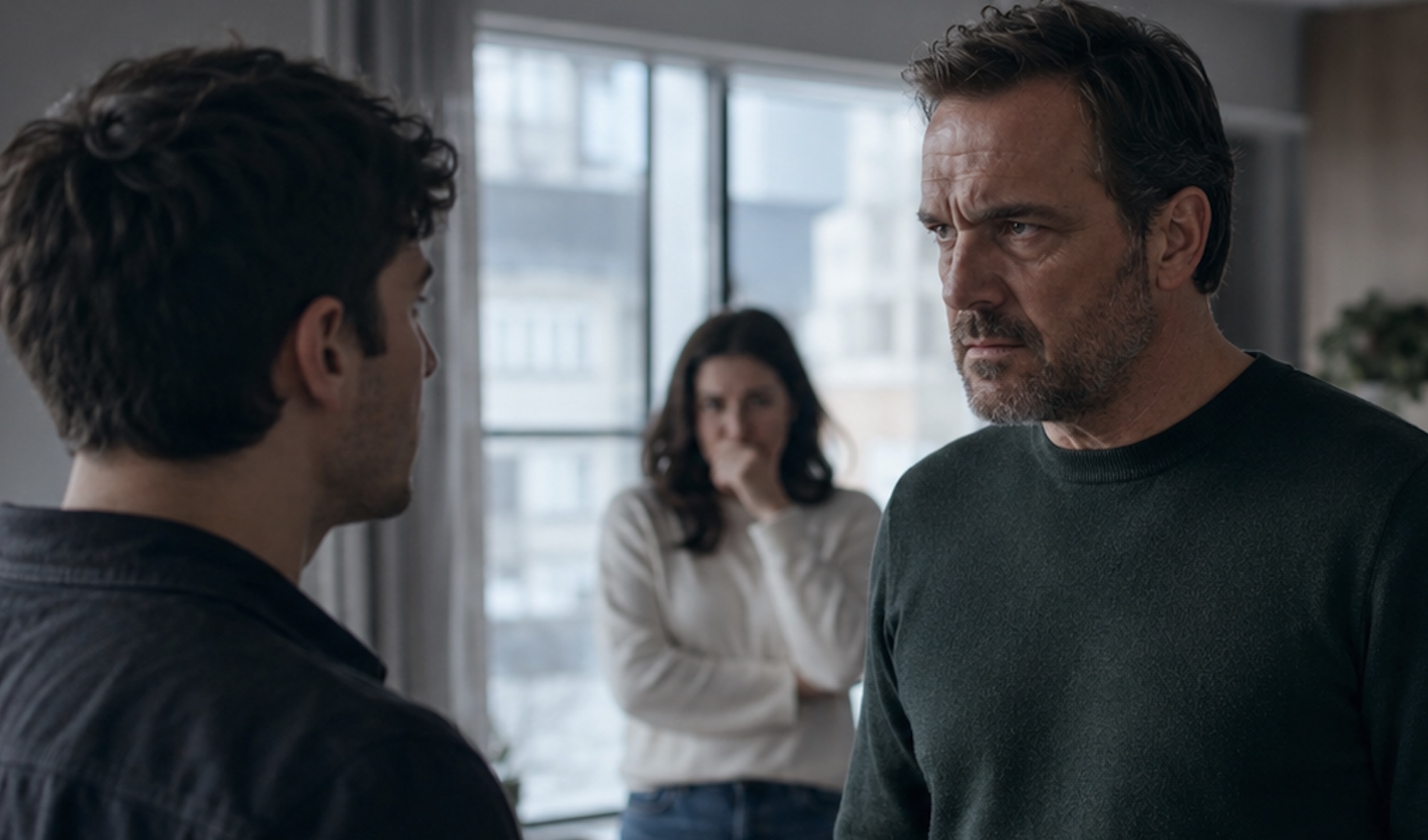
Morning began with a phone call.
Dmitry stood on the veranda, pressing the phone to his ear, looking down at the sea as it lazily rolled the pebbles along the shore. The conversation lasted five minutes, no more.
“Marina,” he called, walking back into the house. “Seryozha called. He wants to come with Kira and Liza. Says they’d like to stay for four days, get some rest.”
Marina set down her digital pen and turned away from the graphics tablet. On the screen remained an unfinished book cover — trees, birds, watercolor hills.
“When?” she asked calmly.
“The day after tomorrow,” Dmitry said, sitting on the edge of the sofa. “I told him I needed to discuss it with you first. But I think he’s already looking at tickets.”
“Well, the guest house is empty,” Marina said with a shrug. “Let them come. Liza and Dasha are the same age. Maybe they’ll finally become friends. They only see each other once a year on video calls anyway.”
“That’s what I thought too,” Dmitry smiled. “Seryozha and I haven’t had a proper chance to sit down together in ages. It’s always rushed, always over the phone. Maybe we’ll go fishing.”
Marina nodded and returned to her tablet. The pen began moving across the screen again, but her thoughts were no longer in the illustration. She was already calculating what to cook, which sheets to put in the guest house, whether there would be enough towels.
“I’ll go pick up Dasha then,” she said without turning around. “She’s been at Mom’s for three weeks already. I miss her. I’ll bring her back just in time for their arrival.”
“Perfect,” Dmitry said, stepping closer and kissing the top of her head. “I’ll get everything ready here. Air out the guest house, check the water.”
“Just turn on the refrigerator there in advance,” Marina reminded him. “It takes half a day to cool properly.”
“I’ll do it,” Dmitry nodded. “Everything will be fine. A normal weekend — the sea, barbecue, kids running on the hill. Beautiful.”
Marina stood up and stretched. Her T-shirt pulled tight across her stomach, and she automatically tugged the fabric down. Dmitry noticed the gesture — familiar, almost instinctive. He said nothing, only squeezed her shoulder gently.
“I’ll leave tomorrow morning,” Marina said, opening the wardrobe and beginning to pack. “I’ll be at Mom’s by evening. And the next day, Dasha and I will be back by lunchtime.”
“All right, so I’ll meet them on my own,” Dmitry said, rubbing his chin. “I’ll manage. I’ll show them the guest house, put together something simple to eat.”
“There’s lamb in the freezer,” Marina said, zipping the bag. “And I bought herbs yesterday. The tomatoes are on the windowsill.”
She left early, just as the sun began gilding the top of the hill. Dmitry waved to her from the veranda and got to work. He wiped the tables in the guest house, hung fresh curtains, and checked whether the shower worked.
Sergey arrived around noon — a full day earlier than promised. A taxi stopped by the gate, and Kira was the first to get out: tall, tanned, wearing a wide-brimmed hat and sunglasses. Sergey followed with two suitcases. Liza, a thin little girl with a long braid, immediately ran to the fence and began looking down at the sea.
“Brother!” Sergey hugged Dmitry. “Look at the life you’ve built here! That view is insane.”
“Glad you made it,” Dmitry said, taking one of the suitcases. “Only you’re a day early. Marina went to pick up Dasha. She’ll be back tomorrow around lunch.”
“No problem, we’re not picky,” Kira said, taking off her sunglasses and looking around. “So this is your house. Compact. And the guest house is that smaller one?”
“Yes, over there, behind the bushes,” Dmitry pointed to the right. “Everything’s ready: bed, shower, small kitchen. Come on, I’ll show you.”
They walked along the stone path. Kira clicked her heels and looked around as if she were evaluating real estate before buying it. Sergey followed behind, dragging the suitcases and breathing heavily.
“Did your father help you buy the land?” Kira asked, as if casually.
“Partly,” Dmitry replied. “The previous owner made an offer, Marina fell in love with the idea, and Father helped a little. We paid for the rest ourselves.”
“I see,” Kira stretched out the words, fitting an entire judgment inside them. “It’s nice when there’s someone to support you.”
Dmitry said nothing. He opened the guest house door, showed them the room and kitchen, explained where the towels were and how to turn on the water heater.
“Make yourselves comfortable,” he said. “I’ll have lunch ready in an hour.”
He stepped out and headed toward the main house. Behind him, Kira’s voice sounded — muffled, but clear. Dmitry stopped near the jasmine bush, not because he meant to listen, but because he remembered he had forgotten to mention the socket in the bathroom.
“…Did you see the photo on the wall?” Kira was saying. “Marina has gotten even bigger than she was last New Year. Seryozha, it’s a disaster. She just needs to eat less — that’s the whole diet.”
“Kira, come on,” Sergey said lazily, without any real attempt to stop her.
“What do you mean, ‘come on’? I’m telling the truth. She sits all day with her little drawings and doesn’t move. Then she wonders where the weight comes from.”
Dmitry turned around and walked back into the guest house. Kira fell silent the moment she saw him in the doorway. Sergey began unpacking a suitcase with exaggerated focus.
“Kira,” Dmitry said evenly, without raising his voice. “I heard what you said. I’m asking you not to talk about Marina that way. Especially not when she comes back.”
“Oh, Dima, I didn’t mean anything bad,” Kira waved her hand. “I’m just worried about her health.”
“People show concern for health differently,” he answered. “Not with those words and not behind someone’s back. Please remember that.”
He left without waiting for a reply. Behind the door, he heard Kira laugh quietly and say, “Everyone’s become so sensitive.” Dmitry clenched his jaw, but he did not go back. He hoped his words would be enough.
At lunch, Kira behaved sweetly. She praised the tomatoes, asked questions about the house, and talked about how Liza had learned to swim. Sergey showed photos from his latest shoots.
“Seryozha, have you ever photographed here?” Kira asked, nodding toward the hill. “The light here is amazing.”
“I should try,” Sergey said, suddenly interested. “Dima, can I climb up there in the morning? Catch the sunrise?”
“Of course,” Dmitry nodded. “There’s a path. Dasha runs there every day.”
“By the way, who does Dasha look like?” Kira asked. “Marina?”
“She looks like herself,” Dmitry replied. “Cheerful, open. She runs around the hill from morning to evening, collects stones, knows every bird by its voice.”
“Well, let’s hope the girls get along,” Kira said with a thin, careful smile. “Our Liza is selective.”
Dmitry did not ask what that meant. The evening passed quietly. Sergey went to photograph the sunset, Kira scrolled through something on her phone, and Liza drew in a notebook. Dmitry sat on the veranda and waited for the next day.
Marina returned around noon, just as she had promised. Dasha jumped out of the car first — round-cheeked, tanned, wearing a little panama hat with daisies. She spotted the unfamiliar girl by the fence and instantly lit up.
“Hi! Are you Liza?” Dasha ran over, breathless. “I’m Dasha! Come on, I’ll show you a nest! The chicks hatched there! And there are stones too — red ones, and if you rub them, they shine!”
Liza looked Dasha up and down. Slowly. Judgingly. Then her lips twisted into an expression far too adult for a five-year-old child.
“I don’t make friends with pigs,” Liza said clearly, loudly enough for the whole yard to hear.
Dasha froze. The smile was still on her face, but her eyes no longer understood what was happening. She looked at her father, then at her mother, then back at Liza, as if waiting for her to say it had been a joke.
Marina stood by the car with a bag in her hand. The bag slowly slipped down to the ground. Sergey sat on the steps of the guest house, staring at his phone. Kira stood nearby with a glass of water and said nothing.
“Seryozha,” Dmitry’s voice was quiet, but every word felt heavy as stone. “Did you hear what your daughter just said to mine?”
“They’re kids, well…” Sergey made an uncertain gesture with his hand. “They’ll sort it out themselves.”
“No,” Dmitry shook his head. “They won’t. Because ‘pig’ is not just a child’s word. It’s a word she heard somewhere. And both of you are silent as if nothing happened.”
“Dima, don’t make a scene,” Kira said, taking a sip of water. “Children say all kinds of things. They’ll fight and make up.”
“Dashenka, go to Mom,” Dmitry crouched in front of his daughter and gently brushed a strand of hair from her face. “Mom will show you what she brought. Go on, sunshine.”
Dasha walked away silently, clutching her mother’s hand. She did not cry, but her lower lip trembled. Marina picked her up and carried her into the house.
“Seryozha, I’m going to say something, and I need you to hear me,” Dmitry said, standing up. “You stayed silent when your child called my child a pig. You didn’t correct her. You didn’t apologize. In fact, you agreed.”
“Oh, come on,” Sergey put his phone into his pocket. “Liza said something stupid. She’s five.”
“Exactly,” Dmitry nodded. “She is five. And Dasha is five. Dasha ran to her with an open heart. And this is what she got. And you know what’s worst of all? You’re sitting there not understanding why I’m angry.”
“You take everything too seriously,” Kira said, placing her glass on the railing. “The kids will forget it in an hour.”
“Dasha won’t forget,” Dmitry replied. “She’ll remember.”
He turned and went into the house. Marina was sitting on the bed, holding Dasha in her arms. The little girl had buried her face in her mother’s shoulder and was silent. Dmitry sat beside them.
“Dashunya,” he said, stroking his daughter’s back. “What Liza said is not true. You are beautiful, kind, and the very best. Some people say hurtful things because no one has taught them how to speak differently.”
“Dad, why did she say that?” Dasha lifted her wet eyes. “I just wanted to show her the nest.”
“Because sometimes children repeat the words of adults,” Dmitry kissed his daughter’s forehead. “But it’s not your fault. Not even a little.”
“I shouldn’t have let her go over there alone,” Marina bit her lip. “I should have stood next to her.”
“You couldn’t have known this would happen,” Dmitry touched his wife’s hand. “It isn’t your fault. It’s their responsibility.”
Marina prepared dinner with particular care — not for the guests, but because that was how she coped with anxiety. The table turned out generous: baked fish, grilled vegetables, herbs, fresh bread, and for dessert, honey pastries she made from her grandmother’s recipe.
The table was quiet. Dasha ate silently, glancing at Liza with a caution that no five-year-old child should have. Liza picked at the fish with her fork and fussed.
“It’s delicious, Marina,” Sergey said, serving himself another portion. “You’ve always cooked well.”
“Thank you,” Marina nodded. “Eat. There’s enough for everyone.”
She took a pastry from the dish and placed it on her plate. A simple, ordinary movement. Kira followed the gesture as if observing a scientific experiment.
“Marina, have you ever thought that maybe you should limit pastries?” Kira said in the tone of a kind adviser, slightly tilting her head. “For your figure, I mean. I gave up sugar completely after thirty, and look at the result.”
The table went very still. Marina lowered her hand with the pastry. Dmitry slowly set down his fork.
“I’m serious, no offense,” Kira continued. “You should take up sports instead of sitting all day with your drawings. You’re still a young woman.”
Dmitry’s palm came down on the table — short, sharp, once. The glasses trembled. Dasha flinched. Liza stopped poking at her fish.
“Marina,” Dmitry said, his voice absolutely level. “Take Dasha and go to our room. Please.”
“Dima…” Marina began.
“Please,” he repeated. “I’ll come in after you.”
Marina stood, took her daughter by the hand, and left. The door closed softly, without a slam. Dmitry looked at his brother. Then at Kira. Then back at his brother.
“I asked you,” he said. “Yesterday, when you arrived, I asked you not to touch my wife. I asked calmly, like a human being. You, Kira, nodded. And now here we are, sitting at a table Marina spent two hours preparing, and you’re talking about her body again.”
“I wanted what was best,” Kira leaned back in her chair. “If you don’t tell people the truth, they’ll never change.”
“That isn’t truth,” Dmitry shook his head. “That’s rudeness. And you know it perfectly well.”
“Dima, come on,” Sergey lifted his hands. “Vacation, sea, good food. Why fight?”
“I’m not fighting,” Dmitry replied. “I’m telling you what I’ve decided. You’re leaving tomorrow morning.”
“What?” Kira straightened. “You’re throwing us out?”
“I’m asking you to leave,” Dmitry corrected her. “In two days, you insulted my five-year-old daughter and humiliated my wife twice. You are guests in my home. And I have the right to decide whom I welcome here.”
“Seryozha, are you hearing this?” Kira turned to her husband. “Say something to him!”
Sergey sat staring into his plate. He slowly twisted the fork in his fingers, then raised his eyes to his brother.
“Dima, maybe everything will calm down by morning?” he asked, without much hope.
“Nothing will calm down,” Dmitry stood. “I asked twice — politely, kindly. There won’t be a third time. Tomorrow at nine, a taxi will be at the gate. I’ll call it.”
“This is because of one pastry?” Kira smirked. “Seriously?”
“This is because my daughter now knows what it feels like to be called a pig,” Dmitry stood straight, his arms lowered at his sides. “And because my wife is now sitting in the bedroom thinking there’s something wrong with her. There isn’t. There is nothing wrong with her. She is wonderful. Any questions?”
There were no questions. Kira got up and left, her heels striking loudly against the wooden floor. Sergey lingered for a second.
“You’ll regret this,” he said quietly. “Father will find out.”
“Father knows who helped build this house,” Dmitry replied. “And who only comes here to sunbathe and humiliate people. Good night, Seryozha.”
Marina woke to the sound of the gate slamming in the yard. It was early morning; light had only just begun to seep through the curtains. She went to the window and saw Sergey loading suitcases into the trunk of a taxi. Kira was already sitting in the back seat, with Liza beside her.
“Dima,” Marina touched her husband’s shoulder. “They’re leaving.”
“I know,” Dmitry opened his eyes. “I called them a car.”
“But… they didn’t even have breakfast. They didn’t even say goodbye.”
“Yes,” he sat up in bed and looked at his wife. “I’m sorry, Marina. I really wanted these days to go differently. I wanted the girls to run around the hill, Seryozha to photograph the sunrises, and all of us to sit together in the evenings with wine and talk.”
“What happened yesterday after Dasha and I left?” Marina sat beside him.
“I told them it would be better for them to go,” Dmitry took her hand. “They insulted you and Dasha. Once, you can forgive it and write it off as stupidity. But they continued. And when people continue after being asked to stop, that’s no longer a mistake. That’s a choice.”
“Dima, what if you did this because of me…” Marina did not finish.
“Not because of you,” he interrupted gently. “For you. And for Dasha. There’s a difference.”
Marina was silent for a while. Then she moved closer and rested her head on his shoulder. They sat like that for a minute, maybe two.
“Mom! Dad!” The door flew open, and Dasha burst into the room wearing a swimsuit and carrying an inflatable ring with a whale on it. “They left? So are we going to the sea? You promised!”
“We promised,” Dmitry laughed. “Give us ten minutes.”
“Five!” Dasha commanded and ran off.
Marina packed the bag: bottles of water, sliced apples, grapes, towels, sunscreen. Dmitry put on shorts and a panama hat, then slung the beach bag over his shoulder.
“You know what hurts the most?” he said as they walked down the path toward the sea. “That Seryozha still didn’t understand. He thinks I punished him. But I simply protected what is precious to me.”
“Maybe he’ll understand with time,” Marina said, walking beside him and holding Dasha’s hand.
“Maybe,” Dmitry nodded. “Or maybe he won’t. But that’s his choice now, not mine.”
Dasha broke free and ran ahead toward the water, waving her inflatable ring. The sea shimmered — warm, calm, morning-bright. Behind them, the hill looked soft, green, and welcoming. Their hill. Their home. Their life.
Meanwhile, Sergey sat in the taxi reading a message from his father. His older brother had called him first — the previous evening, after dinner. Their father’s message was short:
“Seryozha, I know everything. I’m ashamed of you. The guest house you considered a small thing — Dmitry built it with his own hands over two summers. Marina designed the layout herself. And you brought someone into their home who humiliates their child. Don’t call me for now. I need time.”
Kira glanced at his phone screen and went pale. Liza, sitting in the back seat, asked quietly:
“Dad, will we ever come back to Uncle Dima’s?”
Sergey did not answer. He looked out the window at the hill receding behind them, at the roof of the house, at the glitter of the sea — and for the first time in a long while, he did not want to take a photograph.
The beauty he saw no longer belonged to him.
And down below, on the shore, Dasha ran along the edge of the water with a joyful shriek, Marina laughed, and Dmitry spread the towels over the warm stones — calm, free, and regretting nothing.