I carefully smoothed the golden wrapping paper with my fingertips.
Inside the small square box was a ceramic key dish shaped like a maple leaf. I had bought it for Polina a month earlier, as soon as I heard that she had finally signed the handover documents and received the keys to her very first apartment.
It was a simple little thing, but it had character: dark green glaze, slightly rough edges, and delicate veins showing through the surface. I thought something like that might make the entrance hall of her new home feel truly warm and lived-in.
My phone rang.
My sister-in-law’s name appeared on the screen.
Inga rarely called me, and conversations with her usually meant trouble. From the very beginning, my husband’s sister and I had maintained a polite but chilly neutrality. Inga was used to managing the entire extended family, and she had never quite forgiven me for being independent.
“Hello, Anya,” she said in an unusually businesslike voice. “I’m calling about Saturday. About Polina’s anniversary celebration.”
“Hello, Inga. Yes, Sergei and I have already prepared her present.”
 
“That’s actually what I wanted to talk to you about. You see, a rather delicate situation has come up.”
Inga paused dramatically.
“Irina is coming.”
My hand froze on the wrapping paper.
Irina was Polina’s biological mother. Many years ago, she had left for another city to build a new life for herself, leaving her twelve-year-old daughter with her father. I knew that Polina had started corresponding with her again during the past year, and I had accepted it calmly. Polina was an adult now. She had every right to search for answers to questions that had stayed with her for years.
“I know they’ve been talking,” I replied evenly. “That’s Polina’s decision.”
“I’m glad you understand,” Inga said, sounding relieved. “But surely you realize how it will look. At a family celebration, sitting around the same table… having two women there in the same role will make things awkward.”
She lowered her voice, giving her next words extra importance.
“Polina is embarrassed to tell you herself, but she’s very worried. She thinks that on a day like this, her real mother should be beside her. And you… well, to put it plainly, you’ll be out of place at the celebration.”
The words were delivered coldly and precisely, like an official stamp being slammed onto a document.
I looked at the gift box I had been wrapping with such care only moments earlier. Something inside me tightened into a heavy lump of ice.
“Did Polina herself ask you to tell me this?” I asked, forcing my voice to remain steady.
“Anya, don’t take it personally,” Inga replied in a patronizing tone. “You’re an intelligent woman. You should understand how nature works. Blood is blood. You helped Sergei raise her, and everyone is grateful for that. But now her mother is returning to the family. There’s no need to make a scene or force the girl to choose.”
There was a rustling sound on the other end, and then another voice came on the line.
It was my mother-in-law, Nina Grigoryevna.
“Anya, sweetheart,” she said cautiously, the way she always did when she was terrified of conflict. “Inga is right. Please, be wise about this. Don’t come. Say you’re ill, make up some excuse. Why risk a scandal in front of everyone?”
She sighed.
“Let Ira sit beside her daughter. Let them take photographs together like a normal family. You and I can have dinner separately another time.”
They kept talking, explaining over and over that my love, all those sleepless nights beside a feverish teenager, all our heart-to-heart conversations before graduation and entrance exams—apparently all of that had only been temporary.
A substitute.
A role whose time had expired.
“I understand,” I said quietly.
Then I put the phone down.
The room became completely silent.
I walked to the window, pressed my forehead against the cool glass, and closed my eyes.
The pain was not sharp. It was dull and lingering, like an old illness that had never completely gone away.
Could Polina really not bring herself to say this to my face?
Could twenty-three years of shared life truly be erased by the sudden return of someone connected to her only by blood?
Sergei came home that evening.
 
He immediately noticed something was wrong. I had never been good at lying to my husband, so I simply told him everything that had happened.
His expression darkened.
Without a word, he took out his phone.
“What are you doing?” I asked.
“Calling my sister. Then my mother,” he replied harshly. “I’m going to explain exactly who is family here and who is unnecessary. And then I’ll call Polina and ask when she started sending messages like this through other people.”
I gently covered his hand with mine.
“Don’t, Sergei.”
“Anya, are you serious? They’re trying to throw you out of our daughter’s celebration!”
“If Polina truly wants me not to come, she can tell me herself,” I said firmly. “She isn’t a teenager anymore. She’s thirty-five years old. She invited me personally, and I’m not going to let Inga cancel that invitation on her behalf. We’re going.”
Sergei looked at me closely. His jaw tightened, but he put the phone away.
“All right. We’ll go. And if anyone says one disrespectful word to you, we turn around and leave together.”
A fine autumn rain was falling on Saturday.
The restaurant Polina had chosen was in the city center—a small, cozy place with subdued lighting and panoramic windows.
Sergei and I entered the spacious lobby where guests were leaving their coats. Inga was standing near a mirror, adjusting her hair.
The moment she saw us, she spun around.
For a second, pure panic flashed across her face before quickly turning into anger.
“So you came after all,” she hissed, stepping toward me while Sergei handed our coats to the cloakroom attendant. “Why are you doing this? Why are you provoking everyone? I asked you nicely!”
“Hello, Inga,” I replied calmly. “I didn’t come here for you. I came to celebrate my husband’s daughter’s birthday because she personally invited me.”
Sergei came over, gave his sister a stern look, and silently took my arm.
We entered the dining room.
There were not many guests—only Polina’s closest friends and relatives.
At one of the tables sat Irina, clutching a glass of mineral water.
I recognized her immediately, although I had only ever seen old photographs.
Her hair was mostly gray now, and her face looked thinner than I remembered from the pictures, but the resemblance to Polina was still unmistakable.
When Irina looked up and saw me, genuine surprise appeared in her eyes.
She glanced uncertainly at Inga, who had hurried in behind us, and then back at me.
Irina slowly stood.
There was none of the triumphant confidence of the “real mother” Inga had described.
 
Instead, she looked guilty and deeply exhausted.
“Hello, Anna,” she said quietly. “I was told… I was told that you absolutely refused to come. That you didn’t want to be in the same room with me and didn’t want to see me at all.”
Her words hung in the air.
I slowly turned toward Inga.
My sister-in-law’s face turned bright red, and she looked away.
Everything became clear.
There had been no “decision from Polina.”
There had been no anxiety on the birthday woman’s part.
Inga had deliberately lied to both of us.
She had told me that Polina did not want me there because her biological mother was coming.
And she had told Irina that I despised her and refused to sit at the same table.
“Hello, Irina,” I said, making myself smile. “Someone misled you. I’m glad you came.”
At that moment, the doors opened and Polina entered the room.
She was glowing.
In her elegant dark blue dress, she looked so grown-up and accomplished, yet for one brief second I saw the awkward twelve-year-old girl she had once been, staring suspiciously at me across our cramped kitchen.
When Polina saw all of us together, she hurried toward us.
“I’m so glad you’ve already met!” she exclaimed.
She hugged me, then her father, then walked over to Irina and gently touched her shoulder.
“Come on, let’s sit down.”
There was no assigned seating, but Polina took my hand and seated me on her right.
 
She gestured for Irina to sit on her left.
Inga, unable to accept that she was losing control, immediately came over.
“Polina, what a strange way to seat everyone,” she said loudly enough for the whole table to hear. “This doesn’t look right. A mother should sit in the place of honor, on the right. Blood relations are sacred. You can’t replace them. People won’t understand why a stranger… why a stepmother is sitting closer to you than your own mother.”
An uncomfortable silence fell over the table.
Nina Grigoryevna, seated opposite us, shrank into herself and stared down at her plate.
Polina slowly placed her napkin on the table.
“Aunt Inga,” she said calmly, though there was steel in her voice that she had clearly inherited from her father, “the only strange thing here is an outsider trying to decide where people belong in my life. Please sit wherever there is a free chair and stop trying to ruin my celebration.”
Inga’s cheeks turned crimson, but she sat down silently at the far end of the table.
The evening continued.
There were toasts, laughter, and the clinking of glasses.
Everyone talked about Polina’s new apartment.
Sergei, finally beginning to relax, started asking his daughter about the renovation.
“Did you change the locks the developer installed?” he asked in his usual practical manner.
“Of course, Dad. I replaced the cylinder and installed a secure one.”
“Good. If it has telescopic pins and a protected key profile, no one can just make an ordinary copy without the owner’s security card. A duplicate can only be ordered through an authorized service.”
I listened to their conversation and felt the tension slowly leave my body.
The wrapped gift box rested on my lap.
I thought about how love is not measured by loud declarations of ownership over another person.
It is measured by who quietly leaves the hallway light on for them.
 
I had never tried to replace Polina’s mother.
I had simply stayed.
When she was fifteen and gave herself a disastrous haircut, then locked herself in the bathroom and cried for two hours, I sat on the rug outside the door.
I didn’t lecture her.
I didn’t try to persuade her to come out.
I simply stayed there so she would know she wasn’t alone.
When she failed to get into university on her first attempt, I quietly made her something warm to drink and picked up the textbooks she had thrown onto the floor in frustration.
After the main course, Polina asked everyone for their attention.
The room fell silent.
She stood holding a small velvet box, nothing like the gift packages around her.
“I want to thank everyone who came today,” she began.
There was emotion in her voice.
“This year has been incredibly important to me. I bought my own home. And I… I finally managed to take a step I had been afraid to take for many years.”
She looked at Irina.
Irina lowered her eyes, and her shoulders began to tremble.
“I invited Irina because I realized I don’t want to carry this heavy, silent resentment inside me for the rest of my life,” Polina continued. “Forgiveness doesn’t erase the past. It simply stops the past from controlling tomorrow. I hope that slowly, one step at a time, we can get to know each other again.”
Irina sobbed softly and covered her face with her hands.
No one judged her.
Everyone understood how difficult that first step must have been.
“But my decision to forgive,” Polina continued, her voice growing stronger, “doesn’t change what happened. And it doesn’t erase the people who made me who I am today.”
She turned toward me.
Her eyes were shining.
 
“Anya,” she said.
The room became so quiet that we could hear the rain tapping against the windows.
“When I was sick, you stayed awake through the night. When I was terrified before exams, you held my hand. When I moved into the dormitory, you secretly put homemade pies and money from your salary into my bag because you thought I wouldn’t notice. You never demanded that I call you Mom. You never demanded anything from me. You simply loved me.”
My breath caught.
I wasn’t crying, but suddenly breathing felt almost impossible.
I looked at the beautiful adult woman standing in front of me and saw that same awkward girl with the guarded eyes.
Polina held out the velvet box.
“Open it, please.”
My fingers trembled slightly as I lifted the lid.
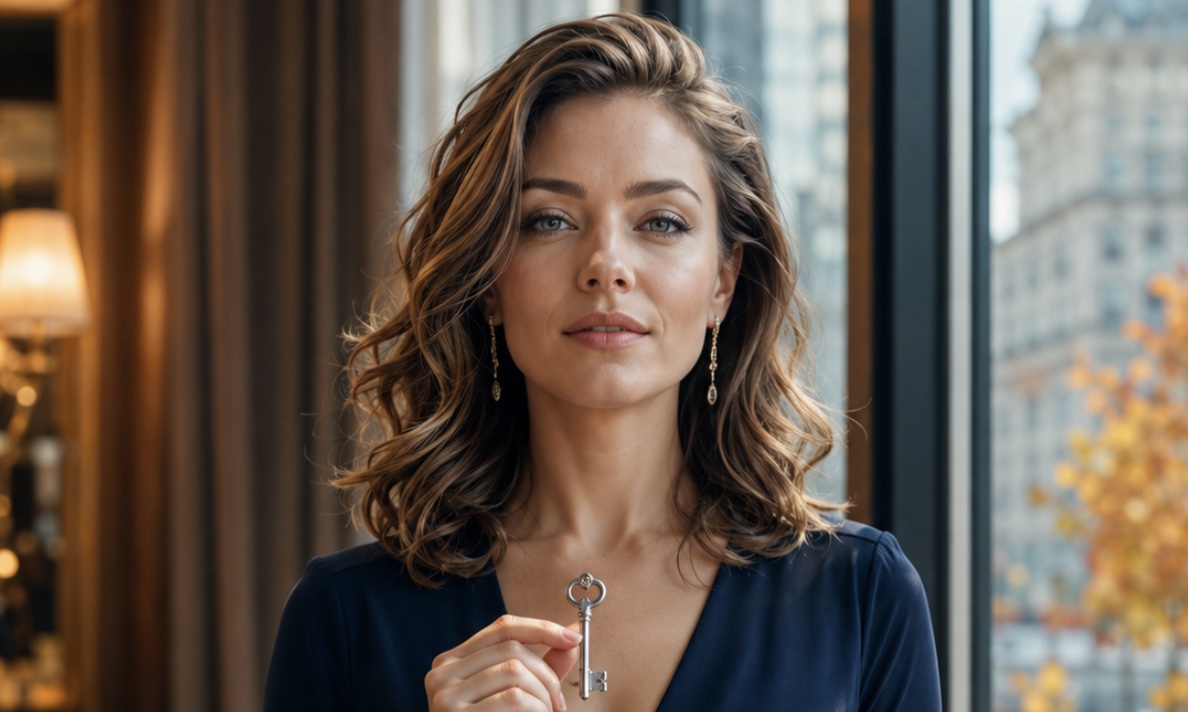
Resting on black velvet was a heavy, perforated high-security key—a duplicate Polina had ordered in advance using the owner’s security card.
“You were never a guest in my life,” Polina said softly. “And in my new home, you shouldn’t need a guest invitation either. You should have your own key. You can come whenever you want. You don’t have to call first. Because this is your home too.”
I lowered my head and stared at the shining piece of metal.
At that moment, every word Inga had tried to plant in my mind, every accusation about me being the “extra woman,” crumbled into nothing.
My place was here.
Not because of blood.
Because of the years we had shared through happiness, pain, fear, and love.
There was a rustle beside me.
Irina stood up.
She wiped her tears with a napkin and looked directly at me.
“Anna,” she began, stumbling over the words as emotion overwhelmed her. She cleared her throat and tried again. “I want to say… thank you. I know I missed the most important years. I missed watching her grow up. I missed seeing her become a woman. I wasn’t there when she cried over her first love. I have no right to demand the place you occupied all those years. I’m not asking Polina to forget you. I only want… if you’ll allow me… to be near her sometimes now. Thank you for taking care of my daughter.”
She lowered her head.
There was so much sincerity and hard-earned dignity in her words that I felt a deep respect for her.
The rivalry Inga had tried so hard to create between us simply never happened.
I stood up.
“You don’t need my permission, Irina,” I replied, meeting her eyes. “I’m not going to stand between the two of you. Polina doesn’t have to choose between being grateful to me and loving you. There is room for both of us.”
“How ridiculous!” a sharp, trembling voice suddenly cried out.
Inga jumped to her feet.
Her face was twisted with anger and disappointment.
The perfect little drama she had planned, in which the unwanted daughter-in-law quietly disappeared from the celebration, had completely fallen apart.
“Have you all lost your minds?” she shouted, looking wildly around the table. “This family is turning into some kind of public waiting room! A gathering of random people! Ira, you’re her mother! How can you humiliate yourself in front of this… freeloader?”
“That is enough!”
Sergei slammed his fist onto the table so hard that the dishes rattled.
He rose to his feet, towering over his sister.
“The random person in my family is not my wife—the woman who spent twenty-three years giving everything she had to my child.”
“Why did you lie to both of them, Aunt Inga?” Polina asked coldly. “Why did you call Anya and tell her I didn’t want her here? Why did you tell my mother that Anya refused to sit at the same table with her?”
An uncomfortable silence filled the room.
Inga looked around desperately for support.
“I… I was trying to do what was best!” she shouted. “I wanted things to be proper! I wanted the real family to reunite! You’re all blind! You don’t understand that blood matters more than anything!”
She turned toward her mother.
“Mom, tell them!”
Nina Grigoryevna, who had seemed almost invisible until that moment, slowly raised her head.
Her aging hands nervously twisted the edge of the tablecloth.
“No, Inga. I won’t,” she said quietly but clearly.
Then she turned toward me, tears filling her eyes.
“Anya… forgive an old fool. I knew Inga was making things up. I knew Polina would never push you away. But I was so afraid of an argument, so desperate to keep everything looking peaceful on the outside, that I agreed to something cruel. Forgive me. You’ve been an extraordinary woman, Anya. And Inga and I… we behaved shamefully.”
 
Her mother’s confession finally destroyed whatever confidence Inga had left.
She realized she was alone in her anger.
Her own daughters had long since moved abroad and called her only once every six months, and this family—our family—had become the last place where she could still exert control.
Now she had lost that too.
“You’re all ungrateful!” Inga snapped.
She grabbed her handbag.
“You’ll regret this! You’ll remember what I said when this ridiculous little paradise falls apart!”
She turned dramatically and marched toward the exit, stamping each step into the floor as if expecting someone to run after her, apologize, and beg her to stay.
No one moved.
No one said a word.
The person who did not belong at that celebration was not me.
It was not Irina.
It was not even my frightened, weak mother-in-law.
The one who did not belong was the woman who had come not to celebrate Polina, but to decide who Polina was allowed to love.
When Inga left the room, it felt as if the entire space became lighter.
Breathing was easier.
The tension disappeared.
Sergei wrapped an arm around my shoulders and pulled me close.
Once everything had settled down, I finally gave Polina my small square gift.
She peeled away the golden paper, saw the ceramic maple leaf, and gently ran a finger over its green glaze.
We did not become a perfect, happy family in a single evening.
There were still years of absence between Polina and Irina.
There would be awkward silences, difficult conversations, and old wounds that would not disappear overnight.
But they looked at each other with hope.
Both were willing to move toward each other.
Before we began getting ready to leave, Polina took out a second duplicate key she had ordered in advance and handed it to Irina.
For now, she asked her to call before coming over, so that they could both adjust to this new closeness gradually, without rushing anything.
At the end of the evening, the photographer asked everyone to gather for a group picture.
Polina stood in the center.
She took my hand and pulled me close on one side.
Then she asked Irina to stand on the other.
Sergei put his arm around my waist, while Nina Grigoryevna cautiously moved closer to her granddaughter with an apologetic little smile.
No one had to give up their place for anyone else.
 
A few days later, on Wednesday evening, I visited Polina’s new apartment for the first time.
I unlocked the door with the high-security duplicate key she had given me.
The entrance hall smelled of fresh paint and new wood.
In the living room, Irina was helping Polina unpack boxes of dishes.
The moment they saw me, both women smiled.
“Anya! Come in! We can’t figure out what to do with this dinner set,” Polina called.
Irina was awkwardly holding a large crystal vase.
“Anya, what do you think?” she asked. “Would it look better by the window or on the shelf?”
There was not a trace of insincerity in her voice.
We did not pretend to be close friends.
We were too different, and our shared history was far too complicated for that.
 
But we both understood one essential truth:
Polina’s love was not a chair that only one person could occupy.
I took off my coat, hung it on a hook, and walked over to the small console table beside the mirror.
There, in the most visible place, sat the green ceramic maple-leaf key dish.
I reached into my pocket, took out my key, and dropped it into the bowl with a soft metallic clink.
It landed right beside Irina’s.