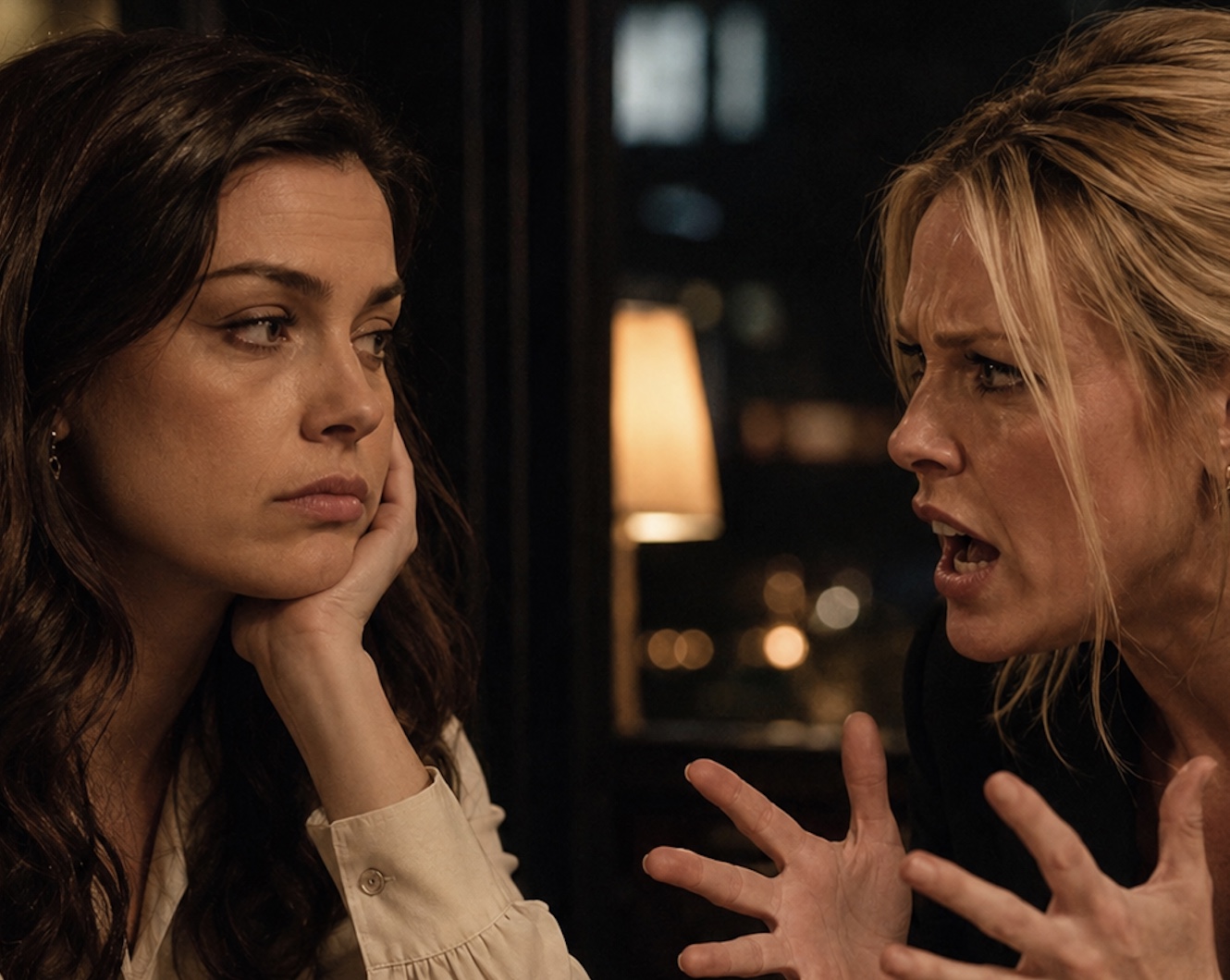
Marina was sitting on the edge of the hospital bed, pressing her palm to her son’s forehead. His skin was hot and dry, like a stone left under the sun. Artyom was breathing heavily, with a faint whistle, and every breath he took struck her like physical pain.
The fourth day. For four days, she had barely slept — only in broken scraps of twenty minutes at a time, whenever the nurse came in to check the IV. She had no appetite, and there was hardly anything to eat anyway: one packet of cookies and a bottle of water were all that remained in her bag.
“Mom,” Artyom whispered without opening his eyes. “I’m hot.”
“I know, sweetheart. It will get better soon. Just hold on a little longer.”
She dipped a towel into a basin of water and carefully placed it against his neck. The boy shivered but didn’t cry. He almost never cried anymore — he only looked at her with those huge brown eyes and kept silent, as if he understood something no five-year-old child should ever have to understand.
The doctor came in that morning, looked over the chart, and listened to his lungs.
“The progress is weak. He needs an additional course of treatment, a different antibiotic. This one isn’t working.”
“How much?” Marina asked quietly.
“The medication isn’t cheap. And he’ll need another X-ray and a full blood panel. I’ll write down the list.”
Marina took the sheet of paper and looked at the numbers. Her hands did not tremble. Her face did not change. She simply nodded and stepped out into the hallway, where she stood against the wall for a long time with her eyes closed.
There were less than seven thousand left on her card. Since the divorce, every ruble had mattered: rent, food, kindergarten fees — the same kindergarten from which Artyom had been taken by ambulance straight from the playground. Her ex-husband, Oleg, had last sent child support two months ago, and after that he had simply stopped answering her calls.
Marina returned to the ward, sat down beside her son, and took out her phone. She scrolled through her contacts. There were no relatives she could turn to — her father had died long ago, and her mother lived in another city on a tiny pension. That left Zhanna.
Zhanna — her friend since their first year at university. Fifteen years together: dorm rooms, exams, first loves, weddings, divorces. It was Zhanna who had sat with her through the nights when Oleg left. It was Zhanna who had stroked her hair and said, “We’ll be together until we’re old, do you hear me? I’ll never abandon you.”
Marina pressed call.
One ring. A second. A third. On the fourth, Zhanna answered.
“Marinka! One second, it’s loud here!”
Music thundered in the background, glasses clinked, someone laughed loudly.
“Zhanna, I’m in the hospital. Artyom… he has severe pneumonia. He can barely breathe.”
“Oh, poor thing. What do the doctors say?”
“They say he needs medicine. Expensive medicine. Zhanna, I don’t have enough. I’ll pay you back as soon as I can. I need at least fifteen thousand.”
There was a pause. In the background someone shouted, “A toast! A toast!”
“Marin, listen, children get sick. That’s normal. Don’t dramatize it. He’s in the hospital, there are doctors there, they know what they’re doing. They’ll treat him.”
“Zhanna, do you hear me? He’s very sick. I have no money for the medicine.”
“Well, I really can’t talk right now. It’s Katya’s anniversary party — you remember Katya, right? Let’s talk later, okay? I’ll call you.”
The call ended.
Marina stared at the dark screen. A minute later, a message arrived. Then another. Then a third. Three photos: Zhanna in an emerald dress with a deep neckline, a table covered with oysters and champagne, and the caption: “You only live once!”
Marina slowly lowered the phone into her lap.
“Mom, are you crying?” Artyom’s voice was hoarse, barely audible.
“No, sweetheart. I’m just a little tired. Sleep.”
She turned away and pressed her hand silently to her mouth. Tears ran down her cheeks, but she did not make a sound.
The next day, two more people were moved into the ward: a woman of about sixty and her four-year-old granddaughter. The girl’s name was Polina — red-haired, snub-nosed, with a bandaged arm and a whiny little voice. The woman introduced herself briefly:
“Valentina Petrovna. Looks like we’ll be neighbors.”
Marina nodded. She didn’t feel like talking. Artyom was burning with fever again, and she changed his compresses every half hour, counting the minutes until the next IV drip.
Valentina Petrovna turned out to be quiet. She didn’t ask questions, didn’t interfere with advice, didn’t sigh dramatically. She simply looked after her granddaughter, read books to her in a low voice, and from time to time cast attentive glances at Marina.
On their third day together in the ward, Marina called Zhanna again. She didn’t answer. Two hours later, Zhanna called back, her voice languid and lazy.
“Marinka, hi. So, how are things?”
“Artyom is still in the hospital. Zhanna, I asked you…”
“Listen, I remember. But I’m going through a difficult period myself. My Viktor said it’s not the right time to throw money around. You have to understand, we have investments, plans…”
“Fifteen thousand, Zhanna. Not a million.”
“And what am I supposed to do? Pull it out of thin air? I have my own expenses. Maybe ask Oleg?”
“Oleg hasn’t answered me in two months.”
“Well, you see? You should have married a decent man. I told you that back then.”
Marina gripped the phone so tightly her fingers began to ache.
“I’ll remember this, Zhanna.”
“Oh, don’t start. Everything will be fine. Kids are strong. Kisses!”
Beeps.
Valentina Petrovna was sitting on her bed, pretending to read. But when Marina put the phone down on the bedside table and stared blankly ahead, the older woman got up, walked to the electric kettle, and silently poured a glass of tea. She placed it in front of Marina.
“Drink. You’ve been living on air for three days.”
“Thank you. I don’t want any.”
“I didn’t ask whether you wanted it. Drink.”
Marina looked at her — and suddenly saw not a strict stranger, but eyes full of calm, adult understanding. No pity. No curiosity. Just understanding.
She drank the tea in one gulp.
“I heard both conversations,” Valentina Petrovna said, sitting down on the edge of the neighboring bed. “I wasn’t eavesdropping. The walls here are made of paper. Tell me honestly: do you need money for the treatment?”
“I’ll manage.”
“I don’t doubt that. But I asked a question.”
Marina raised her eyes to her.
“Yes. I do. I don’t have enough for the antibiotics and the tests. There are free options, but… I’ll work it off, I’ll return it, I swear…”
“Stop,” Valentina Petrovna raised her hand. “No oaths. I’ll help. But not because I feel sorry for you. Pity is useless. I’ve been watching you for four days. You don’t sleep, you don’t eat, you don’t complain, you don’t lash out at the doctors, and you don’t leave your child for a single minute. Do you know how many people like that I’ve met in all my years?”
“How many?”
“Only a few. Take the money. And when you’re discharged, come to me. I need a reliable person. Someone who won’t run at the first difficulty and won’t betray at the second.”
Marina wanted to object, but Valentina Petrovna placed the bills on the bedside table and returned to her granddaughter as if nothing had happened.
Marina counted them.
Thirty thousand.
She covered her face with her hands and sat like that for a long time, until she felt a small, hot palm rest on her knee.
“Mom, is that lady kind?”
“Yes, sweetheart. Very kind.”
Artyom recovered slowly, but steadily. The new course of treatment began to work on the second day — his fever dropped, his cough softened, and the boy started eating again. A week later, they were discharged with a long list of recommendations and prescriptions.
Marina called Valentina Petrovna that same evening.
“We’ve been discharged. I wanted to thank you and discuss… the job you mentioned.”
“Come tomorrow at ten. I’ll send you the address.”
The office was in a business center — small, but well-kept. A sign on the door read: logistics company. Valentina Petrovna met her in the office — collected, businesslike, completely different from the woman in the hospital robe.
“Sit down. It would take me a long time to explain everything we do. In short: transport, routes, warehouses, contracts. I need someone to handle documents, communicate with clients, and make sure things don’t fall apart. I’ll be honest — I’ll pay well, but I’ll also demand a lot.”
“I won’t let you down.”
“I know. That’s why you’re here.”
Marina left the office and stopped on the steps outside. The wind tugged at her hair, the city hummed around her, and suddenly she realized she couldn’t remember the last time she had felt anything close to hope.
Month by month, her life began to change. Not magically, not instantly — but stubbornly, step by step. Marina worked harder than ever before: she arrived before everyone else, left later than everyone else, and learned every detail. Valentina Petrovna never praised her aloud, but one day she silently placed a new contract on her desk and said:
“Handle this one yourself. I trust you.”
Artyom went back to kindergarten, grew stronger, and began drawing dinosaurs on the wallpaper. For the first time in a year and a half, Marina laughed for real when she saw a purple tyrannosaurus above the baseboard.
She repaid Valentina Petrovna in full three months later. The older woman took the envelope, counted the money, and put it into a drawer.
“Well done. But I knew you’d return it. That’s why I gave it to you.”
During all that time, Zhanna did not call once. Not a single message, not a single question about whether Artyom had survived, whether they had been discharged. Silence. Marina deleted their chat but didn’t erase the number. She didn’t know why.
Life settled into place. Marina rented a larger apartment, enrolled Artyom in swimming lessons, and began saving money. In the evenings, after putting her son to bed, she sat in the kitchen, drank tea, and thought about how strangely life worked: the people you expected help from turned away, while strangers reached out their hands.
Six months had passed since that hospital nightmare.
And then, one late October evening, the doorbell rang.
Marina opened the door and froze.
Zhanna was standing on the threshold. But this was a different Zhanna — not the bright, loud, confident woman in the emerald dress. Before Marina stood a gaunt figure in a gray coat, with empty eyes and trembling lips. Her hair was gathered carelessly.
“Marina…” Her voice was hoarse, broken. “Let me in. I have nowhere else to go.”
Marina didn’t move. She stood in the doorway and looked at her.
“What happened?”
“Viktor… he took everything. The apartment was in his name, the accounts were in his name, the car too. He transferred everything to himself while I thought we were building a life together. Yesterday he changed the locks and told me he didn’t need me anymore.”
“And you came to me.”
“I have nowhere to go, Marina. I’ve been on the street for two days. I slept at the train station. I don’t have a kopeck, no things, nothing.”
Zhanna dropped to her knees right there on the concrete floor of the stairwell. Tears ran down her cheeks.
“Forgive me. I know that back then… in the hospital… I acted terribly. But I didn’t think… I thought it wasn’t serious…”
“Not serious,” Marina repeated quietly. “My son was suffocating. His fever was forty degrees. Four days. And you sent me a photo of oysters.”
“I was an idiot, I know!”
“No, Zhanna. You weren’t an idiot. An idiot wouldn’t understand what she had done. You understood perfectly. You simply decided I wasn’t your problem.”
Zhanna lifted her tear-streaked face.
“I’ve changed! Life hit me hard, and I understood…”
“Life hit you,” Marina gave a dry laugh. “Exactly. It wasn’t your conscience waking up. It wasn’t shame. Life hit you. And suddenly you remembered you had a friend who didn’t know how to say no.”
“Marina, one night. Just one. I’ll leave in the morning, I promise.”
Marina looked at her for a long time in silence. Then she stepped aside.
“Come in.”
Zhanna stood, wiping her face with her sleeve, and entered the hallway. Marina closed the door.
“Sit in the kitchen. I’ll make tea.”
They sat across from each other. Zhanna wrapped both hands around the mug like a freezing person. Marina didn’t touch hers.
“Tell me,” Marina said. “Everything.”
“Viktor… we were together almost a year. He was generous, handsome, he said all the right things. I moved in with him after two months. He said, why do you need that rented little hole, come live with me. I gave up my apartment, transferred my savings to his account because he said it would be more convenient. And then…”
“Then he shut the door.”
“Yes.”
“And you’re surprised.”
Zhanna jerked her head up.
“What was I supposed to expect? He was affectionate, caring!”
“My Oleg was affectionate too,” Marina said evenly, without a tremor in her voice. “Remember? You sat with me after the divorce and said men were temporary, but girlfriends were forever. Do you remember those words?”
“I remember…”
“And then my child was close to death, and your ‘forever’ disappeared in one second. Between me and a glass of champagne, you chose champagne.”
“That’s not fair!”
“Not fair?” Marina’s voice hardened. “Not fair is when a five-year-old boy asks his mother why she’s crying, and she can’t answer because the only person she trusted sent her a party photo instead of help.”
Zhanna looked away.
“I’m guilty. I understand everything. But what am I supposed to do now — die on the street?”
“You won’t die. You’re as tough as you are shameless.”
“Why are you saying that?”
Marina stood and walked to the window. She stood there for a moment, then turned around.
“I let you in not because I forgave you. And not because I pity you. I let you in because I don’t want to become like you. There’s a huge difference. Remember it.”
Zhanna said nothing.
“You can spend the night. In the morning, you leave. That is all I can give you.”
“Thank you,” Zhanna whispered.
Marina made up the sofa for her in the living room and went to Artyom. The boy was asleep, arms spread wide, breathing softly. She lay down beside him and remained awake for a long time, eyes open.
Around midnight, she heard a noise. Quiet, careful. The creak of a drawer. A rustle.
Marina got up silently and stepped into the hallway.
Zhanna was standing there beside Marina’s open bag.
In her hands was Marina’s wallet.
Time stopped.
“Put it down,” Marina said.
Zhanna flinched and turned around. Her eyes were like those of a trapped animal.
“I… I just wanted to look…”
“Put the wallet down.”
“Marina, you misunderstood, I…”
Marina stepped forward and slapped her across the face. The sound echoed through the dark hallway. Zhanna staggered back, grabbed her cheek, and stared at Marina with her mouth open.
“You… hit me?”
“Yes. And I’ll hit you again if you don’t put my wallet back.”
The wallet fell to the floor. Zhanna backed toward the wall.
“I just… I don’t have a single kopeck. I wanted to take a little for food…”
“You wanted to steal. From me. From a single mother who six months ago couldn’t buy medicine for her son. From the same friend you refused fifteen thousand to. You came into my home, sat at my table, drank my tea, and then reached into my bag while I was sleeping. Do you know what that is called?”
Zhanna remained silent, pressing her palm to her burning cheek.
“That is called rock bottom, Zhanna. Real rock bottom.”
“I have nowhere else to go…” Her voice trembled.
“That is no longer my concern. Get dressed. Leave.”
“Now? At night?”
“Immediately.”
“Marina, please…”
“Please is the word I said to you in the hospital. Do you remember what you answered? ‘Don’t dramatize it.’ So I’ll say the same to you — don’t dramatize it. Leave.”
Zhanna pulled on her coat, shoved her feet into her shoes, and stopped at the door.
“You’re cruel.”
“No. I simply learned to tell the difference between people and their words. You are not my friend. You never were.”
Zhanna stood on the threshold, and at that moment footsteps sounded from the child’s room. Artyom came out into the hallway, squinting in the light, barefoot and wearing pajamas with little hedgehogs on them. He rubbed his eyes with his fist and looked at Zhanna.
“Mom, is Aunt Zhanna going to Dad again?”
The world froze.
Marina slowly turned to her son.
“What did you say, Artyomka?”
“Aunt Zhanna. She used to come over when Dad was home and you were away. They would close themselves in the room and talk very quietly. Dad told me not to tell you. I promised. But you won’t be angry, right? Dad is far away now, so the promise doesn’t count anymore, does it?”
The silence was so thick that Marina could hear the clock ticking in the kitchen.
She turned to Zhanna. The woman stood as white as the wall, her mouth slightly open, her pupils wide.
“This… it’s not what… don’t think…” Zhanna forced out.
“And what do I think?” Marina’s voice became so even, so calm, that it would have unsettled anyone. “That my ‘best friend’ slept with my husband? That the whole performance after the divorce — the nights, the tears, the ‘we’ll be together until we’re old’ — was a cover? That you comforted me while knowing you were the one who had helped destroy my family?”
“Marina, it was one time! Just once!”
“Artyomka,” Marina knelt in front of her son. “How many times did Aunt Zhanna come to Dad?”
The boy thought for a moment, bending his fingers.
“A lot. I didn’t count. Maybe five. Or seven. She brought me candy and asked me not to tell.”
Marina kissed her son on the forehead.
“Go back to bed, sweetheart. You did the right thing. Promises that make you lie to your mother are not real promises.”
Artyom nodded and left. His bare heels slapped softly down the hallway, and the door to his room creaked.
Marina straightened and looked at Zhanna. She was pressing herself into the wall as if she wanted to disappear into the plaster.
“Marina… I didn’t want…”
“You didn’t want what? Didn’t want me to find out? That, I believe. You didn’t want me to find out. Everything else, you wanted perfectly well.”
“He started it! Oleg wrote to me, invited me…”
“And of course you refused. Because I was your friend. Because I had a child. Because it was betrayal.”
“I… I was weak…”
“You weren’t weak, Zhanna. You were vile. There’s a difference. A weak person lacks the strength to help. A vile person knowingly causes harm and then pretends nothing happened.”
Zhanna began to cry. Tears streamed down the same cheeks that, six months earlier, had been covered with expensive powder at someone’s anniversary party.
“What am I supposed to do? Where am I supposed to go?”
“Call Oleg. Since you know each other so well, maybe he’ll let you in.”
“He hasn’t answered me in six months…”
Marina smiled bitterly.
“A familiar story. He doesn’t answer me either. Apparently, that’s his style — use people and throw them away. But the difference between us, Zhanna, is that I didn’t deserve it. You received exactly what you gave to others.”
She opened the door.
“Leave. And don’t ever come back. Never.”
Zhanna stepped out onto the landing. Then she turned around.
“Will you ever forgive me?”
Marina stood in the doorway — straight, calm, unshakable. The same woman who had cried silently in a hospital ward six months earlier, clenching her teeth. The same woman to whom a stranger had offered a glass of tea and money. The same woman who had not broken.
“Forgiveness has to be earned, Zhanna. And you haven’t even begun.”
The door closed. The lock clicked twice.
Marina returned to the child’s room, lay down beside her son, and wrapped her arms around him.
“Mom,” Artyom whispered sleepily. “Did I say the right thing?”
“You did everything right, my dear. Sleep.”
In the morning, she called Valentina Petrovna.
“Good morning, Valentina Petrovna. Forgive me for calling so early.”
“It’s all right. I’ve been up for ages. What happened?”
“Nothing new. I just wanted to say thank you. Not for the money, not for the job. For showing me what a real person should be. I thought I knew. It turned out I didn’t.”
There was a pause.
“Marina, I’ll tell you this. People are not divided into good and bad. They are divided into those who stay when things are hard, and those who run away. You are among the first. And the ones from the second group always come back. But not because they love you. Because they have nowhere else to go.”
“I know that now.”
“Good. Be here by ten. We have a new client. A serious one.”
Marina hung up and looked at Artyom. The boy was sitting at the table, concentrating on a drawing. A purple dinosaur was appearing on the sheet — only this time it had a kind face and tiny wings.
“Mom, look. It’s a kind dragon. It protects the little ones.”
“It’s beautiful,” Marina said, smiling.
She knew everything would be all right.
Not because life had become easy.
But because she had stopped waiting for help from those who were incapable of giving it.