Marina stood at the ironing board, pressing the seam of a velvet dress. Her slender fingers guided the iron along the stitching with practiced precision, leaving not a single crease behind. The order had to be delivered in the morning, and the clock had already passed midnight.
From the next room came the sound of keyboard tapping — slow, uneven, lazy, broken by long pauses. Andrey was “working.” For two years, that sound had replaced everything else he was supposed to contribute: a salary, help around the house, even the most basic human respect for the woman who had been carrying their entire life on her shoulders.
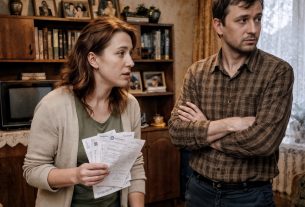
“Andrey, could you at least wash the dishes?” Marina asked quietly, peeking into the room. “I’ll be sewing until three, and I have to be up at seven.”
“Marin, not now,” he said without even turning his head. “I’ve finally got an idea flowing. If I stop now, I’ll lose the whole thread.”
“That idea has been flowing for two years, Andrey. And the dishes have been sitting there since lunch.”
“You don’t understand the creative process. It’s not like cutting fabric. It’s different.”
Marina bit her lip and returned to the ironing board.
Different.
She heard that word every day.
Her work was never “different.” Her work was what bought their food, paid the rent, covered Andrey’s expensive coffee and the endless notebooks he filled with notes that never became a finished manuscript.
She loved him. Once, passionately. Then patiently. Now, mostly out of habit. But she still believed it was temporary. That he would finish his book. That someone would notice him. That everything would finally fall into place.
Hope is a strange thing. It can survive for years on absolutely nothing.
In the morning, before leaving for the factory, Marina placed a plate of breakfast in front of Andrey.
“Thanks,” he muttered, not looking up from his phone.
“I’ll be late today. I have a fitting at seven in the evening. A private order. A wedding dress.”
“Mm-hm. Listen, I need three thousand.”
Marina paused.
“For what?”
“My subscription to that literary platform is ending.”
“Three thousand? Andrey, the rent is due next week.”
“It’s an investment in the future. Editors read your texts there and give feedback. It matters.”
Marina placed the money on the table and left without another word.
On the stairwell landing, she stopped, leaned against the railing, and simply breathed for a few seconds. Then she straightened her back and went downstairs.
Hope was a heavy burden, but she was still carrying it.
At the factory, the day passed as usual: rolls of fabric, the hum of machines, endless rows of stitching. During lunch break, Svetlana called.
“Marinka, how are you? Still alive?”
“Alive. Just tired.”
“Were you sewing until night again?”
“Until three. A wedding dress. Serious order. The bride is picky, but she pays well.”
“And your genius? Does he help with anything at all?”
“Svet, don’t start.”
“I’m not starting. I’m continuing. I’ve been continuing for two years. You’re working for two people while he sits at home pretending to be Dostoevsky. And Dostoevsky, by the way, actually wrote something.”
“He writes,” Marina said, lowering her voice and moving closer to the window. “It’s just a long process.”
“Cooking borscht is a long process, Marina. What Andrey is doing is professional laziness at someone else’s expense. Your expense.”
“He’ll find himself. I believe in him.”
“You believe in him more than he believes in himself. And that is not a compliment, my friend. That is a diagnosis.”
Marina ended the call and returned to her machine.
Svetlana was harsh, but somewhere deep inside, Marina knew she was honest. Admitting it, however, would mean admitting that two years of her life had been wasted. And she did not yet have the strength for that.
That evening, Marina returned home at half past eight. The fitting had dragged on — the bride had changed her mind about the sleeve length three times. Marina stepped into the apartment, placed her bag in the hallway, and froze.
There was a bouquet on the kitchen table.
Cheap chrysanthemums from the kiosk near the metro, but flowers nonetheless. Beside them lay a note:
“Sorry about this morning. You’re the best. A.”
Marina picked up the note and read it twice.
Then she smiled.
It was for moments like this that she endured everything — for small glimpses of the Andrey she had once fallen in love with. The one who could be warm and attentive. They came less and less often now, in tiny crumbs, but somewhere behind that wall of indifference, he still seemed to exist.
She put the flowers in a jar — they didn’t own a vase — and went to make dinner. Andrey was in the room.
“Thank you for the flowers,” she said, looking in.
“No problem. You know, someone from a publishing house wrote to me today. They asked me to send the first three chapters.”
“Really?” Marina’s face lit up. “That’s wonderful! What publishing house?”
“Small, but promising. There’s an editor there… Victoria, I think. She said my style was interesting.”
“See? I told you everything would work out.”
Andrey nodded and turned back to the screen.
Marina went to the kitchen with a light heart.
At that moment, she still had no idea that the name Victoria would soon become a sound that made her jaw tighten.
Three weeks passed.
Andrey changed. He began leaving the house more often. He bought new shirts — with Marina’s money, of course. He started shaving every day. Marina noticed all of it and felt happy.
At last, he had come alive.
At last, some energy had returned to him.
The only thing she failed to notice was that he had stopped showing her his writing. Before, even if rarely, he would read her passages and ask for her opinion. Now, the moment she entered the room, the laptop closed.
On Saturday morning, Andrey sat down across from her at the kitchen table. His face was serious, his gaze fixed somewhere past her.
“Marina, we need to talk.”
“What happened?”
“I’m leaving. Leaving you.”
She placed her cup on the table slowly and carefully, as if afraid not to spill tea, but herself.
“Leaving where?”
“To Victoria. We… we’ve been together for a month. She understands me. She sees something in me that you never saw.”
“What didn’t I see in you, Andrey? For two years, all I did was see a future in you that didn’t exist.”
“Exactly. You saw a future. She sees the present. My talent. My potential. She understands how the literary world works.”
“And I understand how the washing machine works, right? And the stove? And the sewing machine that fed you for two years?”
“Don’t reduce everything to money.”
“To money?” Marina slowly rose to her feet. “I’m the one reducing everything to money? You spent two years without earning a single kopeck. You asked me for subscriptions, notebooks, coffee, your ‘creative meetings.’ You never paid the rent. Not once, Andrey. Not one single time.”
“You knew what you were getting into. I told you from the beginning that I needed time.”
“Time? Two years is not time. It’s a sentence. For me, not for you.”
Andrey stood up and shoved his hands into his pockets. Marina knew that gesture by heart — hands in pockets, chin slightly raised. That was how he always looked when he was about to say something cruel.
“You need to move out.”
“Me? Move out?” Marina repeated, unable to believe what she had heard. “From the apartment I pay for?”
“The apartment is in my name. I signed the rental agreement.”
“With my money! Every month — my money!”
“That’s a detail. Legally, my name is on the contract. Victoria is moving in next week. You’d better pack your things.”
And that was when Marina understood.
The hope she had carried for two years had not simply fallen. It had crumbled into dust.
The man in front of her was not a lost artist. Not a boy trying to find himself. He was a cold, calculating person who had used her as a servant and was now throwing her away because he had found a more convenient option.
“You’re filth, Andrey,” she said evenly. “Do you know that?”
“Call me whatever you want. You have a week.”
“I don’t need a week. I’ll pack today.”
She turned and went into the room.
She packed quickly, efficiently, without tears. The sewing machine went into its case. Fabrics into large bags. Clothes into the suitcase. Andrey watched from the kitchen, leaning against the doorframe.
“You can leave the machine here for now,” he said. “It’s heavy.”
“The machine is my life. Unlike you, it feeds me.”
Marina pulled the suitcase into the hallway. She opened the front door — and found herself face to face with Galina Sergeyevna, who stood on the threshold holding a plastic container.
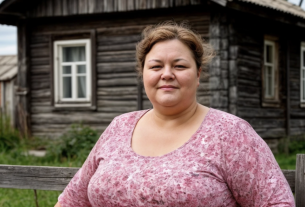
“Oh, daughter-in-law, going somewhere?” her mother-in-law sang, glancing at the suitcase and bags. “Finally. I brought Andryusha some cutlets. Homemade.”
“Galina Sergeyevna,” Marina stopped, “did you know?”
“That you were leaving? Of course I knew. Andryusha told me about Victoria two weeks ago. Such a wonderful girl. Educated. From a good family. Not like…”
“Not like what? Finish the sentence.”
“Well, dear,” Galina Sergeyevna pursed her lips, “you are a good girl, but everything has its place. Andryusha is a creative person. He needs a muse, not… domestic help.”
Marina put the suitcase down.
Slowly, she straightened and looked the woman directly in the eyes.
“Two years, Galina Sergeyevna. For two years, your ‘creative person’ did not earn a single coin. Not one. He was fed, clothed, washed after — by the domestic help. By me. And do you know what else? In those two years, your Andryusha did not write anything. Not one finished novella. Not one story accepted for publication. Not one line anyone would pay even a ruble for.”
“How dare you…”
“I dare because I earned the right to dare. With every ruble I invested in your son. And now step aside. My suitcase is heavy.”
Galina Sergeyevna recoiled, clutching the container of cutlets as if Marina might take those too.
Marina dragged the suitcase past her, went down one flight of stairs, then turned back.
“And the cutlets, Galina Sergeyevna — you’ll have to bring them to him until he grows old. Because Victoria will eventually understand too that your son is just a freeloader with pretty words.”
Svetlana opened the door, saw Marina with her suitcase, bags, and sewing machine case — and silently stepped aside.
No “I told you so.”
No pitying sighs.
She simply helped carry the things inside and put the kettle on.
“Tell me,” Svetlana said, sitting across from her.
“He left. For that editor from the publishing house. Her name is Victoria. He demanded that I move out.”
“From the apartment you paid for?”
“The agreement was in his name. He used that.”
“What a rotten piece of work.”
“Svet, don’t. That’s not what I need right now. I need to think about what comes next.”
“What comes next is you live here as long as you need to. The spare room is free. End of discussion.”
“Thank you.”
For three days, Marina came back to herself. She did not cry — she could not. Anger sat in her throat like a tight knot, not allowing tears or weakness to break through.
On the fourth day, she returned to work — and received a second blow.
“Marina Vadimovna,” the shift supervisor called her into the office, “I don’t know how to say this gently. The workshop is closing. Layoffs. Your whole department has to sign the papers.”
“When?”
“In two weeks. There will be compensation, but not much.”
She left the office and called Svetlana.
“I’ve been laid off.”
“You’re joking.”
“I’m not. The workshop is closing.”
“Come home. We’ll think.”
That evening, they sat in Svetlana’s kitchen. On the table was a laptop with open tabs: job listings, rental spaces, tax calculators.
“Marinka, listen to me carefully,” Svetlana said, closing every tab at once. “You don’t need another factory. You need your own studio.”
“Svet, with what money?”
“With your hands. You sew so well that people are already lining up for your private orders. Remember that wedding dress? The bride told all her friends. Three people called you afterward.”
“Private evening orders are one thing. A business is another.”
“What’s the difference? You have a machine. You have golden hands. All you need is a space.”
“A space costs money, Svet. Money I don’t have.”
“What if you combine things? Find a place where you can live and work? Two rooms — one for you, one for the studio.”
Marina was silent. Then she slowly nodded.
“Maybe you’re right. Maybe it’s time I stopped sewing by other people’s patterns.”
“That! That is exactly what I wanted to hear.”
For the next three days, Marina combed through listings. One-room apartments, rooms in shared flats, corners with “quiet neighbors” — nothing worked.
On the fourth day, she found a strange offer: two rooms in a three-room apartment, inexpensive, owner not living there.
Marina called.
“Hello. I’m calling about the listing — the two rooms.”
“Yes, hello. Dmitry speaking. The apartment is free. You can see it today.”
“Why is it so cheap?”
“Because I need a normal, quiet person more than I need the highest price. I’m in a… difficult situation right now. The apartment is mine, but I’m temporarily living elsewhere. I just don’t want it standing empty.”
His voice was calm. No trickery. No rush.
Marina agreed to meet.
The apartment turned out to be bright, with high ceilings and large windows. Dmitry — thin, slightly stooped, with attentive eyes — showed her the rooms, kitchen, and bathroom.
“Would the larger room work for you?” he asked. “There’s a lot of light. Good for any kind of work.”
“You’re not going to ask what I do?”
“It doesn’t matter what you do. What matters is that the walls remain standing and the neighbors don’t complain.”
Marina smiled.
“I sew. Sewing machine, fabrics, fittings. It may be noisy sometimes.”
“Noisy is when my former common-law wife recorded videos for her blog at three in the morning with a karaoke microphone. A sewing machine is silence compared to that.”
“Former?”
“Long story. In short: we lived together for four years. The apartment is mine, bought with my money, and now she’s trying to prove she has rights to it. So for now, I’m staying with my mother and renting this place out so it doesn’t sit empty.”
“That situation sounds familiar. In a way.”
“Then shall we make an agreement?”
“We shall.”
Marina moved in three days later.
She turned the larger room into a studio: the sewing machine by the window, the worktable along the wall, the mannequin in the corner. The second room became her bedroom. Svetlana helped move her things.
“Good place,” she said, looking around. “And the owner seems normal. Kind eyes.”
“Svet, don’t start.”
“I’m not starting anything. I’m stating a fact. Kind eyes. That’s all.”
The first month, Marina worked from morning until night. Orders began coming in — first as a thin stream, then more confidently. A wedding dress for the friend of that first bride. A set of curtains for a restaurant. Three evening gowns for a corporate event.
She completed every order as if her entire life depended on it.
And in a way, it did.
Dmitry appeared once a week — to pick up mail, check the pipes, leave money for utilities. They exchanged a few words and went their separate ways.
But one evening he came in while Marina was in the kitchen, warming soup after a twelve-hour workday.
“May I?” he asked from the doorway.
“Of course. It’s your kitchen.”
“Ours,” he corrected. “While you live here, it’s ours.”
“Would you like some soup?”
“I wouldn’t refuse.”
They sat at the table.
The soup was simple — potato, with dill. But after a long day, it was exactly what was needed.
“How is your situation?” Marina asked carefully. “With the apartment?”
“Almost over. Polina — my ex — hired a lawyer, but she has no documents proving any investment. Because there was none. I bought the apartment, I paid for the repairs, all the payments were mine.”
“And what does she say?”
“That she invested emotionally for four years. That she kept the household. That thanks to her, I could work in peace.”
“Familiar words. Only reversed.”
“What do you mean?”
“In my case, I invested financially and domestically. My husband ‘invested emotionally.’ Or rather, he didn’t invest at all.”
Dmitry looked at her for a long moment.
“You and I are on opposite sides of the same coin.”
“Looks like it.”
After that evening, they spoke more often. Dmitry stopped by two or three times a week, sometimes staying for dinner. They talked about strange things — about how the world works for people who honestly work hard, and how easily others take advantage of that labor.
Marina told him about her two years with Andrey. Dmitry told her about his four years with Polina.
“Once she spent forty thousand of my money on a ‘spontaneous’ flight to Sochi,” he said. “Because she ‘needed content.’ Content, can you imagine? Forty thousand was my budget for the month.”
“And what did you do?”
“I said nothing. As usual. I was afraid of conflict. Afraid she would leave.”
“And then she left anyway.”
“She didn’t just leave. She left for some guy with a travel channel, and then declared the apartment was shared property.”
Marina gave a dry laugh.
“You and I were two fools who fed other people’s arrogance with our patience.”
“Were fools,” Dmitry corrected. “Were.”
There was no lightning between them. No sudden spark, no thunder.
There was something else — slow, warm recognition. Two people burned by the same fire had found each other, not out of weakness, but out of honesty.
Two months later, Dmitry won the apartment dispute. Polina lost all claims and had to admit she had no rights to the property. Dmitry returned — this time for good.
They became neighbors not by contract, but by life.
“You can stay,” he said one day. “Not as a tenant. Just… stay.”
“And if I want to pay?”
“Pay me with dinners. Your potato soup is worth more than any rent.”
Around that time, Marina received a major order: corporate uniforms for a chain of restaurants. Twenty sets, each with individual fitting. She worked fourteen hours a day and hired an assistant — Svetlana brought over an acquaintance who also knew how to sew.
The apartment was slowly becoming a real atelier.
And then Andrey appeared.
He called one evening just as Marina finished cutting the final set. It was an unfamiliar number — he had changed his old one.
“Marina, hi. It’s Andrey.”
She froze. Then sat down, exhaled.
“What do you want?”
“Listen… Things didn’t work out with Victoria. She… turned out not to be the person I thought. She didn’t believe in my talent. She wanted to rewrite everything her own way, turn me into a commercial author. And that’s not who I am.”
“Andrey, why are you calling me?”
“I thought maybe we could meet. Talk. I’ve understood a lot.”
“What have you understood?”
“That you were the best thing that ever happened to me. That I didn’t appreciate you.”
Marina closed her eyes.
Six months earlier, those words would have broken her. Six months earlier, perhaps she would have cried and said, “Come over.”
But now she felt only one thing — a dull, heavy anger. Anger that even his apology sounded as if he were doing her a favor.
“No,” she said.
“What do you mean, no?”
“No, we will not meet. No, we will not talk. No, Andrey. Just no.”
“Marina, wait…”
She hung up and deleted the number.
Then she opened the messenger — there was a message from Andrey, long, two screens of self-pity and elegant words. She read the first line — “Marina, I know I hurt you…” — and deleted it without finishing.
“Who called?” Dmitry came out of his room with a cup of tea.
“My ex-husband. He wanted to come back.”
“And?”
“What do you think? I deleted him. He doesn’t need me. He needs someone who will cook, wash, and believe in his ‘talent.’ I’m not doing charity anymore.”
Dmitry smiled and placed a second cup in front of her.
“Good. You sew by your own patterns now. Other people’s don’t fit.”
A year passed.
Marina’s workshop became an atelier with two assistants and a steady flow of orders. She rented an additional space nearby for cutting and storing fabrics. Her social media page gained followers, and orders began arriving from other cities. Dmitry helped with organization — he created a website and set up online booking.
They were together — calmly, steadily, without drama. Two people who knew the price of pain and therefore protected each other.
One evening, Marina was returning from the atelier. It was late — she had been finishing an urgent order. She climbed to her floor, took out her keys, and saw him.
Andrey stood by the door.
In his hands was a crumpled folder.
“Marina,” he began, “I know you don’t want to see me. But hear me out. Five minutes.”
“Andrey, I told you everything on the phone. Six months ago.”
“Listen, I have nothing. Victoria kicked me out. I lost the apartment. My mother is renting out a room and won’t let me in. Marina, I have nowhere to go.”
“And how is that my problem?”
“You’re the only person who…”
“Who what? Who fed you for two years? The only person you threw out like an old rag? The person you ordered to leave an apartment paid for by her own hands?”
“I was a fool.”
“No, Andrey. You were not a fool. You were calculating. You planned everything — leaving for Victoria, pushing me out. You did not make a mistake. You made a choice. Now live with it.”
“Marina, I’ll be sleeping on the street. Let me stay for a week. I’ll sleep in the kitchen.”
“No.”
“Please!”
He stepped toward her and grabbed her sleeve. Marina yanked her arm away.
“Let go.”
“Just listen to me!” he raised his voice. “You owe me! I put up with your whining for two years, your factory, your threads all over the apartment! You are obligated to me!”
“I’m obligated to you?”
Marina turned and slapped him across the face.
The sound was dry and sharp, like the snap of scissors.
Andrey recoiled, clutching his cheek, his eyes wide.
“You… you hit me?”
“Yes. And if you say one more time that I owe you anything, you’ll get another one.”
Andrey stood there with his palm pressed to his cheek, and in his eyes Marina saw something she had never seen before: real fear.
Not surprise.
Fear.
The fear of realizing that the woman standing before him was not the same quiet, patient Marina who ironed his shirts and silently listened while he spoke of his greatness.
This was someone else entirely.
“Leave, Andrey. And never come here again.”
“You’ve changed,” he muttered.
“No. I simply stopped tolerating things. Now get out of here before I call security.”
He backed toward the stairs, stumbled on a step, caught the railing. He looked up at her from below — stunned, pathetic, empty. Then he turned and went down.
Marina entered the apartment and locked the door twice.
Dmitry was standing in the hallway. He had heard everything.
“Are you all right?”
“I’m perfectly fine. My hand hurts a little.”
“You should have used both hands.”
“One was enough. He’s a coward. He always was.”
They went to the kitchen. Dmitry poured her tea — hot, sweet, with lemon. Marina warmed her hands around the mug and said nothing for a while.
“You know what’s scariest?” she finally said. “I don’t feel sorry for him. Not at all. Not even a little. And I don’t feel guilty about it. Before, I would have. Before, I would have sat here thinking, maybe I’m cruel, maybe I should have helped. But now — no. Nothing. Empty. And it’s the right kind of empty.”
“That isn’t emptiness,” Dmitry said. “That’s freedom.”
A week later, Marina learned from Svetlana the story that put the final full stop on everything.
It turned out Victoria had not thrown Andrey out for no reason. She had thrown him out after discovering that all the “manuscripts” he had shown her — all his “chapters” and “drafts” — had been copied. Whole sections from little-known foreign authors, hastily reworded.
There had been no talent.
No potential.
Only arrogance and the ability to convince people.
“Are you serious?” Marina sat at Svetlana’s table, unable to believe it.
“Absolutely. Victoria told a mutual acquaintance, who told me. When she ran the texts through a plagiarism check, the match was nearly eighty percent. He hadn’t even bothered to rewrite them properly.”
“So for two years… he wasn’t even really trying to write?”
“He was trying to look like someone he wasn’t. To everyone. To you, to Victoria, to his mother. To the whole world.”
“And Galina Sergeyevna? Does she know?”
“She knows. They say she stopped calling him. No more cutlets.”
Marina leaned back in her chair and suddenly laughed.
Not bitterly.
Not cruelly.
With relief.
For two years, she had fed a man who had not only failed to value her, but had been a fiction from beginning to end. A cardboard character from his own invention — the only work he had ever managed to create.
“You know, Svet,” she said after laughing, “I’m thirty-one years old. I have my own atelier, two assistants, orders booked three months ahead, and a man who doesn’t see me as his servant. That is the best possible result that could have grown out of the worst beginning.”
“Then keep living that way, Marinka. By your own patterns.”
That evening, Marina returned home, entered the studio, and stood for a long time looking at the mannequin with a half-finished dress on it. Burgundy velvet, hand embroidery — an order for an anniversary celebration.
A beautiful thing.
A real thing.
Dmitry looked into the room.
“Are you going to eat?”
“I am. I’m cooking tonight.”
“Really? What are you making?”
“Soup. Our potato soup with dill. The one that’s worth more than any rent.”
He smiled and held out his hand.
She took it — firmly, confidently, without fear.
The way one takes scissors before making the first cut in fabric, knowing the line will be even because the pattern is her own.
And Andrey…
Andrey disappeared.
He dissolved like an unfinished manuscript tossed into the trash.
Unpublished.
Unfinished.
Without a single reader who would mourn the lost text.