“Leave the keys on the dresser, Ira. And write down the password to the business page on a piece of paper. Kristina will handle everything from now on. She has more followers anyway.”
I lowered the damp cloth onto the smooth larch boards of the terrace. The air smelled of fresh cedarwood and river moisture. Our glamping site stood right on the bank of the Upa River, half an hour from Tula. Two stylish dome houses with panoramic windows, wooden decking, Siberian wood-fired hot tubs that we had ordered directly from Altai for an outrageous amount of money. Every last ruble from the small apartment I had sold on the outskirts of the city had gone into this place.
“What Kristina, Antonina Semyonovna? Our part-time administrator?”
“Well, why call her just an administrator?” Dima finally spoke up. He was sitting in a woven rattan hanging chair. “Kristina is going to be with me now. We’re filing an application at the registry office. Ira, you’re used to the city anyway. You’re a landscape designer, you’ll find new clients. But we need to expand here. Kristina is pregnant. She needs fresh air.”
Dima adjusted the hood of his brand-new neon hoodie, bought with the money from our May bookings.
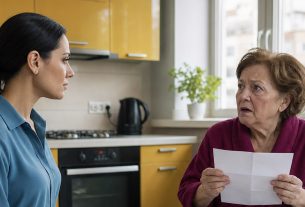
“A baby, yes,” my mother-in-law nodded sweetly, pulling her cup of tea closer. “A business needs a young, energetic woman running it. Don’t be upset, Irochka. The land under the site is mine. It’s an old collective-farm share, registered in my name. So legally, everything here belongs to us. Pack up your girlish little things by this evening. Dimka will drive you to the highway in our Niva, and from there you can take a minibus.”
I looked at the piece of dried bread in my mother-in-law’s plump fingers. A gold bracelet glittered on her wrist, a birthday gift from her son, bought from the glamping cash register. For one second, rage flared in my chest, but I forced myself to breathe out. I lowered my eyes to my jeans, stained with black Tula soil. That very morning, I had finished planting premium hydrangeas along the path.
“So the land is yours, but the business is ours?”
“Whose else would it be?” Dima finally looked up. “The land is Mom’s. I’m the face of the glamping site. You just arranged the décor and laid down some grass. Thanks for that.”
“Let’s not make a scene, all right?” Dima muttered, following me into the dome house. “Pack your things carefully. Don’t take the dishes. They were bought to match the dome interior.”
He reached toward the bedside table to grab the work tablet, but I was faster. My husband had forgotten to close the messenger tab, and right in front of my eyes was his conversation with Kristina from the day before.
“Dimchik, the main thing is to get her out before the weekend,” the future “young hostess” had written. “Otherwise she’ll see the June bookings and cancel all the prepayments. There’s almost six hundred thousand sitting on the cards. That will be just enough for the Stokke stroller and a private maternity clinic.”
Dima jerked forward, trying to snatch the tablet from me, but I calmly locked the screen and dropped the device into my work bag.
“That’s my equipment,” I said coldly. “And you should probably look for a simpler stroller. A used one on Avito, maybe.”
“What, now you’re stealing from us? We offered to handle this decently!”
I did not answer.
Instead, I pulled a thick plastic folder from my backpack. On the cover, in bold marker, it said: “Base 2022–2025.” Three years earlier, my mother, a school head teacher with thirty years of experience, had practically gone to battle at the notary’s office in Tula.
“No verbal agreements on someone else’s land, Ira,” she had repeated again and again. “If you’re selling your studio apartment, make your mother-in-law sign a loan agreement secured against that very land share. Or make her give you an official stake.”
Back then, Antonina Semyonovna had clenched her teeth, but she had signed the loan agreement for three and a half million rubles. She had desperately wanted to receive an agricultural grant for rural tourism development, and for that she needed ready-made infrastructure.
In addition to that agreement, the folder contained receipts, contractor agreements, invoices for the domes, stoves, Siberian hot tubs, and even every single Brabant thuja bought from the nursery. Nearly four million rubles in total — and everything was registered in my name.
“Decently, you say?” I zipped up my backpack. “Fine. Then we’ll do this decently.”
“What loan agreement? Stop trying to confuse me, Irka!” my mother-in-law shrieked when we stepped out onto the veranda of the main dome.
Without a word, I placed a copy of the loan agreement on the wooden table, complete with the blue stamp of notary Gololobova.
“This one, Antonina Semyonovna. Three and a half million rubles. Plus overdue interest at the Central Bank’s key rate. As of today, that adds another four hundred thousand. Tomorrow, a copy of the claim for debt recovery and seizure of your land share will be filed with the court.”
My mother-in-law’s eyes bulged. She looked at Dima, but he just stood there helplessly, shifting his gaze from the agreement to me.
“Oh…” Antonina Semyonovna suddenly gasped and swayed. “Oh, my heart… Dimka, help…”
She collapsed backward straight into the gray designer chaise lounge I had ordered last month for the fire-pit area. She rolled her eyes, clutched the left side of her chest with her free hand, and began breathing quickly and dramatically.
“Mom!” Dima rushed to her, slapping her cheeks in panic. “Mom, are you all right? Ira, bring Corvalol from the first dome! Quickly! You’re going to give her a heart attack!”
I did not move. I simply stepped closer to the chaise lounge and looked at my mother-in-law.
Antonina Semyonovna’s right hand was gripping a tall glass of freshly squeezed orange juice with impressive strength. The juice was cold, condensation forming on the glass, but her hand was perfectly steady. Not a single orange drop fell onto the expensive deck board.
“The first-aid kit in the first dome is empty, Dima,” I said calmly. “And there’s no Corvalol there. Antonina Semyonovna doesn’t need it anyway. Look at how she’s holding that glass. With muscle tone like that, people run sprints.”
My mother-in-law opened one eye, shot me a vicious glare, and started moaning again. But she still did not let go of the glass.
The next day.
“What are you doing?! Stop right there!” Kristina’s shriek rose above the heavy diesel roar of the KamAZ truck driving onto the property, straight over the decorative border.
It was exactly eight in the morning. Three orange crane trucks rolled onto the site. Behind them came a Gazelle van with a crew of ten men in work uniforms. My lawyer Sergey was with them, a thick folder of documents tucked under his arm.
“Ira, have you lost your mind? Call the police, Dimka!” Antonina Semyonovna ran out onto the porch in nothing but her robe, breathless with fury. “They’re robbing us in broad daylight!”
“The police have already been informed,” Sergey replied calmly, showing her the official notice. “We are dismantling property belonging to sole proprietor Irina Yuryevna Smirnova. Here are the receipts and purchase agreements for the structures. The land is yours. We are not claiming it. Everything standing on top of it is leaving with its rightful owner.”
Then the total dismantling of the site began.
Two workers opened the drain valves on the Siberian hot tubs. Murky warm water rushed noisily onto the gravel path, washing away the carefully laid surface. Each of those Altai cedar tubs had cost two hundred and fifty thousand rubles. Ten minutes later, straps tightened around the massive wooden sides, and the first tub rose into the air, slowly swaying from the crane arm.
Inside the dome houses, hammers were pounding. Workers carried out leather armchairs and projectors, unscrewed the designer Vesuvius fireplace stoves.
Meanwhile, the landscaping crew carefully cut and rolled up the emerald-green lawn that I had personally paid for at the nursery last autumn. Two men dug up the Smaragd thujas and Japanese willows by the roots.
Dima ran around the vehicles in house slippers on bare feet, trying to grab the workers by their jackets, but they simply moved him aside with firm shoulders. Kristina stood by the fence, smearing expensive mascara across her face, sobbing loudly enough for the whole village to hear while typing furiously into her phone.
“This is robbery! We’ll sue you!” Dima shouted.
“Go ahead,” I said with a smile, watching as the dismantled wooden terrace was loaded onto a flatbed.
Seven hours later.
“Enjoy your property, Antonina Semyonovna. The land is yours, just like you said,” I said, lowering the car window.
It was four in the afternoon. The last KamAZ drove away, covering the fence in a cloud of gray diesel smoke. In place of our “little paradise” there was now a clay field churned up by heavy tires. Reddish mud slowly filled the deep tracks. In the middle of that gray-brown wasteland, only gray plastic sewer pipe openings stuck out pitifully, along with torn cable ends.
I handed Dmitry a thick white envelope through the window.
“Inside is the demolition completion report and a copy of the lawsuit. Seven million two hundred thousand rubles. That includes the loan amount with interest and damages for the premium plants you tried to block from leaving the site. If the money is not in my account within one month, my lawyer will file for seizure of the land. Your share will be auctioned off against the debt.”
Kristina sat on her suitcase by the roadside, staring at her white sneakers covered in mud.
“Dima, you told me the base was yours,” she said quietly, with an angry tear in her voice. “So where am I supposed to go now?”
Dima said nothing.
His neon hoodie was splattered with mud, and his face held the completely lost expression of a child whose stolen toy had just been taken away.
Kristina left that very evening, catching a passing truck to Aleksin. As far as I know, she was never seen in our area again. The Instagram blogger quickly found herself a new “face of the brand” somewhere near Podolsk.
Dima stayed with his mother in her old one-room apartment, trying to sell his grandfather’s Niva and find any kind of job so he could start paying off the million-ruble debt. Their land is now under seizure: they cannot sell it, and they cannot rent it out.