Inga Petrovna stirred the borscht with the solemn concentration of someone not making an ordinary vegetable soup with chicken broth, but brewing a charm to lure good fortune into her life. The kitchen was filled with that dense, sleepy heat found only in Soviet-style apartment blocks in winter—radiators blazing as if they were personally fighting off another ice age, while opening the window was out of the question unless you wanted a draft shooting straight into your lower back.
The clock read 6:45 p.m.
The hour of tactical waiting.
Inga set the ladle aside and inspected the table with a critical eye. Thin slices of lard streaked with pink, almost translucent. A loaf of black Borodinsky bread, dark, heavy, and moist. Sour cream in a small bowl. A bunch of fresh herbs that had become so expensive lately she was beginning to think dill belonged on the windowsill more than geraniums. Everything was ready for the arrival of a very dear guest.
Dear in every possible sense.
Valery Sergeyevich—a striking man with noble gray at his temples and a way of wearing a scarf that made him look less like a dispatcher at a taxi depot and more like an undiscovered painter—had come into Inga’s life three months earlier. They had met the old-fashioned way: in line at the clinic, outside the physiotherapy room. Inga was treating her knee. Valery was treating his shoulder. Shared aches, as it turns out, bring people together better than shared laughter.
At first, they only took walks. Valery spoke beautifully about politics, scolded young people for “living in their phones,” and admired the way Inga held herself. Then the walks became tea visits. And over the last month, Valery had moved fully into an all-inclusive arrangement, showing up for dinner with the punctuality of a German train.
The doorbell broke into a demanding trill.
Inga sighed, straightened her house dress, and went to open it. Her heart no longer gave that traitorous little leap. It used to. Now, somewhere in her chest, some invisible calculator had switched on and was quietly tallying losses.
“Bonsoir, my queen!” Valery stood in the doorway, rosy from the cold, smelling of street air and cheap tobacco. His hands were conspicuously empty. No flowers. No chocolate. Not even a miserable loaf of bread.
“Hi, Valera. Come in,” Inga said, stepping aside.
He kicked off his shoes as if he lived there—she really needed to wash that rug, he had tracked dirt on it again—hung up his coat, and headed straight for the bathroom. Water ran. Cheerful snorting followed.
“Ingusya!” he called from inside. “Could I get a fresh towel? This one feels damp.”
Inga took a clean terry towel from the cupboard.
“Of course it’s damp,” she thought, tossing it onto the washing machine. “You used it yesterday too. But hanging it up to dry? Apparently that takes advanced mathematics and at least two university degrees.”
At the table, Valery transformed. His eyes lit up with a hungry gleam the moment he saw the borscht.
“Oh, Inga Petrovna,” he purred, tucking a napkin into his collar. “You’re a miracle. These days, when everything is chemicals and GMOs, finding a woman who keeps house like this is like striking buried treasure.”
He ate greedily, quickly, smacking his lips with obvious pleasure. Inga watched the lard disappear into his mouth, watched the bread steadily vanish, while numbers circled in her mind. Pork had gone up fifteen percent. Chicken, ten. And Valery ate as if a small but extraordinarily determined parasite lived inside him.
“Good?” Inga asked, propping her cheek on her hand. She herself had not touched a bite.
“Unbelievable,” Valery exhaled, wiping his lips with a crust of bread. “My mother cooks too, of course, but everything at her place is diet food, steamed and bland. A man needs strength, you know. A man needs meat.”
His mother. Zinaida Markovna. The unseen third presence at all their dinners. According to Valery, she was a saintly woman in fragile health who constantly required financial support.
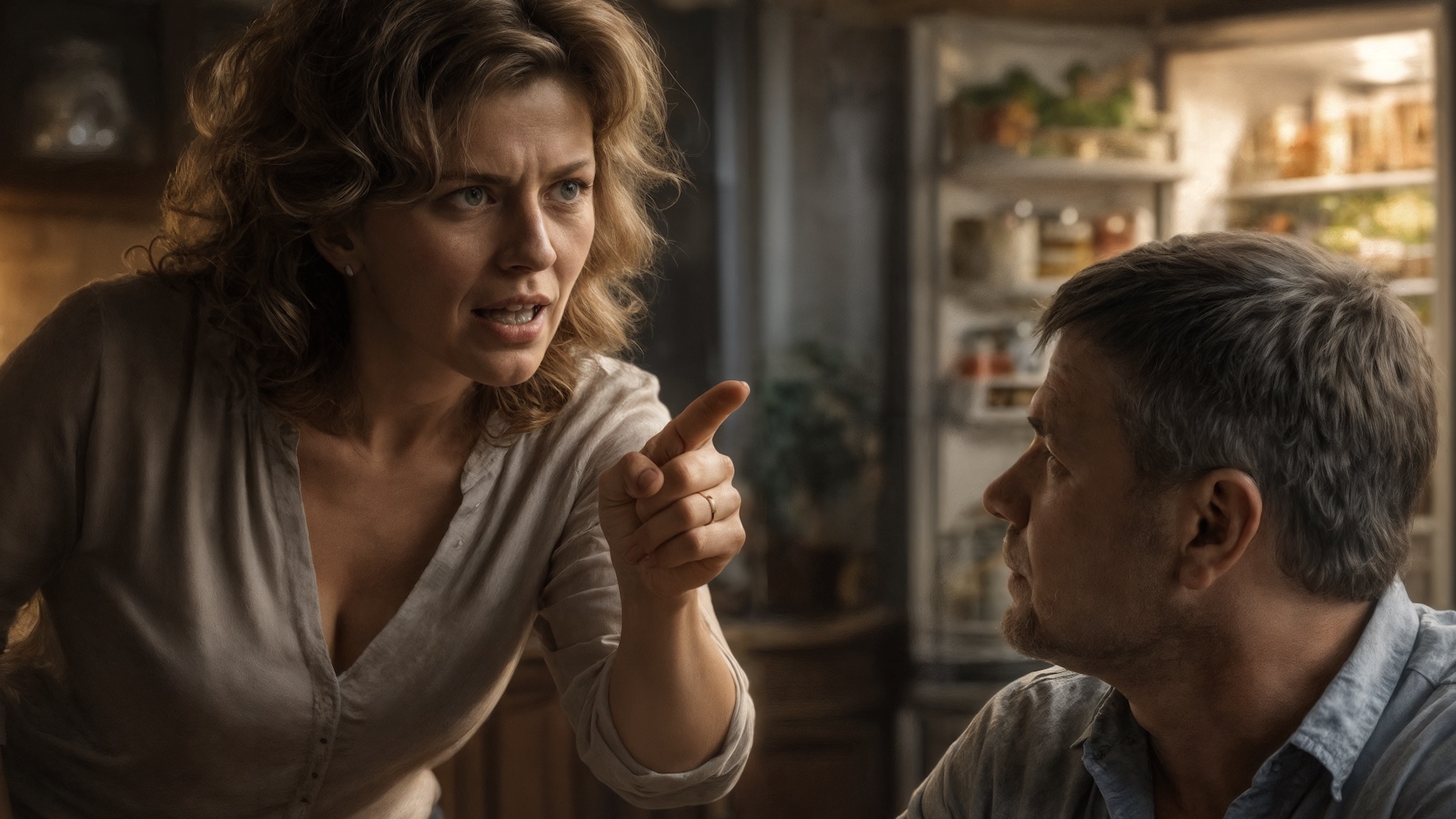
“Valera,” Inga began carefully while he spooned himself another serving, “I got the electricity bill today. It was pretty high. Water too.”
Valery froze for a second, his spoon hanging in midair. His face arranged itself into an expression of tragic hardship.
“They skin working people alive,” he sighed mournfully. “And my mother has it even worse this month. Her imported medicine disappeared, so we had to get substitutes, and they cost three times more—can you imagine? I gave her everything I had. I’m walking around in old boots myself, the soles are about to fall off.”
For emphasis, he moved one foot under the table. Inga knew those boots well. Good leather. Perfectly decent. They had at least two more seasons in them.
“What I mean is…” Inga lowered her voice so it would not sound like an accusation. “Maybe we could split expenses somehow. At least groceries. I’m not some millionaire’s daughter. I work in an archive, not in a gold mine.”
Valery set his spoon down. The look in his eyes turned into that of a wounded deer.
“Inga… I didn’t expect this from you. We talk about feelings, about something higher… and you’d let vulgar household concerns come between us? I thought you understood me. I’m just going through a difficult period. Temporary setbacks. Once I sort things out with my mother’s health, I’ll shower you in gold, I swear.”
“Shower me in gold,” Inga thought, staring at the borscht stain on the tablecloth. “You could start with a pack of pasta, treasure hunter.”
But aloud, she said nothing. Female pity is a dangerous thing. You understand perfectly well you’re being used, yet part of you still hopes: maybe now… maybe soon… he’s a good man, he’s kind, it’s just bad circumstances.
A week passed in strict economy mode. To keep feeding her “gallant gentleman,” Inga got crafty. She bought chicken backs for soup, hunted down buy-one-get-one deals at a supermarket on the far end of town, dragged heavy bags home until her arms nearly gave out. Valery, meanwhile, came over, ate, praised her cooking, watched television on her couch, and then went home to sleep—always explaining that “Mother worries if I don’t answer my phone late at night.”
The breaking point came on Friday. It had been a rotten day: chaos at work, her supervisor in a fury, and since morning an ugly mix of rain and snow had turned the sidewalks into a skating rink.
Inga was heading home burdened like a pack mule. In one hand she carried a bag of potatoes and cabbage—heavy, but cheap at the market. In the other, a net sack of onions and a bottle of milk. Her back ached, and the same knee she had been treating announced itself with every step in sharp jolts of pain.
A taxi pulled up by the entrance. A yellow car with checker stripes. The door opened, and Valery climbed out with a grunt.
Inga stopped to catch her breath and say hello. But the words died in her throat.
Valery was alone. And yet he clearly wasn’t. He reached into the back seat and hauled out two enormous, bulging, glossy shopping bags from an upscale gourmet store—the kind Inga only ever entered to look at the prices and leave in horror.
The bags were heavy. The handles stretched tight. Sticking out of one was the tail of a respectable fish—not some cheap pollock, but noble trout or salmon. Through the translucent side she could make out a thick smoked sausage, a jar of caviar with that unmistakable green label, and a box of expensive chocolates.
“Oh! Ingusya!” Valery saw her and faltered for half a second, then instantly arranged his usual smile. “I’m just on my way to see my mother. Thought I’d bring her some treats. Poor woman doesn’t have much joy left, only a chance to eat something nice.”
Inga looked at her own bags. Muddy potatoes. Onions flaking dry skins. Discount milk.
Then she looked back at Valery’s luxury convoy.
“Quite the treats,” she said, her voice gone hoarse. “Red fish? Caviar?”
“Well, yes.” Valery shifted the bags more comfortably, his face reddening with the strain. “The doctor said she needs phosphorus, vitamins. And she loves dry-cured sausage, sliced thin so she can savor it. For my mother, I spare nothing. I’ll go hungry myself, but I’ll buy for her.”
“I’ll go hungry,” echoed in Inga’s mind.
“In my kitchen.”
“Listen, Ingusya,” Valery said, shrinking into himself against the wind. “Since we’ve run into each other… you’re going home, right? I’ll just stop by your place, drop these bags in the hallway so I don’t have to drag them around. We’ll have a quick dinner—I’m starving, I’ve got no strength left, been on my feet all day! Then I’ll call a taxi and take everything to Mom’s. My arms are falling off, honestly.”
The suggestion was so casually shameless that Inga did not at first know what to say. He was proposing to use her apartment as a storage locker and her as a free meal service so he could protect the delicacies meant for another household.
“Come on,” she said shortly.
They entered the elevator. It filled at once with the rich smell of smoked sausage and expensive fish. The scent was dense, festive, almost luxurious enough to crowd out the air itself. Valery sniffed and hugged the bags to his chest like beloved children.
“Oh, the prices, Inga, the prices…” he began his usual song as the elevator crept toward the fifth floor. “You can’t imagine how much I spent there. Half my advance pay! But this is sacred…”
“Sacred,” Inga repeated flatly.
The doors opened. Inga unlocked the apartment. Valery pushed inside first and, with a relieved groan, lowered his treasures onto the floor beside the shoe rack.
“Whew! My hands are shaking.” He started unbuttoning his coat, already anticipating warmth and comfort. “So what have we got today, Ingusya? Smells like cutlets? Or meatballs? I could eat an elephant right now!”
Inga slowly set her bags of potatoes on the entry cabinet. Took off her hat. Looked at herself in the mirror. A tired woman with fine lines around her eyes, in an inexpensive puffer coat. And next to her, a rosy, well-fed man pleased with life, who had come “for a quick bite.”
All at once, the picture became painfully clear. In a minute he would sit at her table. He would eat the meatballs she had made last night instead of watching her show. He would drink her tea with her sugar. And in the hallway, barely a yard away, would sit caviar and salmon bought with money he supposedly did not have—not enough even to bring a loaf of bread into her home.
This was not just stinginess. It was disrespect. Total, deafening indifference wrapped in pretty words.
“Valera,” she said quietly.
“Hm?” He was already tugging off one boot.
“Put it back on.”
Valery froze, balancing on one leg with a boot in his hand like a startled stork.
“I’m sorry—what? What’s wrong, Inga? Did a pipe burst?”
“It did, Valera. My patience burst.”
“What are you talking about?” He was still smiling, but the smile had turned confused and foolish. “I’m hungry. You invited me yourself…”
Inga stepped toward the glossy shopping bags.
“You stocked your mother’s refrigerator like royalty? Good for you. Wonderful. Son of the year. Then go to your mother. Let her make you a caviar sandwich. Or fry your fish. Because as far as I’m concerned, the free cafeteria here is closed for inventory. Permanently.”
“You… you’re throwing me out?” Valery lowered his socked foot onto the dirty rug. His eyes widened. “Over food? Inga, that’s low. Holding a piece of bread over a man’s head? I never expected such pettiness from you!”
“Petty, Valera, is when a healthy grown moose spends three months eating off a woman who earns less than he does, while pinching every penny on her so he can buy delicacies for another house. That’s not pettiness. That’s piggish.”
“That’s for my sick mother!” Valery shrieked, and his noble baritone cracked on the last word.
“Then go to your mother!” Inga raised her voice, something she almost never did. “Go and eat there! Enjoy your phosphorus and omega-3! Maybe while you’re at it, you’ll grow a conscience!”
She threw the front door wide open. Cold air swept in from the stairwell.
“Take your rations and get out.”
Valery turned red. Then pale. Then blotchy. He understood. There would be no dinner. No meatballs. No warm kitchen. No cushioned chair.
Fumbling into his sleeves, he yanked his coat back on. Grabbed his shopping bags. Glass clinked inside them.
“Idiot!” he spat from the doorway. “Hysterical woman! Old maid! Who needs you and your cutlets? I only came to you out of pity!”
“Run along, Uncle Mitya,” Inga sneered, recalling the old saying. “Before your caviar gets warm and spoils.”
And she slammed the door in his face. Hard. With feeling. Hard enough, probably, to shake loose a little plaster. She turned the lock twice. Hooked the chain. Then, just to be sure, tugged the handle.
Silence.
Inga leaned back against the door and closed her eyes. Her heart was pounding somewhere in her throat. Her hands were trembling.
“So that’s it,” she thought. “Alone again.”
She went slowly into the kitchen. Picked up her own bags. Dumped the potatoes into the drawer under the sink. Took out the milk.
On the stove, a pan of meatballs simmered gently in tomato sauce. Tender. Fragrant.
Inga took a plate. Served herself three. Spooned over plenty of sauce. Cut a slice of black bread. Poured herself a shot—not valerian drops, but homemade cranberry liqueur she kept in the cupboard “in case of a cold.”
“Well then. Here’s to seeing clearly,” she told the silence.
She drank. Then took a bite of the meatballs.
Dear God, they were delicious. And best of all, no one was smacking their lips in her ear, no one was lecturing about geopolitics through a full mouth, and no one was eyeing the food on her plate as though calculating how much of it they could claim.
Her phone buzzed in her pocket. A text from Valery.
“Inga, you overreacted. I’m willing to forgive your outburst. Let’s talk calmly. I’m at the bus stop. It’s cold.”
Inga gave a dry little snort, deleted the message, and blocked his number.
“Freeze out there, wolf’s tail,” she muttered, wiping the last of the sauce from her plate with a piece of bread.
Ahead of her stretched a long, peaceful evening. Tomorrow was her day off. And there was a whole pan of meatballs left now—enough for at least three days. With the money she saved, she could finally treat herself. Maybe buy a pastry. Or a new pair of slippers.