You know, people say, “Still waters run deep.”
That is when you look at someone and think: there she is, a calm woman, peaceful, non-confrontational, everything in her life seems steady and quiet. And then suddenly — just like that — the still water begins to churn. And it turns out it had been boiling underneath for a long time. You simply could not see it from the surface.
Klava was exactly that kind of still water.
She herself had no idea. Not until a certain point.
From the outside, Klava Petrova’s life looked ordinary enough, without any major storms or upheavals. She worked in accounting — a quiet job, almost like a library, smelling of paper and strong tea. Her husband, Nikolai, was solid and respectable, the kind of man people called “reliable,” though sometimes that word sounded more like a sentence than a compliment. There was also her mother-in-law’s country house outside the city, where every summer Klava weeded the beds, made jam, and pretended not to notice her mother-in-law’s constant remarks — that the cucumbers had not been salted properly, that the curtains should have been different, that “in my day, wives knew how to…”
Klava knew how to do many things.
She knew how to endure, too.
She used to consider that a virtue. Now she was no longer so sure.
That year, everything began with a conversation at work.
Her colleagues were planning a trip to Altai. Nothing extreme, not some reckless adventure for young daredevils, but a perfectly reasonable trip — with a guide, a planned route, and views so breathtaking they made your chest tighten. Lena from the tax department showed them photographs: mountains reflected in lakes so clear it looked as if the water had been painted in watercolor. Alina from HR had already bought trekking poles.
“Klava, what about you?” Lena asked. “Are you coming with us?”
Klava looked at the pictures and felt something she could not immediately name. It was as if a small door had opened inside her, leading into a room she had never known existed. Mountains. Fresh air. Not her mother-in-law’s garden, but real mountains.
“I’ll think about it,” Klava said.
And the very next day, she said:
“I’m coming.”
She bought a sleeping bag — light as a feather, yet warm. She tried on her hiking boots at home and walked around the apartment in them, laughing at herself. She read about the route, about the mountain passes, about how at night in the mountains you could see millions of stars.
She waited for that summer.
Truly waited.
“Klava,” Nikolai said one evening, without looking away from the television. “Relatives are coming to stay with us.”
“What relatives?” she asked, not understanding at first.
“My cousin Tanya. With her husband and daughter. They’ll come to the country house for a while. You understand, Mother isn’t what she used to be, her health won’t allow her to manage everything. Someone has to look after the place and receive the guests properly.”
Klava put her book aside.
“Kolya, I’m going on vacation. To Altai. I told you.”
“Well, your trip can wait,” he said calmly, as though they were talking about postponing a walk to the grocery store. “The guests need to be welcomed and fed. They’re not coming to fend for themselves. And who’s going to watch the garden?”
“You?” Klava asked quietly.
Nikolai looked at her as if she had said something absurd.
“I’m working.”
And that was the whole conversation.
Later, whenever Klava tried to bring it up again, Nikolai sighed, frowned, and said she did not understand, that they were family, that it would be awkward, that they themselves had stayed with them once, had she forgotten? That his mother would be offended.
And once, when Klava would not let it go, he said coldly:
“If you don’t like it, we can just separate. Why torture each other?”
Klava fell silent.
Not because she was afraid of divorce. But because something inside her tightened and turned cold.
She called Lena and said she would not be going. Lena was upset. Alina said, “That’s a shame, Klava. You would have been able to breathe there.”
Klava smiled into the phone and said it was all right. Maybe next time.
She put the sleeping bag away on the mezzanine shelf.
She placed the boots in the closet.
The relatives arrived on Friday evening with three huge suitcases, loudly, demanding tea from the very threshold.
Tanya was a plump woman with the confident gaze of someone who considered herself mistress wherever she went. She inspected the country house and declared loudly:
“Well, it’s livable.”
Her husband, Gena, a silent type with the look of a man permanently slightly offended by the world, immediately went out to the veranda and turned on loud music from his speaker. The neighbor behind the fence muttered something about manners.
Their daughter, Kristina — old enough to be an adult, yet behaving like a spoiled child — walked into the house, looked at the room set aside for the guests, and grimaced.
“Couldn’t you have made it a little prettier?”
Klava stood in the kitchen, slicing bread.
It’s all right, she told herself. It won’t be for long.
The way those relatives ate was a story of its own. They ate with appetite, thoroughly, without hurry. Tanya had a way of eating that made it seem as though her entire life had been preparation for that one meal. She did not touch the groceries, did not go to the store, did not offer any money for the household.
In the morning — breakfast.
At noon — lunch.
In the evening — dinner, plus tea with sweets, of course.
“Klava, you should bake some pies,” Tanya said on the third day. “I like them with cabbage.”
Klava baked them.
“A little dry,” Tanya remarked. “But edible.”
That same day, Gena decided to make a fire right by the fence, where the grass was dry after a week of heat. Klava explained that it was dangerous, that the neighbors would complain, that the fire department could get involved. Gena looked at her like she was someone deliberately interfering with his right to live.
“So what?” he said. “Don’t worry, it won’t catch fire.”
“It won’t catch fire because we’re not making one here,” Klava said evenly, though inside her everything was already burning like a real bonfire.
Nikolai reacted to all these incidents in the same way — he shrugged and left. Or he said quietly to Klava, “Just put up with it. They won’t be here long.”
No one clarified exactly when that “not long” would end.
Klava took the guests to the lake.
Klava cooked three times a day.
Klava listened to Tanya’s comments about how “everything is different in our house.”
At night, Klava stared at the ceiling and thought about the mountains, about the stars, about the mountain pass she would never cross.
The strawberries in the garden were her mother-in-law’s special pride.
Not just strawberries — a rare variety she had been growing for years. Large, sweet berries with a particular fragrance. Every morning, her mother-in-law went out to look at the bed.
“When they ripen, we’ll make jam,” she would say.
That jam was a tradition and was treated almost like something sacred.
One morning, Klava went out into the garden — and stopped.
The bed was empty.
Completely.
Not a single berry left.
Kristina, meeting Klava’s gaze, shrugged.
“What’s the big deal? They’re for eating, aren’t they? They were tasty, by the way.”
Klava said nothing.
She turned around and walked away.
Her mother-in-law came out in the afternoon and stood for a long time looking at the empty bed. Then she sat down on the bench by the house. Klava brought her some water — silently, simply placing it beside her.
“I put so much effort into them,” her mother-in-law said quietly. Not complaining, just saying it. “So much effort.”
Klava sat beside her.
And in that exact moment, something shifted inside her.
She realized she was no longer angry.
She was tired of being angry.
She simply looked at the elderly woman whom she had so often mentally accused of being petty and tiresome — and saw a person. An aging, upset person who was sorry about the strawberries not because she was greedy, but because they were her strawberries. Her work. Her small joy.
“It’s all right,” Klava said. “We’ll sort it out.”
But the real explosion came that evening.
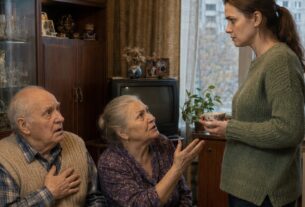
Her mother-in-law came to Klava with tearful eyes. At first she said nothing. Then she showed her an empty little wooden box with a faded pattern on it.
“The earrings,” she said. “My mother’s earrings were in there. I kept them in the drawer. And she took them. She said she wanted to wear them because they were pretty. And then she lost them. At the lake, she says. They searched but couldn’t find them.”
Klava looked at the empty box.
“Did she at least say she was sorry?”
“She said, ‘It was an accident.’ And shrugged like this.”
Her mother-in-law demonstrated the gesture — the kind people use when something is hopeless.
“Maybe,” Klava said slowly, “it’s time for both of us to stop putting up with this.”
Her mother-in-law looked at her.
For a long time.
Then, unexpectedly, she nodded.
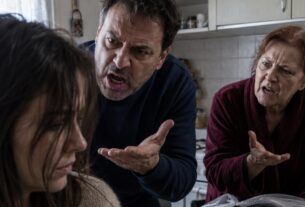
Tanya, Gena, and Kristina were asked to pack their things.
Klava did not know how to make a scene, and she did not want to. She simply said that this could not continue. That the earrings were not just a piece of jewelry. That people should behave differently in someone else’s home. That hospitality was not serfdom.
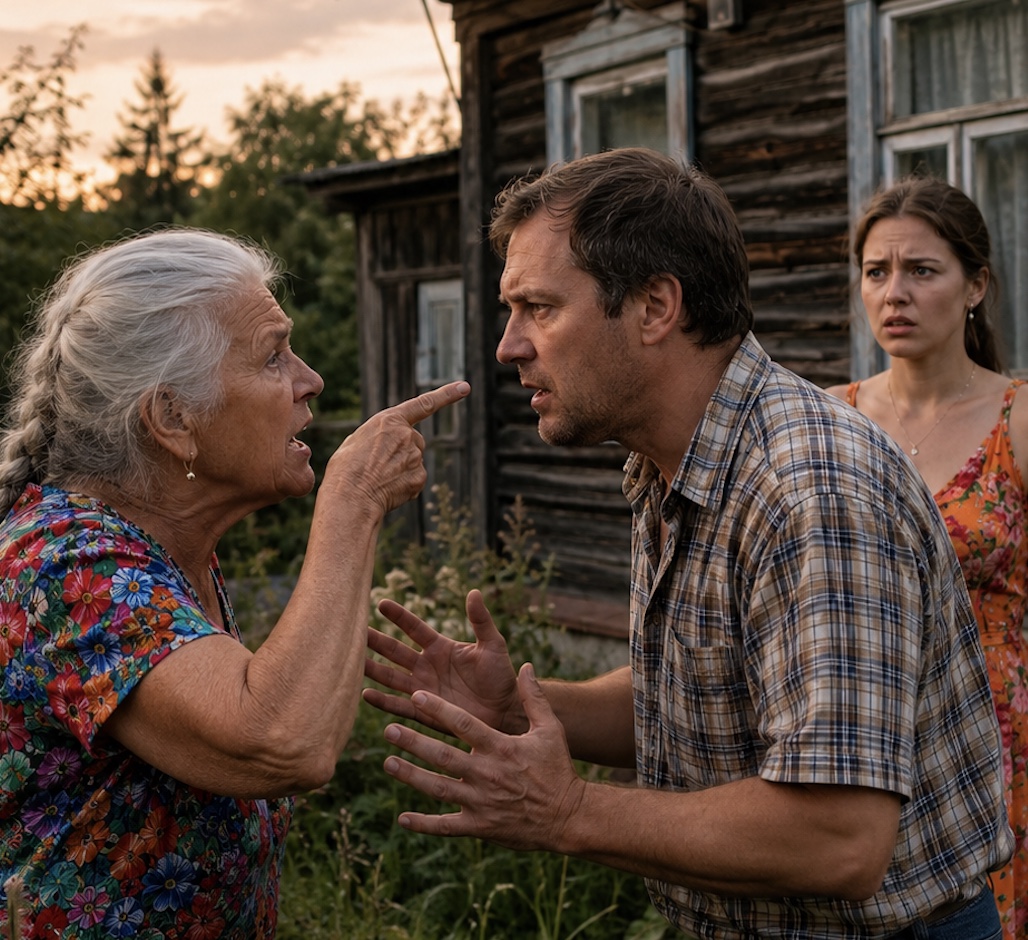
Tanya became indignant. She said that “Kolya invited us,” that “you’re throwing us out, and that’s ugly.”
“You are not being thrown out,” Klava’s mother-in-law said in the firm voice she could still use when necessary. “You are being asked to leave. Those are two different things.”
Gena remained silent.
Kristina put on an offended face.
An hour later, they left.
Klava closed the gate.
She leaned her back against it.
And exhaled.
Her mother-in-law stood beside her.
For the first time in many years, they were looking in the same direction.
“You did well,” her mother-in-law said. Awkwardly, uncomfortably, as if praise did not come easily to her. “I couldn’t have done it alone.”
“I couldn’t have done it alone either,” Klava answered honestly.
Nikolai returned that evening from the city, where he had gone to buy groceries, not suspecting that such a quantity of groceries was no longer needed.
He saw the empty yard and the closed shutters in the guest room.
He looked at his mother.
Then at Klava.
“Where are they?”
“They left,” Klava said.
“Who… how…”
“We asked them to,” his mother said.
And her voice was such that Nikolai did not argue.
He was silent for a long time. Then he started saying something about how awkward it was, about how they were family, but his mother stopped him.
“Kolya,” she said sternly, and he immediately straightened. “When was the last time you stood up for Klava? When did you stand up for me?”
He opened his mouth.
Then closed it.
“My daughter-in-law stood up for me. Klava. The woman with whom we…” His mother hesitated for a second. “With whom we have not always gotten along. Do you understand that?”
Nikolai understood.
It was clear from his face that he understood — and that this was exactly what was hurting him now.
“You didn’t let your wife go on vacation. You said she would stay here and serve your relatives, while you stood aside and watched her wear herself out. What do you call that?”
Kolya said nothing.
“Go,” his mother told him. “Talk to her.”
They sat on the veranda, just the two of them — Klava and Nikolai.
It was growing dark. From somewhere on a neighboring plot came the smell of smoke.
“I’m sorry,” Nikolai said.
Not immediately. He took a long time to gather the words.
“I… I shouldn’t have acted that way.”
Klava looked out into the darkening garden.
“You told me, ‘If you don’t like it, we can separate.’”
“That isn’t what I meant.”
“Maybe you didn’t mean separation. But you did mean: shut up and endure. That’s what you meant.”
Nikolai did not deny it.
He rubbed his face with his hands.
“To be honest,” he said quietly, “I would have kicked them out myself. Long ago. When Gena wanted to start that fire… I was boiling inside too. But they’re family. I couldn’t. I didn’t have the courage.”
Klava turned to him.
It was unexpected — and there was something almost funny in that unexpectedness. Bitterly funny.
“Are you serious?”
“I am.”
They both fell silent.
“Do you have any idea how much I was looking forward to that trip?” she asked. “I bought boots. A sleeping bag. I read about mountains and passes. I thought — here it is. Something of my own. Something I chose for myself.”
“I understand.”
“And you told me no.”
“I shouldn’t have.”
Night settled completely.
Above the country houses, the moon rose — surprisingly bright. Klava looked at it and thought that somewhere in Altai, her colleagues were probably sitting by a fire right now. And the stars there, most likely, were completely different.
“Next year, I’m going,” Klava said.
Not angrily.
Simply firmly.
“That is not up for discussion.”
Nikolai nodded.
Summer ended.
Autumn came with rain and with jars of jam made from strawberries bought at the market. In winter, Klava and her mother-in-law sometimes drank tea together — without any particular warmth, but also without the old sharpness. Something had appeared between them. Not friendship, no. More like understanding. Two people who had done something difficult together were no longer entirely strangers.
Nikolai did not bring up that story again.
Neither did Klava.
In spring, Lena began gathering a group for Altai again.
“Klava, are you coming this time?”
“This time, yes,” Klava said.
Then she added, a little embarrassed:
“There will be two of us.”
“Two?”
“Me and my mother-in-law.”
Lena laughed, thinking it was a joke.
But it was not a joke.
Valentina Stepanovna — that was her mother-in-law’s name, though Klava had not called her by her name and patronymic for a long time now, more often “Mom,” or nothing at all — suddenly became excited about the idea. She had never been to the mountains. To be honest, she had barely been anywhere. Her whole life had been the country house, the garden, jam.
And then one day, her daughter-in-law showed her photographs — lakes, ridges, a sky so blue it never appeared like that in the central plains.
“My legs aren’t what they used to be,” her mother-in-law said uncertainly.
“The route isn’t difficult. We’ll go slowly,” Klava replied.
That summer, Nikolai stayed at the country house alone.
He watered the cucumbers and weeded the beds. In the evenings, he called his wife, and she told him about the passes, about how his mother got scared on the descent and grabbed Klava’s hand, then laughed at herself. She told him about the stars — the very stars Klava had once only read about.
“How is it there?” Nikolai asked.
“Good,” Klava said. “Really good.”
He listened to her voice and thought that he had not heard it sound like that in a long time.
Light.
Free.
“Kolya,” she said one evening, when they were already saying goodbye. “I’m not holding a grudge. You know that, right?”
“I know,” he said. “Thank you.”
“For what?”
“For staying. Back then. For not leaving.”
Klava was silent for a moment.
“I’m glad I didn’t leave too,” she finally said. “But let’s agree on one thing. I never want to hear ‘I won’t let you go on vacation’ again. Deal?”
“Deal,” Nikolai said.
And by the way he said it — without pauses, without excuses, immediately — Klava understood that this time he was telling the truth.
She put her phone away, stepped out of the tent, and looked up at the sky.
There were so many stars that she did not know where to look.