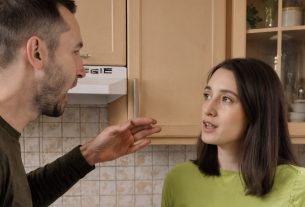
The note was lying on the kitchen table. Right in the middle of it, held down by the salt shaker so it wouldn’t be blown away. I stood there in my coat, looking at it, my handbag still hanging from my shoulder.
Kirill had left.
I understood that before I even reached the table. His large white headphones were gone from the little cabinet by the sofa. His sneakers had disappeared from the hallway. The charger he had immediately stretched across the room to the socket near the window had been wound up and taken with him. The apartment was quiet.
Seven days. At first, I counted them with joy. Then with tired patience. And by the end, with something I could not even name.
I picked up the note with two fingers, the way you take a receipt from someone else’s hands.
Kirill was the son of Rimma, my older sister. Rimma, who always said, “He’s special,” and for a long time I thought that meant something good. Maybe clever. Maybe sensitive. Maybe simply different from the others in some noticeable way.
I had not seen him for five years, since that summer when their whole family came to visit and Kirill spent the entire time on his phone without lifting his head. He was fourteen then, a teenager. That was understandable.
When Rimma called in February and said that Kiryusha was coming to our city for a university conference and had nowhere to stay, I said, “Of course.” Just like that, immediately, without even pausing. Because he was my nephew, nineteen years old, in an unfamiliar city with no one he knew.
Because I had a sofa, and a room, and the desire to welcome him. After my divorce, the children had grown up and moved away. The apartment had long been empty.
“Galya, thank you. You’ve really helped us out,” Rimma said. “He’s quiet, don’t worry. You won’t even notice him.”
I decided not to notice him and began preparing.
The first day I spent shopping. First, at the grocery store near my building: yogurt, eggs, sausage, cheese, cottage cheese, a loaf of bread. Then I remembered coffee and went back to the shelf. I stood there for about three minutes, looking at the jars. I don’t drink coffee myself; it gives me a headache, and I have no idea what the difference is between one brand and another.
I took one that was medium-priced, then put it back. Then I chose an expensive one, in a glass jar with a red lid. Three hundred and forty rubles for one hundred grams. That is expensive for me. I work as a technologist at a canning factory, every other day in shifts. There is not much room for luxury. But my nephew was visiting for the first time in five years, so let the coffee be decent.
At another store, one block away, I bought two kinds of cookies because I did not know which ones he liked, and a can of corn, which I put in the fridge just in case. Young people like different things, after all.
That evening, I called the internet company and asked them to increase the speed. Two hundred rubles more per month, they said. Fine, I said, increase it. He would need proper internet for studying.
I made up the sofa with clean bedding and placed a flannel blanket on top. It was March, cold at night. Then I went to set up a folding bed for myself in the kitchen.
On Monday, March ninth, I met him at the train station.
Kirill came out of the carriage with a large backpack and a wheeled suitcase, headphones around his neck, phone in front of his face. He walked while looking at the screen, and only near the exit did he raise his eyes and find me in the crowd. He looked at me the way people look at a sign with their name on it: found the right one, nodded. I stepped toward him and hugged him. He stood stiffly, without taking off his backpack. For a moment, he lowered his arms and patted me on the back twice, the way people pat a stranger.
“Hi, Aunt Galya,” he said, already pulling away.
“Kiryusha.” I looked at him. Tall, thin, grown so much in five years. “How was the trip?”
“Fine.”
He glanced at his phone, nodded, and put on his headphones. I pulled his suitcase. He walked beside me, looking at the screen, half a step ahead, so all I saw most of the time was the back of his head and the white arches of his headphones.
On the tram, I tried to talk to him. I asked about university. He said, “Fine.” About the conference. He said, “It starts tomorrow.” How Rimma was. He said, “Fine, she’s working.” Then he looked back down at his phone, and I started looking out the window. March snow was falling, small and dirty, the way it does at the end of winter.
At home, I showed him the room, the refrigerator, the towels in the bathroom, the hook for his jacket in the hallway. He listened absent-mindedly and looked around. Then he noticed the socket by the window and immediately reached into his backpack for his charger.
“What’s the Wi-Fi?” he asked without turning around.
I told him the password. He typed it in, nodded, and sat down on the sofa with his laptop.
I went to put the kettle on.
I remember the first morning by the smell of coffee. I woke up early, as always. I tried not to make noise: soft-soled slippers, no light until I reached the corridor, placing the kettle down as quietly as a kettle can possibly be placed down. I poured coffee into a mug, covered it with a saucer, and left it on the table. Then I put on my coat.
As I was leaving, Kirill came into the kitchen. He was in a T-shirt, his hair ruffled, squinting from the light.
“Coffee?” he asked, noticing the mug.
“Yes, for you. It’s good. I chose it specially.”
He lifted the mug, smelled it, and put it back.
“This is instant.”
“Yes.”
“I don’t drink instant coffee,” he said without anger, simply stating a fact, the way someone might say, “I don’t eat fish.” “I’m used to proper coffee. Capsules at least. Or beans.”
I looked at the mug. Then at the shelf where the jar stood. Three hundred and forty rubles. Red lid.
“I don’t have a coffee machine,” I said.
“Yeah, I figured.” He opened the fridge and stared inside for a long time, moving his eyes from one shelf to another. “Is there anything lactose-free?”
“No. I didn’t know about that.”
“Of course,” he repeated. He took the loaf of bread and went back to the room.
I went to work.
On the tram, I kept going over it in my mind. All right. He is young. He doesn’t know how to speak properly. He’ll get used to it.
At work that day, we were on the packaging line. Monotonous work: the hands move by themselves, while the mind stays free. Lyuba was working next to me. We had been on the same shift for eight years. During lunch, she asked how my nephew was.
“He arrived,” I said.
“Happy?”
I looked at my sandwich.
“Happy,” I said.
Lyuba nodded. She knows how to hear when “happy” means something else, but she never pushes. That is one of the reasons I value her.
On my way home, I kept remembering the smell of coffee in the mug. It smelled good, honestly. A pity I don’t drink it. Maybe one day I would try it.
On the third morning, Kirill came into the kitchen at half past seven, just as I was putting on my coat by the door.
“Aunt Galya.”
I turned around.
“It’s really noisy in the mornings. I can’t sleep properly because of it.”
I stood there and looked at him. I woke up at half past five. I wore slippers with soft soles. I did not turn on the main light until I reached the corridor. I placed the kettle down as quietly as physically possible. I zipped my bag slowly, tooth by tooth.
“Kiryusha, I’m trying,” I said.
“Well, maybe you could somehow be quieter.” His tone was calm, explanatory. The tone of someone pointing out the obvious. “I can hear every movement.”
I opened my mouth and closed it again. About the slippers. About the light. I said nothing about the fact that I was walking around in my own apartment.
“I’ll try,” I said.
He nodded and went back to the room.
I closed the door behind me and stood on the landing for a moment. Behind the door, there was silence. Then I called the elevator.
Inside the elevator, I saw my reflection in the mirror that one of the neighbors had screwed to the side wall long ago. My coat was buttoned crookedly, one button in the wrong hole. I unbuttoned it and fastened it properly. Then I looked at myself. Forty-eight years old, tired face. In the morning it was still more or less all right. By evening, not so much.
The elevator opened. I stepped out and went to the stop.
That day at the factory, I counted the same batch twice because I kept losing track. A technologist does not have the right to lose track. My signature decides whether a batch goes to sale or not.
I counted it a third time, and only then signed. The shift lasted twelve hours. By the end, my legs were aching. I stood all the way home on the tram, looking into the dark window where my tired face was reflected. I thought: four more days. Just four more days.
Kirill mentioned the internet on the fourth day.
I came home from work, took off my shoes in the hallway, and hung up my coat. Quiet music was coming from the room. I walked into the kitchen and started taking out a pot.
He appeared in the doorway.
“Aunt Galya, your internet is really slow.”
“I increased the speed before you came.” I turned on the tap and filled the pot. “I’m paying extra for it.”
“It’s still slow. I need to work properly.”
“If I’d known in advance, I could have asked about a higher plan.”
“Well, keep that in mind for next time,” he said, and returned to his laptop.
I put the pot on the stove. I stood there, watching the flame come on.
“Keep that in mind for next time.”
A person had been staying with me for four days, eating my potatoes, sleeping on my sheets, using my apartment, which I had cleaned before his arrival. And he said, “Keep that in mind.”
I began peeling potatoes. My hands worked on their own: knife, peel, water, next one.
My eyes fell on the sofa.
The sofa had belonged to my mother. Wide, heavy, with a high straight back. “Built to last forever,” she used to say, running her hand along the wooden armrest.
Mother was ill for a long time. Three years. I visited her every other day after work, carrying a bag with groceries and medicine, and sometimes something else too: a book, a magazine, just because. She lay on that sofa because toward the end she could no longer get to the bed by herself, and she watched television or dozed.
I would sit beside her, on the edge, and we would talk about anything: neighbors, weather, how the children were doing. I nodded and made mental notes: buy seedlings, find a bigger flowerpot. We never did plant the petunias.
After the divorce, I rented a one-room apartment on the other side of town. When Mother passed away, I moved into her apartment. The sofa stayed with me. I have slept on it for fifteen years. It is firm, that is true. I like that it is firm.
Kirill slept on it for seven days.
I dropped the potatoes into boiling water and called him for dinner.
He came into the kitchen with his phone, sat on the chair by the window, the one on the right, even though the left one was more comfortable, and began eating without putting the phone away. He ate silently, never looking up from the screen.
Then he went back to his phone. I cleared the table, washed the dishes, hung the towel on the hook, and turned off the light.
On the fifth day, I tried to have a real conversation.
That evening, when he came into the kitchen for water, I asked how he liked our city in general. He said, “Fine. A bit gray.” I asked whether he had seen anything besides the university.
He said he had walked to the center once, but there was nothing to see there. I wanted to tell him that we had an old park, and that it was nice even in March, but he was already pouring water into a glass and looking at his phone.
“Kiryusha,” I said, “tell me at least something about yourself. How you live. How your studies are going.”
He lifted his head and looked at me with slight surprise, as though he had not expected the question.
“Fine,” he said. “I’m studying. Everything’s good.”
“Do you have friends?”
“Yes.”
“A girlfriend?”
“Aunt Galya.” Something condescending appeared in his voice, as if I had asked about something obvious. “Why do you need to know that?”
“I’m just interested. You’re my nephew.”
He placed the glass on the table.
“Well, I have a girlfriend. That all?”
“Yes,” I said.
He went back to the room. I heard music come on behind the wall.
I sat in the kitchen and drank tea. It was dark outside. Rimma had said, “He’s quiet, you won’t even notice him,” and that was true. I barely noticed him all week. I simply cooked, washed, went quietly to work. I was in my own home and yet felt like a stranger.
I thought about my own children. They had also withdrawn at that age. Sat at the table, answered “fine,” looked at their phones. Then they grew up, and conversations appeared on their own: about work, about their own children, about nonsense.
Sometimes they called for no reason at all. Maybe it would be like that with Kirill one day. Maybe ten years would pass and he would remember Aunt Galya. Bring something from the south, say thank you for that week. Although no. He was not that kind of person. By the fifth day, I had already understood that.
On Sunday, I had a duty shift. The factory was quiet, fewer people, less noise. I walked around the workshop, checked, counted, signed. I like work when it does itself: you do not think about it, you just do it, and your mind stays free for something else.
On Sunday, my mind was free: my nephew would leave, and the apartment would become quiet again. I would move back to the sofa. I would visit Lyuba. We had not seen each other properly in a long time, only at work. Maybe we would go to the cinema; Lyuba had been inviting me for ages.
I rode home by tram. It was dark outside, streetlights glowing, windows in the buildings shining warmly. I looked at them and thought about nothing in particular.
There was no backpack in the hallway. No sneakers. No charger, the one Kirill had immediately stretched to the socket and that I carefully stepped around every morning so I would not touch it.
The bed linen lay on the sofa in a neat stack. Folded evenly. On the table was the note.
I picked it up. Read it.
Put it back down. Went to the kitchen, poured myself a glass of water, and drank it standing by the sink, without sitting down. Then I came back and picked it up again.
The sheet had been torn from a notebook, lined paper. The handwriting was neat, the letters round and even. It was written in a column, like a shopping list:
“The coffee in the house is bad.
The Wi-Fi is weak.
The sofa is hard.
It’s noisy in the mornings.
Next time, prepare better for guests.”
I read it for the third time.
And everything inside me became very quiet. It was not anger. Anger is hot; it burns and pushes you somewhere. This was something else: cold and calm, the way you feel when you understand something important about a person and realize there is no point being surprised anymore.
I folded the note lengthwise and placed it on the table.
Then I called Rimma’s home number. The phone rang for a long time before there was a click.
“Hello?” It was not Rimma’s voice. It was Kirill. So he was already home.
“Kiryusha,” I said. “I read your note.”
“Oh.” No pause. No embarrassment. “Yeah. I wrote it constructively, so you could keep it in mind for the future.”
“Constructively,” I repeated.
“Yeah.” That light intonation again, the voice of someone explaining the obvious. “You’re not offended, are you? It’s better to be honest than to stay silent.”
I stood by the window. Outside was March: bare black branches, a low dark sky, a streetlamp swaying in the wind.
“Kiryusha, why was it noisy in the mornings?”
“Well, I don’t know. You were rattling something.”
“I woke up at half past five. In soft-soled slippers. I didn’t turn on the light until I left the room.”
A pause.
“I could still hear it.”
I stayed silent for a moment. Then I said:
“You wrote that the sofa was hard. Do you know whose sofa that is?”
“Yours.”
“It was my mother’s sofa. Your grandmother Anna Petrovna’s sofa. I have slept on it for fifteen years because I do not have another one.”
“Aunt Galya, I’m not telling you to throw it away. I just wrote it on the list.”
Exactly. He had simply written it on the list.
“Kiryusha,” I said slowly, “you stayed with me for seven days for free. I cooked, washed, bought groceries. I paid extra for the internet. I bought coffee, good coffee, expensive for me, and you never even tried it. I got up at half past five and walked around my own apartment in slippers so I wouldn’t wake you.”
Silence on the other end.
“Feedback is good. But first, people say thank you.”
“Well…” Something in his voice shifted slightly. “Thank you. I didn’t mean it badly.”
“I know. Tell your mother to call me back.”
I hung up.
Rimma called half an hour later. During that time, I washed my face, changed clothes, and managed to sit in the kitchen in the silence I had not heard for a long time. I put the kettle on. Just to be doing something.
“Galya, don’t be upset,” Rimma said. Her voice had that same tone I had known since childhood. The same tone she used when Kirill, at five years old, broke my favorite mug and she had to explain to me that it had been an accident. “That’s just how he is. Direct. He doesn’t know how to be any other way.”
“I heard.”
“Well, there you go. He didn’t mean it badly. He talks like that to everyone. Even to me. He comes home and says, ‘Mom, the soup is too salty.’ Straight out, no softening it. Not out of malice.”
I looked out the window. The kettle was starting to boil; I could hear the rising hum.
“Rimma,” I said, “have you ever explained to him that before saying ‘the soup is too salty,’ people say, ‘thank you for cooking’?”
A long pause.
“Galya, well, he’s…”
“I know,” I said. “He’s special.”
The kettle clicked off.
“You’re offended,” Rimma said. She did not ask. She stated it.
“No, Rimma. I’m not offended. I just understood something.”
“What?”
“That next time, I’ll know better.”
We were both silent for a while. I could hear her breathing into the phone.
“He said your place was cozy,” she finally said quietly, with a trace of guilt.
“Good,” I said.
“All right then. We’ll talk.”
“We’ll talk.”
I got up and went into the room.
The sofa stood in its place. I took the stack of bedding and threw it into a basin to wash. I straightened the pillow and set it against the backrest. Then I ran my hand over the wooden armrest. Old, polished, warm to the touch, as always.
Mother is gone now, but the sofa remains. It seems unfair until you think about it and realize that perhaps this is exactly how it should be: people leave, but what they touched, what they made part of life, stays behind.
I sat down on the sofa.
The coffee in the jar with the red lid was still on the kitchen shelf. Almost full. Kirill had never opened it. Three hundred and forty rubles. Let it stay there. Tomorrow morning I would open it and finally try it myself.
I picked up the note from the table and folded it into four. Then I put it in the drawer with the bills, under the old payment receipts. Let it lie there. Not as a memory, but as a reminder: whom not to invite next time.
Then I went into the kitchen. I reached toward the hook for Mother’s blue-striped apron. Then I stopped my hand. Not today.
Outside, the wind bent the branches. March was black and empty, with no leaves, no buds yet. Spring comes late where we live, at the end of April, when people have almost stopped waiting for it. I know that very well, and still, every year, I start waiting too early.
I put the kettle on.
For myself.
For the first time in those seven days, only for myself, without worrying about anyone else’s tastes or needs.
Have you ever cooked for someone, tried your best, and then discovered that it still was not enough? How did you deal with it?