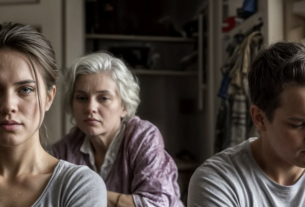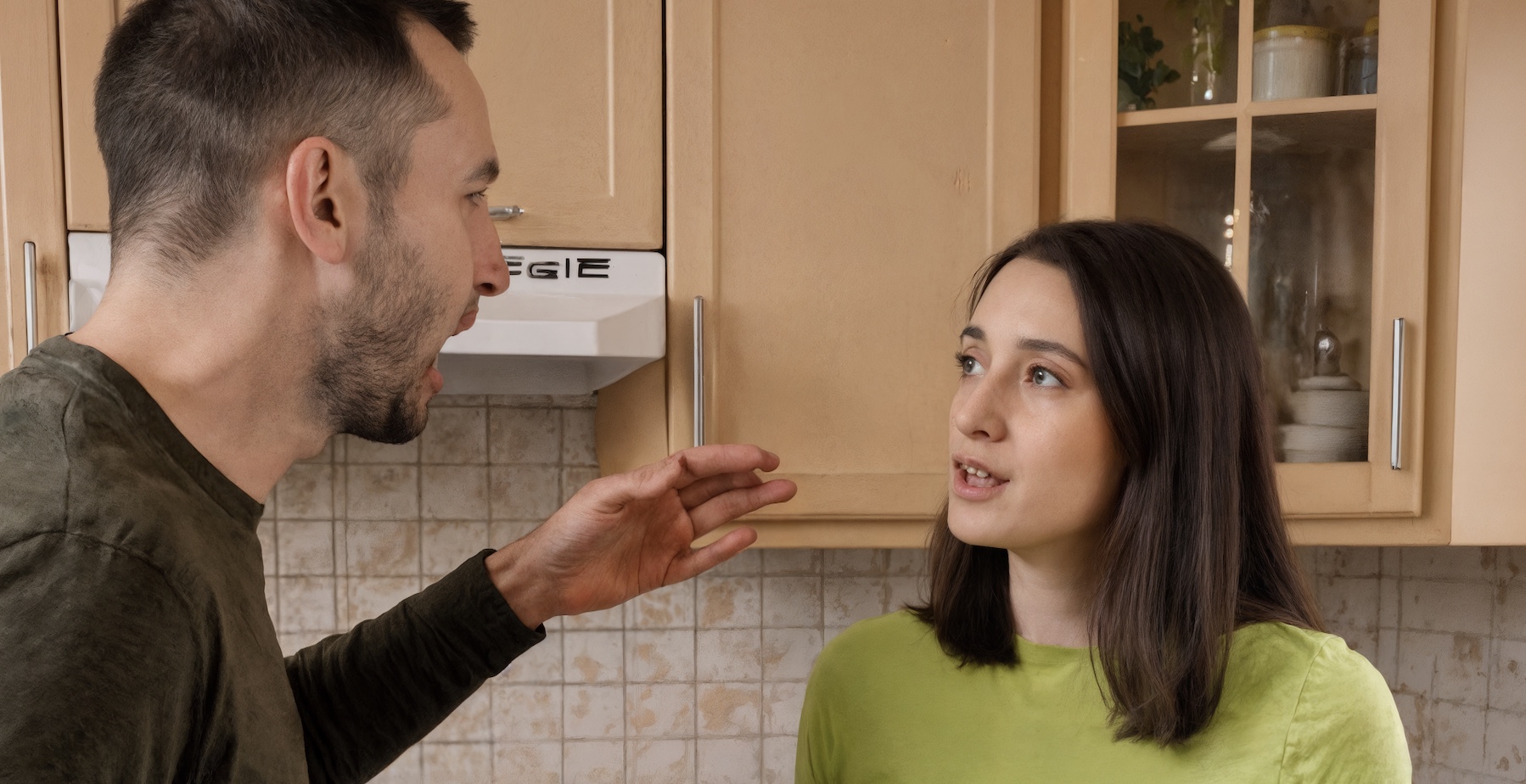
Anya woke up at half past six, just like always. Igor was still asleep, spread across three-quarters of the bed, one arm dangling off the edge, almost brushing the floor. She slipped out from under the blanket as carefully as she could, trying not to wake him. His alarm was set for eight, and she had a full hour to get the apartment in order, make breakfast, and pack his lunch for work.
Their rental on the outskirts of town was small—a one-room flat in a concrete panel building where the floors creaked and the radiators leaked—but it was their first shared nest. They’d registered their marriage two months earlier, and Anya still felt a quiet, tender satisfaction whenever she said the word husband. Husband. Her husband. It sounded so grown-up.
While coffee simmered in the cezve—Anya hated instant, even if it was cheaper—she wiped down the counter, hung yesterday’s laundry on the drying rack by the radiator, and put the kettle on. Then she quickly fried eggs, sliced tomatoes and cucumbers, and pulled cottage cheese and yogurt from the fridge. Igor didn’t really eat yogurt; he called it “girl food.” But Anya bought it for herself. She tried to eat healthy.
“Up you get, sleepyhead,” she said softly, giving Igor’s shoulder a gentle shake. “It’s almost eight.”
He grunted something unclear and rolled to the other side.
“What time is it?”
“Quarter to eight.”
“Damn, Anya… I could’ve slept fifteen more minutes.”
“Breakfast will get cold. Come on—move.”
Igor finally got up and shuffled to the bathroom. Anya heard the water running, him brushing his teeth. Then he came out in jeans and a T-shirt, his hair sticking up in every direction.
“Smells great,” he said, dropping into a chair and reaching for his plate. “Oh, fried eggs. Nice.”
Anya sat across from him and poured his coffee. Igor was already demolishing his breakfast in big bites, while she ate her cottage cheese slowly, washing it down with yogurt.
“Hey… are those yogurts expensive?” Igor asked suddenly, nodding at her little cup.
“I’m not even talking about that,” he added quickly. “I’m just saying we could save. We’re saving up for an apartment.”
Anya stayed quiet. Yes, they were saving. Or rather—she was. Igor earned more; he worked as a developer at an IT company, while she was an administrator at a small clinic. Yet somehow it was her paycheck that went toward groceries, utilities, household cleaners, and all the little things that constantly popped up. Igor transferred money for rent—his half—and acted as if that was the end of his responsibilities.
“Alright, I’ve gotta run,” Igor said, finishing his coffee. He kissed Anya on the top of her head. “I’ll try to be back by seven.”
He left, and the apartment instantly felt quieter. Anya cleared the table, washed the dishes, and got ready for work. Her shift started at nine.
During the first month after the wedding, they lived like they were in a fairy tale. Igor would come home from work, they’d have dinner together, watch shows, talk about plans. They wanted so much—to save for a mortgage down payment, buy proper furniture, take a trip somewhere. Anya did the math in her head: if they set money aside every month, then in a year they could aim for a small one-bedroom in a new build.
But in the second month, something started to shift.
At first, Igor began staying late at work. Once. Then again. Then a third time. After that he announced the guys wanted to go sit at a bar—could he come home around ten? Anya nodded. Of course he could. She wasn’t some dictator. A person needs a social life.
But “once” turned into a pattern. Now Igor went out with coworkers two or three times a week, came home late, sometimes tipsy, collapsed into bed and passed out immediately. And on Fridays or Saturdays he always declared the “guys” were meeting up—football, barbecue, something else.
Anya stayed home. She cooked, cleaned, did laundry, ironed his shirts. On weekends she’d meet a friend at a café for a couple of hours, but she tried not to spend much. She was putting less into savings now—everything else vanished into daily expenses. Igor didn’t add a single ruble to the shared stash. “Why would I?” he’d say, genuinely puzzled. “I’ve got my own expenses. I need to relax too—I work like a dog.”
One Sunday night, when Igor stumbled home around three in the morning, Anya couldn’t take it anymore.
“Where were you?” she asked as he flopped onto the sofa without even taking his shoes off.
“At a club with the guys. Anya, don’t start, okay? I’m tired.”
“Igor, do you realize you spent my week’s salary in one night?”
He looked at her through bleary eyes.
“What?”
“Yesterday you took a wad of cash from my stash. You said it was for your night out with friends. I earn that much in a week.”
Igor paused and rubbed his face with both hands.
“Anya, listen. I work a lot. I bring money into this house. I need to unwind, you get it? I can’t sit at home all the time. I’m not your property.”
“I’m not saying you’re my property,” Anya said. “I’m saying we had a goal. We wanted to save for an apartment. And you’re spending money on bars every week.”
“And you spend on your yogurts and whole-bean coffee,” Igor snapped. “You think I don’t notice? You buy expensive stuff, and then you come at me. If you want things to be fair, then let’s split expenses fairly—by income.”
Anya didn’t answer.
“That’s right,” Igor went on, warming up. “Since your salary’s lower, let’s split food fairly,” my husband said—having no idea what it would lead to. “You eat your yogurts, your fancy coffee, your fresh veggies. I’ll stick to sausages and dumplings. Honestly, I don’t need your healthy crap. I’m fine with simple food. And you can save on your delicacies if you think I spend too much. It’s logical. Everyone spends according to what they earn. You want fairness? There it is—fairness.”
Something inside Anya tightened into a hard knot. She wanted to reply, but the words stuck in her throat. Igor had already gotten up and headed to the bathroom. She heard the water running, heard him splashing around. Then he came out, dropped into bed—and a minute later he was snoring.
Anya stayed sitting on the sofa. His words spun in her head: Since your salary’s lower, let’s split food fairly. So that was it? They were going to live like roommates in a communal apartment—each for themselves? And what about family? What about their plans, their dreams?
She didn’t cry. She just sat in the dark, staring out the window at the yellow streetlights below.
From that day on, everything changed. Igor really did switch to sausages and dumplings. Anya bought herself chicken, fish, fresh vegetables, yogurt, and whole-bean coffee. For him—cheap frozen meals. They ate at the same table, but each had their own food. Igor acted like he didn’t care, like the arrangement suited him. Anya said nothing.
She’d never been talkative, but now she went almost completely silent. Short answers. One-word replies. Igor either didn’t notice—or pretended not to. He kept going to bars, meeting friends, coming home late. They barely spoke. In the mornings Anya still got up at half past six, cooked breakfast—now two different versions—cleaned, washed, ironed. Igor left for work, she left for work, and in the evenings each of them disappeared into their own world.
But Anya knew something Igor didn’t.
A month earlier, her manager had called her in.
“Anya, you’re doing great,” Marina Sergeyevna told her. “Clients praise you, the doctors are happy. I want to offer you a promotion. We’re opening a second branch, and I need a senior administrator there. It’s more responsibility, but the salary will be different—almost twice as much. Will you think about it?”
Anya didn’t hesitate.
“Yes. I agree.”
“Excellent. Starting on the first of next month, you’ll begin the new position.”
Anya came home that day and almost blurted out the news to Igor. But he arrived late, drunk, went straight to bed without even saying hello. And Anya decided to keep quiet. Let it be a surprise. In a month, she’d tell him.
That month crawled by painfully. Every day Anya woke at half past six, made breakfast, cleaned, did laundry, ironed. Igor went out to bars, came home late, sometimes didn’t even eat—just collapsed and passed out. They barely spoke. Sometimes Anya caught herself missing the Igor from before—attentive, funny, loving. But the person living beside her now felt different. Like a stranger.
On the first, Anya started her new job. There was more to do, but she managed. And at the end of the month she received her first paycheck in the new role—a solid amount. Even more than Igor’s.
She came home earlier than usual. Igor was home, sitting at his computer, playing some game.
“Hi,” Anya said.
“Hi,” he answered without looking away from the screen.
“I need to talk to you.”
“Yeah, sure—just let me finish this level.”
Anya went into the kitchen and put the kettle on. Ten minutes later Igor came out, stretching.
“So what did you want to talk about?”
Anya sat at the table and motioned for him to sit across from her.
“I got promoted a month ago. I’m a senior administrator now.”
“Oh, nice!” Igor even smiled. “Congrats. Did you get a raise?”
“Yes. Now I earn this much,” she said, showing him her phone screen with her banking app open.
Igor froze for a second, then nodded.
“Not bad. More than me. Good for you.”
“Yes,” Anya looked him straight in the eyes. “More than you. And I want to tell you this: I’m leaving.”
“Leaving where?” Igor didn’t understand.
“I’m going to my mom’s. I need to think about our marriage. About whether it even makes sense.”
“What?” Igor sat up, his smile vanishing. “Anya, what are you talking about?”
“Igor, for the last two months you’ve lived as if you don’t have a family. You disappear into bars, spend money on hanging out with friends, and come home only to sleep. We barely talk. You suggested splitting food ‘fairly’ because my salary was smaller. Fine. Now my salary is bigger. But it’s not about money. It’s about the fact that you don’t want to be home. With me. So why did we get married?”
“Anya, come on!” Igor jumped up and started pacing the kitchen. “I’m just… I’m exhausted from work. I need to unwind. That doesn’t mean I don’t love you.”
“It doesn’t mean you don’t,” Anya nodded. “But it doesn’t mean you do either. Igor, I stayed silent for two months. I put up with it. I hoped you’d come to your senses, that we’d talk, that things would get better. But you didn’t even notice I was next to you. You came home, ate, slept, and left. Like this place was a cheap motel. And I washed your shirts, cooked your food, cleaned up after you. And when I tried to talk about money, you offered to split food by income—as if we’re not a family, just roommates.”
“Anya, I got carried away that night. I’m sorry. I was drunk—I wasn’t thinking.”
“You were sober the next morning,” she replied. “And you didn’t apologize. And we really did split the food. Remember? You spent a month eating your sausages and acting happy about it.”
Igor stared at her, lost. It was like he was seeing her for the first time in weeks—not just looking through her.
“I don’t want a divorce,” Anya said quietly. “But I need time. I need to understand whether I want a husband who isn’t interested in me. A man who thinks that because he earns more, he gets to do whatever he wants, and I should stay home and save money on food. Now I earn more. But I’m not going to behave like you did. Because this isn’t about money. It’s about respect.”
“Anya, wait,” Igor stepped closer and tried to take her hand, but she pulled away. “Let’s talk. Let’s work it out.”
“We didn’t talk for two months, Igor. For two months I tried to reach you, and you didn’t hear me—or didn’t want to. You’re only hearing me now because I said I’m leaving.”
“Anya, just give me a chance. I’ll fix it. I won’t go to bars anymore. I’ll come home. We’ll have dinner together, talk—like before.”
Anya shook her head.
“I need time. I need to think whether I want to live with someone who only changes when he’s cornered. Someone who changes because he’s afraid of losing me—not because my feelings actually matter to him.”
She stood and went into the bedroom. Igor followed her.
“Anya, don’t. Please.”
Anya took a bag from the closet and began packing. Igor stood nearby, helpless, not knowing what to do.
“How much time do you need?” he asked softly.
“I don’t know. A week. Two. Maybe a month. I’ll call when I’m ready to talk.”
“And if… if you decide you don’t want to come back?”
Anya zipped the bag, straightened, and looked at him.
“Then we’ll get divorced.”
She walked past him, grabbed her jacket in the hallway, and put on her shoes.
“Anya,” Igor called.
She turned.
“I really do love you,” he said, and for the first time in a long while, real pain came through in his voice.
“I know,” Anya nodded. “I love you too. But love isn’t enough, Igor. There also has to be respect. And a desire to be together. And for the last two months, you didn’t have that desire.”
She closed the door behind her, went down the stairs, and stepped outside. It was late evening; the city glowed with lights, cars hummed somewhere in the distance. Anya took out her phone and called her mom.
“Mom, hi. Can I come stay with you? For a while.”
“Of course, sweetheart,” her mother’s voice immediately tightened with worry. “Did something happen?”
“I’ll tell you when I get there.”
Anya caught a taxi and slid into the back seat. The car pulled away, and the rented apartment where she’d spent three months as a married woman faded behind her. Ahead was her mother’s home—quiet, safety, and time to think.
A week passed. Anya lived with her mom, went to work, came back home. Her mother didn’t press her with questions—she just hugged her, fed her, and said everything would be okay. Igor called every day. At first it was nonstop, several times a day. Then less often. Anya picked up and answered briefly that she needed more time.
On the tenth day, Igor came to her mother’s place. He rang the bell and stood at the door with a bouquet and a guilty face.
“Can I talk to Anya?” he asked.
Her mom looked at her daughter. Anya nodded.
“I’ll be right back, Mom.”
She stepped out into the stairwell and pulled the door mostly closed behind her.
“Hi,” Igor said. “These are for you.”
He held out the flowers. Anya took them, but didn’t say anything.
“I’ve been thinking,” Igor began. “A lot. You’re right. I acted like an egoist. I was an egoist. I only thought about myself. I figured that because I earned more, I had the right to do whatever I wanted, and you had to stay quiet and deal with it. That was wrong. I’m sorry.”
Anya stayed silent.
“I don’t want to lose you,” he continued. “I realized I feel awful without you. The place is empty. I come home and there’s no one there. No dinner, no one asking how my day was. I took you for granted. And that was wrong. You did so much for me, and I didn’t even say thank you.”
“I don’t need your flowers and apologies,” Anya said quietly. “I need you to change—really change. Not for a week, not for a month. For good. I need you to see me. To care about how I feel. To want to spend time at home—with me—not with your friends in bars.”
“I will,” Igor nodded. “I promise. Give me a chance to prove it.”
Anya looked at him for a long moment.
“Alright,” she said at last. “But not yet. I need more time. Another week. Or two. I don’t know. I’ll tell you when I’m ready.”
Igor nodded, even though disappointment was written all over his face.
“Okay. I’ll wait.”
He turned to go, then looked back.
“Anya, I love you.”
“I know,” she replied. “Go.”
He left. Anya went back inside. Her mother was sitting at the kitchen table, drinking tea.
“He apologized?” her mom asked.
“Yes.”
“And what did you decide?”
“I don’t know yet, Mom. I’ll see.”
Her mother nodded.
“You’re a smart girl. You’ll figure it out.”
A week later Anya went back home. Not because she’d forgiven him—she just realized she wanted to try one more time. Igor met her at the door, hugged her, held her close.
“Thank you,” he whispered. “I won’t let you down. I promise.”
And he didn’t.
At first Anya watched carefully, waiting for a catch. But Igor truly changed. He came home on time. He went out to bars once every two weeks, and even then not for long. They started having dinner together again, talking, making plans. Igor stopped dividing food into “yours” and “mine.” Now they had one budget, shared groceries, shared goals. He started helping around the house—washing dishes, vacuuming, even learning to cook a few basic meals.
Anya could see he was trying. And that was what mattered most. Not words, but actions. Not promises, but proof.
One evening they were sitting on the sofa watching a movie. Igor had his arm around her; she leaned into his shoulder.
“Anya,” he said quietly, “thank you for giving me a second chance.”
“Don’t thank me,” she replied. “Just don’t mess it up.”
He smirked.
“I’ll try.”
And Anya understood they would make it. Because they were a family again—a real family, where each person values the other, where respect matters more than money, and love is shown not in speeches, but in choices. They’d made it through a crisis and come out stronger. And this was only the beginning.