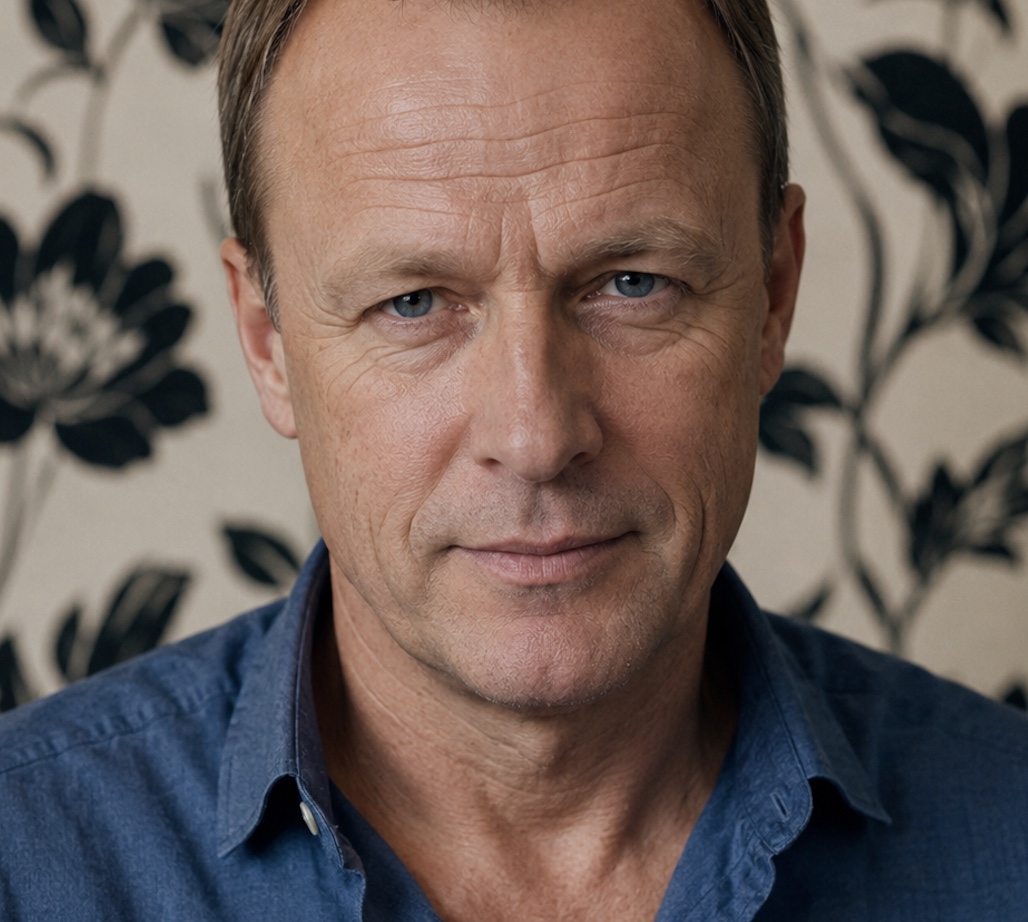
“For fun, I choose older women, around forty, like you. But I’ll only marry a young one,” said my 53-year-old colleague while asking me out.
“Don’t start. A man has value at any age.”
“Of course. Especially a balding foreman with a beer belly and an advance payment due before Friday.”
My name is Aliya. I’m forty-one years old, and over the past few years I’ve heard plenty of ridiculous things from men. But Evgeny’s phrase became a separate category of professional deformation for aging men — the type who somehow decide that once they pass fifty, they automatically become “solid,” “high-status,” and wildly attractive to twenty-year-old girls.
In reality, Evgeny looked like a man who had spent the last ten years arguing with doctors that his belly was just “a masculine build,” and that his shortness of breath happened only “because of the weather.”
We work at a construction company. I handle procurement, and our team is mostly male: foremen, suppliers, drivers, contractors — men who are convinced that a woman at work is either “sweetheart,” “little daughter,” or a potential target for flirting, especially if she doesn’t look exhausted and doesn’t walk around with the face of someone crushed by a mortgage and three children.
In the neighboring department, we had young female managers. Beautiful, well-groomed girls, around twenty-five to thirty, always in heels, with perfect eyeliner and endless patience for men’s jokes.
Evgeny, fifty-three, regularly visited that department as if it were a museum exhibition. He had the facial expression of a man who sincerely believed he was a gift to womankind.
He came there “for work matters,” but somehow his work matters always came with phrases like:
“Well, beauties, who’s going to save a lonely man today?”
“Who’s coming with me for coffee?”
“Young women need an experienced man.”
All those tired clichés were probably supposed to sound charismatic. In reality, they caused the same reaction from the girls every time: a forced smile and an urgent need to “go see a client.”
The funniest part was that he genuinely considered himself dangerously attractive.
There are men who age calmly. They accept their age, joke about themselves, remain interesting and pleasant to be around.
And then there are men like Evgeny.
For some reason, they believe that fifty-plus is the peak of male value, and that any woman under forty should feel grateful just because he noticed her at all.
He constantly talked about “spoiled young women” who “don’t appreciate normal men,” about women “with baggage,” about greed, about how “nowadays all women care about is money.”
Meanwhile, he lived in a one-room apartment with a renovation straight out of 2003 and drove a car that creaked as if begging for mercy.
At first, I just found it amusing.
I would half-listen while he tried to flirt with the girls again. Later, they would roll their eyes by the water cooler and laugh among themselves, repeating his lines about “male energy” and being “a real alpha.”
I didn’t interfere. A grown man has the right to embarrass himself however he wants.
But then one of the girls quit, another went on vacation, and Evgeny’s attention unexpectedly shifted to me.
It happened during lunch break.
I was standing by the coffee machine, scrolling through an estimate on my phone and thinking about how to explain to a supplier that “the price went up slightly” did not mean adding two hundred thousand to the contract.
That was when Evgeny appeared beside me with his usual squint — the squint of a man who thinks he is charming.
“Aliya, how about we go somewhere tonight?” he said, leaning one hand against the wall as if we were in some cheap TV drama. “We’ll sit, talk, relax.”
I slowly looked up. At first, I didn’t even understand that he was serious.
“What happened?” I asked calmly. “Did the young ones run out?”
And then he smiled.
Smugly. Confidently.
Like a man who was about to say something deeply wise.
“Young women are for family,” he said. “Women like you are for pleasure. You’re already grown. No illusions. You need a man. And I wouldn’t mind spending a nice evening either.”
I didn’t even take a sip of my coffee right away.
I just stared at him, trying to understand whether he had actually said that out loud or whether I was already hallucinating from work stress.
“What do you mean, ‘women like me’?” I asked.
“Well… older women,” he shrugged. “No offense. You’re already forty. You’re a mature woman. You understand life. I’ll still find myself a young one for something serious.”
At that moment, I didn’t even feel anger.
What rose inside me was a kind of icy disbelief.
Because standing in front of me was a man more than ten years older than I was. A man who looked exactly his age, if not older. A man with a visible bald spot, a belly, and the heavy face of someone who had been living on kebabs and beer for fifteen years.
And this man was sincerely calling me old.
I slowly placed my coffee cup on the table.
Looked at him.
And asked:
“Zhenya, how old are you again?”
“Fifty-three. So what?”
“So you’re calling a woman twelve years younger than you old?”
He smirked.
“Men and women age differently.”
That phrase finished me completely.
Because men like Evgeny genuinely live in a parallel reality where wrinkles on a woman mean “old,” but wrinkles on a man mean “character.”
Where female age is a tragedy, but male age is an investment.
Where a man with a belly is “solid,” but a woman with two extra kilos has “let herself go.”
And that was when I lost my patience.
“Why would I need an old, worn-out Zhiguli,” I asked calmly, “when I can choose a decent foreign car?”
He blinked.
He didn’t understand.
So I continued.
“Have you seen yourself, Zhenya? Your bald spot shines brighter than the office lights. Your belly enters the room before you do, and you’re standing here telling me about young girls?”
He immediately tensed.
“You’re being rude.”
“No. I’m bringing you back to reality.”
He started turning red. Visibly red.
Men generally handle it very badly when they are evaluated the same way they are used to evaluating women. They love talking about whether a woman is “marketable,” “not fresh anymore,” or “used goods.”
But the moment someone starts discussing their own condition, suddenly it becomes “disrespect.”
“Young girls like me,” he said irritably. “It’s just that women today are too materialistic.”
I laughed.
Out loud.
“Zhenya, young girls don’t even want you. Otherwise, you wouldn’t be wandering around the office trying to flirt with everyone in sight.”
That one truly hit him.
Because it was true. Everyone had seen it.
He messaged the girls, invited them for coffee, tried to offer them rides, joked, hinted, hovered nearby.
And the most he ever got was a polite:
“Oh, I’m busy.”
“You’re all the same!” he snapped. “All you care about is money!”
“And what do you care about?” I asked. “A young, beautiful woman with no past, who looks at you with admiration and pretends you’re a gift from heaven?”
He began saying something about “normal traditional relationships,” about how a man needs to feel like a man, about respect.
But the more he spoke, the clearer it became that behind all this bravado there was ordinary fear of aging.
Because men like him don’t look for young women out of love.
They look for proof that they still “have it.”
They don’t need a girl. They need a mirror in which they still look young, desirable, and important.
After that conversation, he was offended.
Truly offended.
He stopped greeting me. He walked past with a stone face. But according to the girls, he began messaging the younger employees even more actively, as if he urgently needed to prove to himself that I was “wrong.”
One girl even showed me his messages, where he wrote that he was a “reliable mature man” and that “young girls need an experienced partner.”
She laughed so hard while reading it that her mascara ran.
But the climax happened a couple of weeks later at a company party.
We were sitting together as a large group. Some were drinking wine, others were discussing construction sites, and somehow the conversation shifted to relationships and age.
One colleague joked that after fifty, some men suddenly start chasing twenty-year-olds because they’re afraid of mirrors.
That was when Evgeny, already tipsy and brave, decided to deliver his signature line:
“Because a young woman is a status symbol.”
And then even the men at the table started laughing.
One engineer, forty-five and happily married to a woman his own age, looked at him and asked:
“Zhenya, what status are you offering exactly? Expired?”
The whole table burst out laughing.
I thought Evgeny would get up and leave.
But he just sat there, red, angry, trying to pretend everyone’s jokes were simply bad.
And in that moment, it suddenly became less funny and more sad.
Because behind all this talk about “old women,” there is usually one very simple thing: the man himself is terrified of becoming irrelevant.
He looks at young girls not because he has anything in common with them, but because he is afraid to look at a woman his own age — a woman who can see him too clearly.
A woman in her forties will no longer flutter her eyelashes and believe fairy tales about “real men.”
She sees the belly.
She sees the laziness.
She sees the immaturity.
She sees the age crisis disguised as “high standards.”
And that is exactly why men like him would rather dream about twenty-year-olds than build a relationship with a woman their own age — because she will ask uncomfortable questions.
The most ironic part is that a month later, I saw Evgeny near the office with yet another young girl from the sales department.
He walked beside her, pushing his belly forward and trying to look confident.
She was staring at her phone with the expression of someone counting the minutes until the dinner was over.
He had apparently been trying to convince her that he was her boss and that he could change her life.
And in that moment, I finally understood: the problem was not age.
Not mine. Not his.
The problem was that some men never grow up, even when they are almost sixty.
Psychologist’s Analysis
This story clearly shows a typical male age crisis, where a man tries to compensate for his fear of aging through the attention of younger women.
Evgeny devalues women his own age and calls them “old” not because he objectively sees them as inferior, but because women closer to his age become a mirror reflecting his own aging, physical changes, and declining social attractiveness.
His phrases about “young women for family” and “mature women for fun” are an attempt to preserve a feeling of control and importance through a hierarchy where the man supposedly remains the one who chooses.
At the same time, Evgeny himself does not meet the standards he demands from women. This reveals a strong double standard and an immature view of relationships.
The heroine’s reaction is important because she does not begin justifying herself or proving her worth. Instead, she returns him to reality by using his own logic against him.
That is why it hurts him so much.
Men with this mindset react extremely painfully when their own appearance and status are evaluated, because their self-esteem is often not based on true inner confidence, but on the illusion of “male desirability.”
The main takeaway is simple: when women over forty are devalued, it often says far less about women’s age and far more about men’s fear of aging and losing their sense of importance.