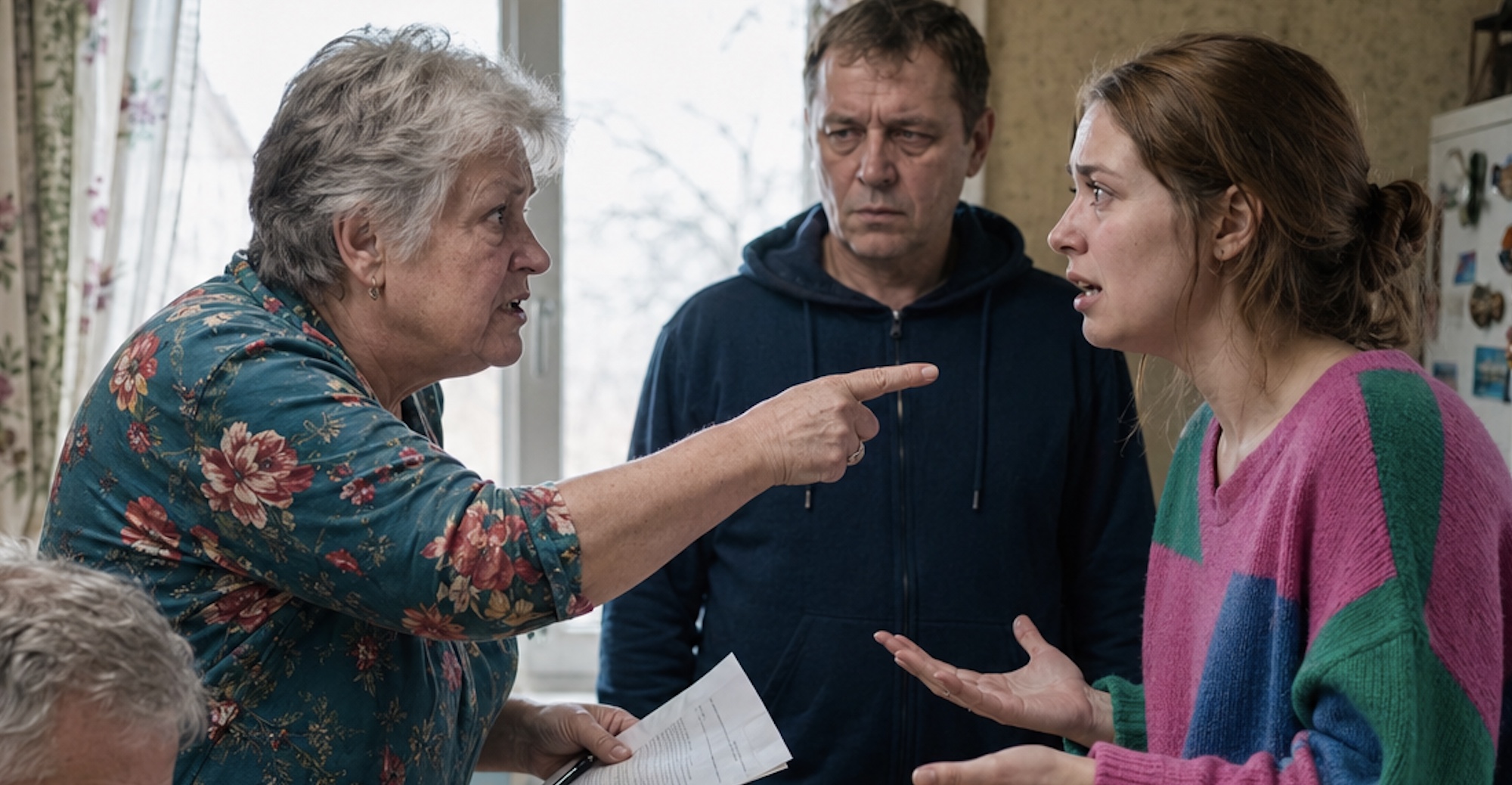
A glass salad bowl landed on the flower-patterned oilcloth with a dull thud. Nadezhda Ivanovna, my mother, lowered herself heavily onto a stool and wiped her hands on her faded apron. On the stove, an old metal kettle was whistling desperately, thick steam pouring from its spout and collecting in droplets on the kitchen window. The room smelled of fresh tea and medicine drops — Dad had been feeling unwell since morning.
My younger sister Yana sat across from me, calmly filing her nail with a glass nail file. She was wearing a fluffy pink sweater, her hair pinned up at the back with a trendy claw clip. My husband Ilya sat beside me, silently studying the pattern on the oilcloth. We had come over for an ordinary Sunday lunch, but my appetite had disappeared five minutes earlier.
“We booked an appointment with the notary for tomorrow,” my mother said in a casual tone, looking somewhere over my head. “We’ll transfer the deed for Malinovka to Yana. And the two-room city apartment too, while we’re at it, so we don’t have to run around offices later.”
The kettle on the stove shrieked even louder. Ilya slowly stood up, turned off the burner, and sat back down. The sound stopped, but my ears were still ringing. I looked at my father. He was diligently stirring sugar in an empty cup, carefully avoiding my eyes.
“Mom, wait,” I said, swallowing hard. My throat had gone dry. “What Malinovka? You’re transferring the dacha to Yana? The same dacha Ilya and I gave you all our savings for four years ago?”
Nadezhda Ivanovna pressed her lips together. Her face took on that stubborn expression she used to have when she forced me to finish cold semolina porridge as a child.
“Dasha, why are you starting to count pennies?” she said, brushing an invisible crumb from the table. “You helped us, and we’re very grateful. We always remember that. But your father and I discussed it and decided this way. You and Ilya are capable people. You stand firmly on your own two feet. You’ll earn your own! But Yanochka needs support. She and Denis have a child, endless expenses. They need a foundation, you understand?”
Yana looked up from her nail file and gazed at me with big, childishly innocent eyes.
“Dashul, honestly,” she drawled, adjusting the collar of her sweater. “We’re family. Why are you reducing everything to money? It’s so materialistic. I feel uncomfortable seeing you react like this.”
I gripped the edge of the stool. The plywood dug painfully into my fingers.
When my parents first became obsessed with buying that plot with a brick cottage in Malinovka, they were short of money. The seller was in a hurry and threatened to give it to other buyers. Back then, my mother called me every evening, crying into the phone, saying Dad dreamed of having his own garden beds, that they needed fresh air. Ilya and I had been saving for a down payment on our own home. We denied ourselves a lot, took weekend side jobs. And we gave them the money. No receipts, no shares registered in our names. We simply transferred it to their card. The plot was registered under my mother’s name.
“Materialistic?” My voice came out unexpectedly quiet, but Yana stopped smiling at once. “Yana, who paid for Dad’s dental treatment last winter? Who bought Mom a sanatorium voucher when she was really unwell? We did. And when was the last time you and Denis even paid our parents’ utilities?”
“I give them attention!” Yana flared up, red patches appearing on her neck. “I call Mom three times a day. We go shopping together. You can’t measure care with receipts!”
“Girls, stop this circus!” Mother slammed her palm on the table so hard the glass salad bowl rattled. “Dasha, you’re a grown woman, but you’re acting like a teenager. The property is ours, and we have the right to do with it as we see fit. That’s it. The subject is closed. Let’s have tea with charlotte.”
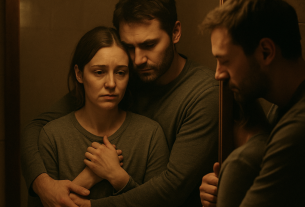
Ilya let out a heavy breath, pushed back his stool, and stood up. He didn’t say a word. He just looked at me. There was no reproach in his eyes, only endless exhaustion.
“We’ll be going, Nadezhda Ivanovna,” he said evenly. “We still have things to do.”
We got dressed in the narrow hallway. I pulled on my boots, fumbling with the laces because my hands refused to obey me. Dad never came out of the kitchen. Mother stood in the doorway of the room with her arms crossed.
“Dasha, don’t invent nonsense,” she threw at my back. “You’ll sulk for a while and get over it.”
The cold November wind hit my face the moment we stepped outside. The yard was covered in wet leaves, slush squelching under our feet. We got into our old foreign car. Ilya started the engine and turned on the heater, but he didn’t drive off right away. He rested his hands on the steering wheel and stared for a long time at the dark windows of my parents’ second-floor apartment.
“I’m sorry,” I whispered, feeling my eyes begin to sting. “You told me back then. You suggested registering at least part of it in our name. And I kept saying they were my parents, that it would be wrong…”
Ilya turned to me. In the dim light of the car interior, the lines around his eyes looked deeper.
“Dasha, it’s not about paperwork,” he said, gently touching my shoulder. “Forget the money. Think of it as the price we paid to understand who we are to your family. A convenient wallet. An emergency service. While their precious daughter is the only real daughter there.”
The next few weeks dragged on painfully. I mechanically did my work at the office, cooked dinners, watched TV series in the evenings without following the plot. Mother called a couple of times, talking about the weather, the price of buckwheat, and how tired Yanochka was from work. Not one word about the dacha. Not one apology. I answered in monosyllables: “uh-huh,” “I see,” “that happens.”
I tried to convince myself that my parents had the right to do whatever they wanted with their own property. But the sharp, human hurt would not let go. My husband and I were carrying a mortgage, saving wherever we could, while my sister received everything on a silver platter simply because she knew how to complain beautifully about life.
The turning point came in early December.
It was a Friday evening. Ilya and I had just returned from a hardware store — we had bought new wallpaper for the bedroom and decided to freshen up the renovation little by little. I made thyme tea, and we sat on the sofa discussing which wall to start with. My phone vibrated on the coffee table. It was my mother.
“Dasha, hi,” she said, sounding fussy and slightly out of breath. “Listen, we’ve had an emergency.”
“Hi. What happened?” I took a sip of tea and automatically lowered the TV volume.
“The neighbors from Malinovka called. A lot of snow fell, and the greenhouse roof caved in. It collapsed right inside. The polycarbonate couldn’t take it. And the fence on the forest side is badly leaning, about to fall any moment. Your father is completely down with his back, he can barely get up. Ilya needs to go there early tomorrow morning. Let him buy metal profiles on the way, those plastic sheets for the greenhouse, and bring tools. We’ll need boards for the fence too. He can manage it over the weekend.”
The room became very quiet. Ilya, who had heard the conversation because my phone speaker was loud, stopped scrolling on his tablet and looked up at me.
“Mom,” I said, carefully placing my mug on the table. My voice was calm. There was no anger inside me, no trembling. “Ilya is not going anywhere tomorrow. Or the day after.”
A heavy silence hung on the other end.
“What do you mean he’s not going?” my mother asked, genuinely confused. “Dasha, do you hear me? The plot is standing open! Stray dogs could get in, or people could steal everything! And the greenhouse needs repairing before the frame bends completely.”
“I hear you, Mom. But tomorrow is Ilya’s only day off. We’re doing repairs.”
“What repairs, Dasha?!” my mother’s voice jumped an octave, turning shrill. “Your parents’ dacha is falling apart, and you’re hanging wallpaper? Let him put his things aside. He won’t melt! And we’ll pay you back for the materials later. Bit by bit from our pension.”
I took a deep breath. The air in our apartment felt unusually light and clean.
“Mom, call Yana.”
“Who? Yana?” Mother stumbled, as if I had suggested calling the president. “Dasha, are you out of your mind? Denis has never held a hammer in his life! He’s an IT guy. His hands are made for a keyboard. And they don’t have spare money right now — they just bought Yanochka a fitness club membership.”
“Perfect,” I replied calmly. “Mom, the dacha in Malinovka belongs to Yana now. On paper. It would be very strange for my husband to spend his lawful day off fixing someone else’s fence and buying building materials for someone else’s plot. You decided yourselves that Yana needed support more. So let her learn to support her own property.”
“You… you’re mocking me?” Mother hissed into the phone. “You’re turning your back on your own mother over a piece of land? Sitting there taking revenge on us?”
“No, Mom. I’m not taking revenge. I’m simply doing what you told me to do. I’m strong. I’ll earn my own dacha. And my husband will repair that one. You and Yana can manage yours. Good night.”
I ended the call and turned the phone face down. A minute later, it vibrated again, then again. A long voice message came from my sister, but I didn’t listen to it. I simply swiped away the notification and turned off the sound.
Ilya moved closer, wrapped his arm around my shoulders, and pulled me to him. His warm house T-shirt smelled of freshness and clean laundry.
“How are you?” he asked quietly.
“I’m fine,” I said, pressing my face into his shoulder. “Finally fine.”
Eight months have passed since that Friday. In the spring, we heard from mutual acquaintances that no one ever repaired the greenhouse in Malinovka. The remains of the frame were simply cut up for scrap metal. The fence was propped up with crooked sticks. Yana refused to hire workers, saying she had no money.
My communication with my parents did not stop completely, but it shifted into polite neutrality. Holiday greetings, routine questions about how things were going. When my mother hinted that the wiring in the hallway needed replacing, I calmly gave her the number of an electrician from the housing office. Yana tried to throw scandals, accusing me of being heartless, but she quickly realized her tantrums no longer worked.
Ilya and I found a small plot in a village, an hour away from the city. No ready-made house, just a piece of land with a couple of old apple trees. We bought it with our own money and registered it as joint property. On weekends we go there, mow the grass, and plan where the gazebo will stand and where the foundation of the house will be. It is difficult. It takes effort. But every time I stand on my own land, I feel absolute confidence in tomorrow.
I understood the most important thing: real family is not defined by shared genes or birth certificates. Family means people who do not look into your wallet, who value your work, and who would never say, “You’ll earn your own,” while taking away what rightfully belongs to you.