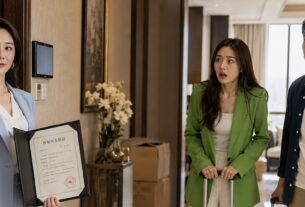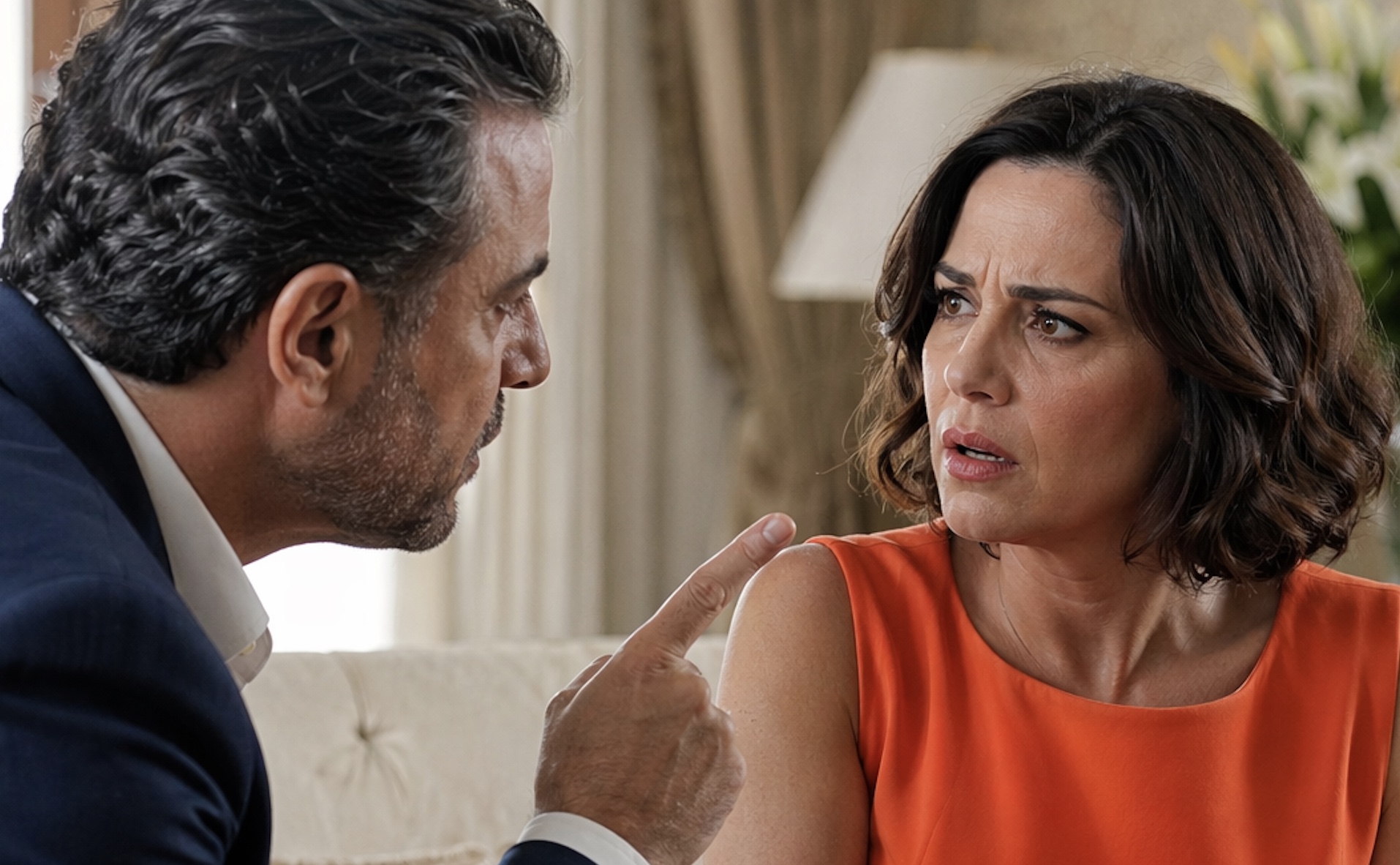
Lena stood in front of the mirror, adjusting the collar of her new blouse and smiling at her reflection.
Thirty.
Soon she would turn thirty, and it wouldn’t be just another birthday. It would be a celebration of her new life. A month ago, she had been offered the position of head of the marketing department. Her salary had nearly doubled, and for the first time in five years of marriage, Lena felt she could finally afford something that truly belonged to her.
“Lena, are you going to be long?” Dmitry’s voice came from the hallway. “Mom called. She said she’s coming by tonight.”
Lena closed her eyes and counted to five.
Valentina Petrovna. Her mother-in-law. The woman who, in five years of marriage, had never once called her by name, preferring things like “dear” or “little girl,” even though Lena was about to turn thirty, not eighteen.
“All right,” Lena replied shortly, leaving the bedroom.
Dmitry was sitting on the sofa with his laptop on his knees. His light brown hair was messy, and thin-framed glasses rested on his nose. He worked as a programmer and earned decent money, but somehow, their money always disappeared. One month his mother needed her refrigerator repaired. Another time, her friend had been hospitalized and urgently needed “a little help” for medicine. Then the roof of the country house started leaking — a house Lena had never even seen, but which Valentina Petrovna supposedly intended to leave to her son.
“Dima, I need to discuss something with you,” Lena said, sitting beside him and placing a folder of printouts on her lap.
“Mhm?” He didn’t look away from the screen.
“Dima, it’s important. It’s about my birthday.”
He finally lifted his eyes.
“Yes, of course. What did you have in mind? The usual? Invite our parents, Oleg and Masha?”
Lena took his hand.
“No. This time I want it differently. I want to celebrate properly. I’m turning thirty, I have a new position. I want to invite everyone — classmates I haven’t seen since university, colleagues, friends. Twenty people, maybe thirty.”
Dmitry blinked.
“Thirty people? Lena, our apartment is small. Where would they even fit?”
“I’m not planning to host them here. I’ve already found a café.” She opened the folder and showed him the photos. “Parus, on Primorsky Boulevard. It’s beautiful, with a view of the sea. A hall for forty people, its own kitchen, banquet service. I’ve already spoken to the administrator and calculated everything. If we cut back on small things, it’ll come to about one hundred and twenty thousand.”
Dmitry leaned back against the sofa.
“One hundred and twenty thousand? Lena, that’s insane.”
“Why is it insane? It’s my celebration. My thirtieth birthday. I want it to be memorable. I’ve spent my whole life saving money and denying myself everything. Just once, I want to have a real celebration. No cooking, no washing dishes, no running between the kitchen and the guests all evening. I want to be the queen of the evening, not the maid.”
“But, Lena…”
“My salary is different now, Dima. I can afford it. We can afford it.”
He rubbed the bridge of his nose.
“All right, let’s think about it. I need time to process all this.”
Lena smiled and kissed him on the cheek. She knew she had convinced him. All that remained was to wait for his final agreement.
Valentina Petrovna arrived exactly at seven, as always — carrying a pile of bags and wearing a dissatisfied expression.
“Dmitry, help your mother,” she commanded from the doorway, and her son obediently rushed to take the bags.
“Hello, Valentina Petrovna,” Lena said, stepping into the hallway.
“Oh, dear, you’re home,” her mother-in-law said, looking her up and down. “A new blouse? Expensive, I suppose.”
“Just an ordinary one. Come in, I’ll put the kettle on.”
Over tea, Valentina Petrovna talked about her misfortunes — how she had been overcharged at the store, how a neighbor had been rude to her, how her back hurt and her blood pressure kept jumping. Lena listened with half an ear, automatically nodding in the right places. She had learned how to do that.
“Dmitry, my son,” Valentina Petrovna said, placing her hand on her son’s palm. “I’ve been meaning to talk to you. Do you remember Lyudochka, my friend? Well, she went to a sanatorium in Zheleznovodsk. She came back as if she had been reborn. Her back stopped hurting, her blood pressure normalized. I think I should go too. I’ve been feeling so terrible lately, I can barely sleep.”
Lena tensed. She knew exactly where this was going.
“Well, Mom,” Dmitry hesitated, “a sanatorium isn’t exactly cheap.”
“The voucher for eighteen days costs ninety-five thousand,” Valentina Petrovna said quickly. “I’ve already checked. Lyuda says the food is excellent, and they have treatments every day. I really need this, Dimochka. I have no strength left. I can barely walk.”
Lena looked at her mother-in-law. The woman looked perfectly fine — rosy-cheeked, energetic, well-groomed, her hair freshly dyed and her manicure neat. At fifty-nine, she could easily outshine many women in their forties.
“You see, Mom, we have some big expenses right now,” Dmitry began, but his mother interrupted him.
“What expenses could possibly be more important than your mother’s health?” Her voice took on an offended tone. “I’m not asking for some nonsense. Doctors recommend sanatorium treatment for me.”
“What doctors?” Lena couldn’t hold back. “You said yourself you haven’t been to a doctor in ages.”
Valentina Petrovna looked at her as if Lena were an annoying fly.
“Dear, I’m speaking to my son. Dmitry, you wouldn’t abandon your mother in trouble, would you?”
“No, of course not, Mom. We’ll think of something.”
After her mother-in-law left, Lena remained silent for a long time as she cleared the dishes. Dmitry sat on the sofa, staring at his phone.
“She’s manipulating you,” Lena finally said.
“Please don’t start.”
“I will start. Because this happens all the time. Your mother always finds something she urgently needs money for. And it always happens exactly when we have plans of our own.”
“Lena, she really isn’t feeling well.”
“She feels perfectly fine. And she looks perfectly fine. Her friend went to a sanatorium, and now she wants the same.”
Dmitry stood up.
“Are you saying my mother is lying?”
“I’m saying she knows exactly how to pressure you. ‘Your mother’s health,’ ‘you wouldn’t leave your mother in trouble.’ Don’t you notice she always uses the same lines?”
“Enough. I’m not going to listen to this. She’s my mother, and if she needs help, I’ll help her.”
Lena put down the towel.
“Ninety-five thousand. That’s almost the same amount as my café.”
Dmitry froze.
“And what are you trying to say?”
“Nothing. Just stating a fact.”
The next few days passed in tense silence. Dmitry worked late. Lena continued planning her celebration — sending invitations, calling the café, choosing the menu. She felt a storm approaching, but tried not to think about it.
On Friday evening, Dmitry came home earlier than usual. Lena understood immediately: there would be a conversation.
“Lena, sit down. We need to talk seriously.”
She sat down, crossing her arms over her chest.
“I’m listening.”
“I’ve thought a lot about this situation. And I realize we need to find a compromise.”
“What compromise?”
“Listen to me until the end. Mom really isn’t feeling well. She needs the sanatorium. But I understand that your birthday matters too. So here’s what I suggest: let’s cancel the café and celebrate at home, like usual. Invite ten people — the closest ones. We’ll save money, and then there will be enough for Mom’s sanatorium and for your celebration.”
Lena said nothing. A cold fury began rising inside her.
“I’m supposed to cancel my anniversary celebration so your mother can go to a sanatorium?” Lena could hardly believe what she was hearing.
“Not cancel it. Just make it more modest.”
“Dima, I’ve been making everything ‘more modest’ for five years. I gave up the trip to Italy because your mother needed dental work. I didn’t buy a new coat because she needed repairs in her bathroom. I’m constantly saving on myself for your mother’s sake. And now, when I finally have a chance to give myself a real celebration, you want me to give it up again?”
“It’s not giving it up. It’s a compromise.”
“What kind of damn compromise is that?” Lena shouted. “Why does compromise always mean I have to sacrifice something? Why can’t your mother wait a couple of months for this sanatorium? Or go somewhere cheaper? Or, you know what, save up for it herself? She has a pension. She has savings!”
“She doesn’t have savings. She spent everything on my education, on our wedding.”
“She spent twenty thousand on our wedding! And she reminds us of it every year!”
Dmitry went pale.
“Don’t you dare talk about my mother like that.”
“I’m telling the truth! Your mother is a manipulator. She can easily wait for that sanatorium, but she deliberately chose this moment because she found out about my café.”
“How could she have found out?”
“From you! You probably told her I was going to ‘throw money away.’ And she immediately came up with a way to take that money from me.”
“Lena, you sound paranoid right now.”
“And you sound like a mama’s boy!”
A heavy silence fell between them. Dmitry looked at her as if she had slapped him.
“If that’s how it is,” he said slowly, “then maybe this marriage was a mistake altogether.”
Lena felt something inside her turn cold, but she didn’t back down.
“Maybe it was.”
He turned and left the room. A minute later, the front door slammed.
Lena sank onto the sofa and covered her face with her hands. She didn’t cry. There were simply no tears. Only numbness — and a strange feeling of relief.
In the morning, Dmitry came back. He had spent the night at a friend’s place. He looked rumpled and exhausted. They ate breakfast in silence, and when he was about to leave for work, Lena spoke.
“Dima, we really need to talk. Seriously.”
He nodded and sat back down at the table.
“I don’t want to fight,” Lena began. “But I have to say what I think. Your mother will always come first. I understand that now. And I will never be able to accept it. Because I don’t want to live in a way where my wishes, my dreams, and my plans always come second to your mother’s whims.”
“They’re not whims. She really—”
“Dima,” Lena said, placing her hand over his. “Even now, you can’t admit the obvious. She is healthy. She doesn’t need a sanatorium. She needs attention. Your attention. And money. Our money. And she will keep inventing new reasons to get both. And you will keep giving them to her. Because you can’t say no to her.”
He remained silent, staring into his cup of cold coffee.
“I’m tired,” Lena continued. “I’m tired of feeling guilty every time I want something for myself. I’m tired of every one of my desires being treated as selfish, while every whim of your mother’s is treated as a vital necessity.”
“What are you suggesting?” he asked dully.
Lena took a deep breath.
“I think we need to separate.”
He looked up at her. His eyes held confusion, pain — but not surprise. As if he had already thought about it himself, but had been afraid to say it out loud.
“Because of a birthday? Because of some money?”
“Not because of the birthday. Because in five years, you have never once taken my side. Not once. When your mother made nasty comments about my cooking, you stayed silent. When she hinted that I wasn’t a good enough wife, you stayed silent. When she demanded money for her needs, you gave it to her. Always. And I understand now that this will never change.”
“I can change.”
“No,” Lena said quietly. “You can’t. Because to do that, you would have to admit your mother manipulates you. And you aren’t ready to admit that. Because to you, she’s sacred. And I don’t want to compete with a saint.”
Dmitry stood up.
“So everything is decided?”
“Yes.”
He nodded and left. This time, he didn’t slam the door. He closed it quietly and carefully.
Three days later, they had their final conversation. Or rather, not a conversation, but an attempt to change Lena’s mind. Dmitry came with his mother.
Valentina Petrovna settled herself on the sofa like a queen on a throne and looked at Lena with poorly hidden triumph.
“Well, you see, dear, where stubbornness leads. You’re destroying a family over some café.”
“Valentina Petrovna,” Lena said calmly, almost indifferently. “I’m not destroying a family over a café. I’m leaving a family where I am not respected. Where my wishes are always less important than your whims.”
“Whims?” her mother-in-law snapped. “I am a sick woman asking for help, and you call that a whim?”
“You’re not sick. You’re a manipulator. And you know exactly what you’re doing.”
“Dmitry!” Valentina Petrovna turned to her son. “Do you hear how she’s speaking to me?”
“Mom, please,” he said tiredly.
“What?” Valentina Petrovna could hardly believe it. “You’re not seriously going to divorce her, are you? Over some money?”
“Mom. Please.”
And then his mother delivered her signature line — the very one Lena had been waiting for.
“You wouldn’t even care if I died!” Valentina Petrovna’s voice rang with genuine outrage. “Go ahead, enjoy yourselves. I’ve already put money aside for my funeral.”
Lena looked at her, then at Dmitry. He was silent, staring at the floor.
“There it is again,” Lena said. “So predictable. When will you finally understand that this doesn’t work on me? Dima, you can send your mother to three sanatorium courses if you want. Because it is no longer my problem. I’m filing for divorce. And I’m going to celebrate my birthday exactly as I planned. At the café. With my friends.”
Valentina Petrovna opened her mouth, but said nothing. Dmitry simply nodded and stood up.
“I’ll pick up my things on the weekend,” he said.
“All right.”
After they left, Lena stood by the window for a long time, looking at the evening city. She felt neither relief nor grief — only a strange emptiness. But that emptiness was cleaner and more honest than what had been there before.
Her birthday was a success. Twenty-five people gathered at the Parus café, and it truly was a celebration — with live music, dancing, toasts, and laughter. Former classmates told stories from their university days, colleagues joked about office life, and friends were simply there beside her.
When Lena blew out the candles on her cake, she suddenly realized that she was happy. Truly happy — for the first time in many years. She wasn’t thinking about setting the table on time, wasn’t worrying whether someone was still hungry, wasn’t running to the kitchen, wasn’t washing dishes. She was simply enjoying the evening.
Her evening.
When the celebration ended and the guests went home, her best friend Ira asked:
“How are you? Do you regret it?”
Lena shook her head.
“No. You know, I thought I would feel sad. But I feel good. I’m free. For the first time in a long time, I feel truly free.”
“And what now?”
“Now? Life. My life. The way I want it.”
They hugged, and Lena looked out the window at the night sea. The waves crashed against the shore, carrying away the old and bringing in the new. And for the first time, it seemed to her that she could hear their true voice — free, strong, endless.
A month later, Lena signed the divorce papers without hesitation. The next day, she received a letter from Dmitry. He wrote that he understood her, that perhaps she had been right, that he was sorry. But there was no apology for always putting his mother first.
Lena didn’t answer. Some things cannot be fixed with words.
She bought a ticket and applied for an Italian visa. Now she could afford the trip she had given up three years earlier. And not just financially.
Before her flight, she met Ira at a café, and her friend asked:
“Do you think he’ll ever change?”
Lena smiled.
“I don’t know. And I don’t care. It’s no longer my story.”
“Aren’t you afraid of being alone?”
“You know, I realized something. I’m not alone. I’m free. And those aren’t the same thing. Loneliness is when you’re surrounded by people but still feel empty. Freedom is when you’re by yourself, but you are whole. And I am whole. For the first time in many years.”
On the plane, looking at the clouds beyond the window, Lena remembered her birthday, the celebration at Parus, the moment when she blew out the candles. Back then, she had made a wish — simple and yet almost impossible: to be happy.
Truly happy.
And now, settling comfortably into her seat, she understood that her wish had begun to come true. Not immediately, not the way she had planned, but it was coming true.
The best gift she had given herself for her thirtieth birthday was freedom.
Freedom from toxic relationships, from manipulation, from the constant need to sacrifice herself for someone else’s comfort.
And that freedom was worth far more than any café, any celebration, any sanatorium.
It was worth an entire life.