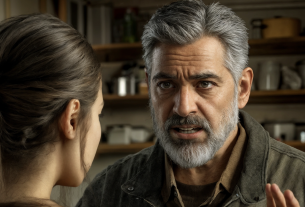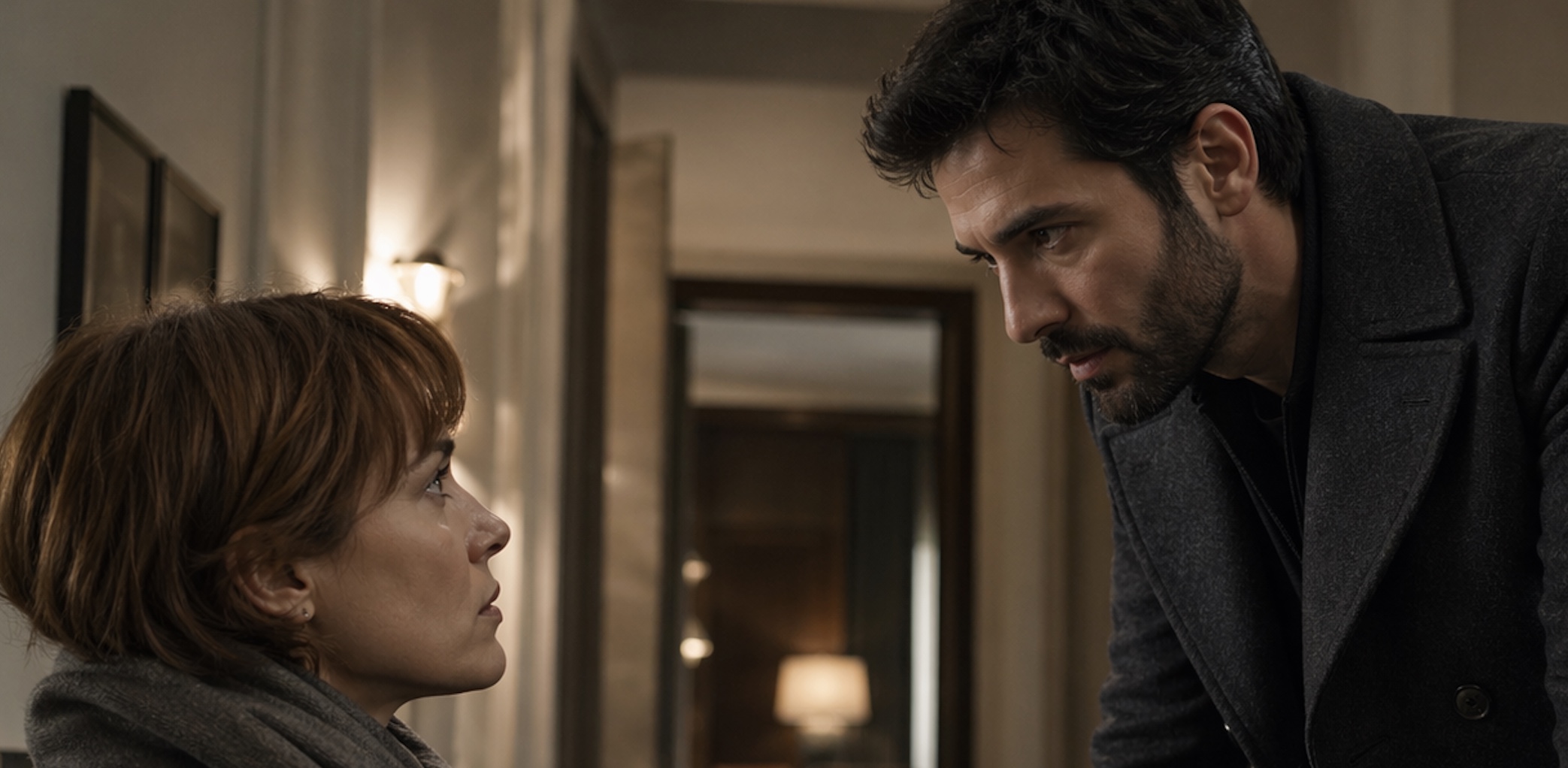
Marina stood in the courthouse hallway, watching Oleg talk on the phone. He was laughing. Loudly, freely — the same way he used to laugh when they had first fallen in love. Back then, he laughed for her. Now he was laughing at her.
“That’s it, we’re officially divorced!” he said into the phone, not even lowering his voice. “Yeah, it went fine. She didn’t argue at all. I left her the apartment — what, should I be sorry? It’s just a beat-up Khrushchyovka anyway. At least my conscience is clear.”
Marina tightened her grip on the folder of documents in her hand. Her fingers were trembling. Not from the cold, but from humiliation.
Fifteen years of marriage… She had cooked, cleaned, ironed, raised their two children, driven Oleg to doctors when he broke his arm on a construction site, spent sleepless nights caring for his mother after her stroke. And now, apparently, she had “never worked a day in her life.”
“How are you even going to live?” he had asked back in the courtroom while the judge was still signing the paperwork. “You’ve never worked a single day! What exactly are you going to do?”
He hadn’t been mocking her. That was what hurt the most. He truly believed it. He honestly could not imagine she was capable of existing without him. For fifteen years she had been his shadow. And a shadow, after all, is not supposed to know how to live once the person casting it is gone.
Marina stepped out of the courthouse into the sharp March wind. Gray sky. Puddles. The smell of damp concrete and thawing earth. She was forty-two years old. She had a teaching degree. Not a single line of work experience in her employment record. Two teenage children — Alyosha, fourteen, and Nastya, twelve. A cramped old apartment. And twenty-three thousand rubles in her bank account.
That was all.
She sat down on a bench at the bus stop and took out her phone. Her fingers dialed her mother’s number almost on their own.
“Mom, it’s done. We’re divorced.”
“Come over right away,” her mother said at once. “We’ll have lunch. I made пирожки.”
Marina smiled faintly. Her mother had always believed that pies could mend anything in life. Divorce? Bring out the pastries.
“I can’t right now.”
“Then tonight. Promise me.”
“Okay, Mom.”
She slipped the phone back into her pocket and sat there for a long while, staring at the passing traffic. Across from her, a woman dragged two enormous shopping bags. A man was walking a dachshund. A boy no older than ten splashed through puddles on a scooter while his mother yelled after him about his boots. Life moving on like always. A completely ordinary day.
Except for Marina, everything had split in two — before and after.
Oleg had left six months earlier. For Svetlana. A colleague. Thirty-one years old, long legs, a laugh like a silver bell. A cliché so predictable Marina hadn’t even been surprised. The only thing that had surprised her was that it hadn’t hurt at first. It felt as if something inside her had died long before, and all this did was give it permission to finally admit it.
The pain came later. When Oleg was packing his things. When he said, “You have to understand — we’ve been strangers for a long time.” When Alyosha slammed himself inside his room, furious. When Nastya asked, “Mom, did Dad leave us too, or just you?”
That was when it hurt. Truly hurt.
But Marina never cried. Not once. Even at night, when the pillow beside her lay cold and untouched, she would just stare up at the ceiling and think. Fifteen years — an enormous piece of a life. And she could not remember the last time she had done anything for herself. Not for Oleg. Not for the children. Not for her mother-in-law. For herself. She searched her memory and found nothing.
A week after the divorce, Marina sat at the kitchen table doing the math. Oleg had promised child support — thirty thousand rubles for both kids. Plus the twenty-three thousand she still had in the bank. Minus utilities, minus food, minus clothes for the children — Alyosha was growing like bamboo, new pants every couple of months. The total came out… grim. It might stretch through one month if she was careful. But after that?
She opened a job search website and typed: “no experience.”
Vacancies flooded the screen. Sales clerk. Cleaner. Call center operator. All of it low-paying, all of it bleak.
Marina shut the laptop. She picked up her mug of tea and walked to the window. The courtyard outside was empty except for a stray cat perched on the hood of someone’s car, calmly washing itself.
“You’ve never worked a day in your life.”
And what if he was right? she thought for a moment.
Then she got angry with herself. Angry for thinking in his words. Angry that she still measured herself by his standards.
Her phone rang. Unknown number.
“Hello?”
“Good afternoon. Is this Marina Dmitrievna Kolesnikova?”
“Yes, speaking.”
“My name is Vera Pavlovna. I’m a notary. May I ask — did you know Zinaida Fyodorovna Biryukova?”
Marina frowned. Biryukova. Biryukova… The name rang faintly somewhere in the distance, like a scent from childhood.
“No… Wait. Hold on. Aunt Zina?”
“Most likely, yes. Zinaida Fyodorovna passed away six months ago. And you are named in her will. There are no other heirs.”
Marina slowly lowered herself onto a stool.
“There must be some mistake. I last saw Aunt Zina when I was… ten, maybe eleven. She was a friend of my grandmother’s.”
“There is no mistake. You will need to come by the office. When would be convenient for you?”
As Marina rode to the notary’s office, she tried to remember Aunt Zina. A tiny, dried-up old woman. She had lived alone in a little house on the edge of town. She had cats — lots of them, five or six at least. And she made wonderful jam. Cherry jam. Thick, almost black, with whole cherries in it. When Marina was a child, she would eat it straight from the jar with a spoon while her grandmother sat on the veranda chatting with her old friend.
But why her? Why had Aunt Zina written a little girl she hadn’t seen in thirty years into her will?
The notary’s office was in an old building downtown. Vera Pavlovna turned out to be a woman in her sixties, wearing severe glasses and a surprisingly warm smile.
“Please, sit down, Marina Dmitrievna. Here is the situation. Zinaida Fyodorovna left you a house. More precisely, a property — a house with a plot of land. It’s in the settlement of Ozyorny, fifty kilometers from the city.”
“A house?” Marina repeated.
“A house,” the notary confirmed. “Wooden, one story, seventy-two square meters. The plot is twenty acres. The paperwork is all in order, the ownership is properly registered. There’s something else as well.”
She took an envelope from the folder. A plain white envelope, sealed, with neat old-fashioned handwriting on the front: “For Marinochka Kolesnikova. Personally.”
“Zinaida Fyodorovna asked that this be given to you together with the documents.”
Marina took the envelope. It was light. Inside was a single sheet of paper, covered in the same careful handwriting.
“Marinochka, hello. You probably don’t remember me. But I remember you well. You came to visit with your grandmother Vera, ate my jam, and played with the cats. You were ten years old, and you said to me, ‘Aunt Zina, it’s like a fairy tale here. I would live here forever and never leave.’ I remembered that. This house is a good one. The walls are strong, the stove works, there is a well in the yard. I ask only one thing: don’t sell it, at least not in the first year. Live there. Feel it. Then decide. God keep you. Yours, Aunt Zina.”
Marina read the note and felt something inside her tremble. She truly did not remember saying any of that. She had been ten. Just a child saying something sweet without thinking. But the old woman had remembered. Remembered for thirty years.
The house was exactly what Marina had imagined it would be.
Wooden, with carved trim around the windows. The paint was peeling in places, but the pattern was still visible. A little porch with creaking steps. Lilac bushes by the fence, still bare from March. And silence. A kind of overwhelming silence that only becomes audible after city noise has been stripped away.
Marina unlocked the door with the key the notary had given her. The smell of old wood rushed out to meet her, along with dry herbs and something else — something warm, lived-in, almost forgotten. In the entryway stood a pair of felt boots. An old shawl hung from the coat rack. In the kitchen: a wooden table, little flowered curtains. Three rooms. In the largest one — a traditional Russian stove tiled in white.
She wandered through the house, touching the walls, the furniture, the dishes. As if she were reading someone else’s life with her fingertips. Aunt Zina must have lived here for forty years, maybe more. Alone. No family. And yet she had left everything to a girl who once said something kind.
Marina stepped out onto the porch. Behind the house was a vegetable garden, beyond that the fence, and beyond the fence — a river. Narrow, unhurried, with icy banks. Past the river, a forest. Dark, March-bare, still carrying winter in its bones.
She took out her phone and called her mother.
“Mom. I think I know what I’m going to do.”
Naturally, everyone thought she had lost her mind.
Her mother was the first to react.
“You want to move to the countryside?! With two children?! Marina, are you out of your mind? There’s no proper school there, no hospital. What are you all going to eat? Grass?”
“Mom, I’ve thought it through. There is a school in the settlement. I called and checked. The district center is fifteen minutes away by bus. The house is good, solid — it just needs some work.”
“Some work!” her mother snapped. “And with what money?”
“I’ll figure it out.”
Her mother went quiet. Then she said softly,
“You’re just like your father. He always said, ‘I’ll figure it out,’ and then…”
“Mom. Please. I need support right now, not ‘and then.’”
The children reacted differently. Nastya was thrilled. At twelve, the idea of moving to a house by the river felt like an adventure. She was already dreaming of a dog and a boat.
Alyosha said nothing. He had been silent for months. Ever since his father left, he had closed in on himself, speaking in one-word answers, spending hours with his headphones on. When Marina told him about the move, he only shrugged.
“I don’t care.”
There are no more frightening words from a fourteen-year-old boy than “I don’t care.”
Oleg called two days later.
“Alyosha told me. Are you really moving to the countryside?”
“To the settlement. Yes.”
“Marin…” He hesitated. “Come on. What are you doing? If you want, I can give you some extra money. But don’t go off to some village…”
“Oleg, it’s none of your business.”
“What do you mean, none of my business? The kids are mine!”
“They’re ours. And they’re going with me. Unless, of course, they would rather stay with you and Svetlana.”
Silence.
Long, awkward silence.
“Fine,” he said at last. “Do whatever you want. But don’t say I didn’t warn you.”
Marina ended the call and exhaled. A strange sense of resolve had appeared inside her. As though someone within her had finally woken up after fifteen years of sleep.
They moved at the beginning of April. A truck brought over the essentials from the old apartment — beds, clothes, books, Nastya’s bicycle, Alyosha’s computer. Marina decided to rent out the apartment. Fifteen thousand rubles a month wasn’t much, but it would help.
The first evening in the new house, Marina lit the stove on the third try. Aunt Zina had left birch firewood in the shed as if she had known it would be needed. Once the fire caught, the house seemed to come alive. The walls crackled softly as they began to warm.
Nastya darted through the rooms, poking into every corner.
“Mom, there’s an attic! A real one! With a ladder!”
“Don’t climb up there yet. The boards might be rotten.”
“Mom, there are jars in this cupboard! A whole shelf of them! Is this jam?”
Marina came over. Inside the old kitchen cabinet stood at least fifteen jars. Cherry jam. Thick, almost black. Each jar had a little paper label with the date. The last batch was from the previous summer.
Marina’s breath caught. She stood there holding a jar and suddenly remembered herself at ten years old.
Alyosha was sitting in his room, silent as usual. But when Marina brought him tea and a sandwich, he unexpectedly asked,
“Mom, is there internet here?”
“Not yet. But tomorrow I’m going to find out.”
He nodded. And Marina could have sworn that — just for a second — he almost smiled.
The first month was hard. The house demanded hands: patch the roof, replace two rotten porch steps, fix the plumbing. Marina, who had never held a hammer in her life, watched videos on YouTube and learned. The results were crooked. But they were results.
Alyosha helped.
The neighbors — an elderly couple, Gennady Ivanovich and Tamara Sergeyevna — were wary at first. A city woman, alone, with two children. Suspicious. Unfamiliar. But when Marina came over with a jar of Aunt Zina’s jam and asked for advice about the garden, the ice began to crack.
“So you’re Marina, then?” Tamara Sergeyevna adjusted her glasses. “Zina used to talk about you.”
“She talked about me?” Marina asked, surprised.
“Of course she did. She kept writing letters to your grandmother Vera right up until the end. Vera told her everything about her granddaughter. That you got married, that you had children, that… well, that you weren’t especially happy.”
Marina sighed.
“My grandmother died five years ago.”
“I know, dear. Zina grieved terribly. But she never stopped keeping an eye on you from afar. She used to say, ‘Just wait, Tamara. One day she’ll come. And I’ll help her.’ Well… she did.”
By May, the house had changed. Marina painted the window trim bright blue, like in old photographs. She planted seedlings. She repaired the fence — with help from Gennady Ivanovich, who grumbled the whole time that “women aren’t supposed to be hammering nails, but fine, your hands may be clumsy, at least you’re trying.”
But the most important thing happened by accident. As the most important things usually do.
Marina was cleaning out the attic when she found Aunt Zina’s old belongings — clothes, dishes, magazines. And recipe notebooks. Thick notebooks filled with neat handwriting. Recipes for jams, sauces, compotes. Dozens of them. Notes. Advice. Tiny drawings in the margins.
Cherry with mint. Apple with cinnamon and cardamom. Plum with ginger. Gooseberry with orange. Marina read page after page, unable to stop. These were not just recipes. They were a whole system. Aunt Zina had spent years experimenting, testing combinations, recording proportions down to the gram.
Marina came down from the attic carrying the notebooks in both hands. Her fingers smelled of dust and old paper. She sat on the porch, opened one of the notebooks at random, and read:
“Cherry + thyme + honey instead of sugar. Simmer in three rounds, fifteen minutes each. It turns dark and thick, with a herbal finish. Nikolai said he had never tasted anything better. And Nikolai knew good food.”
Marina had no idea who Nikolai was. But something about the note — its simplicity, the tenderness with which the old woman described flavor and remembered someone’s praise — caught at her heart and would not let go.
That evening she cooked her first trial batch. Aunt Zina’s recipe: cherry with mint. Made from frozen cherries, because fresh ones were still months away. Nastya tasted it first and froze with the spoon halfway to her mouth.
“Mom. This is insanely good. Seriously.”
Alyosha tried it without a word. Then he helped himself to more. And then more again.
“It’s decent,” he said, not looking up.
For Alyosha, “decent” was the highest compliment imaginable.
The idea came to Marina that night. She was lying awake, listening to a dog barking somewhere far away, when suddenly she thought: what if? Jam. Homemade jam using unique old recipes. Natural, made from local berries, no chemicals, no preservatives. A tiny home business. She had seen women like that online — village women cooking and selling preserves. But they did not have these recipes. They did not have Aunt Zina’s notebooks.
The next morning Marina went to the district center. She visited the market to check prices. Then she stopped by a local organic foods shop to speak with the owner.
The owner turned out to be a woman around her age. Irina. Short hair, bright cheerful eyes, apron with the words “Eco Market” printed across it.
“Homemade jam?” Irina raised an eyebrow. “Well, that depends on the quality. Let me see it.”
Marina took a jar from her bag — cherry with mint.
Irina opened it, inhaled, tasted. Then paused.
“You made this yourself?”
“Using… an old woman’s recipe.”
“Listen,” Irina said. “I’ve been in this business for twenty years. I’ve tried everything. But I’ve never tasted anything like this. There’s something special in it. Do you understand this could actually sell? Properly?”
“That’s exactly what I wanted to ask…”
“How much can you make in a month? I’d need at least thirty jars to start. Different flavors.”
Marina began calculating frantically in her head. There were no berries yet, but she could buy frozen fruit. Jars. Lids. Labels. Labor.
“I can do it,” she said, even though she did not yet know whether she really could.
“Then here’s what we’ll do.” Irina handed her a business card. “Next week we have a weekend fair. You can have a table there. Free of charge — I’ll arrange it. Bring everything you manage to cook. We’ll see what happens. I can help you with jars too. We’ll work out the prices.”
The week that followed passed in a blur. Marina cooked from morning until night. She studied Aunt Zina’s notebooks like sacred texts. She experimented. Nastya washed jars. Even Alyosha wandered into the kitchen once and silently helped fill them.
By the time of the fair, Marina had forty-two jars ready. Six flavors. She arranged them on the table Irina had secured for her, spread an old checked tablecloth over it — another thing found in Aunt Zina’s cabinet — and set out tiny tasting spoons.
Then she waited.
The first hour, nothing happened. People passed by, some glanced over, but no one stopped. Panic grew inside her. Stupid idea. Who needs her jam? Oleg had been right — she knew how to do nothing.
Then one woman came over. Middle-aged, expensive coat, shopping bags from other stalls. She tasted the cherry-thyme jam. Froze in place.
“How much?”
“Three hundred fifty rubles,” Marina said, barely believing she was saying it out loud.
“I’ll take three. And this one too. And that one.”
Then came a second customer. A third. By lunchtime there was a line in front of Marina’s table. People tasted and bought. One jar, three jars. One woman bought ten — “for gifts, I have a юбилей.” A man in a cap asked, “Can you do custom orders? My son’s wedding is coming up, a hundred guests.”
By four in the afternoon, the table was empty. Forty-two jars. Gone.
Marina sat on a folding chair, staring at the bare tabletop and counting the money in her hands.
Fourteen thousand seven hundred rubles.
In one day.
From jam.
Irina came over and sat beside her.
“Well? Convinced now?”
“It was just luck…” Marina whispered.
“It was not luck. It was you. And those old recipes of your auntie’s — they’re gold. We need to have a serious talk.”
The summer flew by in a single breath. Marina worked the land, planted cherry trees, currants, gooseberries. The plants would take time, so for now she bought berries from locals. Word spread quickly through the settlement that the city woman was buying fruit, and people started bringing it to her themselves. Marina paid fairly. She never cheated anyone.
By July, she was making a hundred jars a month. Irina sold them in her shop. Two more local stores took them on consignment. A one-page website appeared — Alyosha built it. On his own. He just sat down at the computer one evening and asked only one question:
“Mom, what are we calling it?”
Marina thought.
“Grandmother’s Secret.” No. “The House by the River.” No…
“Aunt Zina,” Nastya said suddenly.
And they all went quiet. Because it was right.
That became the name. “Aunt Zina — Homemade Jam from Old Recipes.”
Alyosha built the site, created a social media page, photographed the jars beautifully — against weathered wood, dried herbs, wildflowers. Marina had never known her son had an eye like that. She had never known because she had never thought to ask.
One evening, the three of them were sitting on the porch with tea and cookies when Alyosha suddenly said,
“Mom, did you know we already have three hundred followers?”
“No. Is that a lot?”
“For a start, it’s okay. But I think we could grow more. If we make videos. Show how you cook. People like that — things that feel real.”
Marina looked at her son. For once, he wasn’t looking at his phone. He was looking at her.
“Let’s try it,” she said.
In September, something happened that Marina never could have expected.
She got a call from Moscow. A woman’s voice — quick, professional.
“Marina Dmitrievna? My name is Elena, I’m an editor for the program Your Own Business on…” She named the channel. “We found your profile online, and we loved your story. A woman rebuilding her life after divorce, moving to the countryside, starting a homemade food business. We’d like to film a segment about you. Would that be okay?”
Marina nearly dropped the phone.
“Wait… are you serious?”
“Absolutely. We’ll come to you, film the house, the production process, talk to you. The piece airs in three weeks.”
The film crew arrived at the end of September. Two cameramen, a sound engineer, and Elena — tall, red-haired, energetic. They filmed the house, the kitchen, Aunt Zina’s notebooks, the fair, the children. Marina told her story awkwardly, nervously. About the divorce. About the inheritance. About the recipes. About what Oleg had said.
“Wait,” Elena interrupted, leaning forward. “He really said, ‘How are you going to live? You’ve never worked a day in your life’?”
“Yes.”
“That’s our headline. You don’t mind?”
Marina didn’t mind.
The segment aired on a Saturday evening. Marina watched it with the children, clutching a pillow to her chest. It felt strange seeing herself on screen — tired, sun-browned, wearing an apron, hands stained with berry juice. But her eyes… the eyes on the screen were alive. Truly alive. Not like they had been six months earlier when she sat on that bench outside the courthouse.
After the broadcast, her phone exploded with orders. In three days, more came in than during the entire summer.
And then one more call.
Oleg.
“I saw you,” he said. “On TV.”
“Yes,” Marina said calmly.
Pause.
“It’s beautiful there,” he said quietly. “The house. The river. And… you look good.”
“Thank you.”
Another pause. Longer than the first.
“Marin… I probably shouldn’t have said that back then. About the work. I didn’t mean to hurt you.”
“Oleg, you didn’t hurt me. You woke me up. For that, thank you. Truly.”
She ended the call and smiled. Not because of him. Because of herself.
December. First snow. The house by the river stood wrapped in white, like a postcard. Smoke curled from the chimney — Marina was heating the stove. The kitchen smelled of cinnamon and orange zest: the Christmas jam series. A stack of orders lay on the table. Irina called every day now: “It’s not enough! Make more!”
Nastya was doing homework at the big wooden table. At her feet lay a ginger puppy they had picked up by the roadside in October.
Alyosha was editing a new video for their channel. They had eight thousand followers now. Recently he had said, “Mom, I might study design. I actually like doing all this — videos, logos…”
Marina stood by the window, looking out at the river. It was frozen over, but near the bank a narrow strip of water still moved — stubborn, refusing to give in.
On the windowsill stood a photograph in a wooden frame. Marina had found it in the attic among Aunt Zina’s things. An old picture: a young woman standing on the veranda. A bowl of jam on the table. She was smiling.
On the back, in faded ink, were the words:
“It was a good day.”
And for Marina, it was too.
A good day.
A good year.
And everything was only just beginning.