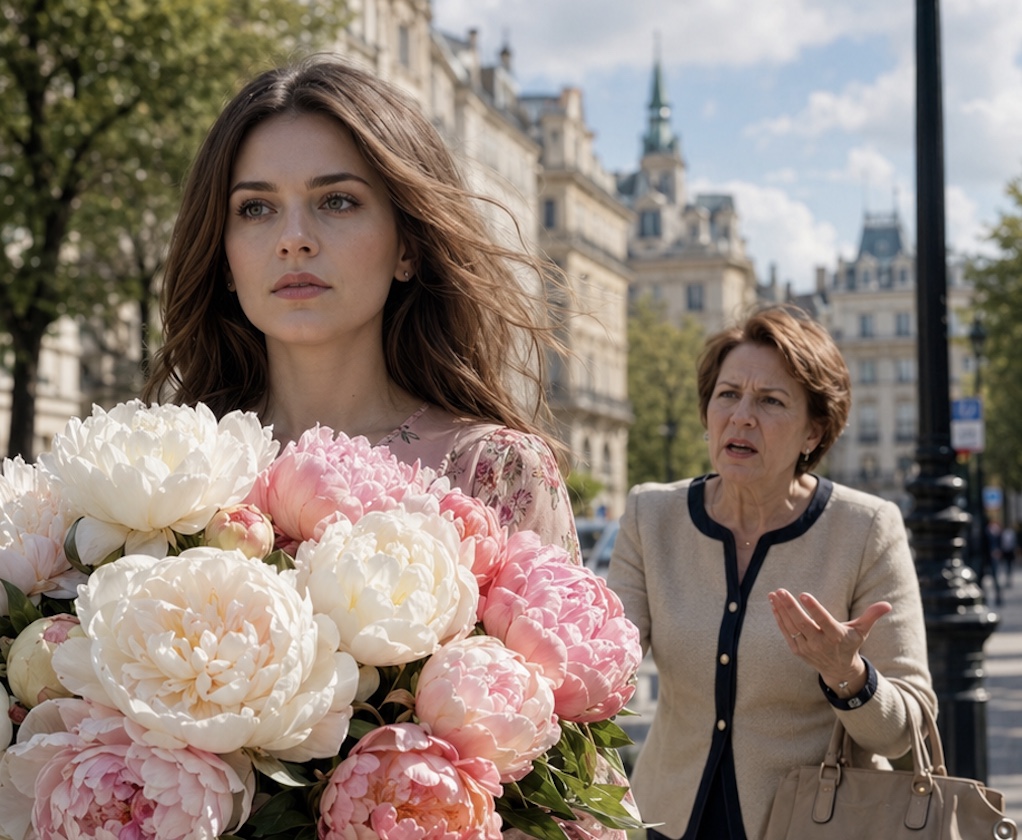
“Hand over the keys to the safe, Nadia, and stop pretending you’re the innocent victim here!” Rimma Albertovna demanded, raising her voice to that shrill, unpleasant pitch usually associated with furious marketplace vendors.
She stood in the middle of the small but immaculately tidy living room, her hands planted firmly on her hips. Her heavy frame, wrapped in a knitted cardigan the color of an overripe plum, looked solid, imposing, and utterly immovable. Her round face carried an expression of absolute, unshakable certainty.
Nadezhda had only just returned from the bank after an exhausting twelve-hour shift. She lowered herself onto the edge of the sofa without even taking off her ankle boots. Her head was still buzzing with endless figures, loan reports, and demanding clients. Yet instead of peace and quiet, she had come home to another family tribunal.
“What keys, Rimma Albertovna?” Nadezhda asked quietly, slowly rubbing her aching temples. “And why would I give you the keys to my private safe? It contains my savings and personal belongings that were left to me after my father died. None of it has anything to do with you.”
“That’s exactly the problem—they’re just sitting there doing nothing!” Vadim, Nadezhda’s husband, cut in as he hurried out of the kitchen with a half-eaten sandwich in his hand. “Kristina’s business is collapsing. Can your cold banker’s brain understand that or not? She urgently needs money to cover a cash-flow gap at her tanning studio. If she doesn’t pay the rent, the landlord will throw all her equipment out tomorrow. Mom is right, Nadia. We’re family. Your late father didn’t collect those gold coins so they could rust inside a metal box. He saved them so they could help people close to you in a difficult situation. Kristina is my sister, which means she’s family to you too.”
Nadezhda was forty-two years old. For the past twelve years, she had worked faithfully at a large commercial bank, gradually rising from an ordinary cashier to a senior specialist serving VIP clients. Her colleagues valued her for her remarkable patience, impeccable manners, and ability to resolve conflicts before they had a chance to escalate.
At work, Nadezhda handled millions every day. She processed major transactions, examined documents, and noticed even the smallest inconsistency. She liked everything to be orderly, from the perfect creases in her trousers to the household bills she paid on the first day of every month without fail.
Unfortunately, her home life was the exact opposite of her professional stability.
Vadim, whom she had married seven years earlier, worked only occasionally. He proudly described himself as an “independent strategic marketing consultant,” but in reality, he woke up around eleven, spent hours scrolling through social media, drank coffee purchased with his wife’s money, and found questionable freelance jobs about twice a year.
Whatever he earned disappeared immediately on personal indulgences: expensive electronics, designer clothes, or another course promising to unlock his masculine potential.
Nadezhda had tolerated it for years.
She had been raised in an educated, respectable household where open arguments were considered vulgar. She believed that if she showed enough patience, surrounded her husband with care, and never embarrassed him about money, he would eventually become responsible, find stable employment, and turn into a dependable partner.
Instead, her so-called feminine wisdom gradually transformed her into a workhorse.
She paid every expense connected with the two-bedroom apartment she had inherited from her grandmother. She bought the groceries, financed their trips to the seaside, and regularly covered the endless whims of Vadim’s relatives.
The most expensive of those relatives was Vadim’s younger sister, twenty-eight-year-old Kristina.
Kristina possessed a rare combination of childish irresponsibility and a passionate desire for a glamorous lifestyle. The tanning studio was already her fourth attempt to become a successful entrepreneur.
Before that, Nadezhda had paid the debts from Kristina’s failed vegan pastry delivery service, purchased equipment for a lash-extension salon that never opened, and settled microloans Kristina had taken out to finance a holiday in Bali.
“Kristina is a healthy, capable adult,” Nadezhda said, finally finding the strength to stand and unfasten her boots. “Her business risks are her responsibility. Why should I sacrifice my father’s inheritance to rescue another one of her reckless ventures? Last time, I gave Kristina my entire annual bonus. I had been saving it to replace the plumbing and renovate the bathroom. We still have cracked tiles, while Kristina bought herself an expensive new smartphone one week after receiving my money.”
“So that’s how you’re going to speak to us!” Rimma Albertovna cried, throwing up her hands theatrically before sinking into an armchair with a deep, wounded sigh. “Pipes matter more to you than a human life! The bathroom can wait. The tiles aren’t falling off the walls. Kristina’s reputation is at stake. The poor girl hasn’t slept for nights, and the stress has completely ruined her skin. You’re heartless, Nadia. I was right when I told Vadik that women who spend all day dealing with other people’s money eventually turn into cash machines themselves. There’s no soul left in you—only arithmetic.”
“Nadia, seriously, stop creating drama over nothing,” Vadim said, approaching his wife and attempting to wrap an arm around her shoulders.
Nadezhda gently but firmly moved away.
Vadim shook his head in disappointment.
“Your father’s coins have risen dramatically in value. We’ll sell them quickly to someone trustworthy, Kristina will pay the rent, the business will recover, and we’ll return every last kopeck. We can even buy identical coins later. What difference does it make? Gold is gold. Just give me the key. I’ll handle everything, and you won’t even have to go anywhere.”
“I’m not giving you the keys,” Nadezhda replied calmly, meeting her husband’s eyes. “This conversation is over. I’m exhausted and I want to sleep. Rimma Albertovna, please go home. Tomorrow is a working day.”
Her mother-in-law rose from the armchair and pressed her lips into a thin, pale line.
“Fine, Nadezhda. But remember—selfishness has never brought anyone happiness. If something happened to us, would you throw us out too? Come on, Vadik, walk me downstairs. I can’t stand being in a house where every coin is considered more valuable than family.”
Vadim went to escort his mother out, while Nadezhda locked herself in the bedroom.
She lay on the bed without changing her clothes and stared at the dark ceiling for a long time.
A heavy, sticky sense of guilt stirred inside her—the same guilt Vadim’s relatives had cultivated for years with the skill of professional gardeners.
Perhaps she really was too petty. Perhaps she had become too attached to material possessions.
But then she remembered her late father and the pride in his eyes whenever he showed her the fifteen gold chervonets coins carefully wrapped in velvet.
They were a part of him. His memory. His legacy.
They were not emergency currency for Kristina’s latest fantasy.
A week passed.
The argument appeared to have faded, but the apartment fell under the silent rule of a cold war.
Vadim stopped speaking to Nadezhda except in brief, icy phrases such as, “Pass the salt,” or, “I took the car keys.”
He stopped washing his dishes and left them piled in the sink as a silent accusation against her supposed selfishness. He spent entire days stretched across the sofa, staring at the ceiling with the tragic expression of an unjustly condemned martyr.
On Thursday, Nadezhda was released from work three hours early.
A major technical failure had disrupted the bank’s system, making customer service impossible, so management sent some of the employees home.
Nadezhda was delighted by the unexpected opportunity to enjoy a few peaceful hours. On the way home, she stopped at a bakery and bought Vadim’s favorite lemon pastries, hoping the small gesture might soften the tension between them.
She quietly unlocked the apartment door.
The hallway was filled with the heavy scent of Rimma Albertovna’s perfume. Her mother-in-law had come over again without invitation.
Nadezhda was about to announce her early arrival when she heard muffled voices coming from the bedroom at the far end of the corridor.
The door was partly open.
Nadezhda froze.
A cold feeling of foreboding tightened inside her.
“You should just break the thing open and be done with it!” Rimma Albertovna whispered sharply. “Why are you dragging this out, Vadik? Borrow a crowbar from the neighbor or call Grisha from the garages. He’ll cut that tin box open with an angle grinder in five minutes. While that miserable banker is away, we’ll take everything, sell the coins, and Kristina can fly to Sochi tomorrow as planned. She has a very promising man waiting there—a restaurant owner, apparently. She needs to look respectable, maintain appearances, and pay off her debts. Let your Nadia cry afterward if she wants. She won’t go to the police. She’ll be too afraid of being embarrassed at work. She’ll shout for a while and then calm down.”
“Mom, you don’t understand,” Vadim replied irritably.
A metallic scraping sound came from inside the room. He was apparently trying to force the safe open with a knife or screwdriver.
“It has both an electronic lock and a lever lock. If I start cutting the hinges, the noise will be so loud that the downstairs neighbors will call the police before Nadia gets home. We need the key. She keeps it in her handbag, in the zippered inside pocket. I saw it once. And I almost know the code. I’m sure about the first three digits. Here’s what we’ll do. Tonight, when she goes into the shower, I’ll take the key from her bag. Tomorrow morning, once she gets on the bus, we’ll open the safe and take everything. We’ll sell the coins to a jeweler.”
He paused before continuing in a contemptuous tone.
“And Nadia? Who else would want her at her age? She’s a gray little mouse in a cheap bank uniform. She isn’t going anywhere. Where would she escape from this submarine? The important thing is helping Kristina. Her life is finally starting to work out. I’m planning to leave this boring woman anyway, as soon as I get my share in Kristina’s new business. I’m sick to death of hearing her complain about me not having a proper job.”
Nadezhda stood motionless in the corridor, clutching the box of lemon pastries against her chest.
The cardboard collapsed beneath her fingers. The cream inside had probably been crushed, but she did not notice.
Vadim’s words rang inside her head.
Gray mouse.
Who would want her?
Boring woman.
I’m going to leave her.
The entire world she had built through patience, pity, and desperate attempts to preserve her marriage collapsed in a single instant.
The veil was gone.
These people had not merely taken advantage of her kindness. They despised her for it. They considered compassion proof of weakness and intelligence proof of foolishness.
For the first time, the usual fear and guilt did not rise inside her.
Instead, she felt a cold, precise, calculating fury.
Her heart beat steadily, as accurately as a Swiss watch.
Nadezhda carefully placed the ruined box of pastries on the hallway cabinet. She took out her phone, switched on the voice recorder, and stepped backward toward the entrance.
Then she slammed the front door loudly, pretending she had only just arrived.
“Vadim, I’m home!” she called brightly. “They let us leave early today!”
Something crashed inside the bedroom.
A second later, a pale Vadim rushed into the corridor with his hands hidden awkwardly behind his back. Rimma Albertovna followed him, breathing heavily and forcing an overly sweet smile onto her face.
“Oh, Nadia! We were just… we were checking whether there was a draft coming through the bedroom windows,” Vadim stammered, his eyes darting around the hallway. “Winter is coming. We need to insulate them. You’re always cold.”
“Yes, yes, it’s important to preserve warmth in the home,” Rimma Albertovna added quickly, tugging her cardigan back into place. “Vadik and I were discussing putting some sealant around the frames.”
Nadezhda looked at them with polite interest.
For the first time, she found their frightened, dishonest faces almost unbearable to watch.
“Of course. Windows are very important,” she replied calmly. “It’s thoughtful of you to take care of them. I’m exhausted, so I’ll change and start dinner.”
For the rest of the evening, Nadezhda behaved exactly as usual.
She roasted chicken and potatoes, participated in a dull conversation about the weather and fuel prices, and showed no sign that anything had changed.
Vadim gradually relaxed. Believing the danger had passed, he even attempted to joke.
Nadezhda looked straight through him as though he were nothing more than clean glass in a shop window.
On Friday morning, she left for work half an hour earlier than usual.
In reality, she had taken the day off, though she naturally said nothing to her husband.
Once Vadim left for another imaginary meeting with supposed investors, Nadezhda returned to the apartment carrying a large canvas shopping bag.
She opened the heavy oak wardrobe, entered the code on the safe, and turned the key.
The electronic mechanism clicked.
Inside were neat velvet pouches containing her father’s gold coins, several antique silver rubles, and a thick envelope holding 450,000 rubles in cash.
The money represented years of careful saving. Nadezhda had planned to send her mother to a good cardiac health resort in the Caucasus.
She transferred everything into the canvas bag.
Then she took out a thick packet she had prepared in advance.
On her way home, she had stopped at the hardware store located on the ground floor of the bank building and asked the clerk to weigh out two kilograms of large steel washers and bolts.
She poured the metal pieces into the velvet pouches so they maintained their shape and produced a convincing metallic clinking sound when moved.
In place of the cash envelope, she inserted a stack of outdated bank instructions printed on scrap paper and secured with a rubber band.
Then she locked the safe again.
From the outside, it felt and sounded exactly as it had before. No one would know the difference without opening it.
Nadezhda returned to her bank branch.
Using her employee privileges and corporate discount, she rented a private safe-deposit box for one year.
She personally descended into the underground vault and, under the supervision of a security officer, placed the gold, silver, and cash inside the steel compartment.
She locked it and also left the real key to the home safe inside.
Everything connected to her father and her past was now protected by a two-ton reinforced door, biometric security, and surveillance cameras.
On Saturday, Vadim’s family decided it was time for decisive action.
Around lunchtime, Rimma Albertovna arrived without warning. This time, Kristina came with her.
The younger woman had made a special effort to look devastated. She wore enormous sunglasses to conceal her supposedly tear-swollen eyes and a designer tracksuit intended to symbolize her tragic descent into despair.
Everyone gathered around the dining table.
Nadezhda silently poured tea and placed a plate of biscuits in the center.
“All right, Nadia. Enough games,” Rimma Albertovna said, pushing her cup away. “There’s no time left. Kristina has to fly to Sochi tomorrow morning. A serious investor is waiting for her there. If she doesn’t go, the business is finished and her life will be ruined. Vadik found the key to your safe in your handbag while you were in the shower last night. There’s no point hiding anything now. Give us the code. Don’t force us to break your furniture. We’ll take the coins, sell them, and settle the matter. We are a family, and we have the right to decide how these resources are used.”
With a triumphant expression, Vadim took a small metal key from his pocket and placed it on the table beside the sugar bowl.
“Nadia, why are you being so stubborn?” he asked, a faint threat in his voice. “Tell us the code. I already know the first three digits, so I’ll work it out eventually. You’ll only waste our time. Let’s do this peacefully.”
Nadezhda looked at the key, then at Vadim, then at Rimma Albertovna and Kristina.
There was no fear or anxiety on her face.
She suddenly remembered the famous line from the film Moscow Does Not Believe in Tears—that life begins at forty.
At that moment, Nadezhda realized how true it was.
Her real life was beginning right now, at this very table.
“All right,” she said calmly, rising from her chair. “Since you carried out such an impressive operation and even searched through my private handbag, let’s open the safe. Come with me.”
The entire group followed her toward the bedroom.
Kristina walked at the back, already tapping excitedly on her phone, perhaps checking the price of business-class tickets.
Vadim approached the wardrobe with great confidence. He inserted the key and entered the combination he had spent so much time watching over his wife’s shoulder.
The safe gave a short electronic beep and opened.
“There, you see? There was nothing to be afraid of!” Rimma Albertovna exclaimed triumphantly.
She shoved her son aside and reached greedily into the safe.
“Where are the pouches? Here they are. Nice and heavy…”
She pulled out the first velvet bag, untied the gold cord, and eagerly emptied its contents onto the bed.
Large gray steel washers and several heavy construction bolts spilled across the bedspread with a dull metallic clatter.
A dense, suffocating silence filled the room.
Kristina stood frozen with her mouth open.
Vadim rubbed his eyes as though convinced he was hallucinating.
“What… what is this?” Rimma Albertovna whispered in confusion.
She reached deeper into the safe and pulled out the stack of old printed instructions.
“Where is the gold, Vadik? Where is the money? What have you done with it, you idiot? Did you hide it from your own mother?”
“Mom, I didn’t touch anything! I swear! I only opened it just now!”
Vadim turned toward Nadezhda. His face had gone so pale that the small freckles across his nose became clearly visible.
“Nadia, where is everything?” he shrieked. “Did you rob us? What did you do with the coins and the cash?”
“Robbed you?” Nadezhda repeated with a faint smile, leaning against the doorframe and folding her arms. “That’s an interesting legal interpretation. Did I rob my own safe inside my own apartment?”
She paused, studying their faces.
“I’m afraid I have disappointing news. My father’s gold and my personal savings were officially transferred to a bank safe-deposit box yesterday. I am the only person authorized to access it, using my passport and biometric identification. So Kristina will have to fly to Sochi using her own savings—assuming she has any.”
“You calculating witch!” Rimma Albertovna howled, flinging the steel washers onto the floor.
Her face turned blotchy and crimson.
“So you were spying on us! Listening at doors! We were only joking. We were testing you to see whether you were a loyal and devoted wife to my son. Vadik was simply playing along to observe your reaction. And now you want to leave your own husband with nothing! Hand over the gold. It belongs to both of you. You’re legally married. We’ll take half of it through the courts!”
“No, you won’t,” Nadezhda replied.
She took a thick folder from the pocket of her house robe.
“Here are the account records and the certificate confirming my inheritance rights. Every coin was legally transferred to me by my father three years before I married Vadim. Under the law, it is my separate property and cannot be divided during divorce.”
She looked from one face to another.
“And as for your little joke…”
Nadezhda took out her phone and pressed play.
Vadim’s voice filled the room, clear and unmistakable.
“Who else would want her at her age? She’s a gray little mouse… I’m going to leave that boring woman anyway…”
Vadim froze.
His face showed raw, animal panic.
He stepped toward Nadezhda, looking ready to collapse at her feet.
“Nadia, sweetheart, it isn’t what you think! I was drunk. I didn’t understand what I was saying. Mom pressured me. She forced me! I love you, Nadia. You know that. We’ve been together for so many years…”
“Enough, Vadim,” Nadezhda said.
There was such strength in her voice that he fell silent at once.
“The performance is over. The actors are dismissed.”
She removed several documents from the folder.
“This is a copy of the divorce petition. I submitted it electronically this morning. And this is a formal demand that you remove your residential registration from this address. The apartment belongs to me. You have no legal claim to it.”
Vadim stared at her in disbelief.
“You have exactly one hour to pack your belongings. Anything you fail to place in your suitcases will be left beside the waste containers in the courtyard.”
“How dare you!” Rimma Albertovna began, but Nadezhda turned toward her.
“If you do not stop speaking and leave my home immediately with your daughter, I will submit this recording to the authorities along with a formal complaint concerning attempted group theft and unlawful interference with private property. My bank has an excellent legal department, and I assure you that your son and daughter will not enjoy the consequences.”
Her eyes moved to the clock.
“Your sixty minutes begin now.”
Kristina assessed the situation and realized there would be no money.
She was the first to rush toward the exit, leaving without even saying goodbye.
Rimma Albertovna muttered curses about the snake she had supposedly warmed against her breast before hurrying to help her son pack.
Vadim frantically shoved his numerous shirts, expensive trainers, phone chargers, and the sheepskin coat purchased with Nadezhda’s previous bonus into travel bags.
Nadezhda stood beside the living-room window with her back to them and watched large drops of autumn rain slide down the glass.
She felt no sorrow for the seven lost years.
She felt no grief for the man leaving her home.
Instead, she felt as though she had finally removed a filthy sack of stones from her shoulders—a burden she had carried uphill for half her life without ever questioning why.
Forty minutes later, the front door slammed shut.
A deep, blessed silence settled over the apartment.
Nadezhda went into the kitchen, carefully wiped away the crumbs, washed the cups, and brewed herself fresh tea with thyme.
The air inside her home suddenly felt clean and light.
Several months passed.
May arrived in sunlight and flowers.
Nadezhda’s life changed so completely that she sometimes found it difficult to believe her own happiness.
Her outstanding results and flawless years of service earned her a promotion to deputy manager of the bank branch.
She now had a spacious private office with a panoramic window, an excellent salary, and an entirely new level of professional respect.
She finally renovated the apartment.
The cracked bathroom tiles were torn away without mercy and replaced with warm olive-colored ceramic.
She gave away the old sofa where Vadim had spent so many years doing nothing. In its place, she bought an elegant rocking chair and a large bookcase, which she filled with her father’s history books.
Her mother successfully completed a treatment program at a cardiac resort in the Caucasus. She returned healthier, happier, and visibly younger, carrying an entire suitcase filled with mountain honey and dried herbs for her daughter.
Nadezhda’s remaining savings were no longer being wasted on irresponsible relatives. They now earned interest in a high-yield account.
Occasionally, mutual acquaintances shared news about Vadim and his family.
The stories brought nothing more than a faint, ironic smile to Nadezhda’s face.
Kristina’s business collapsed completely two weeks after the scandal.
Because of unpaid rent, the landlord sealed the tanning studio and seized the equipment.
Kristina never flew to Sochi. Instead, she was forced to accept a job as a sales assistant in a discount clothing shop, where she spent ten hours a day on her feet for a modest commission.
Vadim moved into his mother’s cramped one-room apartment on the outskirts of the city.
His strategic marketing expertise turned out to be in no demand at all.
When Rimma Albertovna grew tired of feeding an unemployed adult son on her small pension, she forced him to take a job as a night dispatcher for a taxi service.
At the end of April, Vadim tried to approach Nadezhda outside the bank after work.
He stood near the entrance wearing an old, slightly worn jacket. Dark circles under his eyes revealed weeks of poor sleep. In his hand, he held a small, unimpressive sprig of mimosa.
“Hello, Nadia,” he began ingratiatingly, taking a step toward her. “You look incredible. Like a queen.”
Nadezhda stopped but said nothing.
“You know, I’ve understood everything,” Vadim continued. “I realize how many mistakes I made. Mom was wrong, but she had such a strong influence on me. You know what she’s like. I miss our home. I miss your cooking. Maybe we could begin again with a clean page? I’m ready to find a permanent job. I swear.”
Nadezhda looked at him with calm, clear eyes.
Not a single old feeling stirred inside her.
His manipulation, pitiful appearance, and attempts to blame his mother no longer held any power over her.
The man standing before her was lazy, emotionally empty, and completely unfamiliar.
Nothing connected them anymore.
“I’m sorry, Vadim, but I have an extremely busy schedule,” she replied politely, adjusting the strap of her expensive leather handbag. “And my clean page has already been filled with entirely different plans. Take care of yourself.”
She walked past him toward the small new car she had purchased one month earlier.
Nadezhda sat behind the wheel and started the engine with confidence.
The car moved smoothly into the busy spring traffic of the city avenue.
She switched on the radio, and a soft jazz melody filled the interior.
Looking at her reflection in the rearview mirror, Nadezhda smiled.
Life was beautiful.
Life was surprising.
And at last, it belonged entirely to her.