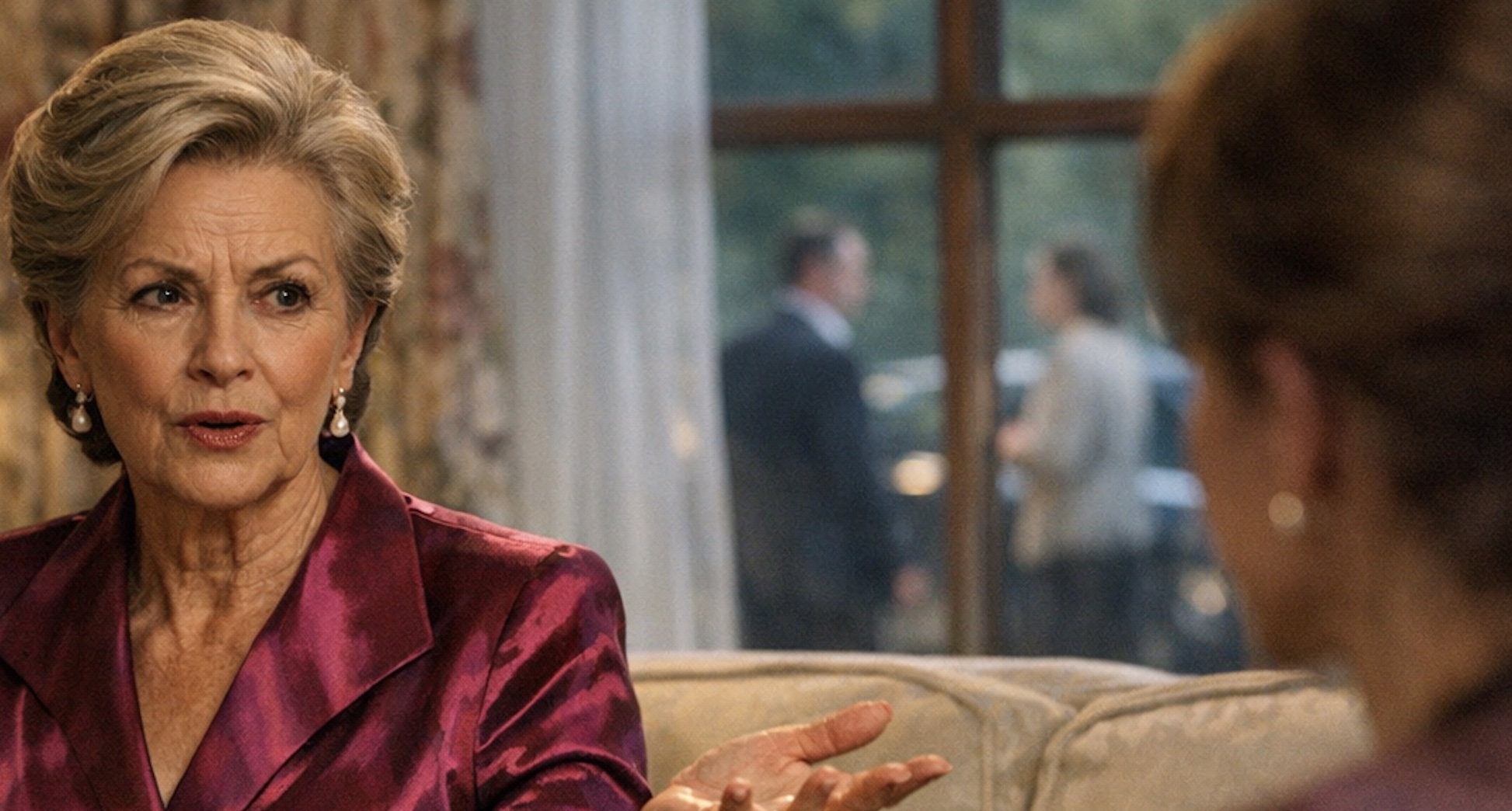
invitations were spread across the table like a fan, cream-colored envelopes stamped with gold foil. Larisa Petrovna curled her lips in disdain as she studied the bride’s photo printed on one of them.
“She is not the right match for us,” she repeated yet again, turning to her husband, who was absently flipping through a newspaper. “Do you even hear me, Viktor? Our Igoryok could have chosen anyone! He is a promising young man, works for a good company, has an apartment, a car…”
“Our apartment,” Viktor muttered without looking up.
“Exactly!” Larisa Petrovna exclaimed, seizing on his remark. “We gave him everything, devoted our whole lives to him! And what does he do? He brings home some girl named Nastya from the provinces. Came running to the capital, no doubt chasing a wealthy groom. I can see right through girls like that!”
“Larisa, calm down,” Viktor said at last, setting the newspaper aside. “Igor is an adult. He can make his own decisions.”
“An adult?” his wife scoffed. “He is about to marry the first girl he happened to meet.”
In truth, Igor had met Nastya almost a year earlier at a professional conference. She worked for a large logistics company, was intelligent, educated, and nothing like the fortune hunter his mother had invented in her mind. But Larisa Petrovna had already reached her verdict and had no intention of revising it.
Whenever Nastya came to visit, her future mother-in-law greeted her with a strained smile that never reached her eyes.
“So, where do your parents live?” she would ask with fake concern, though she already knew the answer perfectly well.
“In the Kurgan region,” Nastya would reply, doing her best to remain composed.
“Oh yes, of course,” Larisa Petrovna would say with a nod. “Well then, the provinces are the provinces. I suppose everything there is cheaper, simpler…”
“Mom, stop,” Igor would cut in, but his mother would wave him off.
“What? I am not saying anything wrong. I am just asking.”
A month before the wedding, Larisa Petrovna staged a full-blown scene.
“Igor!” she shouted, throwing her hands in the air in the kitchen of their spacious three-room apartment in a prestigious neighborhood. “Do you even understand what you are doing? That girl came to Moscow with a single suitcase! Her parents probably own nothing back in that village of theirs!”
“It is not a village, Mom. It is a regional center,” Igor said wearily.
“I do not care!” Larisa Petrovna snapped. “You are tying your life to someone from a completely different world! Your father and I have connections, status, a certain standing in society! And what do they have? Nothing!”
“I have love,” Igor said quietly.
“Love!” his mother mocked. “You will live with her for a year or two, and then what? She will drag all her relatives here and ask to move in with us!”
“We are not planning to live with you,” Igor said sharply.
“Oh, really?” Larisa Petrovna clutched at her chest. “So she has already turned you against your own mother. Wonderful. Just wonderful. Thank you, son. Thank you for such gratitude.”
Still, the wedding went ahead.
Larisa Petrovna arrived at the restaurant looking like a martyr walking to the scaffold. Her face carried such dramatic suffering that guests kept glancing her way.
Nastya’s parents had arrived the day before. Ivan Sergeyevich and Tatyana Nikolaevna were ordinary people in their early fifties—simple, warm, and openhearted. He was a broad-shouldered man with a kind face and a firm handshake. She was a pleasant woman with a gentle smile.
“It is such a pleasure to meet you!” Ivan Sergeyevich said cheerfully, shaking Viktor’s hand and then Larisa Petrovna’s.
“The pleasure is mine,” Larisa Petrovna replied through clenched teeth, giving the new in-laws a measured, appraising look.
Their clothes were well made, though clearly not designer labels. Tatyana Nikolaevna carried a modest handbag that was obviously not from a luxury brand. Larisa Petrovna felt a surge of smug satisfaction. There it was again: provincial, plain, unsophisticated.
At the reception, she sat with a stony expression, barely touching her food. When Nastya’s guests approached their table, she pasted on a mask of politeness, but the moment they walked away, she leaned toward her husband and began whispering.
“Did you see those relatives of hers? One of the uncles came wearing some ridiculous shirt. And that aunt’s dress looked straight out of a market stall. My God, what has our Igoryok gotten himself into?”
“Larisa, please be quiet,” Viktor begged.
But she truly outdid herself when she saw Nastya’s parents happily dancing to old pop songs.
“Just look at them,” she hissed to the friend seated beside her. “They dance like they are at some village disco. No polish, no elegance, no culture. And these are the people we are now supposed to be related to.”
Meanwhile, the bride’s parents were having a wonderful time. Ivan Sergeyevich chatted easily with the guests and told jokes. Tatyana Nikolaevna dabbed at her tears during the couple’s first dance. They were sincerely happy for their daughter, and that joy shone openly on their faces.
By the end of the evening, Larisa Petrovna had convinced herself even more firmly that she had been right all along. When Nastya and Igor came over with flowers and words of thanks for their parents, the mother-in-law deliberately turned away.
“Thank you for everything,” Nastya said, hugging her mother as Tatyana stroked her hair.
“Be happy, my darling girl,” her mother whispered.
Larisa Petrovna grimaced. Such provincial sentimentality, she thought.
After the wedding, the newlyweds returned to Igor’s apartment, where he had been living with his parents. The first few days passed in a tense atmosphere. Larisa Petrovna found fault with everything.
“Nastya, dear, do you not know how to make coffee?” she would ask in a honey-sweet voice. “Never mind, I can teach you. We are used to a certain standard here.”
Or:
“Igoryok, why don’t you take her out somewhere for dinner? Let Nastya breathe in a little of real capital-city life.”
Nastya would flush red, but stay silent. Igor was furious, though he tried not to turn every incident into an open confrontation.
A week after the wedding, Igor and Nastya were sitting in the kitchen one evening when Larisa Petrovna stepped out of her room.
“Mom, we need to talk,” Igor began.
“About what?” she asked, instantly on guard.
“We have decided… we are moving out,” he blurted.
Larisa Petrovna first turned pale, then bright red.
“What?!” she shrieked. “Moving out? To where? You have nothing!”
“We do,” Nastya said calmly.
“What do you mean, you do?” Larisa Petrovna rushed toward her. “What could you possibly have? A dorm room?”
“An apartment,” Igor said, placing documents on the table. “A one-bedroom apartment in Sokolniki. A gift from Nastya’s parents.”
Larisa Petrovna froze.
“What apartment?”
“Nastya’s parents own a chain of car service centers in their region,” Igor said coldly. “A profitable business. They sold part of it last year and invested in property. They bought this apartment as a wedding gift.”
The silence in the kitchen was so deep it seemed the air itself had stopped moving.
“But… how?” Larisa Petrovna stammered. “Why did they never say anything? They seemed so… so ordinary…”
“Because they are normal people, Mom,” Igor said harshly. “They do not flaunt their money. They do not brag about their status or their connections. They simply live their lives and enjoy them.”
“And now they can finally rest,” Nastya added. “My father has wanted for years to show my mother the world. And now that the business is arranged and we have a place in Moscow, they can finally do it.”
Larisa Petrovna stared at the documents. Her face slowly shifted from white to red, from red to almost purple.
“So they… they have… and I thought… I was so sure…”
“That they were backwards nobodies with no money?” Igor said, no longer holding back. “That Nastya was hunting for my money? For your apartment?”
“Igor!” Viktor, who had been silently listening from the other room, stepped into the kitchen. “Do not speak to your mother like that!”
“And how exactly should I speak to her?” Igor exploded. “She humiliated Nastya for months! She picked at every word! At the wedding she mocked her parents and called them simpletons!”
“I did not… I only…” Larisa Petrovna blinked helplessly.
“You simply decided you knew best what your son needed,” Nastya said, raising her voice for the first time. “You never even tried to know me. You never asked what I did, what I had achieved. You saw a girl from the provinces and instantly labeled her poor and desperate.”
“Nastya, calm down,” Igor said, taking her hand.
“No!” she said, rising to her feet. “She needs to hear this! I graduated university with honors. I worked three years in the regional office of my company, and then I was transferred to Moscow because of my results. I paid my own rent. I supported myself. I have never asked Igor for money, and I was never planning to live off him!”
“Nastya, dear, I did not mean—” Larisa Petrovna began, but her daughter-in-law cut her off.
“Yes, you did. You wanted to see an enemy in me, so that is exactly what you created.”
“Larisa,” Viktor said, resting a hand on his wife’s shoulder, “she is right. You went too far.”
Larisa Petrovna covered her face with both hands. For several minutes, the kitchen was silent except for the sound of her stifled sobs.
“When are you leaving?” Viktor finally asked.
“This weekend,” Igor answered. “The apartment is renovated. The furniture has already been ordered.”
His father nodded.
“I understand.”
The very next day, Larisa Petrovna underwent a miraculous transformation. She burst into the young couple’s room with a radiant smile.
“Nastenka! Igoryok! Let me help you furnish the new apartment! I have such taste, such experience. We could go shopping together!”
Nastya looked at her coolly.
“Thank you, but we will manage on our own.”
“Oh, come now!” Larisa Petrovna chirped. “I only want to help. And really, we should get to know your parents better too! Such wonderful people, and at the wedding we hardly had a chance to talk!”
“That is strange,” Igor said. “At the wedding you called them simple.”
Larisa Petrovna nearly choked.
“I did? Whatever are you talking about? You must have misunderstood.”
“Mom, enough,” he said tiredly. “Everything is obvious. When you thought Nastya’s parents were poor, you wanted nothing to do with them. Now you know they have money, property, a business, and suddenly you want to be close friends.”
“No, you are misunderstanding me!” Larisa Petrovna wrung her hands. “I was wrong, yes, I admit it. But I want to make things right now!”
“It is too late,” Nastya said flatly.
A few days later, Nastya’s parents called. Larisa Petrovna snatched up the phone before anyone else could answer.
“Hello! Ivan Sergeyevich! Tatyana Nikolaevna! How lovely to hear from you!” she gushed. “When are you coming to Moscow again? Let us meet, have dinner at a nice restaurant!”
“Good afternoon, Larisa Petrovna,” Tatyana Nikolaevna replied politely. “Thank you for the invitation, but we are leaving on a Mediterranean cruise. We have dreamed of it for years.”
“Oh! A cruise! How wonderful!” Larisa Petrovna practically squealed. “Perhaps Viktor and I could join you? We could keep each other company!”
Nastya, who had been listening nearby, gently took the phone from her mother-in-law.
“Hi, Mom. Do not mind this. You and Dad enjoy yourselves and get some rest. Igor and I will handle the move.”
“All right, sweetheart,” Tatyana Nikolaevna said, clearly relieved to hear her daughter’s voice. “Give my love to Igor. And do not worry about anything.”
When Nastya hung up, Larisa Petrovna cried out indignantly.
“How could you do that? I wanted to speak with them!”
“About what?” Nastya turned toward her. “About how simple they are and how they do not belong in your circle? Or about how their daughter was chasing a rich Moscow groom?”
“Nastya, please!” Larisa Petrovna clasped her hands together as if praying. “I understand now. I was wrong. Let us start over from the beginning.”
“No,” Nastya said calmly. “You have already shown us who you really are. Now we know exactly what you are worth.”
“Igor!” Larisa Petrovna pleaded. “Say something to her!”
Her son wrapped an arm around his wife’s shoulders.
“Mom, Nastya is right. You made her life miserable for months. You humiliated her. You insulted her and her family. And the moment you found out they have money, you suddenly wanted friendship. That is called hypocrisy.”
“But I am your mother!” Larisa Petrovna cried.
“And because of that, we will keep in touch,” Igor said with a nod. “But the relationship will be exactly what you chose for it to be—formal and distant.”
That weekend, the newlyweds really did move out. The apartment was bright and cozy, with fresh renovations and a view over the park. Nastya’s parents sent them a photo from Barcelona: the two of them standing by the waterfront, tanned, smiling, and happy.
Larisa Petrovna tried several more times to repair the damage. She brought gifts, offered help, invited them to family dinners. But Nastya and Igor remained polite and firm. They thanked her, yet kept their distance.
One day Viktor said to his wife:
“Larisa, leave them alone. You got exactly what you deserved.”
“But I only wanted what was best!” she sobbed.
“No,” he said, shaking his head. “You wanted control. You wanted a daughter-in-law who would feel indebted to you, dependent on us. But she turned out to be independent and from a good family. And you could not accept it until you heard about the money.”
“So now I will not even get to see my grandchildren?” Larisa Petrovna asked bitterly.
“You will,” Viktor replied. “On holidays. That is the price of your pride.”
Meanwhile, in their apartment in Sokolniki, Igor and Nastya sat on their new sofa, drinking tea and making plans for the future. On the laptop screen glowed a photo from Nastya’s parents.
“What do you think,” Igor asked, “when they come back, should we invite them over?”
“Of course,” Nastya said with a smile. “This is our home now. And only those who accept us as we are are truly welcome here.”
Igor wrapped his arms around his wife. Outside, the evening deepened and the park lanterns flickered on. Somewhere across the city, Larisa Petrovna sat alone with her phone, rereading the dry, one-line replies her son now sent to her messages. And for the first time in many years, she understood that not everything in life can be bought, and money does not always define a person’s worth.
But she understood it too late—when nothing could be undone anymore.