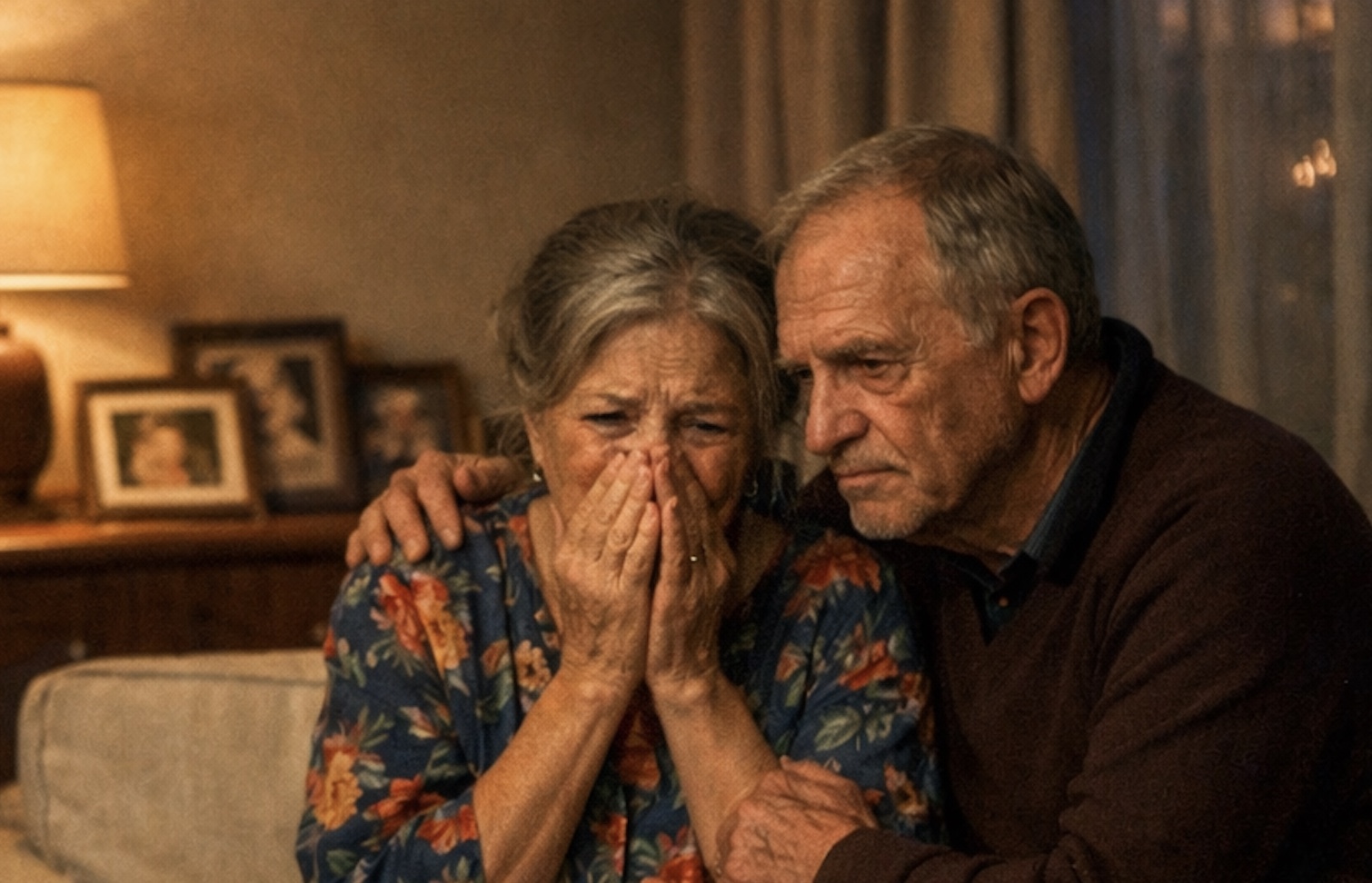
Katya left Luzyanki in August, right after graduation. It was not that she hated her hometown. She simply knew that if she stayed, within a year she would be working at the local grocery store, within two she would marry some guy from a neighboring yard, and by the third she would stop believing life could be anything different. She had seen it happen to others. She had watched the light go out in the eyes of people who kept postponing their departure for “later.”
Her mother saw her off at the bus station and cried as though she were sending her daughter to war. Her father stood beside them with his lips pressed together, silent as always. In hard moments, he buried words so deep inside himself that no one could reach them anymore. Her younger sister Alina, fourteen at the time, licked an ice cream and looked at Katya with naked envy.
“Message me when you get there,” her mother said, adjusting the strap of Katya’s bag. “And call right away. The minute you arrive, do you hear me?”
“I hear you, Mom.”
The bus pulled away. Katya watched the station recede through the window, watched her mother’s small figure, watched her father already turning back toward the exit. She did not cry. She was thinking only of the big city ahead and how she would have to cling to it somehow.
And she did.
‘
The first year was brutal. Katya rented a corner of a room in a three-bedroom apartment shared with four other girls just like her, girls who had also come from somewhere else hoping for more. During the day she worked in a café, and in the evenings she stocked shelves in a warehouse. She slept five hours a night, ate whatever she could afford, and counted every coin. But she never complained. She called her parents regularly and told them everything was fine, that she was adjusting, that the city was hard but interesting.
By the third month, she had started sending money home. Not much, barely more than a token, but she sent it. At first her mother refused to take it, then began accepting it. Her father pretended not to know anything about it.
In her second year in the capital, Katya got a job as a sales manager at a small company. The pay was decent, the team was normal, and for the first time she realized she had a gift for persuading people. It surprised her. She had always thought of herself as quiet, almost invisible. But it turned out she knew how to listen, how to catch what people wanted, how to choose exactly the right words. She could offer a product in a way that left a customer happy to buy it.
Two years later, she began saving for a business of her own.
The idea came by accident. One day she stepped into a tiny accessories shop near the metro and immediately saw that the whole place was being run wrong. The lighting was bad, the merchandise was displayed with no logic, and the saleswoman barely looked up from her phone. Yet customers still wandered in because the location was good and there were not many shops of that kind nearby. Katya walked out and kept walking for a long time, thinking. When she got home, by then she was already renting a decent one-room apartment by herself, she sat down and started doing the math.
She kept calculating for months. She studied the market, visited similar stores, spoke with owners of small retail spots, read everything she could find about small business. Then she rented a tiny space in a shopping center, painted the walls herself, set up the shelves, designed the layout, and opened the store.
At first she was terrified. Then it became more exciting than frightening.
The shop began to work. Not immediately. In the first months she barely broke even. But little by little regular customers appeared, traffic picked up, and she learned which items sold well and which did not. She learned how to negotiate with suppliers. The business grew slowly, but steadily.
By then she was sending her parents far more money than before. Not because she owed them anything. Simply because she could, and it felt right. Her father had left the factory because of his health. Her mother still worked in the library for a small salary. Alina had finished the local college by then and showed no desire to leave town.
“Katyusha, you’ve done so well,” her mother would say over the phone. “If only Alinka could be like you. She just sits there, waiting for I don’t know what.”
“Let her figure it out herself,” Katya would reply.
“You should talk to her. You understand how life works.”
“Mom, I can’t think for her.”
Alina never tried to follow her sister’s path. She had chosen another strategy: wait for life to arrange itself. Eventually, it seemed to. She met Dima, a local mechanic who worked at an auto shop and dreamed of opening a business one day. Her parents liked him. He was polite, brought cakes when he visited, helped Katya’s father with the garden. Six months later, the two announced they wanted to get married.
The wedding was planned on a grand scale.
Katya learned about it during one of the routine phone calls home. Her mother spoke with breathless excitement, listing everything they had already ordered and everything still to come, describing the dress Alina had chosen and the restaurant they had booked. Katya listened and thought she was happy for her sister. Let it all work out. Let her be happy.
“And where’s the money coming from?” Katya asked at the end. “You said things were tight.”
“Oh, we found a way,” her mother said vaguely. “Don’t worry about it.”
Katya did not press further. Maybe they had borrowed it. Maybe they had saved something. It was not her business, or so she thought.
She could not make it to the wedding. At that exact time she was opening a second section in her store, and everything hit at once. She called, congratulated them, transferred a generous gift. Alina thanked her coolly. They had never been close. They were simply too different.
Katya managed to visit only a few months after the wedding. She arrived on a Friday morning by train, standing at the gate of her parents’ house with a travel bag in hand, pleased she would be staying for a week, finally resting from the relentless rush of city life.
Her mother welcomed her as always: a table full of food, fresh pastries, that familiar smell that meant home. Her father hugged her hard and patted her on the back. Over lunch they talked about ordinary things: the store, the city, local gossip. Later her father went off for a nap, her mother washed the dishes, and Katya sat in the kitchen with tea, looking out at the old yard.
“Mom,” she said suddenly, “what about Grandma’s apartment? Is it still standing empty?”
Her mother fell silent. Katya did not notice at once, but there was a pause. A small one. A telling one.
“Katia…”
“What?”
Her mother turned around, wiped her hands on a dish towel, hung it on the hook, and sat across from her.
“Just don’t get upset.”
Something tightened instantly in Katya’s chest. That feeling people get when they do not yet know what happened, but already know it is bad.
“We sold the apartment,” her mother said. “For Alina’s wedding. There was so much to pay for, you understand…”
For a few moments Katya simply stared at her.
“What do you mean, sold it?”
“Well… your father and I decided what to do. Alina lives here, she needed…”
“Mom.” Katya’s voice came out strangely flat, the way it does when a person is trying with all their strength not to let it break. “Grandma left that apartment to me. Everyone knew it was mine. She said so herself. It was meant for me.”
“She never officially wrote it down, never signed anything…”
“Because we all understood. Because we were family. Because that was the agreement.”
“Katia, please, don’t raise your voice…”
“I’m not raising it.” She truly was not. She spoke softly, and somehow that made it worse. “I’m trying to understand how you decided it was acceptable to take something that was mine and spend it on a wedding. On a restaurant. On flowers. On guests. Without even asking me.”
“You were busy. You were far away. We didn’t want to trouble you…”
“You didn’t want to trouble me.” Katya stood up and walked to the window. The yard was the same as ever: the old birch tree, the children’s swings no one had repaired in years. “So you decided to do it in silence. Without a word.”
“Well, we’re talking about it now.”
“Yes. Now. After the apartment is gone.”
She stood there for a long time. Her mother said nothing, perhaps because she did not know what to say, perhaps because she understood that silence was safer. Through the wall came the faint sound of her father snoring in his sleep.
Katya thought of her grandmother. Of the way she had lived in that apartment all her life. Of the smell of old books and cabbage pies. Of the armchair in the corner where she used to read with her glasses on. Of the day, when Katya was still a teenager, when her grandmother had told her, “You’re the one who’ll make something of yourself. You’ll go far.” That apartment had been the last thing left of her. The last thread connecting them.
And they had cut that thread. Calmly. Casually. Without much thought. Just sold it so that Alina could have a wedding with a restaurant and a beautiful dress.
“I’m leaving tomorrow,” Katya said at last.
“Katia…”
“I need to be alone for a while. I’m not angry, Mom. I just… I need some space.”
In the end, she did not leave the next day but the day after. She gave herself one more day, walked through the town, sat in the old park where she and her grandmother used to stroll. She thought. She slowly, reluctantly let go of something inside herself.
She barely spoke to her mother. Even less to her father, who pretended nothing especially serious had happened. At dinner he said, “It’s not like you’re struggling, Katya,” and she looked at him in such a way that he never finished the thought.
Alina came by once with Dima. They said hello, sat for half an hour, made small talk about nothing. Alina did not apologize. Dima was friendly and slightly fidgety. They left early.
At the station, her mother cried again. Katya hugged her without bitterness, truly without bitterness, because over those days she had managed to settle a great deal inside herself. But the warmth that had once been there was gone. Something had shifted between them. Not shattered. Not completely. But shifted in a way that could never be undone.
“Will you come for New Year’s?” her mother asked.
“We’ll see,” Katya answered.
It meant no. They both knew it.
A few months passed.
Katya worked. The store demanded constant attention. She was thinking about expanding, scouting new locations, looking for additional suppliers. Life moved on in its own dense, full rhythm. She tried not to think about the apartment. Sometimes she succeeded. Sometimes she didn’t.
Her calls home became less frequent. When her mother called, Katya answered, spoke calmly, but she stopped sending money. Not out of revenge. Something inside her had simply said: enough. That’s enough.
Then one day her mother called again. Her voice was different this time, strained, almost cracked.
“Katia, there’s something… Alina is pregnant. And Dima lost his job. He got laid off. It all happened at once.”
Katya said nothing for a moment.
“I’m listening.”
“They have no money right now. And the baby will be here soon. Your father and I are helping as much as we can, but you know how little we have. Could you maybe help them out a little? Just temporarily, until they get back on their feet.”
Katya stood by the window of her apartment, looking at the city lights from a high floor. She knew exactly what she wanted to say. She just wanted to say it precisely.
“Mom,” she said at last, “you sold my apartment and gave the money to my sister for her wedding. I can’t help you.”
There was a pause.
“Katia, but that’s different…”
“No, it isn’t. You made a choice about money that was mine and spent it on a wedding. That was your decision. I’m sure it was very pretty. The restaurant, the dress, the guests. But tell me this: if the young couple can’t afford to support a child, then why did they need such a wedding in the first place?”
“You couldn’t do it modestly. People would have…”
“People would have what? Mom. You spent money on a celebration instead of giving the young family a safety net. That was your choice. You made it without me and didn’t even tell me. So now you’ll deal with the consequences without me too.”
“You’re still upset…”
“No, Mom. I’m not upset. I’m just speaking plainly. I came to this city alone with nothing. I worked two jobs. I built myself up from scratch. And all that time I still helped you. But there is a limit to what I am willing to do when people treat me as someone whose opinion doesn’t matter.”
“Katia…”
“Dima will find another job. Alina will find something too. They’re young. Let them figure it out. That’s normal. That’s life. You managed once. So can they.”
“But the baby…”
“That baby will be born to two grown adults who chose to have it. It is their responsibility, Mom. Not mine.”
Her mother went quiet. Katya could hear her breathing through the phone, soft and uneven.
“You’ve changed so much,” her mother said at last. “You were never like this before.”
“I was always like this,” Katya replied. “I just used to stay silent.”
They ended the call without shouting. Almost formally. Katya set the phone down on the table and sat in silence for a long time. Somewhere below, the city roared on. Tomorrow she needed to receive a new shipment for the shop, and she made herself a note so she would not forget.
She thought about Alina, and it mattered that she felt no hatred. She simply thought of her. Alina had chosen her own life: she stayed, found a man who was now unemployed, and was expecting a child. That was her path, her set of choices. Let her manage them. Let her learn how.
She thought about her parents too. They probably believed they had done the right thing. Katya was far away, Katya had everything, Alina needed it more. They had not seen it as betrayal. They simply had not thought deeply enough. And somehow that was worse than malice: that casual certainty that Katya would understand, forgive, and help. That Katya would always help.
No. Not always.
Spring came to the city loudly and in full color. Katya arranged a new spring collection in the store: bracelets, delicate chains, woven straw bags. She placed fresh flowers in small vases in the display window. Customers told her it looked beautiful. She was glad.
Her mother still called from time to time, briefly and cautiously, as if testing the ground. Katya answered. She talked about her life, listened to theirs. She never asked about Alina, and her mother no longer brought her up. She understood, apparently, that this subject was closed.
Then one day her father called himself. He almost never called first. As usual, he spoke slowly, with pauses.
“You hold it against us,” he said. Not a question. A fact.
“I did,” Katya answered.
“We thought we were doing the right thing.”
“I know.”
“Forgive us, if you can.”
She was silent for a moment.
“I don’t wish you any harm, Dad. Really. But some things don’t change just because you regret them.”
“Yes,” he said. Then, after another pause, “You’ve done well, Katya. You always were the strong one.”
“I know,” she answered quietly. “I made myself into who I am.”
He had nothing to say to that. They talked a little longer about the weather and his health, then ended the call. Katya put her phone away and headed to the shop. It was time to open.
Outside, the air smelled like spring. As she walked, she thought about how strangely life is built: sometimes the people closest to you hurt you so casually, so thoughtlessly, that anger almost feels impossible. All you can do is accept who they are, accept that you are different, accept that now there is a distance between you.
Her grandmother’s apartment was gone. It was a real loss, with no softening of the truth. Not because of the money. Because of what it meant. A place. A memory. The comfort of knowing that somewhere in that small town there had been a corner of the world that belonged to her.
That could never be restored.
But morning still existed. The city still existed. Her little store with spring flowers in the window still existed. Her own business. Her own life. Built with her own hands, without anyone’s help.
Katya unlocked the shop door and stepped inside.