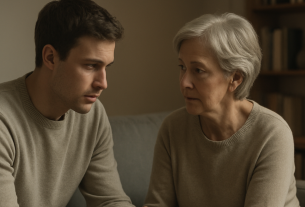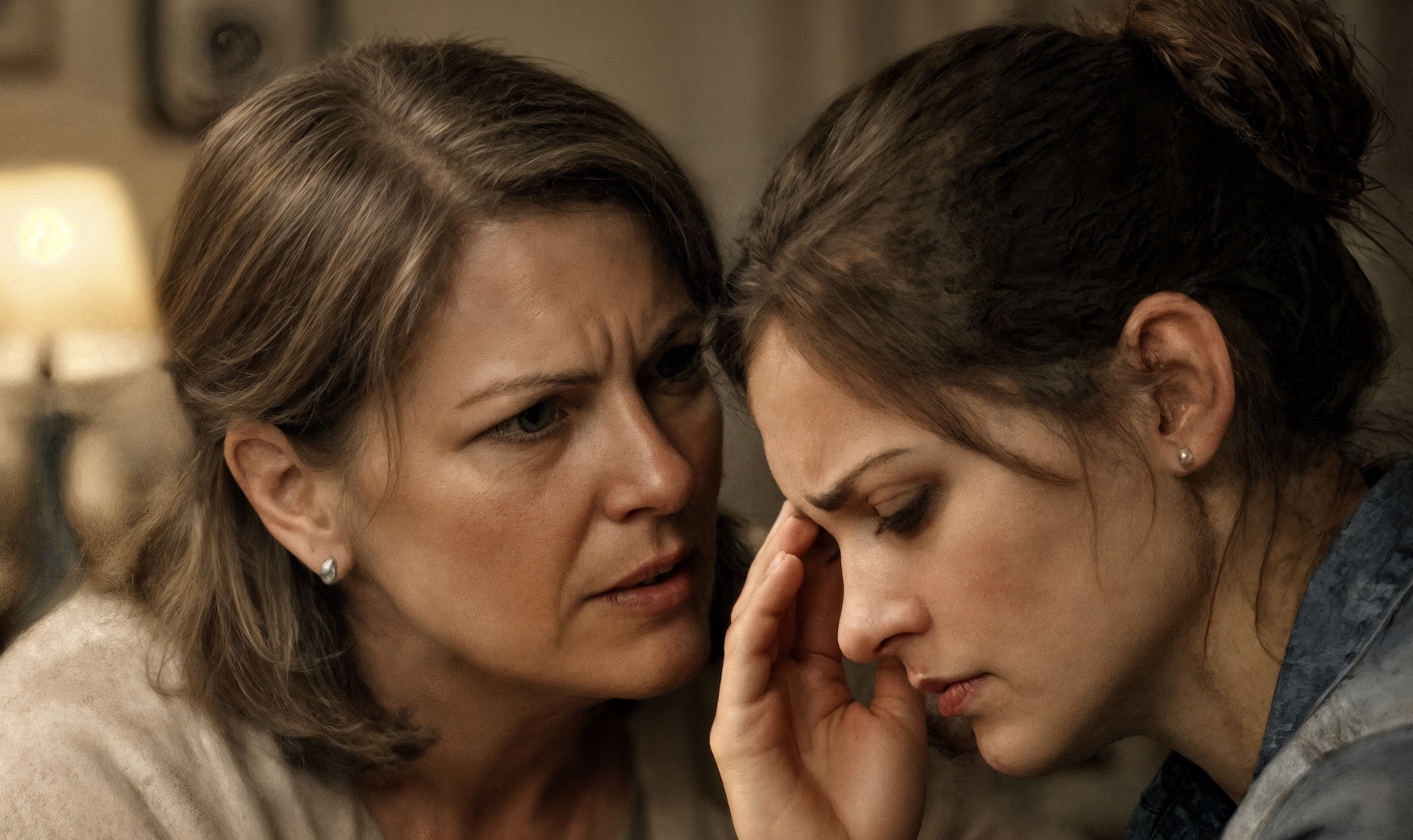
“Put the apartment in our names. That way divorce won’t even enter your mind.”
Nina Sergeyevna said it as casually as though she were asking for the salt. She sat at the kitchen table, straight-backed and rigid, her silver hair arranged with flawless precision. In front of her, tea was cooling in a porcelain cup edged with gold.
Alena stood still, dish towel in hand. The silence in the room grew so deep that she could hear a television turn on in the apartment next door.
“Mom, are you serious?”
“Do I joke about important things?” Nina Sergeyevna lifted her eyes to her younger daughter. Her gray gaze was filled with unwavering certainty. “You’re planning to marry Maxim, aren’t you? Then the apartment should be transferred to your father and me. For your own protection.”
The wall clock ticked steadily. Tick-tock. Tick-tock. And in that moment Alena understood: this was not about real estate at all. It was about control over her future.
Nina Sergeyevna had always been convinced she knew the proper way to live. At sixty-two, she still carried herself like a school literature teacher and clung fiercely to her beliefs about family. Marriage meant endurance. Family meant sacrifice. Divorce meant disgrace. She had absorbed those rules from childhood and carried them through life like sacred truths.
Her husband, Viktor Pavlovich, was in the living room reading the newspaper. When he heard the raised voices from the kitchen, he let out a quiet sigh and turned the page. After thirty-five years of marriage, he had mastered the art of staying out of conversations between his wife and their daughters.
“Vitya never supports me when it really matters,” Nina Sergeyevna often complained to her friends.
“But at least I don’t get in the way,” Viktor Pavlovich would joke whenever the comment reached him.
Alena remembered the family dinners of her childhood. Her mother arranged the napkins, her father poured the borscht, and then came the unavoidable lesson.
“Marina, sit up straight. Alena, elbows off the table. Girls, remember this: a man should feel like he is the head of the household, but the decisions are made by the woman. A smart woman.”
At times like that, Viktor Pavlovich would concentrate on buttering his bread, occasionally glancing at his daughters and giving them the faintest wink. That quiet conspiracy bound them more tightly than words ever could.
Their older daughter, Marina, was the first to step outside the path their mother had laid out. She married at twenty-three, had a son at twenty-four, and filed for divorce at twenty-seven.
“I warned you Andrei wasn’t right for you,” Nina Sergeyevna said when Marina came back to live with her parents. “But no, of course, you knew better.”
“Mom, how could I have known he’d turn into this after the baby was born?”
“Men don’t change. You simply didn’t know how to create the proper atmosphere at home.”
Alena said nothing then, only wrapped her arms around her sister and felt her trembling from the effort of holding back tears.
Marina had tried to save her marriage for two years. Alena remembered those evenings well: her sister with the baby in her arms, dark circles under her eyes, toys scattered across the apartment, and a hollow look in her face.
“He says he’s tired from work,” Marina would say as she rocked her son. “And what am I, not tired? I’m on maternity leave, not on vacation.”
One night, Alena woke to the sound of quiet sobbing in the kitchen. Marina was sitting at the table, her face hidden in her hands. A baby bottle stood beside her.
Viktor Pavlovich came out of the bedroom in his pajamas. Without a word, he set the kettle on and took a pack of cookies from the top cabinet—the oatmeal ones Marina had loved since childhood.
“Dad, I can’t do this anymore,” Marina whispered.
“I know, sweetheart. I know.”
“Mom will never forgive me.”
“Your mother will survive. But you need to live, not just endure.”
The next morning Nina Sergeyevna exploded.
“You’re simply not trying hard enough! In my day there were no divorces, because women knew how to endure!”
“In your day, women had nowhere to go, Mom.”
“Don’t you dare say that! Your father and I have lived together in perfect harmony our entire lives!”
At that moment Viktor Pavlovich was studying the pattern on the tablecloth with great focus.
A week later Marina moved into a rented apartment. Before leaving, she hugged Alena tightly and whispered:
“Buy a home before you get married. Even if you love him. Especially if you love him.”
That night Alena lay awake for hours, thinking about her sister, her mother, and her own future. The next morning she went to the bank and opened a savings account. She told no one. Not even Marina.
Alena met Maxim by accident—in line for coffee. He let her go ahead of him, she smiled, they started talking about the weather, then about work, and eventually exchanged phone numbers.
“I’m a programmer,” he said by way of introduction. “Boring and predictable.”
“I’m an accountant,” Alena replied. “Even more boring.”
But being with him was never dull. Maxim was calm, dryly funny, and independent. He owned a small apartment in a newly built complex—nothing luxurious, but warm and comfortable. Six months later, they moved in together.
“Your mortgage is your mortgage,” he said when Alena told him about her financial obligations. “Can you manage it?”
“I can. I rent the apartment out, cover the loan payments, and still manage to save.”
“Good for you. If you ever need help, say the word.”
But she did not need help. Alena paid the mortgage with steady discipline, denying herself new dresses and restaurant dinners so she could stay on course. Maxim never pushed her into shared spending; he understood what mattered to her.
In the evenings they sat at the same table: she with her laptop and payment spreadsheets, he with a soldering iron and another broken appliance spread out in front of him. Sometimes Alena would lift her eyes from the screen and watch him working with complete concentration. In moments like that she felt an odd, unfamiliar peace—as though she had finally found her place in the world.
“What are we fixing today?” she would ask.
“Your sister’s mixer. The bearing’s gone.”
“Marina will be thrilled. Thank you.”
“No problem. Tell my nephew I said hi.”
When she made the final payment, Alena could hardly believe it. Three years of saving, calculating, and refusing herself small pleasures—and now the documents to the apartment were in her hands. Entirely hers.
Maxim was the first to know.
“Congratulations. That’s huge. Are we celebrating?”
“First I’m going to tell my parents. They’ll be happy.”
Her parents’ apartment smelled of pies. Nina Sergeyevna had been preparing for her daughter’s visit and had baked Alena’s favorite cabbage ones.
“I have news,” Alena said, glowing. “I paid off the mortgage!”
Viktor Pavlovich broke into a smile.
“Well done! My daughter is officially a property owner!”
Nina Sergeyevna set down the pie server.
“You paid it off completely? The entire apartment is yours?”
“Yes, Mom. All mine.”
“And Maxim? He’s your future husband. The place is registered only in your name?”
“Of course. I bought it before I even met him.”
“That’s exactly what I’m talking about.” Nina Sergeyevna sat at the table and folded her hands in her lap. “Put the apartment in our names. That way divorce won’t even occur to you.”
The silence after her mother’s words did not last long. Alena slowly laid the towel on the table.
“Mom, are you telling me to hand over the apartment I spent three years paying for?”
“Not hand it over—protect your marriage. When people have somewhere to run, they stop fighting for the family,” Nina Sergeyevna said in the tone of a teacher explaining something obvious. “Look at Marina. If she hadn’t had the option to move out, she would have found a way to make things work with Andrei.”
“But the apartment would still be mine?”
“Formally, yes. But if something happened, you wouldn’t be able to simply leave. You’d come to us first, we’d talk, we’d sort it out. I would decide whether things were truly bad enough to justify divorce or whether you were just blowing things out of proportion. If it turned out to be unbearable, then yes, we’d return the apartment to you. But not before that.”
“So you would decide whether I’m unhappy enough to deserve access to my own home?”
“I would protect you from reckless decisions. Young women dramatize everything. One fight, and suddenly it’s divorce. But when there’s nowhere to go, people think, talk, and learn to compromise.”
“So you want me trapped?”
“What trap? Family is not a trap. It’s responsibility!”
Viktor Pavlovich appeared in the kitchen doorway, though he remained silent, leaning against the frame.
“Mom, Marina was miserable. She cried every night!”
“Everyone cries in marriage. I cried too. But I didn’t run back to my mother—I stayed and built a family!”
“And now you want us to suffer the same way?”
Nina Sergeyevna shot to her feet, the chair scraping harshly against the linoleum.
“I want you to be truly married! Not living with the comforting thought that you can always escape! Do you know my one regret? That Marina had the option to leave. If she hadn’t…”
“If she hadn’t, she’d probably be on antidepressants by now,” Viktor Pavlovich said quietly.
Everyone turned to him. Nina Sergeyevna went pale.
“What on earth are you saying?”
“The truth, Nina. Just the truth.”
Alena suddenly remembered falling off her bicycle as a child and scraping her knee badly. Her mother had said, “Don’t cry. The Vorontsovs do not fall apart.” Little Alena had swallowed her tears, forced a smile, and limped home. The wound healed. The habit of swallowing pain never did.
“I’m not transferring the apartment,” Alena said evenly. “It’s my apartment, my safety, and my decision.”
“Then don’t expect my support,” Nina Sergeyevna said, straightening up until she looked like a monument to herself. “And I will not come to the wedding. I don’t want to watch you destroy your life.”
“Mom…”
“That’s enough. The conversation is over. Go back to your Maxim. Since you have somewhere to go.”
Without a word, Alena picked up her bag. In the hallway her father caught up with her. He hugged her awkwardly—briefly, almost secretly—and whispered:
“You’re doing the right thing. Your mother… she’ll calm down. Probably.”
“Dad, what about you? Will you come?”
Viktor Pavlovich shook his head.
“You know how it is. Thirty-five years together.”
Alena nodded. She did know.
Outside, the air was bitterly cold. The February wind threw fine grains of snow against her face. She got into the car but did not start the engine. She just sat there, staring at the windows of her parents’ apartment—third floor, corner room, lace curtains.
Her chest ached as if some essential thread inside her were slowly snapping. The thread that tied her to childhood, to family dinners, to her mother’s pies. Yet beneath the pain came a strange sense of relief, like pulling off tight shoes after an endless day.
The line had finally been drawn. Clear, painful, necessary.
“Turn around for me!” Marina sat on an ottoman in the bridal salon, while four-year-old Timur lounged on her lap with an iPad.
Alena turned before the mirror. The dress was simple—not the giant cloud of tulle their mother had dreamed about when they were children, but elegant and fitted.
“Perfect. Maxim is going to lose his mind.”
“Mom won’t be there,” Alena said again.
“I know. That’s her decision, Alenka. Not your fault.”
That evening she and Marina talked for a long time on the phone. Her sister told her how Timur had learned to ride a scooter, how she had met an interesting man at the playground, how she planned to expand her little cake business.
“You know,” Marina said, “sometimes I think if I hadn’t gotten divorced, I never would have discovered that I can do more than just endure.”
“Mom would say you ruined your life.”
“Mom would say a lot of things. But we’re the ones actually living.”
After the call, Alena walked through her apartment. The living room where Maxim had set up his desk. The kitchen with the new coffee machine he had given her for her birthday. The bedroom with its enormous bed and travel photos on the walls.
This was not an emergency exit. It was home. Her home.
She stopped by the window. Below, children were building a snowman, a young mother was pushing a stroller, and an elderly couple moved slowly toward the entrance, supporting each other as they walked.
Family is not a cage with no door, Alena thought. It is a place where people stay by choice. Where love exists not because there is nowhere else to go, but because they genuinely want to be together.
Tomorrow she would put on a white dress. Marina would stand beside her. Her father might perhaps come secretly and watch from a distance—she had left him an invitation tucked beneath the windshield wiper of his car. And her mother… her mother had made her choice.
And Alena had made hers too.