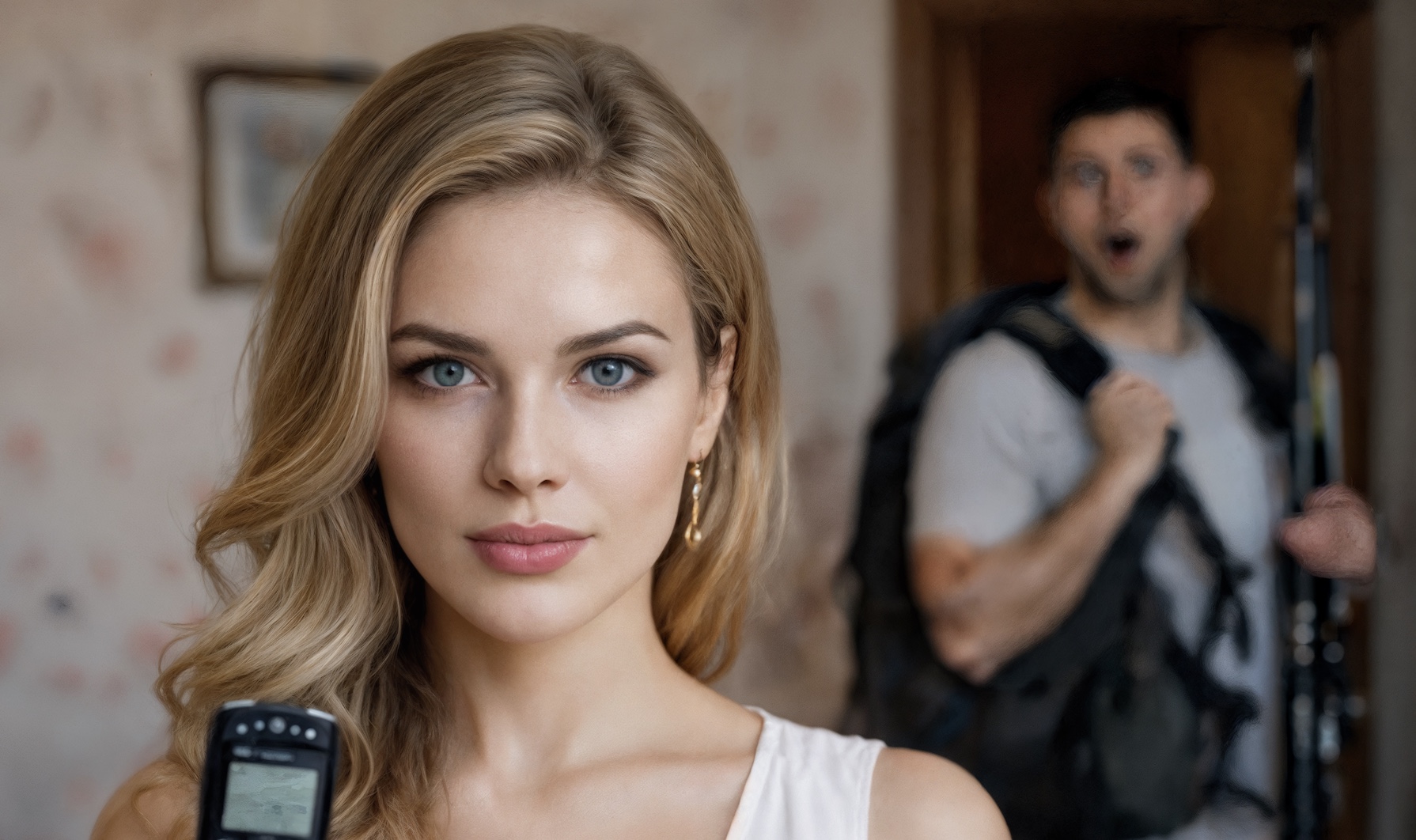
“Where are the fishing rods, Vitaly?”
The words slipped out before I could stop myself, even though I already knew what he’d say. We’d been performing the same little play for the entire ten years of our marriage—every other weekend—like a scratched record that never learned a new song. Vitaly froze in the entryway, one sneaker half-laced, and his face instantly arranged itself into wounded innocence.
“Ira, seriously? How many times do we have to do this? I’ve told you a hundred times—Petrovich keeps all the tackle in his garage.” He let out a heavy sigh and rolled his eyes up at the ceiling, where a single lightbulb hung—one he’d been “meaning to change” for a year. “We’re taking his car. Why would I haul everything across the whole city?”
Vitaly’s logic was always ironclad—unbreakable, perfectly convenient for him and no one else. I nodded at his shoes, pointing out the slush outside and the fact he was heading out in lightweight city sneakers. He waved me off, grumbling that he had spare shoes there, because fishing was “a state of mind,” not a checklist of gear.
He pecked my cheek with a dry, dutiful motion, more like stamping a pass than showing affection, and grabbed his enormous canvas backpack. The bag looked impressive, but it sat on his shoulder strangely light—like it was full of emptiness rather than food and supplies.
“I’ll be back for Sunday dinner. I’ll make fish soup, I promise.”
It was our old joke. I’d never seen that soup even once, because supposedly they “released the fish for sport.” I pretended to believe him—it was easier that way, easier to keep the illusion of a normal family and a little personal space. The front door slammed shut, cutting me off from his rehearsed cheer, and the lock clicked through its familiar two turns.
I stayed in the hallway, and my gaze fell on the dresser. Among the bills and receipts lay the parent unit of a baby monitor—forgotten. We’d bought the set as a gift for my nephew, but the box got crushed and the present never left our apartment. The second piece—the transmitter shaped like a goofy plastic teddy bear—was missing.
I slipped it into the side pocket of Vitaly’s backpack while he was shaving, obeying a sudden impulse that felt almost mischievous. My heart thumped hard against my ribs as I picked up the parent unit, walked into the kitchen, and pressed the power button.
Through static, the sounds of the street broke through: tires hissing on wet asphalt, irritated car horns. Then came the metallic clank of something—he must’ve climbed into a minibus, because Vitaly always considered taxis a waste of money. I sat there listening to my husband set off on his “rugged man’s retreat,” complete with campfire smoke and mist—at least in the story he sold me.
Fifteen minutes later, the engine noise faded. I heard fabric rustle, then the familiar chirp of an intercom. Oddly enough, it was exactly the same tone as the intercom in the new building complex next door—the one we could see perfectly from our window. An elevator groaned to life with that strained, scraping sound I’d heard plenty of times when I visited… my sister.
Then came a doorbell—impatient, three short rings—and everything inside me tightened.
“Well, finally! I was starting to think you’d grown roots over there with your wifey!”
My cup slipped from my hand. Coffee spilled in a dark puddle across the tablecloth, but I didn’t even move to wipe it up. That voice wasn’t Petrovich’s gravelly bass, and it wasn’t some secret girlfriend from a spa whispering sweet nonsense. My husband had been “going fishing” without rods for ten years—and now I was hearing the voice of my own sister, Olga.
“Yeah, Ira was on me again about boots,” Vitaly said, bright and cheerful—nothing like the weary condescension he saved for me. “Barely got away. ‘Where are the rods, where are the rods,’ nag-nag-nag.”
“Whatever, come in,” Olga replied. “I ordered pizza—‘Meat Attack,’ like you love. And the beer’s already chilling in the fridge. Toss the backpack in the corner.”
“Ooooh, heaven,” my husband moaned, and I heard the light bag hit the floor. “Hey, Olya, hand me the remote. The match starts in five minutes—our guys are playing.”
“During halftime, check the shelf in the bathroom. It’s totally loose again.”
“I will, I will. Did you bring out the chips?”
I sat there staring at the wet stain, unable to make it fit inside my brain. Olga—my older sister—who lived two courtyards away and called me every Sunday with that fake-sweet question: “So, how’s your provider? Back from his trip?” My fingers turned the volume up, terrified of missing even one word.
“Listen,” my sister said with her mouth full, “does she seriously still believe that ‘sporting’ nonsense after ten years?”
“Your Ira?” Vitaly snorted, making a disgusting chewing sound. “She’s ‘spiritual.’ Tell her it’s about bonding with nature and she’s happy—anything as long as I’m not underfoot at home. I need peace. Here with you is paradise: nobody nags, nobody makes me take out the trash, nobody tries to have relationship talks.”
“Well, you’ll still fix my faucet,” Olga said. “That’s why I feed you, you parasite, and why I cover your little legend.”
“It’s not a legend, Olya. It’s a mutually beneficial ecosystem,” he declared theatrically. “I get weekends without brain-melting drama, you get a man in the house for an hour for tiny chores—and gossip. By the way, did you see what she wore yesterday? That polka-dot dress?”
“Ugh, don’t remind me,” Olga laughed. “Collective farm ‘Red Bast Shoe.’ I told her it makes her look bigger, but you know our Ira…”
They both laughed, and that laughter hit me like a bucket of ice water. What washed over me wasn’t rage—it was a strange, clear understanding that snapped everything into place. All these years he hadn’t been cheating on me with women. He’d been cheating on me with comfort.
He’d been running to my sister’s place to eat junk food, watch dumb shows, and sprawl on the couch—while I stayed home trying to be the perfect wife. And Olga got a free handyman on demand and the pleasure of tearing me apart behind my back, enjoying her little sense of superiority over “poor Ira.” The two people closest to me had built a lazy, hypocritical conspiracy right under my nose.
I glanced at the clock. Only forty minutes had passed since the door closed behind him. Calmly, I wiped the coffee off the table, tossed the rag into the trash—and then the chipped mug followed it. To hell with keepsakes. To hell with old attachments.
I pulled a rolling suitcase out of the closet and yanked open Vitaly’s wardrobe. T-shirts, jeans, those “fishing pants” still with the tags on—everything went into the suitcase in a shapeless heap. I worked fast and silent while the apartment filled with the baby monitor’s crackle and the TV muttering through its tiny speaker.
“…and then she goes, ‘Let’s re-wallpaper,’ can you imagine?” Vitaly’s voice droned. “I immediately told her my back was acting up, and I ran to you.”
“Aww, poor thing,” Olga cooed. “Here, take another slice—keep your strength up.”
The suitcase was stuffed to the brim. I forced the lid down and dragged the zipper shut with a hard tug. I got dressed quickly: jeans, a T-shirt, sneakers. No “vintage,” no trying to look cute—only comfort and speed. A Comfort-class taxi arrived in five minutes. I wasn’t about to carry his junk across town myself.
The ride was ridiculously short—the driver even looked surprised—but I didn’t care. I didn’t buzz the intercom; I slipped in while a neighbor with a little dog was leaving. Third floor. The familiar door padded with faux leather. Behind it, they were chewing and laughing.
I set the suitcase right in front of the threshold, pulled up the handle, and leaned my ear against the door. Someone scored on TV, and Vitaly screamed, “YES! Legends!”
I took the parent unit out of my pocket, turned the volume all the way up, and held down the talk button. Now my voice would come from inside Vitaly’s backpack—lying right there at their feet.
“Vitalik!” I said loudly and clearly into the microphone. “Nice goal! But you forgot to change your boots—you’ll catch a cold!”
A dead, cottony silence fell. Even the television seemed to quiet.
“Ira?” Olga’s muffled, frightened voice came at the same time from behind the door and from the speaker a second later.
“The backpack…” Vitaly croaked. “It’s talking. It’s coming from the backpack…”
There was frantic movement, the sound of a zipper ripping open, like they were trying to defuse a bomb.
“Hi, fishermen,” I said into the mic with icy calm. “I’ve got a business proposal for you. The same ‘ecosystem’ you love so much, sweetheart.”
The door flew open. Olga stood there in a robe, still holding a slice of pizza she’d forgotten to let go of. Behind her, Vitaly sat frozen on the couch in a sleeveless shirt, belly sticking out—the one he always sucked in at home. They stared at me like I was a glitch in their reality, because “Ideal Ira” was supposed to stay home and wait.
I nudged the suitcase forward with my foot. It rolled inside and thumped against my sister’s slippers.
“Here you go, Olya—humanitarian aid,” I said, looking her straight in the eyes. “A full set: clothes, socks, even his toothbrush. And that drill he’s been ‘unable to find’ on the top shelf for a year.”
“Ira, what are you… you got it all wrong…” Vitaly bleated, trying to peel himself out of the blanket.
“I got it perfectly right,” I cut him off, hard, not letting him squeeze in a single excuse. “You wanted peace? Take it—permanently. And you, Olya, wanted a man in the house? Congratulations. He snores and eats a lot, but hey—he can hang shelves… sometimes.”
“Ira, let’s talk at home!” he shrieked, finally staggering to his feet.
“My home is going to be clean now,” I said. “And there won’t be any backpacks in the hallway.”
I turned around, feeling an unbelievable lightness in my shoulders.
“Put the keys to my apartment on the little table. Now.”
Automatically, he patted his pockets, pulled out the keyring—and handed it to Olga. She, like she was sleepwalking, passed it to me.
“But what about us…?” my sister started, then stopped.
“That’s your problem now,” I said. “May you have love, advice, and a pleasant appetite.”
I called the elevator. As the doors slid shut, I watched their stunned, stupid faces. They were left alone together with cooling pizza and my suitcase—and now they’d have to actually live with each other for real. For some reason, I was sure their precious “ecosystem” would collapse faster than a house of cards in the wind.
Outside, I inhaled the damp autumn air. It tasted better than the finest wine. That small plastic device had done more than a hundred heart-to-heart conversations ever could. I swung my arm and tossed the baby monitor into a street trash can.
My phone buzzed in my pocket. The screen flashed: “My Love.” Without hesitation, I hit Block. My sister’s number followed right after.
My stomach growled—I hadn’t eaten since morning. On the corner, a bakery sign glowed, the one that sold those sinful cherry puff pastries I’d always forbidden myself for the sake of my figure.
“Two cherry pastries, please,” I smiled at the cashier, “and the biggest coffee you have—with syrup.”
I sat by the window, bit into the hot flaky dough, and sweet jam ran down my fingers. I was alone. I had an empty evening ahead—and a whole life where I no longer had to pretend I believed in fishing trips without fishing rods.
A month later, mutual friends told me Vitaly moved out of Olga’s place after two weeks. Turns out, their “ecosystem” couldn’t survive everyday life.
But that wasn’t my story anymore.