I stood at the entrance to the restaurant, holding my daughter’s hand. Kira was tired after the clinic, cranky, and hungry. We had just gone in for her vaccination, and I had promised her something tasty afterward. The restaurant was nearby, and I also wanted to check how things were going there. I hadn’t been here for three weeks—ever since my daughter caught a cold and I stayed home with her.
I was dressed simply: old jeans, a sweater with a snag on the sleeve, and sneakers. My hair was pulled into a ponytail, no makeup. After a sleepless night with a feverish child and a morning at the clinic, I looked, to put it mildly, awful. But I didn’t care. The main thing was that Kira was feeling better and we had finally gotten that vaccination done.
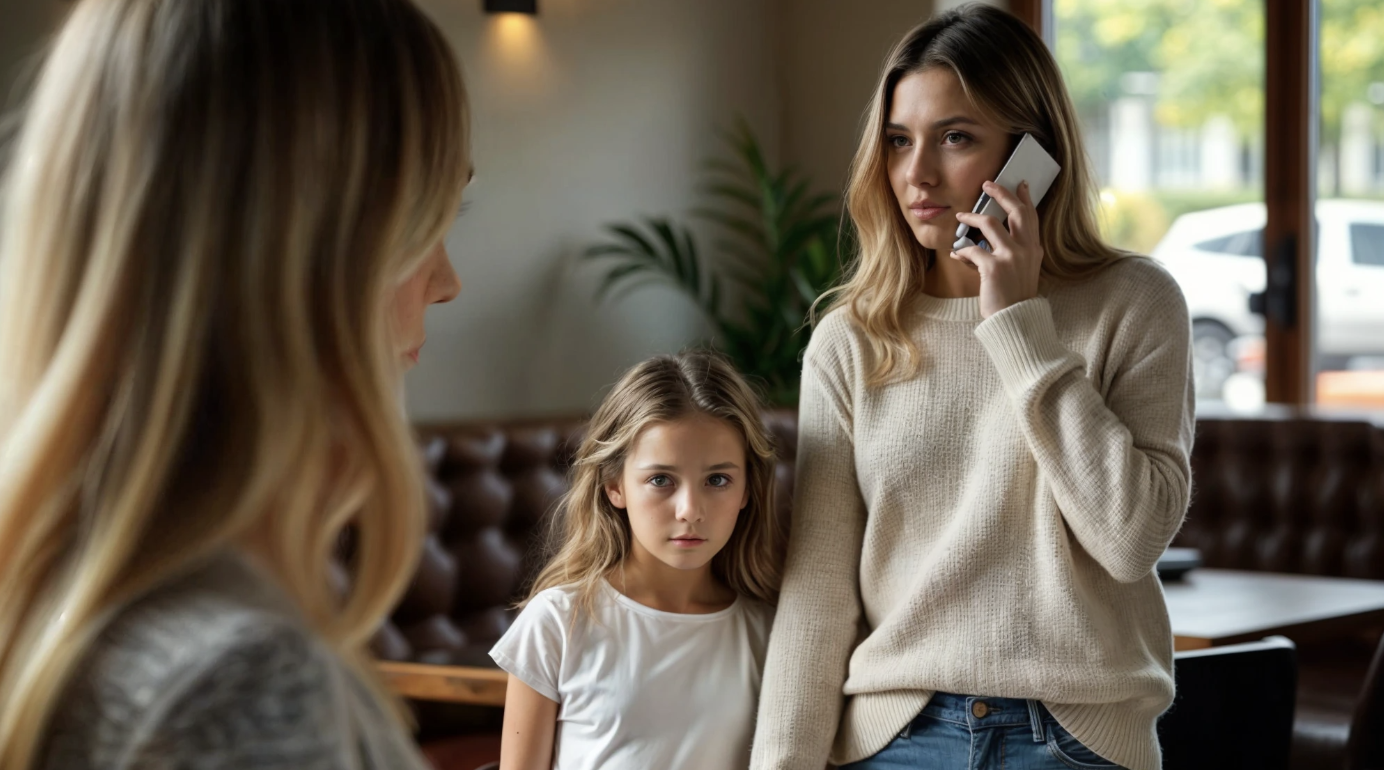
I pushed open the restaurant door and walked inside. The dining room was half-empty; lunch rush hadn’t started yet. Behind the host stand stood a girl of about twenty-five whom I had never seen before. Brightly made up, in a tight dress, with her hair piled high. She was laughing into her phone, paying no attention to us.
Kira tugged my hand.
“Mom, I want to eat. You promised pancakes.”
“Just a second, sweetheart. Wait one minute.”
I walked up to the stand. The hostess was still chatting on the phone. I waited patiently, but after a minute Kira started whining louder.
“Mommy, when? I really want to!”
The hostess finally looked up, sweeping her eyes over us from head to toe. A disgusted expression appeared on her face. She said something quickly into the receiver and set the phone down on the counter.
“What do you want?” she asked irritably.
“We’d like a table,” I replied calmly.
She looked me over again—my worn jeans, old sweater, faux-leather bag. Kira fidgeted beside me, tugging at my hand and repeating that she was hungry.
“We’re fully booked,” the hostess snapped.
I glanced into the dining room. Out of fifteen tables, only three were occupied.
“But there are free tables.”
“They’re reserved.”
“All of them?” I was surprised. “At one in the afternoon on a Thursday?”
The girl crossed her arms over her chest.
“Yes, all of them. We work by reservation only. You should have called ahead.”
Kira began to whimper. She was tired, hungry, and I understood that real tears were coming any second. I pulled out my phone.
“Fine. Then I’ll call and make a reservation right now.”
The hostess snorted.
“It’s too late now. Everything’s booked.”
I started dialing the manager. I needed to understand what was going on here. I had hired this hostess a month earlier, when Marina—my longtime hostess—went on maternity leave. The new girl had been recommended by the manager; he said she was experienced and had worked at good places.
When the hostess saw that I was calling, she leaned toward me over the counter. Her face twisted with anger.
“Listen, get your kid out of here. We don’t have room for broke moms,” she hissed quietly so the guests in the dining room wouldn’t hear. “Have you looked in the mirror? This is a respectable place, understand? People with money come here. And you…” She flicked her gaze at me. “Go to some cafeteria—that’s where you belong.”
I froze with the phone in my hand. Kira pressed against my leg, frightened. Inside, everything boiled, but I forced myself to stay calm. The manager picked up on the third ring.
“Hello, Natalia Sergeyevna?” Andrey’s voice sounded surprised. He hadn’t expected a call from me during work hours.
“Andrey, hi. I’m at the restaurant. By the entrance. Can you come down?”
“Of course—I’m coming!”
I slipped my phone into my pocket. The hostess watched me suspiciously. She clearly sensed something was wrong, but still didn’t realize who I was.
“Who did you call?” she asked warily.
“The manager. He’ll be down in a moment.”
The girl’s face went pale. She straightened up, trying to put on a businesslike expression.
“Why did you bother Andrey Vladimirovich? If you have complaints, you could have addressed them to me.”
“Complaints?” I smiled. “No, no complaints. I just want to talk.”
Andrey emerged from a door at the back of the dining room. Tall, in a строг suit, he walked quickly toward us. Seeing me with Kira, he smiled—then caught the look on my face and turned serious.
“Natalia Sergeyevna, good afternoon! How is Kira feeling? Better now?” He crouched down in front of my daughter. “Hi, sweetie! How are you?”
Kira smiled at him. She knew Andrey; he often came to our place with reports when I was working from home.
The hostess stood as if rooted to the floor. Her eyes widened; the color drained from her face. She understood who I was.
“Andrey, introduce us,” I said, nodding toward the girl. “What’s her name?”
“This is Veronika, our new hostess. Veronika, meet Natalia Sergeyevna Komarova—the owner of the restaurant.”
Veronika opened her mouth but couldn’t make a sound. Her face turned gray.
“Nice to meet you, Veronika.” I reached my hand across the counter. “Please tell me why there was no table for me and my daughter. Why are all the tables reserved at one in the afternoon on a Thursday when the dining room is half-empty?”
Veronika was silent. Her hands trembled.
“Natalia Sergeyevna, I don’t know what happened,” Andrey said, looking at the hostess, confused. “Veronika, please explain.”
“I… I thought…” she stammered. “You were dressed like that… and I thought you weren’t our kind of customers.”
“Not your kind of customers?” I raised an eyebrow. “And what kind of customers are we supposed to have?”
“Well… well-off ones. Dressed nicely…”
“So if someone is dressed simply, you don’t let them into the restaurant?”
Veronika said nothing. Andrey went pale.
“Natalia Sergeyevna, I didn’t know this was happening. I’m very sorry.”
I looked at Veronika. She stood with her head down, biting her lip. It was unpleasant to watch her, but she needed to learn.
“Veronika, do you know that discriminating against customers based on appearance is illegal? That anyone who comes into a public place has the right to be served as long as they follow the establishment’s rules and are ready to pay?”
She nodded.
“I know.”
“Then why did you refuse to serve us?”
“I wanted to do what was best. I thought I was protecting the restaurant’s image.”
“The restaurant’s image is created not by refusing people service, but by offering good food and good service to everyone who comes in. It doesn’t matter if someone is wearing a suit or jeans, whether they have a lot of money or not. Our job is to feed people tasty food in a pleasant setting. All people.”
Veronika stayed silent. Tears welled in her eyes, but she tried to hold them back.
“When I opened this restaurant, I dreamed that any mom with a child could come here after an exhausting day and simply rest—eat—without worrying about how she looks. That people would feel at home here. And you turned my place into a spot where people are judged by their clothes.”
I opened this restaurant three years ago. I put all my savings into it, took out a loan, took a risk. I did the renovation myself, chose every spoon, every painting on the walls. I wanted to create a cozy place people would want to return to. In the beginning I stood behind the hostess stand myself—greeted guests, smiled at everyone, walked them to their table. I knew how important it was for someone to feel like a welcome guest.
Then business picked up. I hired staff and started coming in less often. Kira was born; I stepped away from the business for a while and left management to Andrey. He handled things well; I trusted him. But with hiring, apparently, something had gone wrong.
“Andrey,” I said to the manager, “please gather the whole staff. I want to hold a meeting. Right now.”
“But in half an hour the lunch rush starts,” he said timidly.
“All the more reason. Let everyone gather.”
Five minutes later the dining room filled with waiters, cooks, and bartenders. Everyone looked at me in surprise. Many were seeing me for the first time. I asked Andrey to keep an eye on Kira and stepped into the middle of the room.
“Hello. For those who don’t know me, I’m Natalia Komarova, the owner of this restaurant. Today I faced a situation that made me think about what’s happening in my establishment. I came here with my daughter, dressed in ordinary clothes after a visit to the clinic. And the hostess refused to serve me, saying I didn’t look like a customer at our level.”
A murmur ran through the room. The waiters exchanged glances; Veronika stood at the stand with her head lowered.
“I want all of you to remember this: our restaurant is open to everyone. To young moms with children, to elderly people, to students, to office workers—to everyone. We don’t judge people by their clothes or their wallet. We greet every guest with respect and warmth. If anyone here thinks differently, please say so now. That’s your right—but then we’re not on the same path.”
No one spoke. The cooks nodded in agreement. The waiters looked guilty.
“Good. Then get back to work. And remember this conversation.”
The staff dispersed. Only Veronika remained. She stood at the stand and cried.
“Natalia Sergeyevna, forgive me. I’m an idiot. I understand everything. Give me a chance to fix it.”
I looked at her. She was young and foolish, but she seemed sincerely remorseful.
“Veronika, I’ll give you one chance. But if I ever hear again that you’re rude to guests or refuse someone service without a valid reason, I’ll fire you on the spot. Agreed?”
She nodded, wiping her tears.
“Agreed. Thank you so much!”
I took Kira by the hand.
“Well then, sweetheart—shall we finally eat? I think we’ll be able to find a table for us.”
Veronika rushed to a table by the window, spread a tablecloth, and began setting the place. Her hands shook, but she tried to do everything perfectly.
We sat down. Kira happily ordered pancakes with honey; I chose a salad and coffee. The waitress—a girl named Lena who had worked for us for a year—brought the order quickly. She smiled, asked how Kira was feeling after the vaccination. We chatted a bit, and I realized the foundation was solid. The staff was good. It’s just that sometimes people show up who need the obvious explained to them.
While we were eating, Andrey joined us at the table.
“Natalia Sergeyevna, please forgive me. I’m at fault for not keeping a closer eye on the hostess’s work. I should have checked more often how she talks to guests.”
“Andrey, don’t worry. This is a lesson for all of us. Now you know you have to pay more attention to training new employees. Explain not only their duties, but also the philosophy of the place.”
He nodded.
“Absolutely. I’ll run additional training sessions with the staff.”
After lunch, Kira and I left. Near the exit Veronika stopped me.
“Natalia Sergeyevna, thank you for giving me a chance. I’ll work harder than anyone. I promise.”
I nodded.
“I believe you. Just remember: every person who walks through that door deserves respect. And then everything will be fine.”
We went outside. Kira held my hand and smiled contentedly.
“Mom, the pancakes were really yummy!”
“I’m glad, sweetheart.”
I thought about how that unpleasant incident had actually been useful. The staff learned an important lesson, Veronika understood her mistake, and I reminded myself that you can’t forget your business even while on maternity leave. You have to come in more often, check on things, talk to people. Because a restaurant isn’t just a place where food is cooked. It’s a place where people rest their souls—where they should be met with joy and warmth. And it doesn’t matter what you’re wearing or how much money is in your wallet. What matters is that you’re a human being. And that’s enough