Friday was hellish. Dasha and I were worn out at work like dogs, but there was no choice — urgent chores were waiting at the dacha. We left in traffic and arrived after dark. It poured all night, and in the morning the sun burned all the moisture away, turning the ground into a dirty mess. But we were determined.
We worked the whole day without a break. I mowed the grass that had grown up to my waist and hacked down the overgrown raspberry bushes. My back burned like a ball of fire. Dasha was weeding the beds, her arms buried in earth up to the elbows, beads of sweat on her forehead that she brushed away with the back of her gloved hand.
“At least once, I’d like to do nothing on a Saturday,” she said dreamily, straightening up and struggling to unbend her back. “Just lie in a deckchair and stare at the sky. Read a book. One day like normal people have.”
“Deal,” I promised her that for the hundredth time, and for the hundredth time it hadn’t worked out. “Tomorrow is pure relaxation. No chores at all.”
We finished by evening, half dead, but satisfied. The plot was sparkling clean. We raked up the last armful of weeds and tossed them into the fire. The smell of smoke and freshly cut grass — the best scent in the world. We showered and had dinner on the veranda in pleasant silence, listening to the crackle of a twig in the fire. We went to bed thinking that tomorrow would be our day.
The morning really did start perfectly. I woke up to birdsong instead of an alarm. The sun was gently filtering through the gaps in the shutters. Dasha was already fussing in the kitchen; it smelled of fresh coffee and something delicious.
“Good morning, beautiful,” I hugged her around the waist.
“Hi,” she smiled. “I went to look at what we did — it’s gorgeous. Coffee on the veranda?”
We had just set out the cups, ready to enjoy the silence and peace, when an insolent car horn sliced through it right at the gate. Sharp, demanding. My stomach dropped. I recognized that sound.
People spilled out of the car, parked any which way, blocking the drive. First bounced out my sister Sveta in a huge straw hat and with a suitcase full of cosmetics. Then her husband Yegor, with a grill slung over his shoulder and a huge bag of charcoal. And their two kids, who immediately shrieked and tore off toward the strawberry bed.
“All right, chop-chop, wake up, the guests have arrived!” shouted Sveta as she walked through the gate like she owned the place. “Oh, coffee! Just what I need, I froze on the road, the AC was blowing.”
She plopped herself down in the best deckchair, the one Dasha had just covered with a fresh throw.
Yegor dropped the grill with a crash right in the middle of the neatly mowed lawn.
“Bro, come on, start marinating the shashlik, we’re starving after the road. The meat’s in the trunk, go get it. Your grass is kind of damp, by the way, you should’ve prepared better, you knew we were dropping in.”
I saw Dasha’s fingers start to tremble. She set her cup on the table and said quietly, but very clearly:
“Sveta, we worked our butts off here all Friday until night. We just wanted to relax today. Give us at least one day to recover.”
Sveta took a sip of my coffee, grimaced, and set the cup aside.
“Oh, come on, you’ll rest with us, it’s more fun that way! What’s the difference where you lie around? And you, Dasha, don’t whine, better get started on the marinade, you do that best of all. And pick us some strawberries, the kids want some.”
Right at that moment her youngest, walking past, wiped his dirty sneakers on the freshly whitewashed little chest by the front door, leaving black streaks on the blinding white.
I looked at my wife’s face. At her eyes, filled with exhaustion, hurt, and complete helplessness. And for the first time in many years I thought absolutely clearly, without a shadow of doubt: “I’ve had enough.”
Meanwhile Sveta unpacked her giant bag and pulled out not food, but beach towels, sunscreen, and a speaker. A minute later heavy beats swallowed up the morning quiet, scattering all the birds. The kids, picked up by the rhythm, started tearing around the yard even louder.
“Turn it off,” I snapped. “It’s seven in the morning, the neighbors are going to kill us.”
“Let them be happy for us!” yelled Sveta in reply, bouncing to the beat. “Put together a basket of your strawberries for them, and that’s that!”
Dasha, teeth clenched, silently went to the kitchen. I followed her to get the meat from the trunk.
It turned out not to be marinated at all, just a hunk of beef wrapped in a bag. We had to urgently cut it up and throw together a marinade.
While my wife and I were fussing in the kitchen, our “guest” was staging a photo shoot in the deckchair, periodically yelling at the kids:
“Kirill, stay out of the mud, those are new shorts! Masha, go help Auntie Dasha pick berries!”
But Masha had no intention of helping anyone. She went over to the swing I’d painted bright blue just last weekend and started swinging as hard as she could so the chain rattled and squealed.
“Dad, look what I can do!” yelled Kirill, and jumped onto the swing on the move. The wooden seat creaked and bent, and when he jumped off he grimaced.
“These swings are crooked and old. Mom, buy us new ones for the dacha, proper ones!”
Without taking her eyes off her selfies, Sveta tossed over her shoulder:
“He’s right, bro. Time to update this place, it’s embarrassing to make people look at this. The kids have nowhere to play.”
My vision darkened. I walked out onto the veranda.
“Sveta, these ‘crooked’ swings I made with my own hands, before your kids were even a thought. And they’ll last another ten years if no one tries to break them on purpose.”
“Oh, so sensitive,” she snorted. “Look what you found to cry over. Got any firewood? Men, get on that grill, I’m hungry!”
Yegor, who’d been sitting with his nose in his phone this whole time, lazily lifted his head.
“Yeah, bro, let’s go chop some wood. You’re the jack-of-all-trades, you can show me how it’s done.”
We chopped in a deathly silence. I kept quiet because I was ready to explode, he because he just didn’t want to be doing it. After the third log he was “tired” and disappeared back into his phone.
By eleven everything was ready. The shashlik was on the grill, the table set. We sat down. Without hesitation, Sveta grabbed the first piece of meat for herself.
“Well, let’s try your creation,” she said as if we were hired cooks. “Oh, what’s this, so tough? And all these tendons. You must have bought the wrong cut, you should’ve asked me, I know these things.”
With his mouth full, Yegor muttered:
“The meat’s fine. It’s the wine that’s sour. Did you buy it at that same shack by the station? You should’ve bought it in the city, I’d have told you where.”
Dasha, pale, just pushed her food around her plate. Then she got up and quietly started gathering the empty salad bowls.
“Hey, Dasha, don’t rush,” Sveta said, sprawling in the chair. “We’re not done sitting. Clear all of it first, this is awkward.”
That’s when my wife couldn’t take it anymore. She didn’t shout; her voice was quiet and very tired:
“Sveta, instead of criticizing, maybe you could help clean the table. We cooked, and you only ate.”
There was a one-second pause. Then Sveta snorted and burst out laughing.
“We’re guests! Guests are supposed to be served! That’s sacred. Didn’t you know? Sit down, sit down, don’t make a fuss.”
I looked at my son. He had been sitting silently off to the side the whole time. Now he got up and, without anyone asking, calmly and methodically began to collect the dirty dishes, move the chairs back, carry the plates into the house. His face was absolutely impassive, stone-like. But I could see how tense his neck was and how white his knuckles were on the fingers gripping the stack of plates.
He looked at his aunt — at her smug, full smile — at her husband, buried back in his phone, at the kids wiping their greasy hands on the tablecloth. And there was so much cold, mute hatred in his gaze that it honestly scared me.
After breakfast the guests scattered to do “their own thing.” Sveta, slathered in sunscreen, settled in to sunbathe; Yegor lay down in the hammock, covered his face with his hat, and started snoring almost immediately. The kids, left to their own devices, tore around the yard.
Dasha and I quietly cleaned up the aftermath of the feast. A mountain of dirty dishes, a greasy grill, crumbs and stains on the table. The water was icy — the boiler couldn’t keep up. I stood there scrubbing plates with a rough sponge, while Dasha wiped them and put them away in the cupboard with a loud clatter. Each sound pounded in my temples like a hammer.
Suddenly a wild shriek came from outside. Not playful — something exultant and destructive. I stuck my head out the window.
My heart dropped. Kirill had found the garden hose. He wasn’t just watering the beds. He’d started an all-out water battle with his sister, and our veranda was the main battlefield.
They were dousing each other with all their might, dirty water splashing over the walls, the floor, running under the door into the house. Dasha had just laid a freshly washed rug there — now it was a pathetic, soggy lump.
Not only was Sveta not stopping them; she was squinting in the sun and filming the chaos on her phone, cooing:
“Oh, look at my bunnies playing! Real Indians! Kirill, go around and flank her! Masha, give it to him good!”
I flung the door open.
“Svetlana! Stop this mess right now!” My voice came out hoarse and loud, cutting through the squeals and rush of water.
She slowly lowered her phone, putting on an innocent face.
“What are you yelling at the kids for? They’re little! They’re having fun. Don’t make a mountain out of a molehill.”
“They’ve soaked everything! The veranda is a swamp! Do you even get that?”
“So what? It’ll dry. The sun is blazing. What, you’re that stingy with water and a mop for your own niece and nephew? Tightwad!”
At that moment, trying to dodge the spray, Kirill bolted into the house, dashed down the hallway in his wet, muddy sneakers, and shot into the living room. Behind him stretched a clear trail of dirt, grass, and water. Right across the freshly washed floor.
Dasha froze at the sink. She looked at that trail, and silent tears started running down her cheeks. She didn’t even try to wipe them away.
I saw that. I saw her tears. I saw the satisfied smirk on my nephew’s face as he ran back out. I saw my sister’s bored face as she was already back to staring at her phone.
And something inside me snapped. Completely and irreversibly.
I didn’t shout. On the contrary, my voice became quiet and very dangerous.
“That’s it. Enough.”
I stepped up to the kids, yanked the hose from their hands, and shut off the water at the tap. Then I turned and swept my gaze over all of them: Sveta, snoring Yegor, the kids.
“Pack your things. And leave. Right now.”
There was a stunned pause. Even the kids went quiet for a second. Sveta stared at me, dumbfounded.
“You… you’re serious?”
“Absolutely.”
Her face slowly flushed with rage. She stood up from the deckchair and flung her phone into the bag.
“Oh, that’s how it is? Kicking us out? Your own sister? Your niece and nephew? Out on the street?”
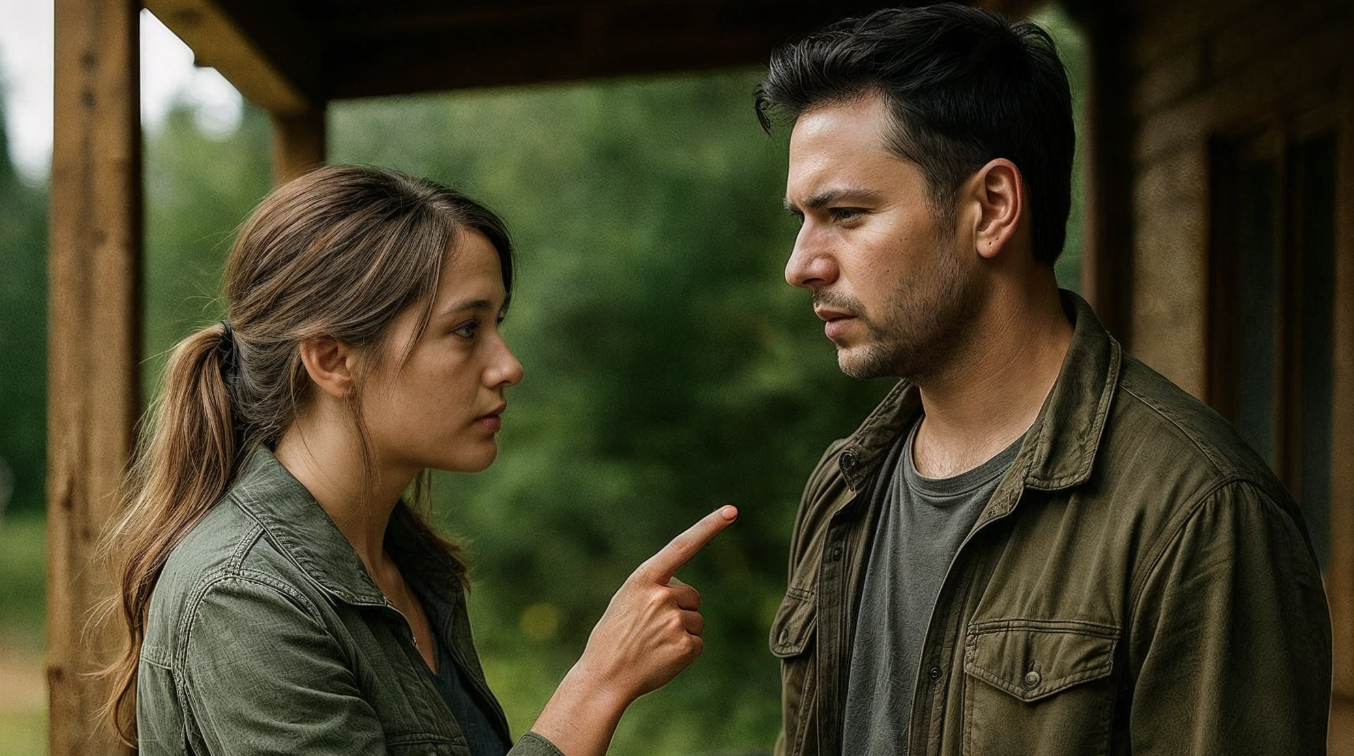
She took a step toward me, jabbing her finger in the air.
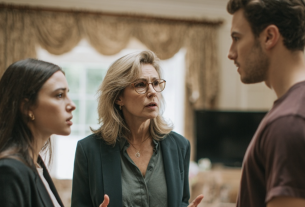
“This is all her, isn’t it?” Her voice rang out, her finger pointing straight at the crying Dasha. “It’s all her whispering in your ear! She laid down her rules here! Moved into the husband’s family and wants to turn everyone upside down! I see right through you!”
I stepped between her and my wife. Physically. Blocked her path.
“Stop. This is my decision. And it’s final.”
I looked at my son. He was standing in the doorway, clutching that same filthy, wet rug. His face was white as chalk.
And I realized that whatever happened next wouldn’t change anything anymore. We’d crossed over. The point of no return was right here, among the puddles on the veranda floor and the muddy footprints.
Sveta’s hysteria reached its peak. She wasn’t just shouting; she was screeching, the sound like glass on raw nerves.
“How dare you! We’re family! The dacha is ours, together! Mom said you have to share! I have a right to be here! We all chipped in!”
It was a brazen, outright lie. No one had ever chipped in for anything. All they ever did was consume.
“Together?” I laughed bitterly, a dry little laugh. “Have you put even a single ruble into this ‘shared’ dacha? Hammered a single nail? Ever come here not to everything ready-made, but with a broom and a shovel? All you know how to do is dirty, break, and consume!”
“I had children!” she blurted out, once again dragging in her main “accomplishment,” as she saw it. “That’s my contribution! And you don’t love them! You hate them!”
At that moment her phone, lying in the bag, started ringing. Not looking, she frantically hit speakerphone, apparently hoping it was another relative she could complain to.
“Hello? Mom?” she bawled into the phone, instantly bursting into tears. “Mom, can you imagine what they’re doing here? He’s throwing us out! Onto the street! With the kids! Because of some little puddle!”
My mother’s voice, worried and stern, filled the veranda, becoming part of this circus.
“Who’s throwing you out? Son, is that you? Are you in your right mind? Stop this this instant! Give in to your sister; she’s got kids, it’s hard for her, you’re a man! She’s right, the dacha is a family place for everyone!”
Yegor finally tore himself away from his phone and got up from the hammock.
Not to calm his wife or start packing, of course. He sauntered over to me and jabbed a finger into my chest.
“Hey, what’s with you, bro? Playing the boss. Your wife calls the shots and you just nod. Real men work this out like men. We’ll finish the shashlik and that’s that.”
I pushed his hand away.
“There’s nothing for us to ‘work out’. You’re nobody here. Grab your junk and load up the car.”
Meanwhile Sveta kept wailing into the phone:
“He’s yelling at me! At the kids! He practically threatened Yegor with his fists! And his wife is standing there, silent, poisonous snake that she is, enjoying it! She egged him on!”
I saw Dasha flinch at that. She always kept quiet, endured, tried not to get involved in conflicts with my family. But her patience had run out too. She wiped her tears, straightened up, and said firmly, looking Sveta straight in the eye:
“I didn’t egg him on. I’m just tired. Tired of being your maid at our own dacha. Tired of your constant rudeness and lack of respect. And yes, I completely support my husband’s decision.”
Sveta froze for a second. She hadn’t expected an answer. Her face twisted with rage.
“Oh, you! How dare you talk to me like that! You joined my brother’s family and decided you can lecture me?!”
Mom was frantic on the phone, but her voice drowned in the shouting.
And then something happened that none of us expected. My son, who had been standing quietly off to the side this whole time, put down the dirty rug. He didn’t shout. He stepped forward, into the center of the chaos. His face was pale, almost translucent, and his eyes burned with a cold, adult fire. He wasn’t looking at me or at his mother, but straight at Sveta.
He spoke quietly, but so clearly that every word cracked through the air like a whip and suddenly made everyone fall silent.
“We decided to sell our dacha because we’re sick and tired of you and how you treat Dad and Dasha.”
An absolute, deafening silence fell. You could hear a bird chirping somewhere that the fight hadn’t scared off. Even Mom went quiet on the phone.
Sveta stared at her nephew, uncomprehending. She slowly lowered the phone.
“What?” It wasn’t even a word, more like a breath of disbelief.
“We’re selling it,” my son repeated without raising his voice. “So you never come to us again. So there won’t be this ‘shared place’ anymore.”
And then the silence exploded.
The silence after my son’s words lasted exactly three seconds. Then the air on the veranda blew up.
“What?!” It was no longer a question, but a roar, animal and deafening. Sveta’s face twisted beyond recognition, flushing with rabid fury. “Sell it?! You’ve lost your mind! This is our dacha! Ours! I won’t allow it!”
She lunged at me, grabbing my sleeve, her fingers digging in like claws.
“Mom! Do you hear what they’re doing?!” she screamed into the phone, which was still lying on the table on speaker. “They want to sell the dacha! Our dacha! Because of that bitch!”
My mother’s voice on the phone became piercing and frightened.
“Son! What does this mean? Stop this nonsense immediately! This is the family nest! You don’t have the right!”
Yegor finally realized the scale of the disaster. His usual cocky confidence evaporated.
“Bro, what are you doing? That’s like a drastic measure. Let’s calm down and talk…”
I wasn’t listening to them. I was looking at my son. He stood still, calmly holding his deranged aunt’s gaze. There was no malice or hysteria in his eyes. Only a cold, final certainty. And in that moment I understood that this wasn’t some spontanous outburst but a decision that had been growing in him for a long time. Maybe for years.
I gently freed my arm from my sister’s claws.
“He’s not joking,” I said quietly but loud enough to be heard over her screaming. “And neither am I.”
Sveta recoiled from me like she’d been burned. She looked around at all of us — me, my son, Dasha standing silently beside us — and her face contorted into a mask of pure hatred.
“Oh, so that’s it!” she started breathing hard and raggedly. “So that’s how it is? Betraying your own blood for the sake of this…”
“Shut up, Sveta,” I cut her off, and for the first time there was steel in my voice. “One more rude word about my wife, and you won’t be leaving here in your own car, but in a cab.”
And you can figure out on your own where to put that grill and your useless speaker.
She choked, her eyes going wide with shock. She had never heard me speak like that.
On the phone, Mom’s anxious voice kept going:
“What’s going on there? Sveta! Son! Answer me!”
Sveta grabbed the phone, pressed it to her ear, and started shrieking into it through sobs:
“They’re throwing us out! And selling the dacha! Did you really give birth to such a freak? You let him get away with everything! Now he thinks he’s king and god here!”
Then she whirled around and rushed to the kids, who, scared by the shouting, were huddled by the swing.
“Pack your things! Now! We’re getting out of this dump! Out of this… garbage pit! Let them sit here alone in their wreck!”
She started sweeping their things together, flinging them into bags. Towels, lotions, hats flew into a pile mixed with leftover food.
Yegor stood there in a stupor, watching. He looked completely lost; his usual approach of “it’ll all blow over” had finally fallen apart.
I went over to the table, picked up Sveta’s phone — she’d hurled it back down in rage — and spoke directly into it:
“Mom, that’s enough. Conversation over. I’ll call you later.”
And I hung up.
The last thing I saw before they banged the car doors and stormed out the gate was my sister’s look. It wasn’t just anger anymore. It was quiet, vengeful hatred. But oddly enough, it didn’t scare me. On the contrary. For the first time in many years I felt calm and empty inside. Like after a long, exhausting storm.
The silence after they left was deafening. It pressed on the ears, still ringing with screams. We stood in the middle of the wreckage: overturned chairs, muddy water streaks on the floor, empty bottles and plates on the table.
Dasha was the first to move. She quietly took the mop and rag that always stood in the corner and started methodically wiping up the puddles. Her movements were slow, automatic. My son, without a word, began putting the furniture back where it belonged.
I looked at my phone. The screen lit up with a dozen missed calls from Mom. I muted the sound and shoved it in my pocket.
We cleaned almost in complete silence. No one wanted to talk. The words spoken here were too heavy; they needed time to sink in.
We sat on the veranda, just as we had planned in the morning. But instead of cups of coffee, there were glasses of water in front of us. And no one was looking at the sky. We all stared at one spot in front of us, each seeing our own wreckage.
The car arrived the next day, closer to evening. I saw my mother’s old car from the window and felt my heart clench. I knew this conversation was inevitable.
She didn’t come in right away. She stood at the gate for a while, looking over the property as if searching for signs of an upcoming sale or freshly dug-up beds. Then she slowly walked toward the house. She looked tired and very old.
“Hi, Mom,” I met her at the door.
She walked past me without answering and sat down at the table on the veranda. Folded her hands on her knees and stared at them for a long time.
“Well,” she finally said without looking at me. “Explain. Explain how you could do this.”
“Mom, you heard everything.”
“I heard you yelling at your sister! Throwing her out with the kids! I didn’t hear any explanation!”
“They ruined our day off. They humiliated Dasha. They behaved like pigs. I got tired of it.”
“They’re family!” her voice trembled. “Sveta is your blood! She’s not perfect, yes! But you’re the man! You’re supposed to be above it! Put up with it! Forgive! Don’t ruin the family over nothing!”
“Nothing?” I couldn’t hold back and raised my voice. “Constant rudeness, entitlement, total lack of respect — that’s nothing? What would be serious then? When they burn the house down?”
“Don’t exaggerate! So the kids fought, so they spilled some water… it’ll dry! Because of that you’re depriving your niece and nephew of their childhood? Where are they supposed to spend summers now? In a stuffy apartment? Did you think about them?”
“Did they ever once think about us?”
Mom fell silent, her lips trembling. She looked at me in real pain.
“I don’t recognize you. You used to be so kind. What has she done to you?” She nodded toward the house, where Dasha was.
That was the last straw. Any hope I’d had for even a little understanding collapsed.
“Dasha has nothing to do with it. This is my decision and our son’s. And it’s final.”
We’re selling the dacha.
My mother’s face turned to stone. The pain and pleading disappeared, replaced by a cold, old resentment. She slowly got up.
“So that’s how it is. You’re choosing her. A stranger. Instead of your own blood.”
“Mom, I’m choosing my family. The one I created myself. The one where I’m respected and valued.”
She looked at me for a long, heavy moment. There was so much disappointment in her eyes that it physically hurt.
“I’d rather see you in your grave,” she whispered hoarsely, without any drama, just stating a fact. “You’re no longer my son. I have one child — Svetlana. And I won’t abandon her.”
She turned and walked to the gate. Her shoulders were unnaturally straight. She didn’t look back even once.
I stood and watched her car drive away, raising a little cloud of dust on the dirt road. My throat was tight, my head empty.
I heard footsteps behind me. I turned. Dasha and our son were standing in the doorway. They were looking at me silently. There was no reproach in their eyes. Only quiet, shared sadness and understanding.
We had lost a part of the family that day. But it felt like we had saved something more important.
The next morning I woke up with a heavy feeling. My mother’s words hung in the air like dense, poisonous smoke. “I’d rather see you in your grave.” I drained a glass of water in one gulp, trying to swallow the lump in my throat.
Dasha silently set a cup of coffee in front of me. Her eyes were red from a sleepless night.
“Are you sure?” she asked quietly. “Maybe it’s not all lost yet? Maybe just don’t let them come here, but keep the dacha?”
I shook my head. I had no doubts. This wasn’t just a desperate act. It was the only way to break the vicious circle. As long as this place existed, it would be a magnet for drama, manipulation, and guilt. We needed to cut the rope.
“No. The decision is made.”
I picked up my phone and turned it on. It buzzed with dozens of notifications. Missed calls from Mom, from Sveta, from two aunts. Angry messages in the family group chat, which I quietly left in the middle of the night.
I opened the browser and went to the biggest real estate listing site. I created a new account with a neutral username. I started filling in the form: “Country house with plot for sale…”
My fingers shook as I uploaded the photos. Our neat lawn, tidy beds, the veranda we’d just scrubbed clean of the last traces of yesterday’s battle. It felt like a betrayal. A betrayal of my own work, my weekends, my dream of a quiet refuge.
I clicked “Publish.”
The effect was instant. The first call came about fifteen minutes later. A polite male voice asked about utilities and details. I answered automatically, lost in my thoughts.
The second call was from Sveta. Her shriek in the receiver was so piercing I instinctively pulled the phone away from my ear.
“You really did it! I see it! Take it down now! Right now, you hear me? How dare you!”
“The listing stays up,” I replied evenly and hung up.
She called back immediately. I declined the call. Then the messages began.
“Bastard!”
“You’ll regret this!”
“Put everything back like it was!”
Then others started calling. Aunt Lyuda, Mom’s sister. Her voice was shaky, offended.
“I didn’t raise you like this! Sveta told me everything! To leave your sister without a roof! How are you going to sleep at night?”
Something twinged inside me. I remembered her birthday, when Dasha and I gave her an expensive tea set. And a week later, Sveta, looking at it on our shelf, had snorted: “Ugh, junk. That aunt’s always had awful taste. Only good enough to drag to the dacha.”
“Aunt Lyuda,” I said calmly. “Do you know your ‘angel’ Sveta called your gift ‘junk that’s only fit to be thrown out at the dacha’?”
Dead silence on the other end. Then the line went dead.
The calls and messages kept coming for another hour. I turned the sound off, but the phone kept lighting up and buzzing on the table like an enraged wasp. Dasha looked at it with despair.
Suddenly someone knocked at the gate. I flinched. We exchanged glances. Had she come back? To stand there and scream at the door?
I went outside. At the gate stood our neighbor, Nikolai Petrovich, an older man.
He was looking at me with an unusual expression — a faint smirk and at the same time approval.
“Heard you had… quite a racket here yesterday,” he said, nodding at the yard. “And I saw your car today, thought I’d drop by.”
I nodded silently, bracing for another lecture.
“So, you’re really selling?” he asked, looking me straight in the eye.
“Really,” I said.
He grunted, pulled a pack of cigarettes from his pocket, and offered me one. I refused.
“Finally,” he exhaled, lighting up. “I was starting to think you were their slaves for life. Always taking it and taking it. Your sister, she’s something else… a real queen. Hang in there, kid. Don’t back down.”
He patted me on the shoulder, turned, and walked back to his place. His words were simple, but they meant more to me than all the other calls put together. It was outside confirmation. A sign that we weren’t crazy and were doing the right thing.
I went back inside, took my phone, and permanently blocked Sveta’s number, her husband’s, and the fretful aunts’. Then I left all the family chats I hadn’t yet been kicked from.
The silence that followed wasn’t oppressive anymore. It was healing.
The listing worked faster than I’d expected. Within a week, there was a call from a young, energetic man. He introduced himself as Alexey and asked detailed questions about the plot, the foundation, the utilities. His questions were intelligent, to the point. We arranged a viewing for Saturday.
On the appointed day, I went to the dacha alone. Dasha couldn’t handle it emotionally. I walked through the house that still felt warm from our presence and waited. Waited with a heavy heart.
But when I saw Alexey and his wife Katya, something inside me flipped. They arrived in a modest car, dressed simply. They didn’t look down on anything. They looked around with delight.
“Oh, look, Lyosha, the lawn!” Katya grabbed his sleeve as they got out of the car. “And apple trees! And the house is so cozy!”
They walked around the property, peeked into every corner, into the tool shed, touched the picket fence I’d once painted with my son. Their eyes shone.
“You know,” Alexey said when we sat at the table on that same veranda, “we’ve been looking for a place for two years. Something of our own, not for show, but for living. So the kids have somewhere to run around, so we can grill on weekends. And here… here it already breathes life. You can tell this place was loved.”
Those words were like balm. They didn’t see a battlefield here. They saw a home. They saw what we had once seen.
We agreed on a price quickly. It was fair. Three weeks later all the paperwork was ready. When I signed at the registration office, my hand didn’t shake.
Another two months passed. Summer turned into early autumn. We hadn’t gone back to the dacha once. Or rather, we had, but only in our memories — and even then we remembered not the fights, but the good things: the first campfire, the first strawberry harvest, painting the fence.
One warm Saturday we packed up and headed out of town. Not to our former dacha, but to a holiday base, to a small, cozy cabin in the woods that we rented for the weekend.
In the evening we sat around a fire. The flames crackled, sparks flew up into the dark autumn sky. It was quiet. Truly quiet. No sudden horns at the gate, no demanding shouts.
My son sat hugging his knees, watching the fire. Then he turned to me. His face was calm.
“You know, Dad,” he said thoughtfully. “Now I finally get what it means to rest. For real. Without always waiting for the other shoe to drop.”
Dasha silently placed her hand on mine. Her fingers were warm.
At that moment my phone rang. I flinched out of habit. On the screen was the name “Sveta.” Apparently she had found a new way to reach me.
I looked at the screen, then at my wife and son’s faces. At their calm, something we had fought so long and hard for.
I declined the call. Then I went into the settings and put the number in the blacklist for good.
The phone fell silent. All we could hear again was the crackle of the logs and a distant bird calling somewhere in the dark.
Sometimes, to save your own family, you have to put another one in its place. Even if it’s your blood — but poisonous. And we didn’t regret it one bit.
We had found what we’d been searching for — our peace. And it turned out to be worth more than any piece of property.