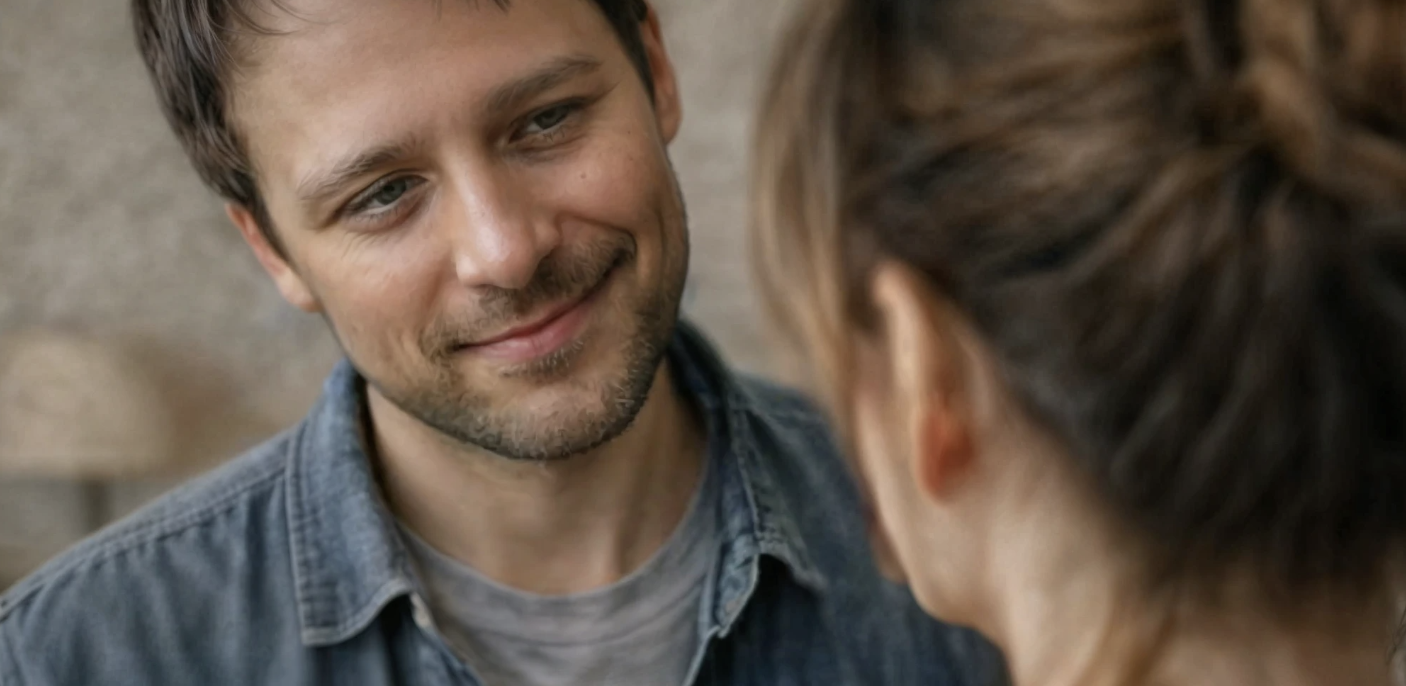
Anastasia was in her third year at the Faculty of Economics when she met Igor. The guy worked as a courier for a transport company, earning thirty-five thousand, but he dreamed of more. He said he would soon find something serious, decently paid. Nastya believed him because she loved him.
They had a modest wedding, about twenty guests. Anastasia’s parents lived in a small town: her father was an electrician, her mother a nurse. There was no money for a lavish celebration, and they didn’t really want one anyway. The main thing was that they were together.
The newlyweds moved into a rented one-room apartment on the outskirts. Twenty-eight square meters, old furniture, and the neighbors behind the wall could hear every word. The rent was fifteen thousand, utilities another four. That left sixteen for food, transportation, clothes. They lived right on the edge.
Anastasia continued studying and did side jobs handing out flyers on weekends. She earned eight to ten thousand a month, no more. Igor promised he would find a better job, but he kept putting it off—tweaking his resume, failing interviews, deciding the salary wasn’t good enough.
The arguments started two months after the wedding. Igor would come home tired and gloomy, toss his bag by the door, and flop onto the couch.
“What’s for dinner?” her husband would ask, staring at his phone.
“Buckwheat with chicken,” Anastasia would answer, standing at the stove.
“Buckwheat again,” Igor would grimace. “I’m sick of it.”
“There’s no money for anything else,” Anastasia would say wearily. “If you want something different, earn it.”
“I work!” her husband would snap. “And what do you do? Study? How much money will studying bring in?”
Anastasia would fall silent, turning back to the stove. Everything inside her tightened, but she didn’t want to argue. She was tired of the constant nagging, the endless dissatisfaction.
Igor’s mother, Marina Petrovna, came to visit regularly. She worked as an accountant at a large company, earned a good salary, lived in a two-room apartment downtown. She looked at her daughter-in-law like an obstacle her son had foolishly dragged into the family.
“Good Lord, Igoryochka, how do you live here?” Marina Petrovna would exclaim, looking around the rented apartment. “In this kennel? With this furniture?”
“Mom, we’re fine,” Igor would grumble, avoiding her eyes.
“Fine?” his mother would snort. “Just look at this kitchen! The stove is covered in stains, the wallpaper is peeling. How can you stay in a place like this?”
Anastasia would stand at the sink, pretending to wash dishes. She heard every word but kept quiet.
“And you, Nastya,” Marina Petrovna would address her daughter-in-law, contempt in her voice, “what kind of clothes are those? From a thrift store?”
“Just normal clothes,” Anastasia would answer softly.
“Normal,” her mother-in-law would repeat with a smirk. “My son’s wife walks around in rags. Shameful.”
Igor stayed silent, glued to his phone. Anastasia pressed her lips together and kept washing plates. She wanted to fire back, to say something sharp, but she was afraid of ruining things completely.
Marina Petrovna came once a week, sometimes more. Every visit turned into torture. She picked on everything: the food, the cleanliness, her daughter-in-law’s appearance.
“Igor, sweetheart, do you at least eat properly?” Marina Petrovna would ask, peering into the fridge. “What’s in here? Pasta, chicken, eggs. Is that it?”
“Mom, it’s enough for us,” Igor would wave her off.
“Enough,” she would shake her head. “You’re twenty-five, in the prime of your life, and you eat like a pensioner. It’s all because of her.”
Anastasia would stand in the hallway, hearing the conversation. Anger boiled inside her, but she didn’t want to come out.
“Mom, don’t,” Igor would plead.
“Don’t what?” Marina Petrovna would flare up. “Tell the truth? Your wife can’t provide for you! A student with no money! Why did you marry her?”
“I love her,” Igor would say quietly.
“Love won’t feed you,” his mother would sneer. “Look at yourself! You’re a courier, living in some rented hole. Is this a happy life?”
Igor fell silent. Anastasia heard him sigh, heard clothes rustle as he got up.
“Mom, come on, I’ll walk you to your car,” Igor would say.
Gradually, Igor started to change. He grew colder, more distant. In the evenings he sat silent, buried in his phone, unwilling to talk. Anastasia tried to ask what was wrong, but he brushed her off.
“I’m tired,” Igor would say. “Stop bothering me.”
“Igor, let’s talk,” Anastasia begged. “What’s going on?”
“Nothing’s going on,” he snapped. “I just want to be alone.”
Anastasia would step back, feeling a wall growing between them. At night she lay awake, listening to his breathing, trying to understand where it all went wrong.
A month later Marina Petrovna came again. Anastasia was at university during a lecture when her mother-in-law showed up to see Igor. That evening, when Anastasia came home, she found her husband in the kitchen, his face dark.
“What happened?” she asked, taking off her coat.
“We need to talk,” Igor said without looking her in the eyes.
Anastasia felt everything inside her clamp down. She sat across from him, waiting.
“Mom thinks we need to get divorced,” Igor said slowly.
Anastasia froze, not believing what she’d heard.
“What?”
“Mom says you’re not right for me,” Igor continued, fiddling with the edge of his shirt. “That we’ll never get out of poverty. That you can’t provide for me.”
“Igor… are you serious?” Anastasia whispered. “You’re listening to your mother?”
“She’s right,” he said quietly. “We’re barely eating. I’m tired of it.”
“I’m studying!” Anastasia burst out. “In a year I’ll graduate and find a normal job! Just hold on a little longer!”
“A year,” Igor smirked. “And then another year. And then another. When does it end?”
“It will end,” Anastasia assured him, grabbing his hand. “I promise. I’ll find a good job, I’ll earn a lot. Everything will get better.”
Igor yanked his hand away and turned aside.
“It won’t,” he said. “Mom says I need a wife with money. Someone who can support a family. Or at least someone with an apartment.”
Anastasia sat there, not knowing what to say. The words stuck in her throat; it became hard to breathe.
“You want a divorce?” she asked quietly.
Igor was silent. Then he nodded.
“Yes.”
A week later Anastasia was thrown out of the apartment. Igor announced he wouldn’t pay rent anymore, and the landlady asked them to move out. Anastasia packed her things into two suitcases and left.
The first week she stayed with her friend Katya, then with her classmate Lena. She slept on couches, on folding beds, wherever she could. In the mornings she woke up with the feeling it was all a nightmare, that she would open her eyes in her own bed next to her husband. But reality stayed the same.
The divorce was finalized quickly. Igor didn’t come to the registry office—he sent his mother instead. Anastasia signed the papers and walked outside with emptiness inside.
Her money ran out after two weeks. Anastasia got a job as a waitress in a café, working evenings and weekends. She earned twenty-five thousand; half of it went to renting a room in a dorm. She ate once a day and saved on everything.
Studying became difficult. Anastasia dozed off in lectures, skipped seminars, barely managed her exams. Professors shook their heads and suggested taking academic leave, but Anastasia refused. She knew that if she stopped, she wouldn’t come back.
At night she cried into her pillow, remembering Igor. What hurt most wasn’t losing her husband—it was the betrayal. That the man she loved had thrown her away like an unwanted thing. Because she didn’t have money.
A year passed. Anastasia moved into her fourth year and kept working as a waitress. She saved every kopek, putting aside three to five thousand a month. She dreamed of saving for a small room so she wouldn’t depend on strangers.
In her fifth year she found part-time work at an auditing company—first as an accounting assistant, then as a junior specialist. Her salary rose to forty-five thousand. Anastasia moved into a one-room apartment, renting it for twenty thousand—but it was her twenty thousand.
After graduation, she was offered a permanent position. Seventy thousand plus bonuses. Anastasia accepted without hesitation. She worked twelve-hour days, took extra projects, studied, developed.
Two years later she became a senior specialist. Her salary grew to a hundred thousand. Anastasia started saving for an apartment—counting every ruble, planning, building her savings.
Four years after that she was promoted to lead auditor. Salary: one hundred fifty thousand plus bonuses. Anastasia took out a mortgage and bought a one-room apartment in a new building. Forty-five square meters: a kitchen-living room, a separate bedroom. She did the renovation herself—light walls, minimalist furniture, big windows.
At thirty-five, Anastasia became a department head. Salary: two hundred twenty thousand, a company car, health insurance. She paid off her mortgage early and bought herself a car—used, but reliable.
Life got better. Anastasia depended on no one; she decided how to live, what to buy, where to go. She met friends, went on vacations, read books. She felt free.
One evening, as Anastasia sat at home with a cup of tea, the doorbell rang. Hardly anyone came without warning, and she grew wary. She went to the door and looked through the peephole.
Igor was standing there.
Nastya froze, not believing her eyes. Her ex-husband looked the same. A bit older, with light stubble, but overall unchanged. He stood shifting from foot to foot, waiting.
Anastasia opened the door without removing the chain.
“Igor?” she asked distrustfully.
“Nastya, hi,” her ex-husband smiled. “Can I come in?”
“Why are you here?” Anastasia asked, leaving the chain on.
“Well, I wanted to see you,” Igor shrugged. “Talk. Can I?”
Anastasia hesitated. Then she unhooked the chain and opened the door. Igor stepped in, looking around the apartment with open curiosity.
“Wow,” he drawled, taking in the interior. “You really made it. Is all this yours?”
“Mine,” Anastasia said shortly.
“The apartment, the furniture…” Igor went on, walking around. “I see a car under the window. Yours too?”
“Mine,” Anastasia nodded, not understanding where this was going.
Igor turned to her, a smirk spreading across his face. Anastasia knew that smirk—she’d seen it before. Self-satisfied, condescending.
“So, got rich?” her ex-husband asked, folding his arms. “Now we can talk. Mom forgave everything—come back.”
Anastasia was stunned by the statement. Igor’s words sounded so absurd she wanted to laugh.
“What?” she asked.
“I’m saying, come back,” Igor repeated, as if it were the most natural thing in the world. “Mom forgave you. She said that since you have money now, we can try again.”
Anastasia stood there, silently processing what she’d heard. Igor kept talking, not noticing her reaction.
“We could live really well,” he continued, looking around. “You earn good money, I’ll step up too. We’ll buy a bigger place, a better car. Mom says we could even look at a house outside the city.”
“Mom says,” Anastasia repeated, and her voice sounded strange.
“Yeah,” Igor nodded. “She thinks since you’ve got stability now, we can come back. Forget the past, start with a clean slate.”
Anastasia looked at her ex-husband and didn’t recognize the man she had once loved—or maybe she recognized him too well. The same selfishness, the same certainty he was right, the same indifference to her feelings.
“Igor, are you serious?” Anastasia asked quietly.
“Absolutely,” Igor assured her. “Nastya, think about it. We were happy once. It was just hard times back then. Now everything’s different.”
“Yes,” Anastasia agreed. “Now everything is different. And I’m different too.”
“Great,” Igor brightened. “So it’s settled. When do I move in?”
Anastasia laughed—not with joy, not with amusement, just at the sheer absurdity of it.
“You’re not moving in,” she said, calming herself. “Nowhere.”
“Why not?” Igor frowned. “Nastya, don’t be stupid. We can be together. Live normally.”
“Normally?” Anastasia echoed. “Igor, you threw me out because there was no money. Because your mother said I wasn’t good enough for you. And now, after all these years, you show up and I’m supposed to throw myself around your neck?”
“Well, I made a mistake,” Igor shrugged. “It happens. But now we can fix it.”
“Fix it,” Anastasia repeated. “Because now I have money.”
“Well, yes,” Igor nodded, not hearing the trap. “If there’s money, we can try. No obstacles to love.”
Anastasia looked at him for a long moment. She remembered crying in the dorm, going hungry, working herself to exhaustion—fighting for every ruble, every chance. Building her life from scratch, with no one’s help.
“You know, Igor,” she began, her voice firmer now, “for a long time I wondered how I could have fallen in love with you. What I saw in you. And you know what? I still don’t understand.”
“Nastya, what are you talking about?” Igor looked rattled.
“That you were always weak,” Anastasia continued. “Dependent on your mother, unable to make decisions on your own. You threw me out not because you didn’t love me, but because your mother told you to.”
“That’s not true,” Igor objected, but his voice lacked confidence.
“That’s exactly what it is,” Anastasia cut him off. “And now you came here because your mother told you again. She decided that since I have money, you can try to come back.”
“Nastya, don’t be mad,” Igor tried to soothe her. “Let’s talk like normal people.”
“We did,” Anastasia said, walking to the door. “And the conversation is over.”
“Wait,” Igor grabbed her hand. “You do understand we could live great together, right? You’ve got a huge salary, an apartment, a car. We could bathe in luxury!”
Anastasia pulled her hand free and stepped back.
“Bathe in luxury,” she repeated with a smirk. “On my money. That I earned myself. While you were just… existing somewhere.”
“I worked!” Igor burst out. “All these years, I worked!”
“So what?” Anastasia asked. “Where’s your apartment? Your car? Your stability?”
Igor fell silent, looking away.
“Exactly,” Anastasia nodded. “You achieved nothing. Because you always looked for the easy way out—a wife with money to support you.”
“That’s not true!” Igor shouted. “I wanted to be with you!”
“No,” Anastasia shook her head. “You wanted to be with my money. And your mother did too. Back then I was a poor student, and you threw me away. Now I have money, and you want to come back. See the pattern?”
Igor stood silent, jaw clenched. His face went pale; sweat appeared on his forehead.
“Leave, Igor,” Anastasia said, opening the door. “And don’t come back.”
“Nastya, first love never rusts!” Igor yelled. “We could be happy! Live rich! You’re letting your chance slip!”
“A chance to live with you?” Anastasia smirked. “Thanks, I already tried. Didn’t like it.”
“You think you’ll find someone better than me?” he kept shouting. “Nobody will want you! You’ll end up alone!”
“Better alone than with you,” Anastasia said calmly. “Go.”
Igor stood there a moment longer, then turned and left. He slammed the door so hard the glass rattled. Anastasia locked it, leaned against it, and exhaled.
Inside, she felt calm. No resentment, no pity, no regret. Just emptiness that quickly filled with relief. Igor had left her life again—and this time, for good.
Anastasia went to the kitchen, poured herself some water, and sat by the window. She looked at the city lights, the passing cars, the people below. Life went on, and she was part of it—free, independent, confident.
When she was a student, Igor threw her away because there was no money. Today he came back because money had appeared. But Anastasia was no longer that naive girl who believed in love and forgave betrayal. Now she knew her worth—and that worth wasn’t measured in money.
Tomorrow would be a new day. Work, meetings, plans. A life she had built with her own hands. And no one—not even Igor and his mother—would take it from her.