— Marina Sergeyevna, the order has already been signed. You’ve been fired.
Tamara’s voice trembled over the phone. Marina was standing in a supplier’s showroom beside a display model of an oak cabinet. For several seconds, she couldn’t fully process what she had just heard.
— What order? Tamara, I’m in the middle of negotiations.
— Your dismissal order. Viktor Nikolayevich signed it this morning. Igor has been appointed director.
Marina slowly lowered the phone.
A manager carrying veneer samples walked past her. She stepped aside automatically so he wouldn’t bump into her.
Images flashed through her mind one after another: their first machine, their first customer, the endless nights she had spent buried in accounts and paperwork.
Suddenly, all of it felt like a dream that had belonged to someone else.
She had spent twelve years building this factory.
And now she had been removed from it with a single sheet of paper.
Marina walked out of the showroom and sat in her car. For a long time, she couldn’t bring herself to start the engine.
Her hands rested on the steering wheel, trembling slightly.
People passed along the sidewalk, absorbed in their own lives. None of them knew that someone had just taken away the work of her entire adult life with one stroke of a pen.
The Dubrava furniture factory had begun in a rented workshop on the outskirts of town.
Marina and Viktor were still engaged when they took out their first loan to buy machinery.
Back then, the workshop smelled of fresh sawdust. During the first month, they paid their three employees out of their own pockets because they were terrified of losing good workers before the business had even begun.
The limited liability company was registered in Viktor’s name.
At the time, it made dealing with the bank easier.
Marina hadn’t argued. She had considered it a technical detail.
She became the company director under an employment contract rather than a co-owner.
A year later, she and Viktor got married.
For twelve years, Marina managed production, contracts, suppliers, and employees.
Viktor handled raw-material purchases and formal meetings with business partners.
The company grew from five employees to seventy-four.
It gained permanent clients, a warehouse, and its own three-story showroom.
Their first major contract came from a construction company that needed a large batch of office furniture.
Marina personally handled the negotiations for three straight weeks. She barely slept, spending nights working through drawings, schedules, and production deadlines.
Viktor had said something to her then that she remembered for years.
— We would never have landed that contract without you.
She had believed him.
It had never occurred to her to ask what would happen if, one day, he changed his mind.
Everyone in the family called the factory “ours.”
But on paper, only Viktor’s name appeared.
Six months earlier, Viktor’s cousin Igor had joined the company.
He had lost his job and asked the family for help.
Marina herself had suggested hiring him as a purchasing manager.
She saw no reason to leave a relative unemployed when they had a position available.
Soon afterward, Viktor’s sister Alla began visiting the factory more often.
She liked talking about “putting the family business in order” and warning that letting outsiders handle company money was dangerous.
Marina had nothing against relatives working for the business.
What she objected to was Igor beginning to overrule her decisions.
One day, he canceled a bonus Marina had approved for the packing staff without even telling her.
She learned about it from the workers themselves.
— You’re too soft with employees, Marina. There’s no discipline here.
Alla said it over Sunday lunch while slicing a pie, speaking as though she were already reporting to a board of directors.
Viktor said nothing.
Marina mistook his silence for support.
She was wrong.
It took Marina twenty minutes to reach the office that day, even though the drive usually took forty.
The entire way, she kept trying to convince herself there had been some mistake.
At the entrance, her access card no longer worked.
— Marina Sergeyevna, your access has been deactivated, — the security guard, Slava, said awkwardly.
He wouldn’t look her in the eye.
— Since when, Slava?
— Since this morning. Orders from Igor Petrovich.
Igor was already sitting in the reception area.
At her desk.
In her chair.
— Marina, don’t make a scene, — he said without standing. — Viktor will explain everything tonight.
— That has been my workplace for twelve years, Igor.
— It was. Now it’s mine.
Marina looked through the glass partition toward the production floor.
Machines were running. Employees were working.
Most of them still had no idea what had happened.
Pyotr Ilyich, one of the workshop supervisors, saw her and waved through the glass as he always did.
He clearly hadn’t heard the news yet.
Marina waved back and forced herself to smile.
Her throat tightened.
After twelve years, she knew every one of those people by name. She remembered their birthdays, their children, their family problems.
And now it seemed as if all of that could be erased as easily as her job title had been.
Tamara emerged from accounting, pale and carrying a folder.
Without saying anything, she handed Marina a copy of the dismissal order.
Under “grounds for dismissal,” it read:
“By decision of the company’s sole participant.”
Marina read the sentence three times.
There was no mention of misconduct.
No explanation.
No mention of compensation.
Just a decision, written as casually as if the company were disposing of an outdated machine.
Marina looked up at the factory sign near the entrance.
She had personally chosen the font twelve years earlier and had argued with the advertising agency over the size of the lettering.
Now the sign seemed to belong to someone else.
— Marina Sergeyevna, what happens now? — Tamara asked quietly.
— Now I’m going home to find my employment contract.
Viktor came home late that evening.
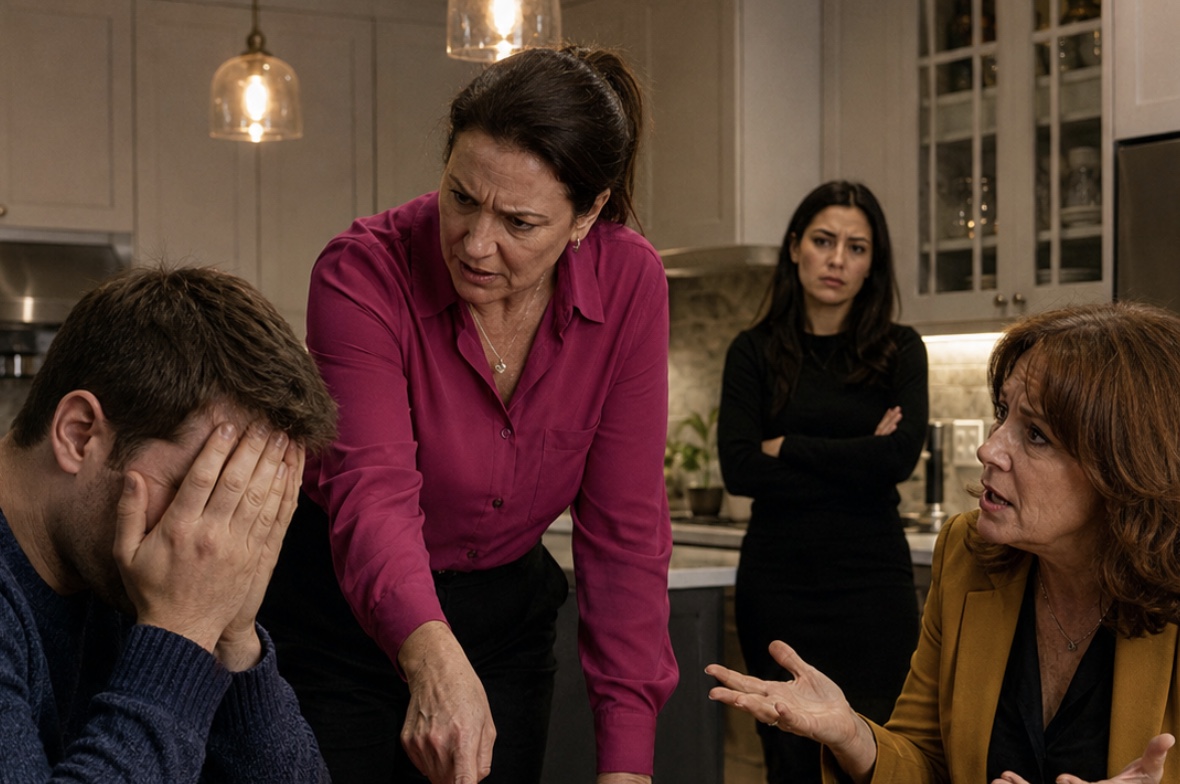
Alla and Igor were already sitting in the kitchen as though the house belonged to them too.
Marina faced her husband.
— You fired me without even calling me.
— The family decided the company needed new management.
— The family? Or Alla and Igor?
Viktor looked away and poured himself some tea.
His hands shook slightly, although his voice remained steady.
— You make too many decisions on your own, Marina. It’s time someone else took over.
— I built that factory for twelve years. Do you even remember where we started?
— I remember. That’s exactly why I’m offering you severance. Three months’ salary. That’s fair.
— Three months’ salary for twelve years of my life is not fair.
Alla gave a dismissive snort and pulled her cup closer.
— You always acted as though you were the most important person there, Marina. But you were only an employee.
— Twelve years of building a business for this family, Alla. If I was only an employee, why does my contract tell a different story?
— You should be grateful you’re getting anything. Some people leave with nothing.
Alla loved saying that family had to stick together.
Yet whenever ownership or official paperwork was involved, she always stood firmly on her brother’s side.
Marina looked at Igor.
— And what exactly did Igor get besides my chair?
— Igor is family, Marina, — Viktor said.
— And what am I?
— You’re my wife.
Marina’s expression hardened.
— I was the company director for twelve years. Being your wife never canceled that.
No one answered.
Marina went upstairs to the bedroom and pulled an old document folder down from the top shelf.
It contained records from almost the entire history of the company: appointment orders, amendments to her employment contract, correspondence with the bank.
Later that evening, her daughter Ksenia called.
She was in her third year at university and had already heard about the dismissal from Tamara.
— Mom, is it true? They fired you from your own factory?
— It’s true, Ksyusha. But this story isn’t over yet.
— Can Dad even do that? Fire you without talking to you?
— On paper, he had the authority to sign an order. Whether he followed the law is another matter. The labor inspectorate can decide that.
— You’re going to fight this, aren’t you?
— Of course I am. Get some sleep. I’ll explain everything tomorrow.
Ksenia came home the next day, skipping her classes.
She sat beside her mother and took her hand.
— Mom, I can talk to Dad. He’ll listen to me.
— Don’t, Ksyusha. This isn’t your fight.
— But he’s still my father.
— I know. That’s what makes it harder. But I have to handle this myself.
Ksenia nodded and didn’t argue again.
Instead, she stayed with her mother for three nights, cooked simple dinners, and made sure Marina ate at least a little.
On the second evening, Ksenia found her looking through old photographs from the factory’s opening.
Young faces.
Fresh paint on the walls.
A ribbon stretched across the entrance.
— Mom, you looked so happy.
— I was. And I’ll be happy again, Ksyusha. Right now, I need to put my documents in order, not my emotions.
Eventually, Marina found the original employment contract she had signed when the company was just beginning.
She read it carefully, line by line, almost as though she had never seen it before.
The section concerning dismissal at the initiative of the company owner stated that if the director was removed without fault, she had to receive compensation of no less than three average monthly salaries.
That was exactly what Viktor had offered.
But there was another requirement.
Any such dismissal had to be preceded by a properly documented decision from the company participant, formalized before the dismissal order was issued.
There was no such document.
Only the dismissal order itself, signed that same day.
Marina didn’t want to break down in front of her daughter.
She locked herself in the bathroom, turned on the water, and finally allowed herself to breathe out.
That night she called an old friend, Alevtina, who had been practicing employment law for fifteen years.
— Alevtina, I have a dismissal order, but there’s no formal written decision preceding it. Is that legal?
— Send me a scan. If the document really doesn’t exist, they’ve violated procedure. That could give you a strong case.
Alevtina listened without interrupting.
Then she asked Marina to photograph and send every relevant document immediately.
An hour later, she called back.
This time, her voice was decisive.
— Marina, their position is weak. The formal decision had to exist before the dismissal order, not be created afterward. And they haven’t even paid the compensation yet.
— What should I do?
— File a complaint with the labor inspectorate and prepare a court claim at the same time. Reinstatement, lost salary for the period you were kept out of work, and compensation. You have a strong position.
Marina was silent for several seconds.
— It’s my entire life, Alevtina. My family, my home, my business.
— Then maybe it’s time to find out what kind of family you really have.
— If I say nothing, they’ll decide I accepted it.
— Have you accepted it?
Marina stayed silent for a long moment.
Then she said quietly:
— No.
She still hesitated.
Was it really worth turning a family conflict into a legal dispute?
What if tomorrow she had to sit at the same table with Viktor and pretend nothing had happened?
Before ending the call, Alevtina told her:
— As long as you stay silent, Marina, other people will keep making decisions for you.
Two days later, they met in a café.
Alevtina spread printed legal provisions across the table.
— Look here. Removing a director without misconduct requires a documented decision from the owner before the dismissal takes effect. They don’t have that. They only have the order.
— Viktor could prepare the missing paperwork now.
— Not legally. The date is already fixed. He can’t create an earlier decision now without falsifying a document.
Alevtina told her she was ready to file the complaint with the labor inspectorate the following day if Marina approved.
Marina slowly turned her cup of cold coffee between her hands.
— If I do this, Viktor’s relatives will call it a declaration of war.
— From your point of view, the war already started. The difference is that until now, you were the only one being attacked.
Marina thought about that sentence for the rest of the evening.
Meanwhile, problems began piling up at the factory.
Igor made a mistake on an order for one of their most important clients, the Olkhon furniture showroom.
A batch of cabinets was manufactured and shipped in the wrong color.
Nastya, a sales manager who had worked with Marina for seven years, refused to sign the acceptance document without clarification.
— I’m not putting my signature on a decision that wasn’t mine, — she told Igor openly on the production floor.
— You are required to follow the director’s instructions.
— As far as I’m concerned, Marina Sergeyevna is still the director until the legal issue is settled.
Igor slammed the workshop door behind him.
Nastya sighed and called Marina.
— Marina Sergeyevna, I refused to sign it. I’m sorry if that causes problems for you.
— You’re not causing problems, Nastya. Thank you for standing your ground.
Tamara also called Marina quietly every evening and told her what was happening.
She was risking her job, but she couldn’t stay silent.
— Igor is getting even basic delivery notes wrong, Marina Sergeyevna. Yesterday he sent an order to the wrong address.
— Document every mistake, Tamara. Put dates on everything. We may need it.
— The warehouse staff are panicking. Igor shouts at everyone, but he can’t even keep track of the paperwork himself.
— Stay calm, Tamara. This will be settled soon.
A week later, the owner of the Olkhon showroom called Viktor personally.
— If Marina Sergeyevna doesn’t return to the negotiations, we’ll terminate our contract. We built our business relationship with her, not with your relative.
For the first time in two weeks, Viktor realized just how unstable the situation had become.
During that period, he tried twice to reach Marina through mutual acquaintances.
Her answer was always the same:
All communication would go through her lawyer.
Igor, meanwhile, attempted to negotiate with clients who had previously dealt only with Marina.
Two contracts collapsed because of mistakes in his calculations.
One longtime supplier even called Marina directly, unaware that she had been removed as director, asking why routine deliveries had suddenly fallen behind schedule.
Marina politely explained that the matter was no longer under her authority.
When she hung up, she felt a bitter ache in her chest.
The labor inspectorate scheduled a hearing three weeks later.
Igor attended with Viktor, although he barely spoke.
The inspector looked through the case file.
— Do you have the formal written decision from the company participant?
Viktor hesitated.
— We have the dismissal order. There is no separate document.
— And the compensation required for this kind of dismissal?
— It hasn’t been paid.
The inspector closed the folder.
— The dismissal procedure was violated. An order requiring reinstatement will be issued today.
Viktor tried to argue that because he was the sole participant in the company, he had personally made the decision before signing the order, even if it had only been discussed verbally.
The inspector barely looked up.
— Verbal intentions do not replace legally required documentation. The law evaluates documents, not what someone claims they intended.
Igor quietly asked whether the ruling could be appealed.
The inspector told him it could, but the chances of overturning it were extremely low.
Viktor was ordered either to reinstate Marina or challenge the ruling in court.
Alevtina had already prepared the legal arguments.
Viktor was very unlikely to win.
Eventually, he came to see Marina alone.
Neither Alla nor Igor was with him.
— Marina, let’s settle this without going to court.
— If I return without a formal agreement, I’ll be director in name but still an employee who can be removed whenever you decide. I’m not accepting that anymore.
— What do you want?
— Reinstatement. Compensation for the time I was unlawfully kept out of work. And ownership in the company. A real share, legally registered through a notary.
Viktor stared at her.
— Marina, this is my company.
— No, Viktor. We built it together. Your name was simply the only one written on the documents for twelve years.
He was silent for a long time, staring out the window.
Finally, he spoke.
— Fine. Thirty percent. We’ll formalize it with a notary this week.
— And there needs to be a separate clause protecting the director from being replaced without a properly documented decision. I want that written into the agreement.
— You don’t trust me at all anymore?
— This isn’t about trust, Viktor. Paperwork doesn’t suddenly change its mind because someone else whispers in its ear.
She paused.
— Put it in writing. I’m tired of relying on promises.
— So you really don’t trust me anymore?
— I trusted you for twelve years. Today I trust documents with signatures and seals.
Ten days later, they signed a settlement agreement.
Marina was officially reinstated as general director.
At Alevtina’s insistence, the agreement included a specific clause requiring formal documentation for any future decision to remove the director.
Viktor signed without arguing.
Alevtina handed Marina her copy.
— This protection is permanent now. No verbal decision can erase what’s written here.
Marina ran her fingers over the smooth paper.
For the first time in a month, she felt she could breathe normally again.
She received compensation covering her salary and thirty-four days of forced absence from work, totaling 214,000 rubles.
Under a separate notarized agreement, Viktor transferred thirty percent of the company to her.
For the first time, Marina was not merely an employee of the factory she had helped create.
She was an official co-owner.
Major decisions could no longer be made as though she didn’t exist.
Igor eventually returned to his previous job as a delivery coordinator at another company.
Alla stopped coming to Sunday family dinners.
A month later, the factory signed a new contract with the Olkhon showroom, with Marina personally handling the negotiations.
Nastya was promoted and became head of sales.
On Marina’s first day back at work, she entered her office.
Her chair was where it had always been.
A pile of delivery documents that Igor had never managed to sort out was waiting on the desk.
Through the glass partition, she could see the same employees who had been there on the day she was fired.
One person raised a hand in greeting.
Another simply nodded, as though nothing extraordinary had happened.
But to Marina, that ordinary morning meant more than almost any day from the previous twelve years.
The old machine on the production floor had already been replaced by the new one Marina herself had ordered before her dismissal.
Tamara appeared in the doorway carrying a cup of coffee.
— Welcome back, Marina Sergeyevna.
— Thank you, Tamara. Especially for calling me that day.
— I couldn’t stay quiet while I watched them do that to you.
— You risked your job. I won’t forget it.
Marina sat down behind her desk and opened the folder containing her documents.
Now it held more than an employment contract.
Inside was proof of her ownership stake in the company.
Two pieces of paper.
Yet they meant more to her now than years of family dinners and spoken promises.
She called Alevtina and simply said thank you.
Nothing more was necessary.
— You did this yourself, Marina, — Alevtina replied. — I only showed you where the law was already on your side.
Ksenia called that evening to ask how the day had gone.
— Mom, are you the director again?
Marina smiled.
— Director and co-owner. And this time, both are written in the documents.
— Dad won’t ever do something like that again, will he?
— I hope not. But if he does, I’m no longer powerless.
That evening, Marina sat alone in the kitchen and reread the employment contract that had started everything.
Twelve years earlier, she had signed it without worrying about the details because she trusted the man with whom she was building both a business and a life.
Later, she often found herself returning to one question.
Not with anger anymore, but as a conclusion she could no longer avoid.
Could a business truly belong to both of you if only one person was legally recognized as its owner?
Now Marina’s name appeared on the documents too.
But the deeper question remained.
Can a family business really be yours if someone can remove you from it with a single order?