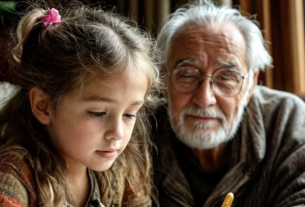
Svetlana was sitting in the kitchen, scrolling through listings on her phone. Her daughter, Varya, was asleep in the next room, while the neighbors’ television murmured through the wall. Their rented one-room apartment on the fourth floor was their first home together. After the wedding, they had deliberately moved out on their own because they wanted to build their family without anyone else’s interference.
Oleg came home from work, dropped his bag by the door, and walked into the kitchen. He sat down across from her and reached for the bread.
“Sveta, I’ll have some pasta. I’m tired.”
“I’ll heat it up now,” she said, putting her phone away and getting up.
Back then, there was still warmth between them. Back then, he still said thank you. Back then, Svetlana believed they would manage. Money wasn’t the most important thing. What mattered was that they were together.
A year later, Varya was born. She was small and quiet, with round eyes and a habit of falling asleep only in someone’s arms. Svetlana fed her, rocked her, washed clothes, ironed, and kept the household going. Oleg came home late, kissed his daughter on the forehead, ate dinner, and went to bed.
When Varya turned one, Svetlana returned to work. In the morning, she took her daughter to daycare, then rushed across the city. In the evening, she picked her up, fed her, and put her to sleep. She earned well, even better than she had expected. Some of the money she saved, and the rest went toward rent, groceries, and clothes for Varya.
“Sveta,” Oleg said one evening, sitting down beside her, “my parents are asking for help again. Their stove broke, and they don’t have money.”
“How much?”
“Twenty-five. Maybe thirty.”
Svetlana transferred thirty thousand. Then another fifteen for medication. Then another ten for something Oleg didn’t explain. She didn’t ask. Helping meant helping.
Oleg’s parents lived in a one-room apartment on the other side of the city. Once, they had owned a decent two-room place with a balcony and a storage closet. They had sold it. The difference in price had gone to their older son, Artyom, for the down payment on his mortgage. There had been nothing left for Oleg.
“So they helped Artyom,” Svetlana once said out loud. It wasn’t an accusation. She simply stated it as a fact.
“He needed it more,” Oleg replied, and there was no resentment in his voice. But there was resentment in his eyes. “He has two children.”
“We have a child too.”
“I know.”
He went silent. Svetlana didn’t continue. She understood that it hurt him that his parents had chosen someone else. But it wasn’t her fault. And it wasn’t her responsibility to fix.
Svetlana’s father, Nikolai Fyodorovich, called in April.
“Daughter, I bought you something.”
“What?”
“Look out the window. The silver one by the entrance.”
Svetlana looked out. Down below stood a car. It wasn’t new, but it was well-kept, clean, and had temporary plates.
“Dad, are you serious?”
“More serious than ever. You run around the city with a child in your arms. Enough. Get in and drive.”
She started crying right there by the window. Not only from joy, though there was joy too. She cried because someone had thought of her. Just like that. Without conditions.
For six months, the car was her salvation. In the morning, she took Varya to kindergarten. Then she went to work. In the evening, she drove back. On Saturdays, they went to the park, to the market for groceries, and sometimes to Oleg’s parents. Svetlana brought Tamara Vasilyevna medicine, grains, and meat. Tamara accepted it all, nodded, and rarely said thank you. Svetlana didn’t take offense. She was used to it.
Oleg came home on Thursday. It was around eight. Varya was already asleep. Svetlana was washing a plate, listening to the silence.
“Sveta, sit down.”
She turned around. He was standing in the doorway, his hands in his pockets, his face tense.
“What happened?”
“Sit down. I’m serious.”
She turned off the water, dried her hands with a towel, and sat at the table. He sat opposite her. For several seconds, he said nothing.
“Sell the car.”
Svetlana blinked. Once. Then again. For a moment, she thought she had misheard him.
“What?”
“Sell the car. We need the money. Give it to me, and I’ll pass it on to my mother.”
“Oleg, wait. What car? Mine?”
“What other car do we have?”
Svetlana clenched the towel in her hands. Then she placed it on the table and smoothed the edge.
“My father gave me that car. Do you remember that?”
“I remember. So what?”
“I need it. Every day. I take Varya to kindergarten, drive to work, come back, buy groceries. Without the car, I won’t manage anything.”
“You’ll figure it out. People take buses.”
“Oleg, I took buses for a year and a half. You know what that was like. Two hours one way with a stroller. In winter.”
He stood up and paced around the kitchen. Then he stopped by the refrigerator.
“Sveta, I’m not asking. I’m telling you. Sell it.”
“Why does your mother need that much money?”
“Don’t ask why. It’s none of your business.”
“None of my business? You’re asking me to sell my car, and I don’t have the right to know why?”
“I’m not asking. I said sell it.”
His tone changed. His voice became harder, sharper. Svetlana saw the way his jaw tightened, how his neck tensed. She knew this mode. Now the shouting would begin.
“Oleg, let’s talk calmly.”
“I am calm! Don’t you hear what I’m saying? Sell the car and give me the money!”
“No.”
“What do you mean, no?”
“No, I won’t sell the car. It was a gift from my father. Neither you nor your family put a single ruble into it. I don’t understand on what grounds you’re demanding that I sell it.”
“On the grounds that I’m your husband!”
He raised his voice. Behind the wall, Varya stirred. Svetlana looked toward the nursery door, then back at Oleg. She stood up.
“Quiet.”
“Don’t tell me what to do!”
“The child is sleeping. Quiet. Please.”
He fell silent. He was breathing heavily. Then he sat back down on the chair and stared at the table.
“Sveta, you don’t understand. My mother needs money. She seriously needs it.”
“Then explain. I helped her. Every month. Medication, groceries, money. Do you even know how much I transferred this year?”
“That’s different.”
“How is it different?”
“Because now she needs a large amount. And the car is the easiest option.”
“Easy for whom?”
He didn’t answer.
Svetlana stood there, looking at the man she had married. And she did not see a husband. She saw an intermediary. A courier. A person who had come to take what belonged to someone else and deliver it to the one who had asked for it.
“Oleg, I’ll say this once. I will not sell the car. If your mother has problems, we can discuss how I can help. But not like this. Not with demands. Not with shouting. And not at my expense.”
“So you don’t care about my family.”
“Your family is me and Varya. We live here, together. I am not your enemy.”
He got up, grabbed his jacket, and left the apartment. The door slammed. Varya woke up and started crying.
Svetlana put her daughter back to sleep. She stroked her hair, tucked in the blanket, sat on the edge of the bed, and took out her phone.
She called her friend Zhenya. One ring, then another, then a third.
“Hello?”
“Zhen, it’s me. Can you talk?”
“I can. What happened? Your voice sounds…”
“Oleg demanded that I sell the car. The one my father gave me. And give the money to his mother.”
A pause.
“Wait. He seriously said that?”
“Absolutely seriously. And he didn’t even explain why. He said, ‘Don’t ask.’”
“Sveta…”
“Zhen, I know what you’re going to say. You went through this.”
“That’s exactly why you need to listen. When my ex started deciding what I should sell and what I shouldn’t, I spent six months trying to talk things through. Six months. And do you know where that led?”
“To divorce.”
“To a divorce where I lost twice as much as I could have, because I delayed. I hoped. I waited for him to come to his senses. But he didn’t, because every day of my patience looked like agreement to him.”
Svetlana listened. The towel still lay on the table, crumpled.
“Zhen, we have a daughter.”
“I know. And that is exactly why you cannot allow your child to grow up beside a man who thinks it’s normal to take what isn’t his and not even explain why.”
“He’s my husband.”
“A husband is someone who stands beside you. Not someone who delivers ultimatums from third parties.”
Svetlana was silent for a minute. Then she said:
“I know what to do. I already decided while he was shouting. I just wanted to hear that I’m not crazy.”
“You are not crazy. You are the most reasonable person I know.”
“Thank you.”
“Sveta, if you need help, any help, at any time, call me.”
Svetlana hung up. She opened the listings app. She found a small, clean studio apartment near Varya’s kindergarten. She called. They arranged a viewing for the next morning at ten.
Then she called her mother.
“Daughter? It’s late. Is everything all right?”
“No, not everything. Oleg demanded that I sell the car. The one Dad bought.”
A long pause.
“Repeat that.”
“He said to sell the car, give the money to him, and he would pass it on to his mother. He didn’t even say why.”
“Svetlana, did he say this in front of you? To your face?”
“Yes.”
“The car that neither he nor his family contributed a single kopeck toward?”
“Yes.”
Galina Petrovna’s voice changed. It became even, but there was more strength in that calmness than in any scream.
“Daughter, have you already made a decision?”
“Yes. Tomorrow morning I’ll take my things and move out. I found a studio.”
“Good. Has your father called you?”
“Not yet.”
“Don’t call him now. I’ll tell him myself. In the morning. He shouldn’t get upset at night.”
“All right.”
“Sveta, listen to me. I have never told you how to live, and I won’t start now. But if a man believes he can control a gift that does not belong to him, and shout at you while doing it, then he is not safe to be around. Not for you. Not for Varya.”
“I know.”
“Then act. And don’t explain anything to him in advance. He hasn’t earned a warning.”
In the morning, Oleg went to work. He didn’t apologize. He didn’t return to the conversation. He simply got up, got dressed, and left. As if nothing had happened.
Svetlana waited twenty minutes after he left. Then she began packing. Two suitcases: hers and Varya’s. Documents: hers and her daughter’s. Toys. Clothes. The most important things. The rest could wait.
By half past nine, the car was loaded. She picked Varya up from kindergarten with an explanation that they were transferring to another one closer to their new address. By eleven, they were already in the studio. It was small and bright. A sofa, a table, a stove. Enough.
Oleg called at six in the evening. Svetlana answered.
“Where are you? The apartment is empty.”
“I moved out.”
“What do you mean, moved out? Where?”
“That doesn’t matter. I took my things and Varya’s things. Yours are still there.”
“Sveta, what are you doing? Because of yesterday?”
“Because of yesterday. Because of the day before. Because of everything that has been building up.”
“Come on, I lost my temper.”
“You didn’t lose your temper. You made a demand. You shouted. You woke the child. And you didn’t apologize. In the morning, you left as if nothing had happened.”
“So what, was I supposed to crawl on my knees?”
“You were supposed to say, ‘I’m sorry, I was wrong.’ Four words. You didn’t say even one.”
“Sveta, come back. We’ll figure it out.”
“No. I already figured it out.”
She ended the call. The phone rang again. She declined it. Then a message came: “Stop being stupid. Come home.”
Svetlana wrote back: “Home is where you are respected. You know my answer.”
An hour later, her mother-in-law called. Svetlana answered because she wanted to hear it. She wanted to be certain.
“Svetlana, this is Tamara Vasilyevna. What have you done?”
“Good evening, Tamara Vasilyevna.”
“What good evening? Oleg is sitting alone in an empty apartment! You took the child and left! What kind of behavior is this?”
“Your son demanded that I sell the car my father gave me and give the money to you. Without explaining why. This is not behavior. These are consequences.”
“So what? He is your husband! He has the right!”
“No. He does not. A gift belongs to the person it was given to. And I am not an object that can be ordered around.”
“Svetlana, you are ungrateful. We accepted you into the family.”
“Blah, blah. Choose your words more carefully. And Tamara Vasilyevna, over the past year I transferred you more than a hundred thousand. Medication, groceries, household appliances. Not once did you say thank you. Not once. And now I am ungrateful?”
A pause.
“That was your duty!”
“No. That was my choice. A choice I am now reconsidering. Goodbye.”
Svetlana hung up and blocked her mother-in-law’s number. She looked at Varya, who was playing with a soft toy rabbit on the rug, and smiled at her.
“We’ll manage, sweetheart. We always have.”
Oleg sent four more messages that evening. The first was angry. The second was offended. The third was confused. The fourth was empty: just three dots. Svetlana did not answer any of them.
Meanwhile, Oleg was sitting in his car near the entrance, calling Denis.
“Den, she left.”
“Who? Svetka? Seriously?”
“Seriously. Packed her things and took off while I was at work.”
“Why?”
“Over nonsense. I asked her to sell the car to help my mother. She refused and moved out.”
“Well, listen, it happens. She’ll come back. Where is she going to go with a child?”
“You think so?”
“Of course. They all do that. They yell, run off, then come back. My Nastya left too. True, she never came back, but your situation is different. You have a child.”
“Den, are you helping me or finishing me off?”
“I’m helping! Wait a couple of days. Call her nicely, tell her you miss her. She’ll soften.”
Oleg hung up. He thought about it and decided to wait.
A week passed. Svetlana did not call, did not write, and did not answer his messages. She transferred Varya to another kindergarten. She paid for the studio two months in advance. She settled into a new routine: home, kindergarten, work, kindergarten, home. The car he had wanted to take from her drove them reliably every day.
Zhenya came over on Saturday with cake and juice for Varya.
“So how are you?”
“Fine. It’s cramped, but fine. Varya has already gotten used to it. She likes that the window looks out onto the playground with the swings.”
“And you?”
“I’m angry. And I’m fine with that. Anger is energy. I haven’t felt this alive in a long time.”
“Has Oleg called?”
“Every day. First he demanded. Then he begged. Then he started complaining that I had abandoned him.”
“Classic.”
“Yesterday he wrote, ‘You destroyed our family over some car.’ I replied, ‘You destroyed our family because you decided that what’s mine is yours, and what’s yours isn’t yours either.’”
Zhenya smirked.
“Did he understand?”
“No. He wrote that I’m making everything complicated.”
“Sveta, he won’t understand. Not because he’s stupid. Because admitting it would mean changing. And he isn’t ready to change.”
“I know. I’m no longer waiting for him to understand. I’m waiting for only one thing: for him to sign the documents.”
Oleg called three days later. His voice was different — quiet, cautious.
“Sveta, can I come over?”
“Why?”
“To talk. Like normal people.”
“Oleg, everything that needed to be said has already been said. ‘Sell the car. Don’t ask why.’ That was a verdict, only not for me. For us.”
“I didn’t mean it like that.”
“You meant exactly that. You decided you could control my property, my time, and my labor. You decided my voice meant nothing. That my ‘no’ was just a pause before my ‘yes.’ But no means no. And leaving means leaving.”
“And Varya? Did you think about your daughter?”
“She is all I think about. Every second. That is exactly why I’m here. Because I don’t want her growing up in a home where a man shouts at a woman and takes away what was given to her.”
Oleg was silent for a long time. Svetlana could hear him breathing through the phone. Finally, he said:
“You’ve become harsh.”
“No. I was always like this. You just didn’t notice before because I was always giving in. Now I’ve stopped.”
“So what happens next?”
“Next comes divorce. I’ll file next week. We’ll settle everything peacefully. But I will not sell the car. Not now, not later. Never. And we won’t divide it.”
She hung up. Varya ran over with a drawing — scribbles where two circles and little sticks could be guessed.
“This is us,” her daughter said.
“We’re beautiful,” Svetlana said. “Let’s put it on the fridge.”
That evening, Galina Petrovna called.
“Daughter, how are you?”
“We’re fine. Varya is drawing. I’m drinking tea.”
“Your father wants to say a few words.”
Nikolai Fyodorovich took the phone.
“Sveta, hold on. You did the right thing. The car is yours. I’ll pay for the apartment until you get back on your feet. Don’t argue.”
“Dad…”
“Don’t argue, I said. You are my daughter. And I am proud of you.”
Svetlana ended the call. She sat Varya on her lap, hugged her, and closed her eyes.
A month later, Oleg called Denis. Denis didn’t answer. He was busy having another fight with another girlfriend, who would also leave him a week later. Tamara Vasilyevna called Svetlana three times from different numbers. Svetlana did not answer. Not once.
Oleg remained alone in the rented apartment. Without a wife. Without a daughter. Without the car that had never belonged to him. Without the money that had never been his to claim. And with a question he had no answer to: how had he managed to lose everything while trying to take what was not his?
But Svetlana was no longer waiting for an answer. She was driving through the morning city, Varya singing something meaningless in the back seat, the sun low in the sky, and the road ahead clear.
A new day was waiting for her.
And she knew with absolute certainty that she would manage.