We didn’t just build our dacha in Sosnovy Bor — we bled for it. For five years I didn’t see the sea, for five years we never bought new clothes. Every tree, every currant bush, I chose myself. I still remember painting the veranda a soft beige while I was five months pregnant, because “the workers won’t do it right.”
“Easy there, Sveta, get down from that ladder,” Oleg would coo, holding me by the waist. “We’re going to raise our children here. This is our family nest.”
I would stroke my belly and smile. I truly believed my husband was my rock. My fortress.
When the contractions started, Oleg was more flustered than I was. He packed my hospital bag, checked the documents three times.
“Olezha, just make sure to water the greenhouse,” I whispered between contractions. “The tomatoes will burn.”
“What are you even thinking about, silly girl?” he said, kissing my sweaty hands tenderly. “Who cares about tomatoes? The only thing that matters is you and our daughter. Tomorrow I’ll go to the dacha and get everything ready for you both. I’ll even buy that wicker cradle you wanted for the terrace.”
If only I had known that at that very moment he was already arranging papers with a notary.
Our daughter was born at night. The labor was hard. There was an emergency C-section. The first day after surgery I was floating in a haze from the anesthesia. Oleg called to congratulate me, but something in his voice felt… dry. Brief.
“Yes, congratulations. Mom is happy. I’m busy, handling documents.”
“What documents, Oleg? For the baby?”
“For her too. Go to sleep and recover.”
By the third day, I knew something was wrong. He stopped answering my calls. His replies to my messages were clipped: “Ok.” “Busy.” “Later.”
At seven in the morning, my phone rang. It was our neighbor from the dacha, Aunt Valya. Her voice was trembling.
“Sveta, dear, forgive me for calling you on a day like this… but Lena, Oleg’s sister, is at your dacha. She’s there with some men. They’re hauling out your lounge chair, digging up your English roses — the ones you ordered from the nursery. They keep saying, ‘We don’t need this junk. We’re putting in a barbecue area.’”
“Aunt Valya, what are you talking about? What Lena? She lives in the city!”
“Oh, she’s not just visiting. She’s already changed the locks. She’s shouting, ‘I’m the lady of the house now. My brother gave it to me as a gift for the birth of his niece!’”
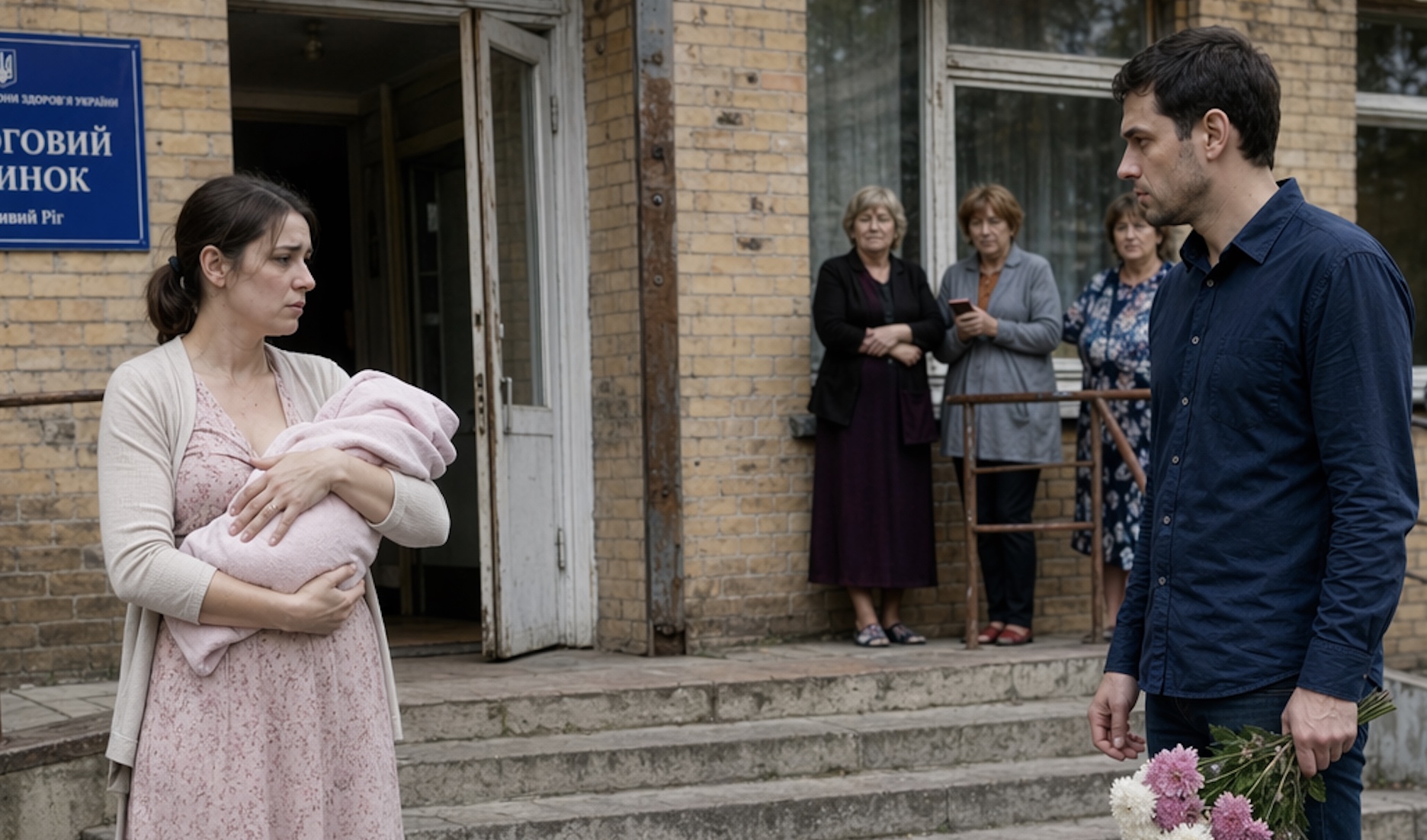
The day I was discharged, all the women in my room were leaving with flowers and smiling husbands. I stood there leaning against the wall, my stitches burning, my head pounding. Oleg came. No balloons. No celebration. He just shoved a crumpled bouquet of chrysanthemums into my hands.
“Let’s go. Mom has the table set,” he muttered, without even looking at our daughter.
I couldn’t hold it in any longer once we got into the car.
“Oleg, why is Aunt Valya saying Lena is acting like she owns our dacha? Why did she dig up my roses?”
He gripped the steering wheel so hard his knuckles turned white.
“Lena is a single mother, Sveta. She’s going through depression after her divorce. The dacha is too much work for us anyway. Mom said the Christian thing to do was give it to my sister. She’s blood. And you… you’re still young. You’ll earn more.”
“Give it to her?” I could barely breathe. “That’s joint property, Oleg! We paid for it with my maternity money and your bonuses! You had no right to do that without my consent!”
“I did,” he said with a crooked grin. “Remember that power of attorney you signed before giving birth? The one so I could ‘handle everything’ while you were in the hospital? I went to the notary and signed a deed of gift. While you were in there ‘resting,’ I saved the family from extra taxes. The dacha belongs to Lena now. And don’t you dare call her. Don’t you dare ruin her holiday.”
We drove straight to his mother’s house. The table was full of salads and champagne. Galina Ivanovna was glowing.
“Welcome home, dear! So, what do you think of our surprise? Now little Lena will have somewhere sunny to sit with her child. Don’t sulk, Sveta. You’re a city girl — what do you need with garden beds? And anyway, the husband is the head of the family. He made the decision. Sit down, eat some soup, you need strength if you’re going to feed the baby.”
I looked at them and saw a pack of hyenas. They sat there dividing up my property, my labor, my sleepless nights, while I had been lying under IV drips.
I tried to speak about the money. About compensation.
“Compensation?” Lena shrieked as she walked into the room wearing my favorite robe — apparently already stolen from the dacha. “You came into this family with one suitcase! Be grateful Oleg even registered you in the apartment. The dacha is ours, ancestral property. My grandfather drove in the first stakes there.” That was a lie. We had bought the plot as bare land.
Oleg said nothing. He just chewed his meat and avoided looking at me. That was the moment I understood: there was no family anymore. Only enemies.
When I came back to our apartment, it was filthy. Dust everywhere. Mountains of dirty dishes. Oleg hadn’t even bothered to tidy up before bringing me and the baby home. My daughter was crying, and I couldn’t feed her — the stress had dried up my milk.
He came into the bedroom and said, “Why are you crying? It’s just land. At least now Mom can relax. She said this proved I’m a real son. Be patient. Maybe in a couple of years we’ll go to the seaside… if Lena lets us stay at the dacha for a week.”
That was when I realized that if I didn’t start fighting right then, they would devour me alive. Without telling him, I called my friend, who was a lawyer.
“Sveta, he made a mistake,” she said. “A power of attorney for managing property doesn’t give him the right to donate it unless that’s specifically written in. He exceeded his authority. We’re filing a lawsuit.”
When Oleg found out I had gone to court, he turned into an animal. He threw plates, screamed that he’d take my child away, called me a greedy parasite. My mother-in-law called my mother and begged her to “control your daughter — she’s trying to throw her husband’s own sister out onto the street!”
But the worst part was this: Oleg stopped giving money for baby formula and diapers.
“If you’re rich enough to go to court, then buy everything yourself. The dacha is sacred. Mom says you’re just jealous of Lena.”
Eight months of hell followed. I went to court hearings with an infant in my arms. Lena brought in “witnesses” who lied that I had “always wanted to give her the property.” But the bank records showing my maternity payments going straight into construction materials spoke louder than their stories.
At one hearing, Lena jumped to her feet and screamed, “I planted those roses myself! She’s lying!”
The judge calmly asked, “Then what varieties of roses were planted there?”
Lena froze.
I named all fifteen. From memory. With tears in my eyes.
The court declared the transfer invalid. The dacha was restored to our joint ownership. But by then I could no longer imagine living there. Every log in that house smelled of their lies.
We divorced. During the division of property, Oleg tried to claim even my microwave — the one my parents had given me.
“You’ll regret this, Sveta!” he shouted outside the registry office. “Mom says you’ll end up alone with baggage! No one will ever love you again!”
But the story didn’t end in court. Real life began after the dust settled and the shouting stopped, when I was left standing on the ruins of everything I once called family. If you think winning back the dacha was the ending, you’re wrong. It was only the beginning of my rebirth.
Once the court decision took effect, Lena refused to hand over the keys. She barricaded herself inside the dacha.
“Come smoke me out!” she screamed from behind the fence. “This is my brother’s land! Sveta, you’re the outsider here — just an incubator for his child!”
I had to call bailiffs and the police. Watching them break the locks on the house I had chosen beam by beam was physically painful. Inside, everything had been trashed. My white sofas were stained with wine, cigarette butts were scattered across the terrace, and the baby crib I had lovingly assembled before giving birth had been turned into a stand for muddy shoes. They destroyed everything they couldn’t keep legally.
Oleg showed up a week later. Not to apologize. To bargain.
“Sveta, come on, you won. But you understand Mom’s suffering now, right? Her blood pressure is through the roof. She says you’re a witch. Let’s make a deal: you drop the child support claim, and I won’t go after a share of the apartment. And the dacha… give it back to Lena. She’s used to it now.”
I looked at him — rumpled, smelling of cheap beer — and suddenly understood that he wasn’t a man standing in front of me. He was just a loudspeaker for his mother’s wishes. Even his words weren’t his own.
“Oleg,” I said, adjusting my daughter’s hood, “your mother always knew exactly how to ruin your life. Let her figure out how to support you now. You are no longer on my list of priorities.”
My mother-in-law switched tactics. She started sending me photos of Oleg as a little boy.
“Look what an angel he was. And you, snake, ruined him. You took away his home. You stole his sister’s only joy. How will you look your daughter in the eye when she finds out you destroyed her father?”
I didn’t block her. I saved every message. They became my vaccine. Every time I started to feel sorry for him, I reread those texts and remembered the day I lay in the maternity ward with stitches in my body while the three of them toasted their “deal” with champagne on my veranda.
In the end, I sold the dacha. Quickly, and at a big discount. The buyers, an elderly couple, were thrilled with the panoramic windows. When I handed them the keys, I cried. Not because I was losing the house, but because I was finally free.
With the money, I paid off the remaining mortgage on my apartment and opened a savings account in my daughter’s name. Oleg, meanwhile, tried to sue me for “unjust enrichment,” but my lawyer shut that down fast.
A year and a half passed.
I was sitting in a café when I saw them. Oleg and Galina Ivanovna. They were walking through a shopping mall. Oleg was carrying his mother’s heavy bags, trudging behind her obediently while she barked at him and jabbed her finger at the shop windows. He looked like an old man, even though he was barely in his thirties. Bent over. Empty. A perfectly “convenient” son.
I didn’t hide. I walked straight past them with my head held high. They didn’t notice me. They were too busy being trapped in their endless family war.
Now I have a small terrace in my new apartment. The same English roses I managed to save from that dacha grow there in pots. They survived. It turns out that when you care for something without hatred, without other people’s poison and advice, it blooms even brighter.
I never sign powers of attorney anymore. I drive my own car, pay my own bills, and decide for myself what color I want to paint my life.
And my daughter… my daughter is growing up in peace. She knows that her mother is strength, not sacrifice.