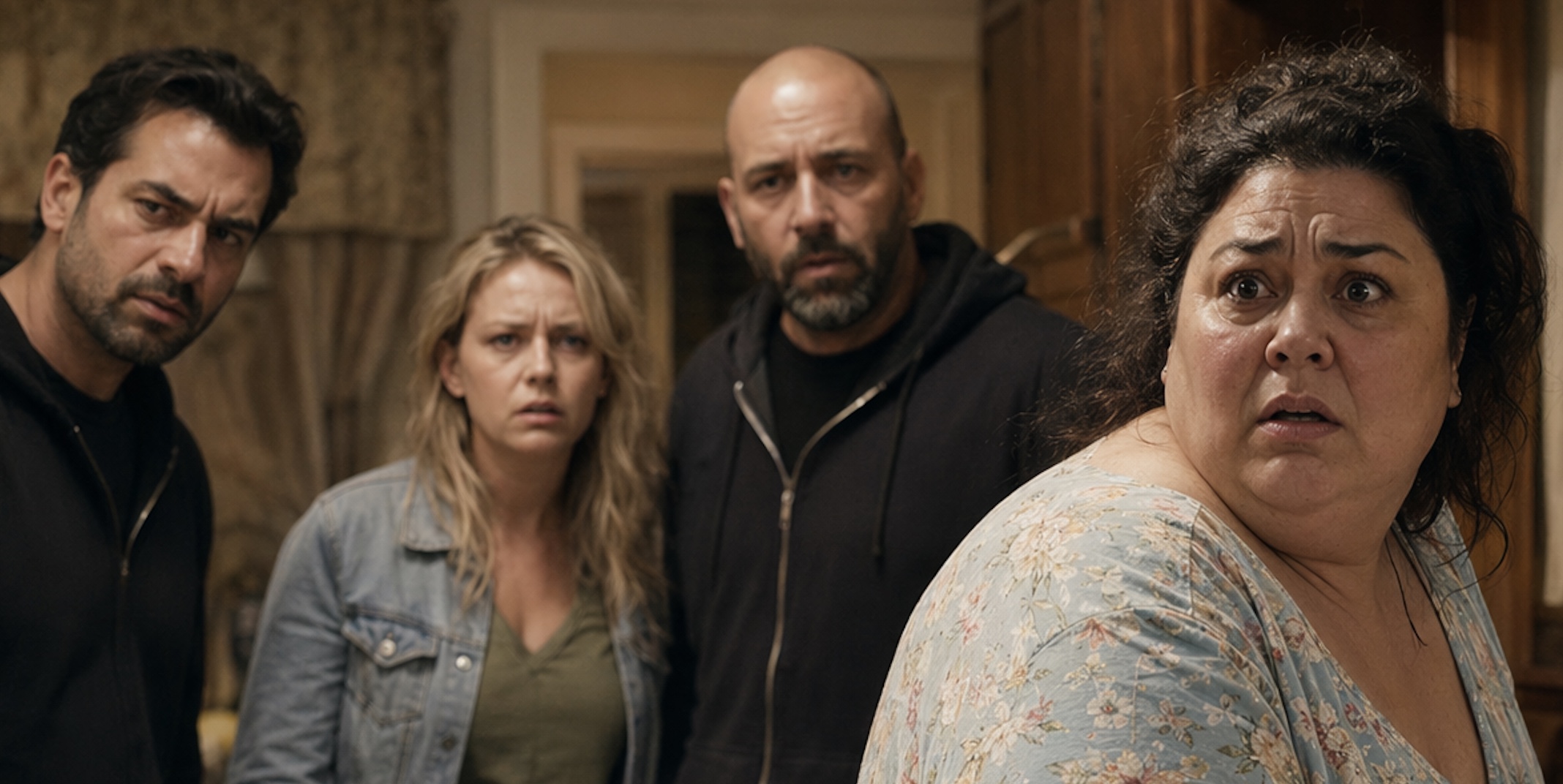
“Excuse me… I think you may have the wrong apartment?”
Anna stood in the doorway of her own kitchen, staring in disbelief. It was late at night, and she had just returned from an exhausting shift at the pharmacy. As she climbed the stairs, she had heard music coming from inside her apartment—some unfamiliar pop song, mixed with the sound of strangers’ voices. The front door had been slightly open.
And now, in her kitchen, complete strangers were acting as though they belonged there. A large man in a sleeveless shirt was frying meat in her pan. A heavyset woman was setting plates from Anna’s dinner set onto the table. Two teenagers sat nearby with laptops open and a bag of chips between them.
Then Larisa Petrovna emerged from the living room, wrapped in her favorite bright floral robe.
“There’s no mistake,” she said calmly, as if they were discussing the weather. “I decided to rent out the rooms. The apartment is legally mine, so I have every right.”
Anna felt the blood drain from her fingers. Something inside her chest seemed to collapse.
“But… I live here. Pavel and I…”
“So live here,” her mother-in-law replied with a shrug. “There’s enough room for everyone. Meet Sergey and his family—they’ve taken the far room.”
A year and a half earlier, Anna’s life had been orderly and predictable. Every morning, she went to the pharmacy where she worked as a senior pharmacist. In the evenings, she earned extra money through online consultations. On weekends, she spent hours searching listings for apartments in new buildings.
“Anya, you’re young, pretty, and all you ever do is stare at your phone with a calculator,” her coworker Marina used to joke. “Life is passing you by!”
“I have a plan,” Anna would answer. “One more year, and I’ll have enough for a down payment. I want a place of my own, even if it’s tiny.”
The day she finally saved enough, Pavel walked into the pharmacy. He was tall, slightly stooped, with kind eyes. He spent forever choosing medicine for his mother, apologizing for asking silly questions. Then, unexpectedly, he asked:
“Would you let me take you out for coffee? After work?”
Anna said yes.
Pavel turned out to be calm, dependable, and easy to be with. He worked in construction, loved old movies, and knew how to listen. A year later, they decided to get married quietly, without a lavish wedding.
“There’s only one problem,” Pavel said on the eve of the свадьба. “My mother.”
Larisa Petrovna truly was a problem. She was a strong-willed woman with an iron grip on her son’s life. But one day, she came to them with what sounded like an offer of help.
“I have an apartment—large, three rooms,” she began, sitting down in the tiny kitchen of their rented place. “I want to move out to the dacha, and you two need housing. Let’s do this: you renovate the apartment, and I’ll leave it to you.”
“Mom, but the paperwork…” Pavel started.
“What paperwork do family members need between each other?” she cut him off. “Anechka, you trust me, don’t you?”
Anna hesitated. Every instinct in her screamed that something was wrong.
“Don’t worry,” Pavel assured her later that evening. “Mom keeps her word. She just hates paperwork. And honestly, this is better than a twenty-year mortgage.”
In the end, Anna gave in.
She poured all her savings into the renovation: new floors, new plumbing, a beautiful kitchen with a dishwasher, a bedroom set, everything. The apartment was transformed—from a crumbling Soviet relic into a modern, comfortable home.
“It turned out beautifully!” Larisa Petrovna said admiringly. “Like something out of a magazine!”
The first month passed peacefully. Larisa Petrovna showed up once a week “to check on the children,” drank tea, and left. Then her visits became more frequent.
“Mom, it’s three in the morning,” Pavel muttered sleepily once, opening the door.
“I came for some papers. I left them in the bedside table,” she replied cheerfully, walking straight into the bedroom.
Anna lay under the blanket, feeling the anxiety growing heavier every day. Her mother-in-law came whenever she pleased: in the morning with friends for tea, in the evening with distant relatives to “show them how the children were living,” on weekends to cook lunch.
“Anechka, why did you buy this sausage?” Larisa Petrovna would say, throwing food from the refrigerator straight into the trash. “Nothing but chemicals! And get rid of these yogurts—they’re unhealthy.”
“But those are our groceries,” Anna would say timidly.
“There will be none of that junk in my house,” her mother-in-law snapped.
The breaking point came the day Anna returned from a night shift and discovered that her work corner in the living room had disappeared. Her desk, book shelves, and laptop had all been shoved into a corner behind the sofa. In their place stood an old sewing machine.
“It’s more convenient for me to sew here,” Larisa Petrovna explained without even looking up from the fabric in her hands. “The light is better. Your things are in the corner.”
That evening, Anna tried to speak to Pavel.
“Pasha, this can’t go on. She acts like she’s the owner, and we’re just tenants.”
“Just give it time,” he sighed. “Mom will get used to the fact that we live here. She just needs time.”
But time passed, and things only got worse. Anna began to understand the awful truth: her money had gone into someone else’s apartment, and she had no rights to it—perhaps never would.
That particular evening began like any other. Anna was making dinner while Pavel watched the news when Larisa Petrovna arrived carrying a cake.
“I have news for you,” she announced, taking the seat at the head of the table.
“That’s nice, Mom,” Pavel said absentmindedly. “Maybe you’ve decided to make money from your crafts?”
“Why think so small?” she said. “We’ve got three rooms. I’m going to rent out two of them. The middle room and the far room are free.”
Anna froze.
“You’re joking.”
“Why would I joke?” Larisa Petrovna said, sounding genuinely surprised. “It’s all decided. Next week two lovely girls from medical school are moving in.”
“But we live here!” Anna cried, hearing her own voice shake.
“Then live here,” her mother-in-law replied. “You have the bedroom. That’s plenty. The rent money will cover utilities—everyone benefits.”
Pavel said nothing. He stared down at his plate. Anna waited for him to object, but he only muttered weakly:
“Mom, maybe don’t rush…”
“It’s decided,” Larisa Petrovna cut him off.
A week later, the first tenants arrived—two female students.
The apartment turned into a revolving door of strangers. In the mornings there was a line for the bathroom. Someone was always cooking in the kitchen, taking over the stove. They divided the refrigerator into shelves, yet food still went missing.
“Anna Sergeyevna, may I borrow your frying pan?” people knocked on the bedroom door to ask.
“Excuse me, have you seen my food? It was in a container…”
At night, music played behind the walls. Doors slammed. People talked loudly on the phone.
Anna no longer felt at home. She hid in the bedroom, tried to avoid the kitchen, and left for work as early as she could. In the apartment she had lovingly created, she had become a stranger.
And then came that evening—when she returned home and found an unfamiliar family in her kitchen, frying meat in her pan.
Anna did not sleep that night. She lay beside Pavel, listening to his snoring, and for the first time in a year and a half decided to act on her own instead of waiting for her husband to “talk to his mother.”
The next morning, while everyone else was asleep, she gathered documents: renovation contracts, receipts from building supply stores, bank statements. The total was staggering—nearly two million rubles.
“I need legal advice about a housing issue,” she told the lawyer at a free consultation office.
The young woman carefully examined the papers.
“This is a very interesting case. The renovation was officially documented, and the payments came from your account. Do you have witnesses?”
“The contractors, the neighbors… everyone saw us move in and do the renovations.”
“We may be able to prove unjust enrichment. You invested in someone else’s property based on a promise that it would be transferred to you. That qualifies as deception. Gather every piece of evidence—messages, witness statements, anything.”
Anna began to work methodically. She contacted the foreman, who confirmed that she had paid for the renovation. She found text messages on her phone in which her mother-in-law had promised to sign over the apartment “after the renovation.”
Meanwhile, Pavel finally began to see the truth. It happened unexpectedly. One night, he woke to voices on the other side of the wall. One of the new tenants was talking on the phone:
“Yeah, it’s a great place, right in the center. The landlady’s amazing—rent is cheap. She said there’s a married couple living here temporarily, but they’ll be moving out soon. Then there’ll be more space.”
Pavel sat up in bed, his blood pounding in his head.
“Did you hear that?” he asked, shaking Anna awake.
“I heard,” she replied quietly.
The next morning, he had his first real fight with his mother.
“Mom, are you trying to kick us out?”
“Don’t be ridiculous,” she said. “It’s just time for you to start looking for your own place. You can’t live with me forever.”
“But Anna invested all her money into your apartment!”
“That was a gift to me,” Larisa Petrovna said coolly. “For taking you in.”
The following morning, for the first time in their married life, Pavel took a day off.
“Come on,” he told Anna. “We’re going to the lawyer together. Enough of this.”
At the law office, they were received by the same woman who had advised Anna earlier.
“It’s good that both of you came,” she said. “This is complicated, but not hopeless. We’ll prepare a formal demand letter before filing suit.”
The document was substantial. It detailed every ruble Anna had invested—from the new windows to the Italian tile in the bathroom. Attached were receipts, bank records, and before-and-after photos. A separate section demanded an end to the unlawful renting of rooms without the consent of the people actually living there.
“And if she refuses?” Pavel asked.
“Then you go to court,” the lawyer said. “And frankly, you have a strong case.”
At first, Larisa Petrovna only laughed when Pavel handed her the letter.
“What is this nonsense? Are you threatening me?”
“Mom, read it carefully,” Pavel said firmly. “Two million three hundred thousand. That’s how much Anna put into your apartment.”
“It was a gift!”
“We have messages where you promised to transfer the apartment to us,” Anna said, holding up her phone. “And we have witnesses—neighbors, builders.”
Larisa Petrovna went pale as she leafed through the papers. The phrase “unjust enrichment” and the possible consequences of a lawsuit made a much bigger impression on her than she expected.
Three days later, she came to them herself.
“Let’s settle this,” she said stiffly. “No courts, no scandals. I’ll transfer a share of the apartment to Anna. Half of it. And I’ll evict the tenants.”
“And you’ll return at least some of the money,” Anna added.
“Five hundred thousand. No more.”
Pavel looked at Anna. She nodded. Better a certain result now than years of court battles with no guarantee.
Four months later, on a mild evening in May, the windows stood open and birdsong floated in from the street. Anna sat in her kitchen—now, finally, she had every right to call it hers—and drank tea with lemon.
The apartment was quiet again. The tenants had moved out back in March. Larisa Petrovna had kept her word and relocated to the dacha, where, according to her, “the air is cleaner and the nerves stay calmer.”
“Look,” Pavel said, placing a folder in front of her.
Anna opened it.
A property ownership certificate. Her name was there, listed as owner. Half of the apartment.
“Now it’s official,” he said with a small smile. “I’m sorry it came to this. I should have acted sooner…”
“You don’t have to say it,” Anna said, resting her hand over his. “What matters is that you stood by me.”
She looked around the kitchen—the white cabinet fronts she had chosen herself, the marble countertop she had bargained hard to get at a discount, the blue curtains she loved.
“You know,” she said softly, “for the first time in two years, I truly feel like I’m home.”
“Mom called,” Pavel said carefully. “She says she wants to stop by. For tea.”
Anna was silent for a moment, then nodded.
“That’s fine. As long as she doesn’t bring any extra guests.”
Outside, the sun was setting, filling the kitchen with warm golden light. Somewhere in the courtyard, children were laughing. It was an ordinary spring evening in a home that had finally become theirs.