I noticed it in the silence. Not the kind that says “nobody’s home,” but the kind where people are there, yet no one seems to breathe all the way in.
The kettle had already clicked off three times, twitchy as a nervous habit. On the table lay an envelope from the notary—white, tidy, stamped. Beside it were my keys, my phone, and the same grocery list I always write the same way: bread, milk, apples, cat food. Life, in other words, was trying very hard to stay ordinary. But that envelope was pretending to be just paper when in fact it held an entire new chapter.
My husband, Dima, kept circling the kitchen.
“Have you opened it yet?” he asked for the third time in ten minutes.
“I have,” I said. “And I read it. Twice, actually. Yes, it’s an inheritance. Yes, it’s mine.”
“Well…” He scratched the back of his head as if the right answer might be hiding there. “That’s… good.”
“Good,” I echoed with a nod. “Then why do you sound like your mother is about to step out of the pantry and tell me I’m reacting the wrong way?”
He said nothing.
And with that silence, he answered everything.
My phone buzzed on the table. The screen lit up with Olya.
Olya was Dima’s sister. The kind of woman who walked into your home as if you already owed her something. The kind who smiled in a way that made you instinctively check whether your wallet was still where you left it.
I looked at Dima.
“She already knows?”
“I… well… I told her,” he admitted, not meeting my eyes. “She asked. Mom asked too. They’re worried.”
“They’re worried,” I repeated. “About my inheritance.”
I picked up the call.
“Hi, Olya.”
“Lenochka, hello!” Her voice was sugary and bright, like a holiday commercial. “Listen, I’m going to stop by for a minute, okay? I’m nearby. Literally right around the corner.”
“And where exactly is ‘nearby’?” I asked.
“Oh… basically already in your neighborhood. Don’t worry, I’m not coming empty-handed. I bought pastries.”
Dima made the face that said, See? She means well.
I let out a slow breath.
“Come by,” I said. “But no surprises.”
“What surprises?” Olya laughed. “We’re family.”
That phrase always set off alarms somewhere inside me.
She arrived twenty minutes later. No kids. No husband. No bakery box.
Just a small handbag and… a folder.
A slim office folder, the kind you bring not to tea but to a meeting.
“Oh, it’s so cozy in here!” she said as she stepped inside, scanning the hallway like an inspector. “Did you renovate recently?”
“The renovation’s old,” I said. “The air is fresh. For now.”
Olya laughed as if I’d made a charming little joke. She took off her coat and hung it up with the calm confidence of someone in her own home. Then she placed the folder on the console table in a way that made sure I noticed it.
Dima instantly began fussing around her.
“Olya, why didn’t you call first? We would’ve…”
“Oh, come on, Dima.” She waved him off. “I’m one of your own. Lena, what tea do you drink again? I remember you like that… green one. The one that tastes like grass.”
“I’ll pour it,” I said, and went into the kitchen.
Olya followed without asking. She sat down at the table as if she lived there and had simply stepped out to run errands.
“Well,” she sighed, smiling even wider now, “congratulations.”
“For what?” I asked, setting down the cups.
“What do you mean, for what?” Olya widened her eyes. “For the inheritance, obviously. Your grandmother—God rest her soul—left you an apartment. That’s huge. That’s… a whole new life.”
“It’s not a new life,” I said evenly. “It’s my grandmother’s apartment. And her memory.”
“Of course, of course.” Olya nodded quickly. “Memory matters. But practical things matter too. We’re adults.”
She pulled the folder closer and set it on the table with theatrical care, like a TV character about to reveal the twist.
Dima tensed.
“Olya, what’s that for?” he asked, as though he still hoped the folder would vanish on its own.
“Oh, nothing dramatic,” she said with a smile. “Just some thoughts. So everything can stay fair. Family fair. No hard feelings. I understand, Lena—this must be a lot for you. Papers, notaries, your head spinning. So we thought we’d help.”
“Help how?” I asked.
“Well… by discussing options,” she said. “Look. Since in a family everything is shared… and you and Dima are married… then major decisions should be made together. And if they’re made together, then naturally… things should be shared together.”
I set the kettle back on its stand very slowly.
“Olya,” I said, “what exactly are you talking about?”
“Lena, don’t pretend you don’t understand.” She leaned forward, lowering her voice into a confidential tone. “Inheritance isn’t just ‘yours.’ You’re a family. That means the apartment is a shared resource. And Dima has family too. Mom. Me. We all have to live somehow. Mom, by the way, is struggling. Her pension… well, you know.”
Dima opened his mouth, then shut it again. Like a fish.
I turned to him.
“Dima,” I asked calmly, “is that how you see it too?”
He swallowed.
“Lena… Olya’s just… talking it through. Don’t get upset.”
Olya jumped in instantly.
“Exactly! Don’t get upset! Nobody’s taking anything. We’re just looking at possibilities. For instance, you could sell the apartment, get something a bit bigger, pay off certain debts… and help Mom out. Or rent it out. Then divide the income. Fairly. You’re a reasonable woman.”
And suddenly I realized I was smiling. It surprised even me.
“Fairly,” I repeated.
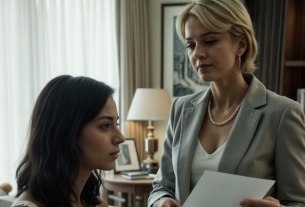
“Of course!” Olya said brightly. “I even made notes…” She opened the folder. Inside were papers. “See? Rental prices in your area, estimated income, and a list of what Mom needs: dental work, medications, a new coat…”
“Olya,” I cut in, “you came to my house with calculations for my inheritance.”
“Lena, don’t be rude,” she said, wearing an injured expression. “I mean well. I just don’t want this family divided.”
I placed my hand on the folder and closed it.
“Surprises are over,” I said.
Olya blinked.
“What?”
I stood up, picked up the folder with two fingers—as if it were sticky—and set it beside her bag.
“You’re leaving now.”
“Lena…” Dima got to his feet. “What are you doing? It’s just…”
“It’s just what?” I turned to him. “Perfectly normal for someone to come into my home and start dividing what my grandmother left me?”
Olya gave a sharp nervous laugh.
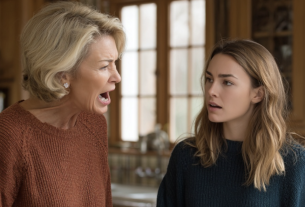
“Oh, come on, you’re being dramatic. ‘Dividing’—really? No one’s dividing anything. We’re discussing. Or did your new money already ruin your character?”
“My character was always there,” I said. “I just used to hide it to make your life easier.”
Olya narrowed her eyes.
“So you think we’re outsiders now?”
“I think the moment you stuck your hands into my inheritance, you crossed a line,” I said. “And one more thing: you didn’t come here as family. You came like an accountant with an agenda.”
She rose abruptly.
“So that’s how it is,” she said slowly. “Fine. But don’t act surprised later if—”
“If what?” I asked, walking to the door and opening it. “If you all start hysterics in the family group chat?”
Dima made one last attempt to smooth it over.
“Lena, let’s calm down, let’s just talk—”
“Calm down?” I looked at him. “You already did your talking. Just not with me.”
Olya grabbed her bag and folder, put on her coat, then paused at the threshold.
“Remember this, Lena,” she said. “Things always come back around in a family.”
“I’ll remember,” I said with a nod. “Which is exactly why you’re standing on the other side of the door.”
I shut it.
And the kitchen fell quiet in that way where even the refrigerator seems to stop humming out of respect.
We stood there in silence for a full minute. Dima stared at the door like a man watching the end credits of a series he hadn’t expected to get so ugly.
“That was… too harsh,” he said at last.
I turned toward him.
“Dima, do you understand that your sister did not come here for tea?”
“She’s just worried about Mom.”
“About Mom?” I let out a small laugh. “Or about finding a comfortable arrangement?”
“Lena, come on…” He lifted his hands helplessly. “You know what my family is like. Mom always… keeps everything under control.”
“And what am I?” I asked quietly. “Something else for her to keep under control too?”
He sat down as though his legs had given out.
“I didn’t want conflict.”
“You didn’t want conflict,” I repeated. “So you let it arrive in my kitchen inside a folder.”
My phone buzzed again.
This time it was my mother-in-law.
I showed the screen to Dima.
“Go ahead,” I said. “Your mother. Your episode.”
He answered.
“Yes, Mom…”
At first he just listened, nodding even though she couldn’t see him. Then the color drained from his face.
“Mom, she didn’t ‘throw her out,’ she just—” He stopped. “Yes, I was there… No, Mom, it’s not…”
I could hear her voice even through the phone: sharp, shrill, like a pot lid dropped onto the floor.
He tried to cut in.
“Mom, wait… Yes, it was Lena’s grandmother’s apartment… No, Mom, it isn’t ‘ours together,’ it’s…” He looked at me as if searching for help.
I only shrugged.
“Mom, I’ll call you back,” he said at last, and ended the call.
A heavy pause followed.
“She said you…” He swallowed. “She said you’ve gotten spoiled. That you think too highly of yourself.”
“Wonderful,” I said. “Send my regards. She’s welcome to come over with a folder too. I do enjoy a theme.”
“Lena, come on…” He tried to smile, but failed. “Listen, maybe… since we are a family… maybe we really should help Mom?”
I looked at him for a long time.
“Dima,” I said softly, “do you hear yourself?”
He leaned back in the chair.
“I’m just… stuck in the middle. I don’t want to choose.”
“You already did,” I said. “You just think it doesn’t count if you never say it out loud.”
He stood up so abruptly the chair scraped the floor.
“So what do you want from me?” he snapped. “To fight with everyone? To cut off my whole family?”
“I want one thing,” I said. “Stop sacrificing my life to make theirs more convenient.”
He opened his mouth again—and once more, nothing came out.
And I understood, very clearly, that the most important thing now was not to argue, not to explain, not to prove anything.
The most important thing was not to retreat.
“I’m going to the notary tomorrow,” I said. “Alone. You can come if you want, but I’m making the decisions.”
“Lena…”
“And one more thing,” I added. “No one gets the keys to my grandmother’s apartment. Not your mother. Not Olya. Not even ‘just for a minute.’”
“No one’s asking,” he muttered.
My phone buzzed yet again. A message from Olya:
You’ll regret this. This isn’t over.
I showed it to Dima.
He went pale.
“She’s just… emotional.”
“She’s not emotional, Dima,” I said. “She’s organized. Her plans aren’t feelings. They’re paperwork.”
The next day I stood outside the notary’s office and noticed that my hands were shaking. Not from fear—from anger. The kind of anger that doesn’t shout. The kind that wears away at you quietly.
Dima came after all. He stood beside me like a man dragged there against his will, but he came.
“Are you sure you want to do this alone?” he asked again.
“I’m not alone,” I said. “I’m with myself.”
Inside, the place smelled of paper and other people’s turning points. The notary—a composed woman with tired eyes—looked over the documents and said in a level tone:
“The certificate of inheritance will be issued in your name. This property is not marital property. Your spouse does not automatically acquire any share in it.”
Dima looked as though he had exhaled for the first time in twenty-four hours.
“So…” he said carefully. “That’s definite?”
“Definite,” the notary replied. “Unless the heir chooses to transfer the property herself—through sale, gift, and so on.”
Something eased inside my chest.
“Thank you,” I said.
The notary’s expression softened just slightly.
“And one more thing,” she added. “If anyone pressures you, don’t rush. Pressure is a terrible adviser.”
I gave a small, humorless smile.
“That much I’ve already learned.”
We stepped back outside. Dima was silent.
“Well?” I asked.
He looked at me like a man who had just had something obvious explained to him after desperately hoping magic might still apply.
“Lena…” he said quietly. “I didn’t know it worked like that.”
“You didn’t know because you didn’t want to know,” I said.
He nodded, as though he understood that too.
“I’ll talk to Mom,” he said. “And to Olya.”
“Do that,” I replied. “But not in the language of ‘Lena overreacted.’ In the language of ‘you crossed the line.’”
He nodded again.
And for the first time, I saw not a boy trapped between women, but a grown man at least trying to become one.
That evening Olya came again.
Without calling. As always.
I opened the door and saw her smile—it wasn’t sugary this time. It was cold.
“Can I come in?” she asked, while already stepping forward.
“No,” I said, and didn’t move.
She stopped in the hallway. In her hand was the folder again.
I wasn’t even surprised.
“Lena, let’s do this properly,” she said. “No circus. I talked to Mom. She’s shocked. Dima’s shocked too. Do you really want this family to fall apart over… an apartment?”
“This family isn’t falling apart because of an apartment,” I said. “It’s falling apart because you decided you had the right to control what isn’t yours.”
Olya lifted her chin.
“What isn’t ours?” she repeated. “You live with my brother. You benefit from what he’s given you. And now all of a sudden you’re ‘independent’?”
I let out a short laugh.
“Olya,” I said, “do you honestly think Dima gave me my grandmother?”
Her face twitched.
“Don’t get clever. I’m talking about principle. We’re family. What’s ours is shared.”
“Then start with yourself,” I said. “How much have you put into renovating your mother’s kitchen? How much do you send her every month? Or does ‘shared’ only apply to what belongs to me?”
“I…” Olya faltered for a moment, then recovered. “I have children. I have a mortgage.”
“I have a life too,” I said. “And a grandmother you all only remembered on holidays.”
She narrowed her eyes.
“Are you implying you were the only one who took care of her?”
I felt something rise inside me—something I normally kept hidden. Not because I was afraid, but because I had no desire to be labeled difficult.
“I’m not implying anything,” I said. “I’m saying it plainly. I visited her. I carried her groceries. I sat with her in endless lines. I listened to the same stories twenty times and never once told her I was too busy.”
Olya fell silent for a second.
“So what?” she shot back at last. “You get the apartment for that, and we get what—thank you?”
“You get a lesson,” I said.
“Oh, is that right…” She stepped closer. “Then listen carefully. We can take another route. Lawyers. Court. Expert reviews. You think this is simple? You think a will is unbreakable?”
I looked at her and suddenly understood: this was never really about the apartment.
It was about power.
About the fact that someone had dared to say no and hadn’t been afraid.
“Olya,” I said calmly, “I have a notary. And I’ll have a lawyer if necessary. You have a folder and a habit of applying pressure. That won’t get you far in court.”
She smiled, but the smile was mean.
“You’ve become so… confident.”
“No,” I said. “I’ve become tired.”
“And that’s it?” she said, lifting a brow. “You’re throwing me out again?”
“I didn’t throw you out the first time,” I said. “I closed the door where you assumed you could enter without permission.”
She spun around sharply.
“Dima will see what you’re really like!”
And right on cue, Dima stepped out of the room.
He had heard everything.
“I already have,” he said. His voice was quiet, but steady. “And I like what I see.”
Olya froze.
“Dima…” She took a step toward him. “Are you seriously taking her side?”
“I’m taking the side of what’s right,” he said. “And you have no right to come here and threaten my wife. And absolutely no right to interfere in her inheritance.”
Olya’s eyes widened.
“Mom is going to faint.”
“Then Mom should stop acting as if we owe her our entire lives,” Dima said. “And you should stop acting as if you get to run ours.”
Olya stared at him like he was someone she’d never met.
“You’ve changed,” she whispered.
“No,” he said. “I’ve just spoken up for once.”
She looked as if she wanted to answer, but no words came. Then she turned and left. No drama. No I’ll be back. She just slammed the door a little harder than necessary and went.
I stood there feeling something strange.
Not victory.
Not triumph.
Relief.
Dima walked over to me.
“I’m sorry,” he said.
“For what exactly?” I asked.
He exhaled.
“For not standing up right away yesterday. For letting them think this was acceptable.”
I nodded.
“I don’t need heroic speeches,” I said. “I need you not to hand me over for the sake of peace.”
“I understand,” he said. “Peace… shouldn’t come at your expense.”
I looked at him, and suddenly I remembered my grandmother. Once, years ago, when I had complained about a neighbor who treated our kitchen like it belonged to her, Grandma had said:
“Lena, a door isn’t there for decoration. A door exists for a boundary.”
A week later, we changed the locks.
Not because we were afraid.
Because we wanted peace.
My mother-in-law called three days in a row. Then she sent a text:
I don’t recognize my son anymore. You turned him against me.
I read it and showed it to Dima.
He sighed, dialed her himself, and put the phone on speaker.
“Mom,” he said, “I’m not turned against anyone. I’m an adult.”
“An adult?!” Her voice came through like boiling water. “That’s how you speak to me? After everything I’ve done for you—”
“Mom,” he cut in, “I love you. But Lena is my wife. And her inheritance is not up for discussion.”
“And what am I supposed to do?” his mother shrieked. “I’m alone! I’m struggling!”
“We’ll help,” Dima said. “But the way we decide to help. Not through threats. Not through Olya. And not through dividing up what isn’t ours.”
A pause. Then, in a cold voice:
“So she matters more to you than your own mother.”
Dima looked at me, then answered:
“Mom, don’t frame it that way. I’m not choosing who I love more. I’m choosing how people are allowed to treat me.”
And I felt something catch in my throat.
Not from pity.
From the fact that someone had finally said it out loud.
That same evening, we went to a small café near the house.
Not to celebrate.
Just to breathe.
It smelled of coffee and cinnamon. Soft music played in the background. People spoke in hushed voices, as if everyone there was carrying a private little drama and no one wanted to disturb anyone else’s.
We sat by the window.
I looked out at the street and realized I hadn’t felt this kind of quiet in a very long time—the real kind, the living kind.
“Do you regret it?” Dima asked.
“Regret what?”
“That it turned out like this. That you… threw Olya out. That Mom is angry.”
I turned the spoon between my fingers.
“Dima,” I said, “the only thing I regret is not doing it sooner.”
He smiled sadly.
“I think I’ve spent my whole life living in ‘just keep the peace’ mode.”
“And I’ve spent mine in ‘just don’t be inconvenient’ mode,” I said. “And you know what? They’re equally bad.”
He nodded.
“What are we going to do with the apartment?” he asked carefully.
I looked at him.
“For now? Nothing. I want to go there. Be there. Take down the curtains Grandma washed by hand. Sort through her cups. Sit in her kitchen.”
“I’ll go with you,” he said.
“Just no folders,” I said with a faint smile.
He laughed for the first time in a long while.
“Deal.”
We sat in silence, drinking coffee.
Outside, wet stubborn March snow was falling.
And I kept thinking that sometimes the greatest inheritance isn’t an apartment at all.
It’s the right to say no and not apologize for it.
And also this:
A door really isn’t there for decoration.
It’s there for a boundary.
So that inside, at last, it can become truly quiet.