“Let’s give Semyon that corner over there—the raspberry patch is thick there, and the soil is soft,” Tamara Stepanovna said, sweeping her hand across my garden as though she were dividing up an ancestral estate rather than a plot of land I had bought with the fee from the Nizhny Novgorod Elevators case.
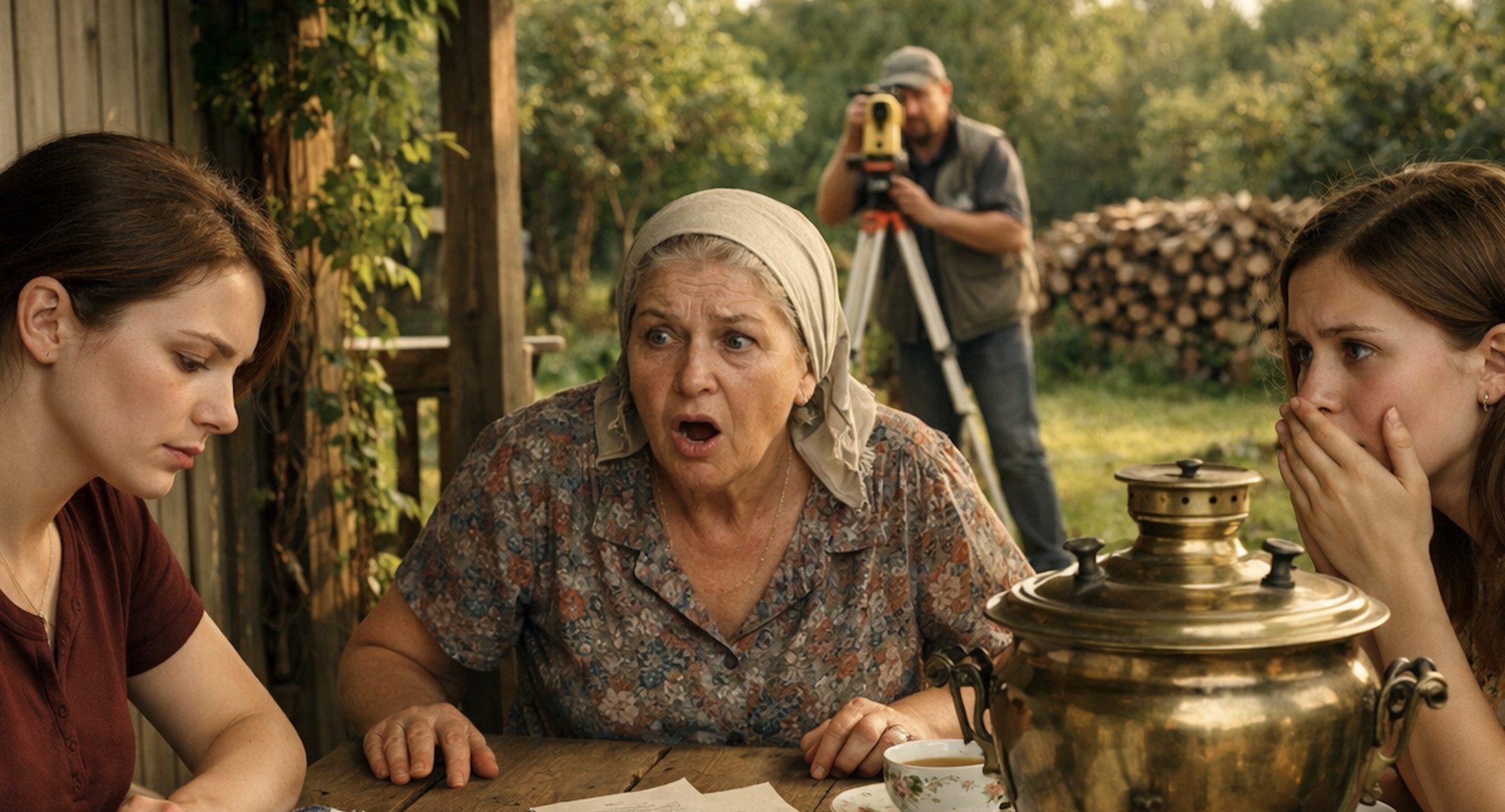
I silently ran my fingertip along the crack in the old brass samovar. The split was as thin as a strand of hair, yet hot water kept seeping through it, drop by drop, leaving a damp stain on the tablecloth. The samovar had belonged to my grandfather, and I had been meaning for ages to take it in for cleaning and soldering, but somehow never got around to it. Now I watched the stain spread while my mother-in-law calmly assigned pieces of my six соток inside the city limits as if they were hers to give away.
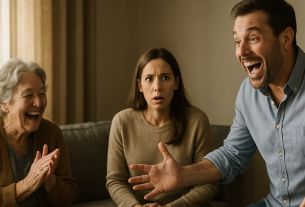
Everyone was at the table: my husband Anton, his sister Marina with her husband, and their two boys—little Semyon and Pavlik. The kids had already stripped the unripe currants and were now gleefully firing them at each other, aiming for the freshly painted white posts of my veranda.
“Mom,” Anton said, clearing his throat and carefully avoiding my eyes, “we’re just… talking it over. Nothing’s been decided yet.”
“What do you mean, nothing’s been decided?” my mother-in-law protested with such sincere indignation that even the samovar seemed to stop leaking in surprise. “Marina’s apartment is cramped, the children are piled on top of each other. And here this land is going to waste! Olya only plants flowers here and sits reading her books anyway. Children need fresh air. We’ve already made a plan: we’ll put up a prefab summer house here, six by four meters, and run a little picket fence around it so they’ll have their own space…”
“More tea, Tamara Stepanovna?” I asked. Inside, I was estimating the cost of a claim for interference with the use of private property, but my voice was sweet as honey.
“Yes, dear, pour me some,” she said graciously, nudging her cup toward me. “You’re an intelligent woman—you understand that family means everything is shared. Anton’s father and I gave every last kopek to our children in our day. But you, Olenka, you’ve got that difficult legal mind. You always want to sort everything into neat little categories. Life doesn’t work like that. Life should be guided by conscience.”
Marina nodded eagerly, clutching an empty pie plate to her chest.
“Olya, honestly, what’s the big deal? We’re not asking for the whole plot. Just two little сотки fenced off. You don’t even use that corner—there’s nothing there but weeds and wild raspberries.”
I looked at the “weeds.” They were rare cultivated raspberry varieties I had ordered from a nursery near Kstovo. Each bush was three years old and only just coming into full strength.
“Of course,” I said with a smile. “Family is important.”
Anton let out a relieved breath and reached for the sugar. He always did that whenever he thought a conflict had dissolved—he started eating. He seemed to believe that if I wasn’t shouting or smashing plates, then I must have agreed. In five years of marriage he had never learned that I was most dangerous precisely when I began smiling and pouring tea from a faulty samovar.
I am a land dispute lawyer. My workday consists of explaining to people that “shared” only matters when the documents say “joint ownership.” When the title registry lists a single surname, everything else is folklore and poetry.
“Please, go on, Tamara Stepanovna,” I said, rising to clear the dishes. “The fence idea is fascinating. Only let me invite a specialist first, so he can see how best to handle the light. We wouldn’t want Semyon’s little house casting shade over my plantings.”
“There!” my mother-in-law exclaimed triumphantly, looking at her son. “And you said Olya would object. Olya’s a treasure. Then tomorrow we’ll bring the builders so they can take measurements.”
“No need tomorrow,” I said, neatly folding the napkins. “Tomorrow I have a cadastral engineer coming. The boundaries need to be clarified. Imagine if we build Semyon a little house and it turns out to stick half a meter into the garden association’s land. We wouldn’t want fines, would we?”
That evening, after the guests had gone and Anton had fallen asleep in front of the television, I stepped out onto the veranda. The samovar had gone cold, but a huge rusty stain from oxidized brass remained on the tablecloth. I touched the crack with my fingernail. Tomorrow there would be more than just an engineer here. Tomorrow there would be a full inventory of reality.
Anton woke up just as I was switching off the hall light.
“Olya, you really aren’t against it, are you? Marina got so excited…”
“Against what, Anton? Against children getting fresh air? Honestly.”
I locked the door with two turns of the key. The click in the silence sounded like a full stop at the end of a sentence. Tomorrow I would show them what the law looks like in the hands of someone who knows how to read it.
The next morning began with a phone call from Marina. She was already at the строительный market and cheerfully asking which corrugated metal roof color I preferred—“chocolate brown” or “moss green.”
“Take whichever you like, Marina,” I said, holding the phone between my shoulder and ear while spooning coffee into the cezve. “Just keep the receipts. You never know.”
Anton sat at the kitchen table chewing a sandwich, trying to do it quietly. He could sense something charged in the air, but couldn’t tell what it was. I, on the other hand, was impeccably polite.
At ten o’clock, a white Niva with orange beacons pulled up at the gate. Ilya got out—my colleague, with whom I had won land-grab cases in the Volga floodplain. He carried a tripod and an instrument that looked like a futuristic camera.
“Olya Igorevna, greetings,” he said formally, though we had been on a first-name basis for ten years. “The request for boundary clarification and staking out the plot has been accepted. Shall we begin?”
At that exact moment, a Gazelle truck loaded with building materials screeched to a stop by the gate. My mother-in-law jumped out of the cab, followed by two workmen in dusty overalls.
“And what is all this supposed to be?” Tamara Stepanovna demanded, hands on hips as she stared at Ilya. “Olya, we had an agreement! Why are these gadgets here?”
“Tamara Stepanovna, this is the engineer,” I said, coming forward and adjusting my glasses. “Everything has to be done legally. So Semyon won’t have problems later. Ilya, start from the north corner, where the raspberry patch is.”
The workers began unloading boards right onto my parking spot. I watched silently as the pile grew, blocking the view of my alpine rock garden. Anton rushed out of the house, bewildered, looking from the engineer to his mother.
“Mom, maybe we should wait until Ilya’s finished?” he asked timidly.
“Wait for what?” she snapped. “For him to fiddle with his little machine all day? Boys, carry the boards deeper into the yard. Over there by the fence.”
Meanwhile, Ilya had set up the GPS receiver and was moving the pole along the boundary line. I saw him frown as he looked at the tablet.
“Olya Igorevna, there’s a complication,” he said loudly. “Come take a look.”
I walked over. My mother-in-law, sensing trouble, hurried after me.
“According to the cadastral plan,” Ilya began in the voice of someone delivering a verdict, “your actual fence on the north side is shifted one meter and twenty centimeters into the neighboring parcel.”
“What do you mean?” my mother-in-law frowned. “What neighboring parcel? There’s just wasteland and woods there!”
“It’s not wasteland,” I said, looking at her with sincere sympathy. “It’s forest fund land. The fence was put up by the previous owners. And if we start building there now, the first inspection from the forestry authority won’t just mean a fine—it’ll mean an order to demolish every structure within the protected zone.”
“Who’s going to inspect anything?” Tamara Stepanovna waved dismissively. “That fence has stood there forever and will stand another hundred years!”
“You see,” I said, shifting my house keys from one hand to the other, “just last week I closed a case involving the demolition of a cottage in the Bogorodsky district. They also thought no one would check. Then a Rosreestr drone flew over, made an orthophoto map, and a month later the bailiffs arrived. We wouldn’t want Marina spending money on a little house only to have it bulldozed, would we?”
My mother-in-law fell silent. The workers froze with an armful of timber in their hands. Marina, who had just arrived in her car, jumped out in alarm.
“Bulldozed? Olya, what are you talking about?”
“Legal risks, my dear,” I said with a smile. “But that’s not all. Ilya, what about the southern boundary?”
Ilya moved to the opposite fence, behind which stood the huge brick mansion of our neighbor, a locally feared businessman whom everyone in the community avoided.
“Here it’s the reverse situation,” Ilya said after checking the instrument. “The neighbor has extended one and a half meters into your plot. Your raspberry patch is actually on his land according to the records. The old fence is in the wrong place.”
“How can it be on his land?” Marina shrieked. “That’s our raspberry patch! Mom said it was supposed to be Semyon’s inheritance!”
“According to the records I pulled from the archive yesterday,” I said, brushing a strand of hair back into place, “that strip belongs to Mr. Vorotnikov. And if we put up a fence there now to mark off ‘Semyon’s little house,’ we’ll block access to his drainage line. As you know, Vorotnikov does not appreciate anyone tampering with his drainage.”
“And what are we supposed to do?” Anton stared at me as if I had just confessed to murder.
“I have a plan,” I said, walking back to the veranda table and pulling out a clean sheet of paper. “We file a lawsuit to formally establish the boundaries. That will take eight months, maybe a year. A court-ordered land survey will be required—another seventy thousand rubles or so. And while the dispute is pending, any construction on the plot can be prohibited by the court. I’ve already prepared a motion for injunctive relief.”
My mother-in-law sank heavily into a chair. She looked at the mountain of boards, the workers who had already begun a cigarette break, and Ilya, who continued calmly measuring the land.
“Olya…” she began, much less confidently now. “Isn’t there some way to handle this… informally?”
“Informally how?” I asked. “By violating the Forest Code or by starting a war with Vorotnikov? Pick whichever you prefer, Tamara Stepanovna. As a lawyer, I’ll support your choice either way. Just bear in mind that court fees are not included in ‘family relations.’”
Marina sat down beside her mother. All her enthusiasm for “moss green” had vanished.
“Eight months?” she whispered. “But we need it now. While it’s summer.”
“The law doesn’t recognize seasons,” I said with a shrug. “Ilya, mark the points. Gentlemen,” I called to the workers, “load the boards back up. There will be no construction. The site is effectively frozen by law due to the boundary dispute.”
Without waiting to be told twice, the workers began tossing the timber back into the truck. They had no desire to get caught up with troublesome clients, and “land disputes lawyer” sounded to them less like a profession than a diagnosis.
“Anton, help your mother to the car,” I said, noticing Tamara Stepanovna fanning herself with her hand. “I’ll finish with Ilya. We still need to draft the field inspection report.”
When the truck and both family cars disappeared around the bend, the yard fell very quiet. Only Ilya chuckled softly as he packed up the tripod.
“You really pulled it off, Olya. So… does Vorotnikov actually know he’s on your land?”
“He does. We settled that half a year ago. He assigned me the lease rights to the strip behind the forest in exchange for that fence shift. The paperwork just hasn’t been registered yet. My mother-in-law doesn’t need to know that.”
“And the forest land?”
“That part is a genuine violation,” I said. “Only if they show up here with boards again, I’ll file it as unlawful encroachment by unidentified persons.”
I went over to the samovar. It was still leaking. The little puddle on the tablecloth looked like a map of some unknown island where there were no mothers-in-law, no grandchildren, and no one else’s plans for my life.
Half a year passed. During that time, I became remarkably skilled at pretending to be buried in legal warfare. At every family lunch I brought “fresh updates from the front.” One week the judge had gone on vacation, the next the expert report required additional measurements, then Vorotnikov had allegedly sent a three-hundred-page counterclaim.
Tamara Stepanovna noticeably wilted. Her passion for arranging “Semyon’s little corner” vanished the moment I quoted the fees for an independent cadastral appraiser. Family might be family, but forty thousand rubles for a site visit was, to them, beyond the bounds of decency.
“Olenka, maybe we shouldn’t have started all this?” she asked one day, poking at a cold omelet with her fork. “So much money, so many nerves… And Marina already got a bigger apartment with a mortgage—there was a good option in Kstovo.”
“Oh, not at all, Tamara Stepanovna,” I said without taking my eyes off the laptop screen. “We’re fighting for justice. You said so yourself: everything should be done according to conscience. And conscience requires precision down to the centimeter. By the way, a notice just came in—we need to pay the fee for a repeat visit from the forest inspection specialist. Will you be paying it, or shall I put it in Anton’s name?”
She changed the subject immediately. After that, all talk of the dacha stopped completely. Anton calmed down too. His sister had stopped pressuring him, and his mother had switched to discussing Marina’s new mortgage, a matter in which, thank heaven, I had no involvement.
Last Saturday I finally took the samovar to a repair shop. The old master turned it in his hands for a long time, examining the crack through a magnifying glass.
“This isn’t just a simple soldering job, daughter,” he said, scratching his beard. “The whole assembly has to be rebuilt. The metal’s tired with age. If I just slap a patch on top, it’ll leak again. It won’t hold the line.”
I nodded. I knew everything there was to know about metal fatigue. And about boundaries, too.
Today I came to the dacha alone. Anton had gone fishing with friends, and I had an entire day of silence ahead of me. The garden stood clear and transparent in the October air. The raspberry leaves had turned red, and the bushes looked like a line of soldiers before a parade. No prefab houses. No “moss green.” Just my flowers and quiet.
I carried the repaired samovar out onto the veranda. It gleamed so brightly that the whole sky over Nizhny Novgorod reflected in its sides. The craftsman had done a beautiful job: the crack had vanished, and the soldered place was nearly invisible unless you knew exactly where to look.
I filled it with water and lit the kindling. Smoke rose in a thin stream and dissolved into the cold air. The samovar began to sing—softly at first, then more confidently, until it settled into a deep, comforting hum.
I sat down in the rocking chair and tucked a blanket over my legs. On the table stood a cup and a saucer with lemon slices. No stacks of dirty dishes. No shouting from Semyon and Pavlik.
My phone rang. The screen said: Tamara Stepanovna. I looked at it, waited through three rings, and tapped decline. Then I went into settings and switched her number to Do Not Disturb. For today, my legal department was closed.
I opened my book and started reading from the place where I had stopped in the spring. Back then I hadn’t managed more than two pages—the fence discussion had gotten in the way. Now the letters flowed into words effortlessly.
The water boiled. I opened the tap. The stream poured strong and steady into the cup. Not a single extra drop fell onto the tablecloth. The cloth was new, linen, perfectly white. Not one rusty stain on it.
I took a sip. The tea was very hot. I looked out over my six соток, at the boundary marker in the corner of the plot, barely visible in the dry grass. I had placed that marker myself. It stood exactly where it was supposed to.
The sun began to sink, painting the fence orange. I closed my book. Rose, walked over to the samovar, and turned the tap all the way shut.
I picked up my cup and went into the house.
Then I turned the key in the lock.