White Church in the evening, freshly washed by a March rain, shimmered with lights reflected in the puddles like scattered jewels on dark velvet. In a small apartment on the fifth floor of an old Khrushchyovka building, a heavy, suffocating silence hung in the air, broken only now and then by the nervous clicking of a television remote.
Maria stood in the hallway, barely able to stay on her feet from exhaustion. Her shoulders sagged as though weighed down by invisible burdens, and in her hands she carried a heavy grocery bag that had cost almost all of her pension and the little money she earned from tutoring.
Pyotr sprawled across the sofa, lazy and detached, as if nothing around him concerned him in the slightest. His worn-out sweatpants had long since faded, and the stale smell of tobacco clung to him. He did not even turn his head when his wife came in.
“Where’s the rice and meat? I told you I wanted pilaf tonight,” he said dryly, without the faintest trace of gratitude.
Maria froze. Morning came rushing back to her mind: the deserted streets, the early market, and herself counting every hryvnia just to buy something fresh. Pain pulsed through her knees with every step.
“Petya, we only have two hundred hryvnias left until the end of the week,” she said quietly, trying not to raise her voice. “I bought the essentials: bread, milk, potatoes. There wasn’t enough for meat. Tomorrow we still have to pay for heating…”
“So what? Am I supposed to starve now?” He finally looked at her, irritation flashing in his eyes. “Or are you hiding something again? Saving it for a ‘rainy day’?”
Maria carefully set the bag down on the floor.
Thirty years together. Thirty years she had given to family, children, work, and endless attempts to change a man who saw her as his property.
“Petya, I need to go to the clinic tomorrow. The doctor ordered an MRI,” she said, her voice trembling. “It costs money. Maybe you could try to find a job? Even as a security guard…”
“A security guard?” he burst out laughing. “Are you serious? With my technical education, I’m supposed to stand by a gate? Don’t be ridiculous. You’re the one who should figure out how to support this family. You’re the ‘smart one,’ so deal with it!”
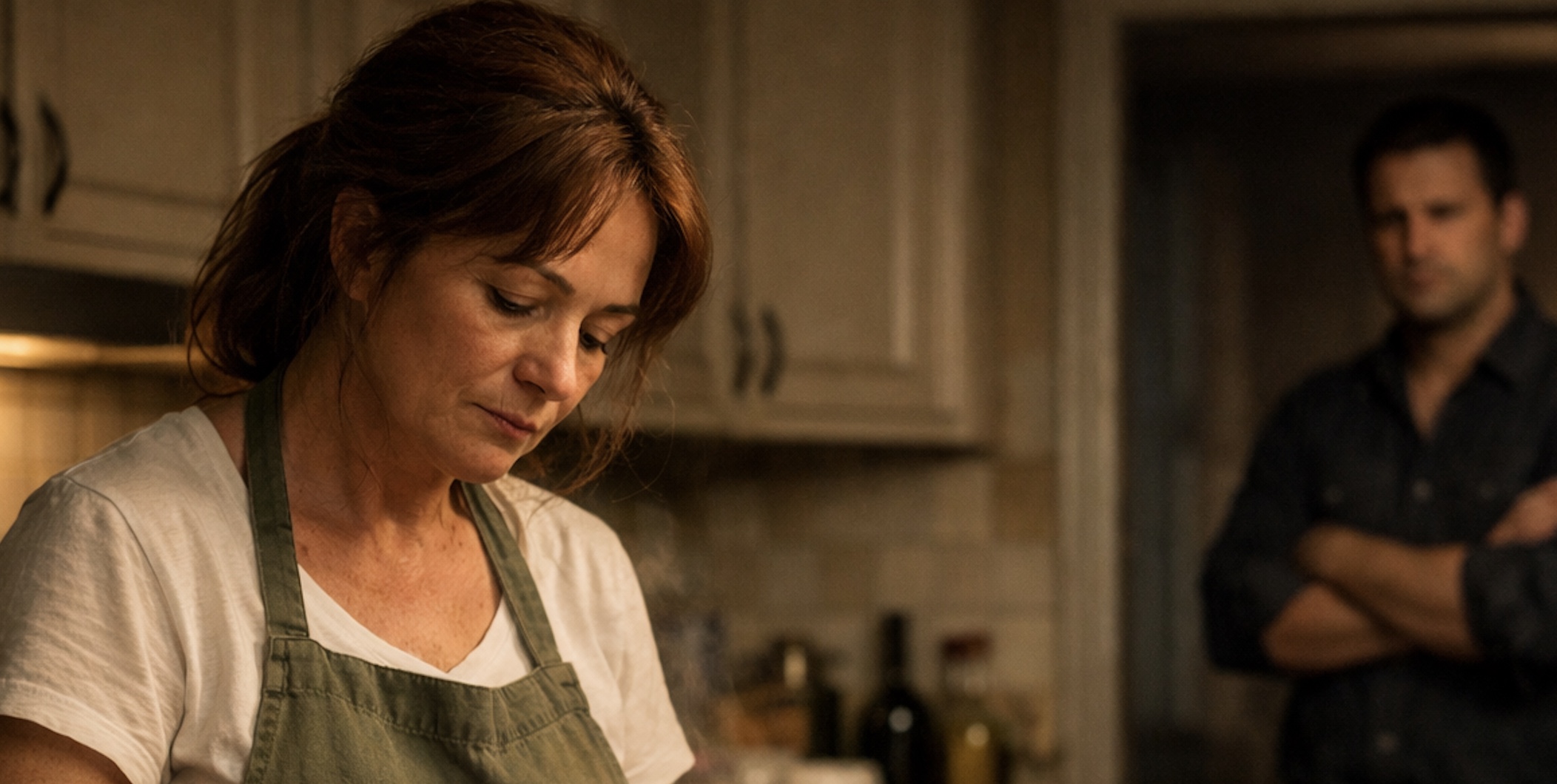
Maria said nothing and went into the kitchen. A mountain of dirty dishes, dried scraps of food—everything around her felt unpleasant, чужое, almost alien.
“Why are you silent? I’m talking to you!” he shouted from the room.
“Because I have nothing left to say, Petya,” she answered, staring out the window. “All these years, you never understood who I am. All that mattered to you was that I cooked and kept quiet.”
The next day, her neighbor Viktoria stopped by—the only person in front of whom Maria could truly be honest.
“Masha, have you looked at yourself in the mirror? You’re fading away. And it’s not just because he doesn’t work…”
“We’ve been together so many years…” Maria said softly. “The children are grown. I’m afraid that if I leave, he’ll fall apart…”
“That’s not a choice, that’s a cage!” Vika shot back sharply. “He doesn’t even know your knee is hurting! You’re not his servant. You’re a person!”
Those words seemed to snap something inside her.
After her friend left, Maria opened her banking app. For a long time, she had been putting money aside little by little from tutoring. There should have been around eight thousand.
She entered the password.
On the screen: 95 hryvnias and 20 kopecks.
It felt as if a bucket of ice water had been poured over her.
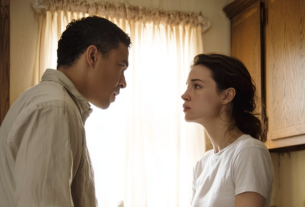
“Petya!” she stormed into the room. “Where’s the money? There were eight thousand there!”
He did not even turn around.
“What money? You probably spent it yourself. Your memory must be failing—happens with age.”
“Don’t lie!” She stepped closer. “You took it! What did you spend it on?”
He stood up.
“You’re accusing me? Have you forgotten who feeds you? This apartment exists because of my efforts!”
“This apartment belonged to my parents!” she snapped back for the first time. “You put nothing into it!”
“Shut up!”
That evening, she did not cry. Instead, she opened his laptop and checked the browser history.
Purchases. Orders. Fishing gear.
Her money. Her chance to pay for treatment.
He came home late that night—drunk, smug, certain he would get away with everything. But he stopped when he saw her standing by the door with a suitcase.
“Going to your mother’s?” he sneered. “You’ll be back in a couple of days.”
Maria stood straight.
“No. You’re the one leaving.”
He frowned.
“The apartment is legally mine. And I have recordings of your threats, plus proof that you withdrew my money. If you don’t leave, I’m calling the police.”
He tried to laugh, but then he noticed the phone in her hand—and fell silent.
“I recorded everything, Petya. And our son already knows.”
Twenty minutes later, there was a knock at the door. Their son Andriy came in—a lawyer.
“Dad, enough. Pack your things. Right now. Or this will get worse.”
Pyotr said nothing. There was no one left to support him.
He gathered his things in silence, muttering about “ingratitude” and “wasted years.”
At the door, he threw over his shoulder:
“You’ll regret this. Who needs a woman at sixty?”
Maria closed the door. Turned the key.
And for the first time, silence felt like relief.
Andriy came over and hugged her tightly.
“Mom, why didn’t you say anything sooner?”
“I was afraid…” she whispered. “Afraid to live differently.”
The months that followed became the beginning of a new life.
She got the MRI, started treatment, and redid the apartment the way she had always wanted. She began taking walks in the park, breathing freely.
One day, sitting on a bench beneath blooming apple trees, she realized that life does not end at sixty. If anything, it becomes clearer.
Pyotr tried to come back—he called, wrote messages, begged for forgiveness. But Maria did not bend.
She changed the locks, changed her phone number, reconnected with old friends, enrolled in classes, and devoted more time to her students.
Andriy visited often. They walked, talked, and for the first time truly felt close.
Sometimes Maria still remembered that evening. The pain. The fear. The despair.
But now it belonged to the past.
She had understood the most important thing: no one has the right to take away your dignity.
Life did not suddenly become easy—she still had to heal, work, and build everything again from scratch.
But now it was her life.
She was no longer living for someone else’s demands.
In the evenings, she opened the window, listened to the city, and smiled.
She no longer asked for permission to be happy.
She simply was.
Maria became an example to others.
She started painting, traveling, rediscovering the world.
And one day she wrote in her diary:
“Happiness is not something other people give you. It is something you create for yourself.”
This is a story about strength and courage.
About the truth that it is never too late to change your life.
What do you think—did Maria do the right thing?
Can betrayal and indifference ever be justified by years spent together?
And is it truly possible to begin again, even when it feels far too late?