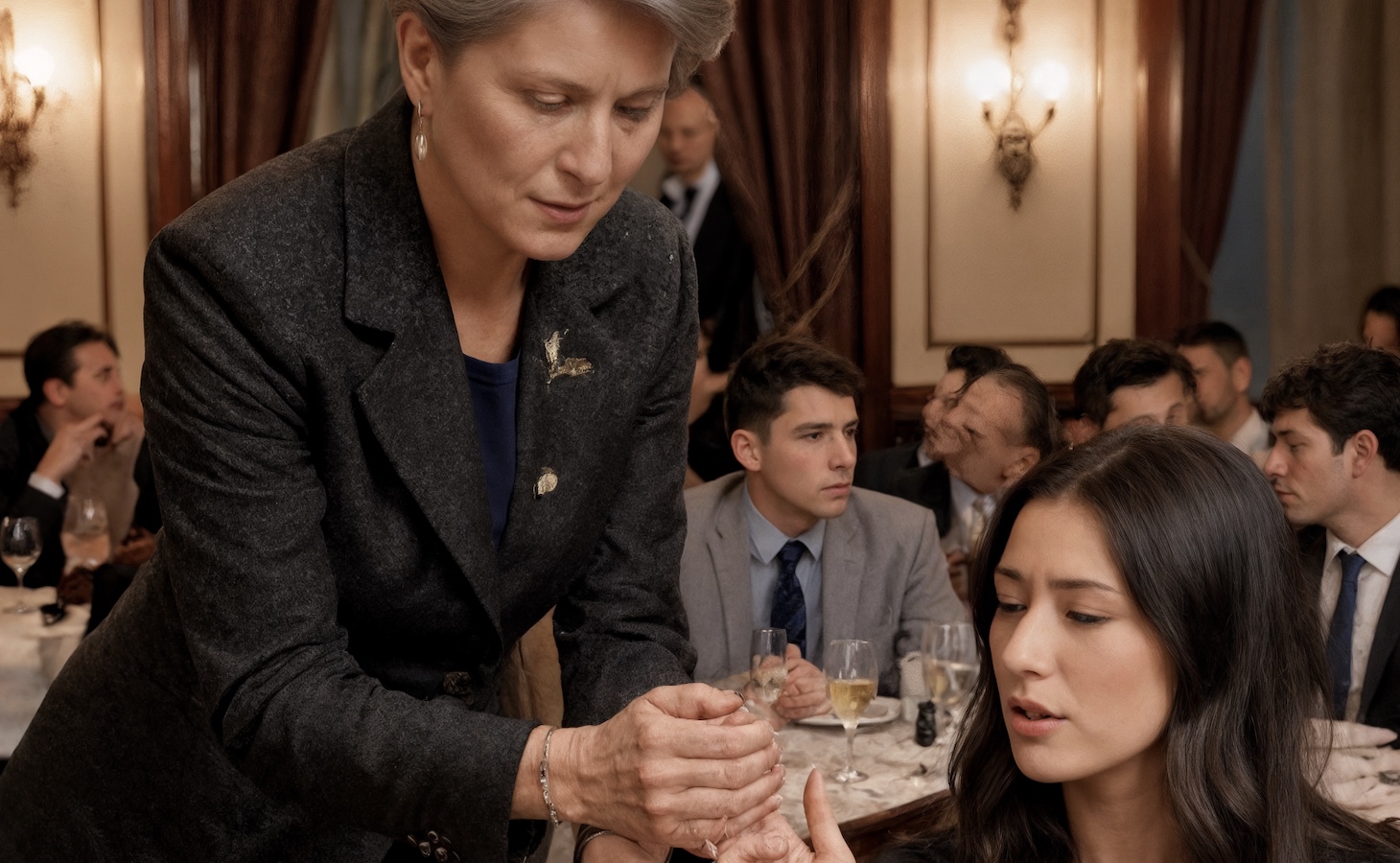
“Have you completely lost your shame, you little gold-digger?” Valentina Petrovna seized my wrist right in the middle of the restaurant. “Do you think I can’t see how you’ve latched onto my Artyom? A secondhand dress, run-down shoes… Get out before I have security throw you out!”
“Mom, stop!” Artyom tried to interfere, but she shoved him aside.
“Be quiet! I know girls like her. A poor little student renting a corner in a dorm, and yet she thinks she can force her way into a respectable family! How much did my son pay you for this performance?”
I silently took off the ring, set it on the table, and walked out. Behind me, I could hear Artyom yelling at his mother, but I never turned around.
I had met Artyom by accident, standing in line at the student cafeteria. He taught in the building next door and had stopped in for lunch. He noticed me counting out coins for a tray of buckwheat and quietly paid the cashier for a cutlet.
“You don’t have to,” I said, blushing.
“You’re a student?” he asked with a smile. “I used to be one too. I’m Artyom.”
We dated in secret for six months. I was embarrassed by my tiny rented room in Medvedkovo, my faded jeans washed a hundred times over, the fact that I kept showing up to dates in the same dress. Artyom would laugh and say he hadn’t fallen for me because of my clothes.
“Masha, why are you acting like a little girl?” he would say, wrapping me in his arms after yet another time I tried to cancel. “I don’t care that you rent a place. I love you, not your bank account.”
He never said much about his parents. His father owned a chain of car dealerships. His mother was a housewife with delusions of high society. “Strict, but fair,” was how he described her.
He lied, as it turned out.
We decided to celebrate the engagement in a restaurant because Artyom insisted. He said he wanted to finally introduce me to his parents and stop playing this hiding game.
I spent three days looking for the right dress in affordable stores. I chose a dark blue one—simple, elegant, modest, flattering. I borrowed shoes from my dorm neighbor. I did my own makeup as best I could.
The moment I walked in, Valentina Petrovna looked me over, and I understood at once: I had failed before I had even sat down. There was such open contempt in her eyes that I wanted to turn around and run.
“So this is the famous Masha?” she said through clenched teeth, without even offering her hand. “Artyomushka has told us… so much about you.”
Artyom’s father, Viktor Stepanovich, turned out to be a far more ordinary, decent man. He shook my hand, smiled, even pulled out a chair for me. But one glance from his wife was enough to put him back in his place.
The first hour dragged by in strained conversation. Valentina Petrovna questioned me about my parents—they died when I was fifteen—my work—I tutor on the side—and my housing—I rent a room. With every answer, her expression grew more sour.
“And how exactly do you support yourself, dear?” she asked loudly on purpose, just as the waiter set down the hot dishes.
“My scholarship, plus tutoring. It’s enough.”
“Enough?” She laughed. “Enough for that dress from last year’s Zara collection?”
“Mom!” Artyom squeezed my hand under the table.
“What do you mean, ‘Mom’? I have every right to know what kind of girl you’ve brought into this family!”
The explosion came when dessert arrived. By then Valentina Petrovna had already finished three glasses of wine and had lost whatever restraint she once had.
“You know, Masha,” she began in a sugary voice, “I made sure to find out everything about you. Straight-A student, orphan, living on a scholarship… touching, really. But my son deserves better than some penniless dorm girl.”
“Mom, stop this right now!” Artyom stood up from the table.
“Sit down!” she barked. “I’m not finished!”
Then she turned to me.
“How much do you need to disappear? Five hundred thousand? A million? Name your price.”
The whole restaurant went silent. At the nearby tables, people stopped chewing and stared at us. The waiters froze in place.
“I’m not for sale,” I said quietly.
“Everyone is for sale, sweetheart. It’s only a matter of price. And yours can’t be very high.”
That was when she grabbed my hand after seeing me reach for my purse. She must have thought I was trying to run. And then she launched into that filthy speech about me being a beggar and about calling security.
Artyom called me all night long. I never answered.
The next morning, I got a message:
“I’m sorry. I’m not speaking to her anymore. I love you.”
I didn’t reply.
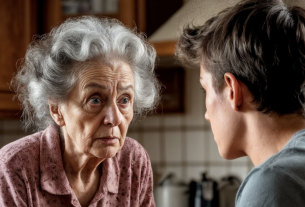
At seven in the morning, someone rang my doorbell. Valentina Petrovna stood on the threshold. Without makeup, dressed in a plain tracksuit, she looked less like a queen of society and more like an exhausted, ordinary woman.
“May I come in?”
“Why?” I did not open the door any wider.
“Artyom… he left last night. He said if I didn’t apologize, he would never speak to me again.”
“And you came here to apologize?”
She was silent for a moment. Then she pulled out her phone.
“Last night I got a call from Georgy Pavlovich Medvedev. Do you know who that is?”
I said nothing.
“The owner of Medvedev Development. He said I had insulted his goddaughter. His only heir.”
“And?”
“Masha… forgive me. I didn’t know…”
“That I wasn’t poor?” I cut in. “That my grandfather left me a share in the business, which I’ll inherit at twenty-five? That I deliberately live on my scholarship because I wanted to learn how to achieve things on my own? That I wear simple clothes because I don’t want to flaunt money at university?”
Valentina Petrovna lowered her eyes.
“You know what?” I said with a tired smile. “You were right. I really am not right for Artyom. Just not because I’m poor. I’m not right for him because he still hasn’t learned how to put you in your place. Goodbye.”
And I shut the door.
An hour later, a message came from Artyom:
“Mom said you refused to see me. She told me about the inheritance. Masha, I don’t care about the money. I love you.”
I deleted it before even reading whatever came next.
A month later, we ran into each other at the university. Artyom looked gaunt, thinner, worn down. He rushed toward me.
“Masha, please, let’s talk! I’m not speaking to my mother. I rented an apartment. I live separately now.”
“Artyom,” I stopped him, “you’re a good person. But do you know what I understood that night? Your mother showed me the truth. Not about me—about you. You didn’t protect me. You let her humiliate me in front of everyone, and afterward you sent apologies by text.”
“But I—”
“You moved away from her? Fine. But what did you do in that moment when she called me trash? You said, ‘Mom, stop’? That was it?”
He said nothing.
“I don’t need a man who decides to defend me after the damage is done. Goodbye.”
Three years later, I graduated with honors. I officially entered my inheritance. I opened my own clinic.
On opening day, a huge bouquet of roses arrived with no card. Security said a man around thirty had delivered them and asked that his name not be mentioned.
Some bridges are better burned all the way down—so completely that not even the ashes can remind you they ever existed.