Snezhana took off her stethoscope and set it on the bedside table. The ward smelled sharply of bleach and dying carnations. Outside, a February drizzle turned Moscow’s streets into a gray wash of watercolor.
“Galina Petrovna, your numbers have stabilized. Tomorrow morning we’ll do a follow-up ECG, and if everything looks good, we can start talking about discharge.”
The patient nodded with gratitude.
“Thank you, Doctor. You’re so young, and already the head of the department. They write about you in medical journals. I read about your technique… what is it called?”
“Minimally invasive myocardial revascularization,” Snezhana replied on autopilot, jotting notes in the chart. “But let’s focus on your treatment. Are you taking the medications exactly as prescribed?”
“I am, I am. May I ask you something? Something personal?”
The woman lifted her eyes from the chart. Patients often tried to pull the conversation into private territory; the loneliness of hospital rooms made people confessional. Normally Snezhana would shut that down gently but firmly.
“Galina Petrovna, I prefer—”
“You wouldn’t happen to be a Morozova… on your father’s side?”
Snezhana’s pen froze in midair. Slowly, she raised her head and studied the woman.
Morozova. Yes—her maiden name. The name of the parents who died in that cursed Moscow–Sochi flight twenty-seven years ago.
“How do you know my surname?”
“I… I’m Galina Petrovna Morozova. Your father’s sister. My God… Snezhanochka!”
The woman tried to lift herself in bed; her eyes filled with tears. Snezhana stepped back as if she’d been hit.
“You’re mistaken. I don’t have any relatives.”
“Snezhanka, sweetheart, it’s me! Aunt Galya! You were just a little thing when… when the tragedy happened. We looked for you, but child services said you’d already been placed, that you were doing fine…”
“Stop,” the doctor said sharply. “Galina Petrovna, I am your attending physician. Only your attending physician. I have nothing more to add.”
She turned to leave, but the woman sobbed behind her.
“Snezhanka, wait! I understand you’re angry. I have no right to ask forgiveness, but… I’ve suffered my whole life. I’ve thought about you every day. I was twenty-three then—just got married—living in a communal apartment… I thought you’d be better off in an orphanage…”
Snezhana stopped at the door.
Twenty-three. That meant the woman was fifty now. The numbers fit. And the voice… something familiar in the intonation, like a half-remembered melody from early childhood.
“Better off in an orphanage. Interesting logic.”
“I know it sounds ridiculous. But I was young, foolish. I thought I couldn’t raise you. And then… then it was too late. You’d grown up, you had your own life. I was afraid to interfere.”
The doctor turned around.
The tears looked real, but years in medicine had taught her not to trust emotion at face value. Too many people knew how to perform what others wanted to see.
“Galina Petrovna, you need to protect your nerves. Your heart doesn’t tolerate stress.”
“But you’ll understand… you have a daughter yourself, I know. You mentioned it in an interview. You know what it’s like… to love a child and be terrified of hurting them.”
The mention of Masha hit a nerve.
Yes, she had a daughter—five-year-old Mashenka, who ran to her bed every morning and told her about her dreams. Who made handmade cards for every holiday and fell asleep only to her mother’s lullaby.
Could Snezhana imagine ever giving up her child? Not in any universe.
“Goodbye, Galina Petrovna. I’ll come by in the morning.”
She left the room quickly and leaned against the wall. Her heart pounded like she’d just sprinted a hundred meters. A nurse on duty passed by with a tray of medications.
“Snezhana Alekseyevna, what’s wrong? Are you feeling ill?”
“I’m fine. Just tired.”
“Then maybe go home early? I’ll check on Petrova myself.”
“Thanks, Lyud. I probably will.”
In the doctors’ room Snezhana sat at the desk and opened her laptop. Work was the best medicine for unwanted thoughts. She had to finish a paper for a medical journal, review lab results for three patients, and prepare tomorrow’s surgery plan.
Routine—something that left no time for memories.
But the thoughts pushed through anyway.
Aunt Galya… twenty-three years old. A communal apartment. Fear of taking responsibility for someone else’s child.
On one hand, you could understand it. On the other… an eight-year-old girl who’d lost her parents shouldn’t have been expected to understand adult reasoning. She just wanted someone to hold her.
That evening her husband found her in the bathroom, a towel in her hands. Masha was already asleep. The apartment was finally quiet.
“Honey, you’ve been in here for half an hour. What happened?”
Snezhana looked at him. In seven years of marriage he’d learned to read her from a single glance, but he hadn’t seen her this shaken in a long time.
“Today at the hospital… I met my aunt. My father’s own sister.”
Andrey sat down beside her on the little stool they used when bathing their daughter.
“What do you mean… met her?”
“She’s in my department. Heart attack. She recognized me by my surname. She started saying she’d searched for me her whole life, suffered, regretted everything.”
“And you believed her?”
“I don’t know. I don’t know what to think at all!” Snezhana stood, went to the mirror, and nervously fixed her hair. “You don’t understand—I made peace a long time ago with the fact that I have no family except you and Masha. And then suddenly…”
“And do you want that family?” he asked.
The question caught her off guard.
Did she?
Sometimes, watching Masha, she thought about how her daughter had no grandparents, no cousins—no extended family at all. Only Andrey’s parents, who visited a few times a year.
And did Snezhana herself want someone who remembered her father, who could tell family stories, show old photographs?
“I don’t know. Maybe.”
The next day Snezhana came early for rounds on purpose. Galina Petrovna was already awake, sitting up and flipping through a magazine. When she saw her niece, her face lit up.
“Snezhanka… I mean—sorry, Doctor…”
“Snezhana Alekseyevna.”
“Snezhana Alekseyevna, what are my ECG results?”
“Good. You can get ready to go home,” the doctor said, pausing as she studied the chart. “Galina Petrovna… are you truly Aleksey Morozov’s sister?”
The woman’s eyes shone.
“Yes! Of course! I have photos at home, documents… Do you want me to bring them? Or maybe you’ll come over? Meet my daughters—your cousins.”
“You have daughters?”
“Two. Lenka and Natasha. Lena is twenty-eight, Natasha is twenty-five. They’re such good girls! And they know about you—I told them. They’ve wanted to meet you too.”
Snezhana pictured two strangers who had known about her existence all their lives, yet never tried to find her. It was a strange feeling—like discovering you’d been watched from a distance for years.
“And your husband?”
“Viktor? He’s good, hardworking. A plumber. We live in a small two-bedroom apartment. Modest, but cozy!” Galina Petrovna hesitated, then added, “I understand you live at a different level. I’ve seen articles about you online. You’re successful, well-known. You probably live nothing like we do.”
There was no envy in her voice. More like a quiet acceptance of her niece’s status. For some reason, that touched Snezhana more than yesterday’s tears.
“Galina Petrovna, do you have… anything that belonged to my parents? Photos, papers?”
“Of course. I have a whole box. After the funeral they gave me some things from the apartment. I kept everything, thinking… maybe one day… Want to see?”
“Yes,” Snezhana said quietly. “I do.”
That evening she told Andrey about the talk. He listened while cooking dinner, nodding now and then.
“So you’ll go visit them?”
“Probably. For the photos. I barely remember Mom and Dad at all. And I want to…”
“Okay. Just be careful.”
“What do you mean?”
“Don’t rush to open your heart completely. People are different. And people’s needs can be… different too.”
Masha ran into the kitchen waving a drawing: a house, a tree, a sun, and four figures beneath it.
“Look! It’s us! Dad, Mom, me—and Grandma!”
“What grandma?” Andrey asked, surprised.
“The one Mom found. I need a grandma—everyone in my group has one and I don’t.”
Snezhana and Andrey exchanged a glance. It was amazing how kids absorbed adult conversations even when you thought they weren’t listening.
“Mashenka, how do you know about Grandma?”
“You were whispering last night and I wasn’t asleep. Can I come with you to see her?”
Her aunt’s apartment really was modest. Galina Petrovna fussed nervously—offering slippers, apologizing for mess that wasn’t there. The little Khrushchyovka was clean and cozy, though the furniture clearly dated back to Soviet times.
“Come in, come in! Now—meet my girls. This is Lena, the older one.”
Lena was a curvy blonde with a friendly smile and perfect nails. She worked as an administrator at a beauty salon, was married, and didn’t have kids yet.
“Snezhana! Finally! Mom told us so much about you. You’re so beautiful! And so young. I thought all scientists were old and wore glasses.”
The younger Natasha was her opposite: slim, dark-haired, in jeans and a plain T-shirt. She watched Snezhana for a long time—carefully, skeptically.
“I’m Natasha. I work at a bank. I’m a loan adviser.”
Masha stayed close to her mother, studying these new relatives with curiosity. Galina Petrovna kept throwing up her hands in delight.
“Mashenka, what a sweet girl you are! You’re the spitting image of Grandma Zina—your mother’s mother. She had the same eyes.”
“Where are my grandpa and grandma?” the little girl asked bluntly.
Snezhana tensed, but Galina Petrovna answered softly.
“They’re in heaven, sunshine. It was a long time ago. But they love you very much, even from there.”
Over tea, Galina Petrovna brought out the promised box: photographs, documents, several books. Snezhana stared at her parents’ faces with her heart in her throat.
“This is their wedding,” Galina Petrovna explained. “Alyosha was so handsome. And smart. I remember how he used to help me with math. I never understood anything in school, and he could explain it so simply…”
Listening, Snezhana felt warmth spreading in her chest.
At last her father was becoming more than a blurred memory—he was turning into a living person. He loved sci-fi novels, knew how to play guitar, always defended his little sister when their parents scolded her.
“And what was my mom like?” Snezhana asked.
“Zinochka… quiet, but with a backbone. She won your father over at university. A beauty—truly unusual. And her hands were golden… she embroidered, knitted. Here—look. She knitted this for you.”
Galina Petrovna pulled a tiny yellow sweater from the box. Snezhana held it in her hands. It was soft, warm, and smelled like an old home.
“Can I try it on Masha?”
“Of course. It’s yours.”
Three hours vanished without notice.
Lena told funny stories from the salon, Natasha talked about her bank job. Masha relaxed and played with the cat, Barsik. And Snezhana felt… part of something. For the first time in years—she wasn’t a visitor. She was family.
“Sweetheart, we should go,” Andrey reminded gently. “Masha has kindergarten tomorrow.”
“Of course, of course!” Galina Petrovna fluttered. “But come again! And we can come to you too.”
“Absolutely,” Snezhana said brightly. “Please do.”
In the car, Masha fell asleep clutching the yellow sweater. Andrey drove in silence, glancing at his wife now and then.
“So? How was it?”
“Good. They’re… ordinary. Simple people. Galina Petrovna really seems sincere. And the girls are fine.”
“Lena felt a little too… energetic,” Andrey said. “And Natasha—too quiet.”
“They were nervous. I was nervous too.”
Over the next two weeks their visits became regular: sometimes Snezhana stopped by after work, sometimes they came to her.
Galina Petrovna turned out to be a wonderful storyteller—she knew endless family tales and remembered details that made the past feel real.
Lena was always ready to help with Masha—playing with her, reading her stories. Natasha gradually thawed, talked about her job, and asked questions about medicine.
Snezhana started to believe she had truly found a family—that her years of loneliness were ending. Masha adored her new “grandma,” called Lena and Natasha “aunties,” and drew them little cards.
But one day everything shifted when Lena called with an unexpected request.
“Snezhanochka, I’m sorry to bother you… I’ve got a situation. Layoffs at the salon—I might get fired. And I heard your hospital needs administrators. Could you put in a word for me?”
Snezhana hesitated. It was unexpected, but doable.
“Lena, I can ask… but they need medical training there—at least some level.”
“But can’t you… you know… make it happen? You’re the department head. Surely you can influence it?”
“I can influence things, but there are requirements—”
“Oh, Snezhanochka, please! We’re family! Relatives should help each other!”
When the call ended, a sour taste lingered. Something in Lena’s tone, in that “we’re family,” felt staged. Still, Snezhana told herself she was imagining it.
People had a right to ask for help—especially relatives.
But the requests began pouring in like a broken dam.
A week after the job conversation, Natasha delicately asked whether Snezhana could lend her some money: she’d gotten into trouble with a loan, and the bank threatened penalties. The amount was small—thirty thousand—so Snezhana transferred it without thinking.
They weren’t strangers, after all.
Then Galina Petrovna began complaining about her health: her back hurt, her legs swelled, her head spun.
Snezhana booked her with the best specialists at her hospital and arranged a full workup. The results came back normal, but her aunt kept complaining.
“Snezhanochka, is it true you have contacts in private clinics? I read their tests are more accurate…”
The private checkups cost eighty thousand.
Snezhana paid without blinking.
Andrey started to frown whenever he heard about another expense.
“Honey, don’t you think they ask for help a little too often?”
“It’s family, Andrey. I was alone for twenty-seven years—now I have relatives. Is it really so bad that they turn to me?”
“What’s bad is they only turn to you. What do they give back?”
Snezhana thought. What did they give? Warmth, stories about her parents, Sunday evenings…
Wasn’t that worth something?
But then came the day everything changed.
Snezhana drove to her aunt’s with a box of toys for neighborhood kids. Masha had outgrown the dolls and building sets, and throwing them away felt wrong.
The elevator in the building was broken, so she climbed to the fifth floor on foot. Near the door she heard voices—her aunt’s apartment door hadn’t been shut all the way.
“Mom, did you ask her about the apartment?” That was Lena.
“Not yet. Too soon. We have to be careful—let her get used to us first.”
“Why drag it out?” Natasha snapped. “Look how kind she is. Ask—and she won’t refuse. She’s swimming in money, and we’re stuck in this Khrushchyovka.”
“Natalya, don’t rush. She’s smart—she’ll suspect something. We have to do it gradually. She already got Lena a job, she’s paying for my treatments. It’ll only get better.”
“Yeah, we got lucky with our niece!” Lena laughed. “Rich, famous—and naïve as a child. A gold mine. Makes you want to ‘take the poor orphan in’ to the family!”
“Exactly. So the main thing is to keep it going. Family, kinship, blood ties… and then we’ll see. She’s got an apartment in the city center—must be worth twenty million at least. And a dacha—I saw photos on her phone. Plus an expensive car…”
“Mom—what if she figures it out?” Natasha’s voice held a flicker of worry.
“She won’t,” Galina Petrovna said firmly. “She wants to believe she has a family. People like that fool themselves—your job is just to help.”
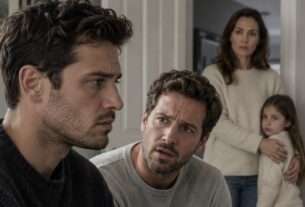
Snezhana stood on the landing without moving, pressing the toy box to her chest. Tears blurred her eyes.
A gold mine. Naïve as a child. An orphan desperate for a family…
Quietly, she turned and went down the stairs, got into her car. Her hands shook as she called her husband.
“You were right,” she said when Andrey answered. “They… they’re just using me.”
“Where are you?”
“By their building. I overheard them. They were discussing my apartment.”
“Come home. We’ll talk.”
At home Snezhana told Andrey everything she’d heard. He listened in silence, shaking his head now and then.
“So what are you going to do now?”
“I don’t know. Part of me wants to disappear—stop answering calls, pretend nothing happened.”
“And the other part?”
“The other part wants to go there and tell them exactly what I think.”
“And what’s stopping you?”
Snezhana stared at the tea leaves at the bottom of her cup.
“Fear. That I’ll hurt myself even more. And… I feel sorry for Masha. She got so attached to them.”
“Masha will be okay. Kids adapt faster than adults. But you… you have a right to your anger. And to your truth.”
Her phone rang. The screen said: “Aunt Galya.”
“Snezhanochka, where are you? We’re waiting! Natasha baked a pie, Lena found new photos. Come over!”
Her voice was the same as ever—warm, caring, loving. A professional performance.
“Galina Petrovna, I’ll be there soon. I need to tell you something.”
Snezhana climbed the stairs slowly, rehearsing every word. The anger had settled, leaving cold resolve behind. She wasn’t going to scream or cause a scene—that would be too cheap. She had a different plan.
Lena opened the door and rushed in for a hug at once.
“Snezhanochka! We thought you changed your mind. Come in, come in!”
“Thank you,” Snezhana said flatly as she walked into the room. “Is everyone here? Perfect.”
Galina Petrovna sat in an armchair, Natasha was on the couch, and Uncle Viktor was in the kitchen reading a newspaper. Snezhana sat across from them, laid her handbag on her knees, and put on the professional smile she used for especially unpleasant patients.
“You know, today I’ve been thinking a lot about family. About blood ties. About what it really means to be related.”
“Yes, of course,” Galina Petrovna jumped in. “We’ve been thinking about it too. How wonderful it is we found each other…”
“Exactly—found each other,” Snezhana said, pausing as she studied their faces. “And do you know what I’ve come to value most in family relationships? Sincerity. Openness. The ability to speak the truth.”
Something in her tone made Natasha lift her head warily.
“For example, Galina Petrovna, you told me how you suffered all these years, how you thought of me. Very touching. Only here’s the problem—I checked with child services. Turns out you never once tried to meet me. Not a single time.”
Galina Petrovna went pale, but tried to argue.
“Yes, but I told you—I was young, frightened…”
“Of course. Twenty-three is practically infancy,” Snezhana said with a thin, mocking smile. “Though plenty of women become mothers at that age. But everyone has different priorities, don’t they?”
Natasha exchanged a glance with Lena. The air in the room tightened.
“Snezhana, if you’re upset about something—”
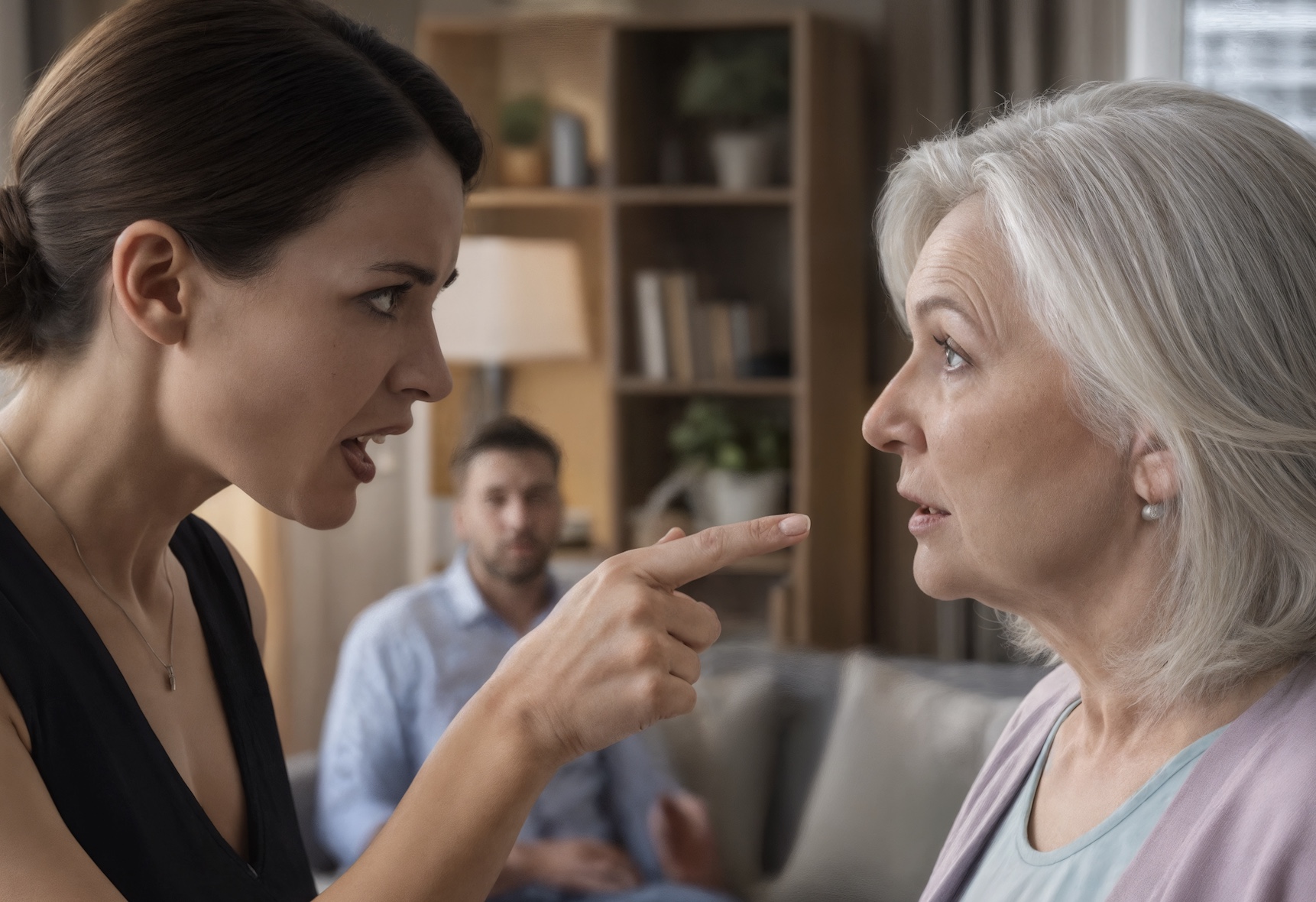
“Upset?” Snezhana laughed. “No, Lena. I’m not upset. I just finally understood who I’m dealing with. In medicine we have a term… a parasite. An organism that lives off its host, giving nothing back. Worse—causing harm.”
“What are you trying to say?” Natasha demanded.
“I’m saying you’re textbook social parasites,” Snezhana replied calmly, almost pleasantly. “And rather talented ones. Especially you, Galina Petrovna. That hospital-room show—tears, remorse… beautifully acted. Bravo. And the calculation was perfect: hit me through emotion, guilt, and an orphan’s need to belong.”
“We really are your family!” Galina Petrovna shrieked.
“Family? Is that so?” Snezhana’s voice sharpened. “Family doesn’t abandon an eight-year-old child to fend for herself. Family doesn’t wait twenty-seven years until someone becomes successful and wealthy. What you’ve been doing is called fraud—emotional fraud.”
Lena started to get up, but Snezhana stopped her with a gesture.
“Wait, Lena. I’m not finished. I want everything perfectly clear.” She turned to the younger cousin. “Natasha, you did make a good point. I really was naïve like a child. Key word—was. You know, being an orphan toughens you. Teaches you to tell sincerity from a performance. Sometimes you just want to believe in a fairy tale.”
“You were eavesdropping,” Galina Petrovna’s husband said, appearing from the kitchen.
“Oh—so the head of the family joins us,” Snezhana said, sweeping him with a contemptuous look. “Yes, Uncle Viktor, I was. And here’s a useful tip: if you’re plotting how to squeeze money out of your niece, shut the door properly.”
They went silent. Galina Petrovna’s mouth opened and closed like a fish tossed onto shore.
“We didn’t mean to—”
“Didn’t mean to what, Lena? Deceive me? Or get caught?” Snezhana rose and adjusted her purse. “Do you know what your biggest mistake was? You thought an orphan would be grateful for any attention. That she’d pay any price for the illusion of a family. But I grew up. And I learned long ago it’s better to be alone than with people who see you as nothing but income.”
“Snezhana, wait…” Galina Petrovna stood, pleading. “We can explain everything…”
“Explain? What is there to explain?” Snezhana said coolly. “The only thing I’m curious about is the photos of my parents. Are they real? Or did you ‘find’ those somewhere too?”
“The photos are real,” her aunt said quietly. “We really are related.”
“Well then—thank you for that truth.” Snezhana smiled. “And I’ll be honest with you in return. Even if I someday own fifteen apartments, remember this: not one of your freeloaders will ever lay eyes on them. Not because I’m greedy. But because I finally learned the difference between family—and a one-woman theater.”
She walked out and shut the door behind her. Confused voices spilled after her, people shouting, trying to stop her—but it no longer concerned her.
In the car Snezhana sat for several minutes, letting a new feeling settle into place. Strange… she’d expected grief, or pain. Instead, she felt relief—like taking off clothing that had been too tight.
At home Andrey and Masha met her. Her daughter, as always, ran straight into her arms.
“Mom, where’s Aunt Galya? You promised she’d come visit.”
Snezhana crouched to Masha’s level and hugged her.
“Mashenka, Aunt Galya won’t be coming to our home anymore. But you have Dad, you have me, and you have Grandma and Grandpa in St. Petersburg. That’s our real family.”
“Why won’t she come?”
“Because sometimes grown-ups make mistakes about people. That’s normal. The important thing is to