Vika picked up a bag of groceries and slowly climbed to the fifth floor. September rain tapped at the stairwell windows, but inside she felt strangely at peace. Six months had passed since the divorce, and life had finally started to feel normal again. No one demanded to know where her money went, no one criticized her cooking, and no one complained about “mess” that, honestly, had never even been there.
The apartment had been Vika’s before she ever got married. Her parents spent all their savings so their daughter would have a home of her own. The deed was registered only in Vika’s name, because at that time there wasn’t even a fiancé on the horizon. Two years later, a random encounter with Andrey at work turned into dating—and then into a wedding.
The marriage lasted four years. Andrey was a difficult man: he liked drinking with friends, constantly complained that he was broke, yet made no effort to actually earn more. He worked as a mechanic at a factory, but skipped half his shifts. Vika was an engineer at a design institute and brought home more money than her husband—something he treated as an insult to his masculinity.
“What kind of man is supported by his wife?” Andrey would grumble, especially when a fresh hangover put him in a foul mood.
“No one is supporting you,” Vika replied. “I just work consistently, and you keep skipping your job.”
“My work is hard—unlike yours, pushing papers around!”
They divorced through court, even though there was nothing to divide. Andrey insisted on splitting the apartment, but the documents clearly showed it belonged only to Vika. The judge rejected his claim, and Andrey left for the village to live with his mother, Klavdiya Semyonovna.
Back home, Andrey began telling the locals what a noble act he’d supposedly performed. He claimed he could have sued for half the apartment but “felt sorry” for his ex-wife and left her everything. Klavdiya Semyonovna listened—and grew more furious by the day. So her son had sacrificed his “right” to housing for an ungrateful ex-daughter-in-law, and she didn’t even say thank you?
While she stirred jam made from late apples, she built her plan. She would go to the city and explain to that Vika who she owed her roof over her head to. Her son was too soft, too kind, didn’t know how to stand up for himself—but his mother would put that brazen girl in her place.
Vika was reaching for her keys when she heard footsteps on the landing. She turned and saw an elderly woman in a faded coat and flattened boots. The face looked familiar, but Vika couldn’t place it right away.
“Can I help you? Who are you here for?” Vika asked politely.
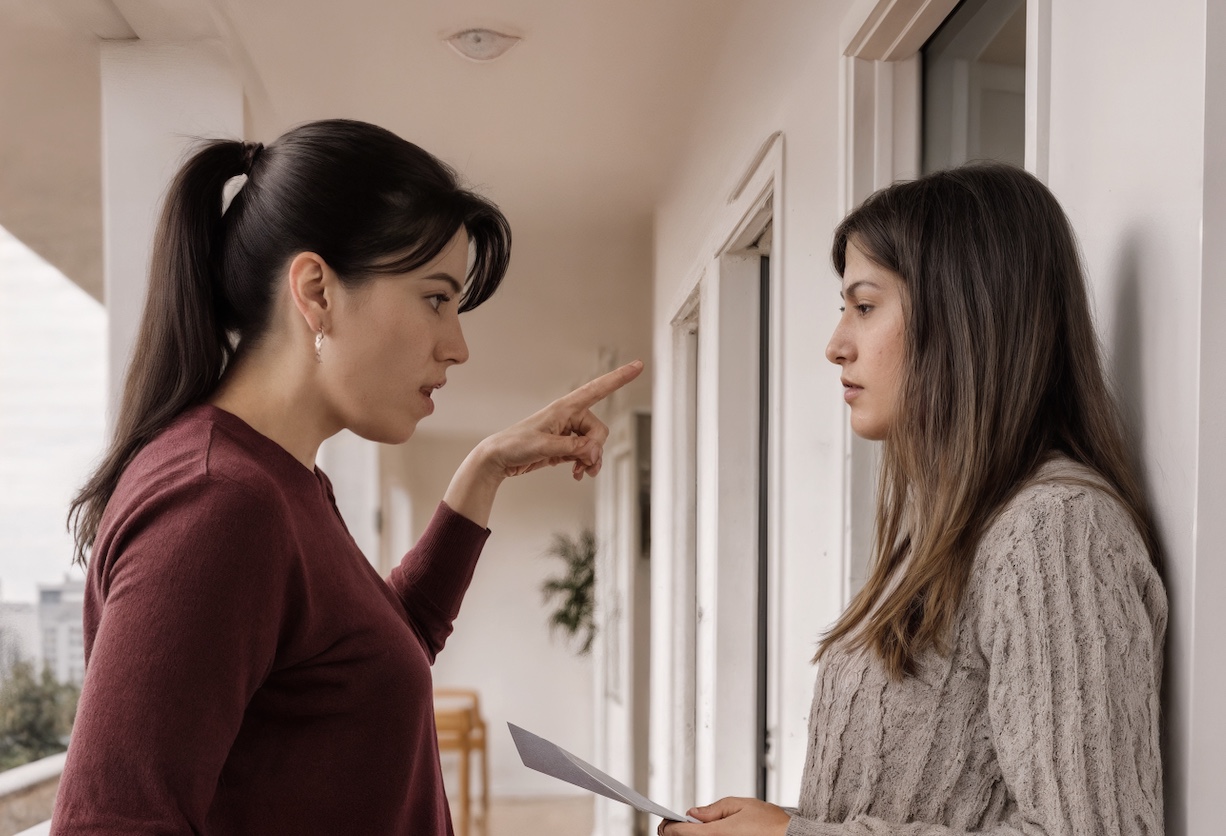
“For you, sweetheart,” the woman answered—and then suddenly raised her voice. “Grab your junk and get out! This is my son’s apartment, not yours!”
Vika went rigid. Her keys slipped from her fingers and clinked on the floor. Her mind refused to process what she’d just heard. Whose son? What was this even about?
“Excuse me… who are you?” Vika murmured as she bent to pick up the keys.
“Your mother-in-law—Klavdiya Semyonovna!” the woman declared proudly. “Andrey’s mother! And I’m not here for apologies. I’m here so you’ll vacate someone else’s living space!”
Heat rushed into Vika’s face. The audacity was so shocking that for a few seconds she couldn’t speak. Meanwhile Klavdiya Semyonovna squeezed past her and walked into the entryway.
“Wow, you’ve cluttered this place up,” she hissed, eyeing the neatly arranged shoes. “Andryusha told me you were a slob, but I didn’t think it was this bad…”
Vika snapped out of it and stepped inside quickly, slamming the door behind her.
“Klavdiya Semyonovna, get out of my apartment. Now.”
“Your apartment?” the older woman snorted. “My son generously left you this place even though he could’ve taken half! And what did you do—no gratitude, nothing. You think you can treat family like that?”
She walked into the room and began inspecting everything like an appraiser. She ran her hand over the sofa, checked the dust on a nightstand, opened the wardrobe.
“The furniture is trash, but it’ll do,” she concluded. “Perfect for Andrey when he finds himself a new wife.”
Vika followed her, still half convinced she was dreaming.
“Do you honestly think this apartment belongs to Andrey?”
“Who else would it belong to?” Klavdiya Semyonovna said, genuinely puzzled. “You lived together four years! Everything acquired in marriage is split fifty-fifty by law!”
“This apartment was bought before the marriage—paid for with my parents’ money,” Vika said, her voice trembling with anger.
“You probably forged the papers,” her ex-mother-in-law waved a hand. “Or Andryusha signed it all over to you out of kindness. Men are stupid—women cry and they believe it.”
Klavdiya Semyonovna opened the refrigerator and began studying its contents.
“Eating well, I see. No saving. And my son’s stuck in the village—no decent work. Is that fair?”
Vika grabbed her by the coat sleeve and yanked her away from the fridge.
“That’s enough. Leave immediately, or I’m calling the police.”
“Oh, you’ve scared me to death,” Klavdiya Semyonovna laughed. “The police! And what will you tell them—your mother-in-law came to visit?”
“My ex-mother-in-law. Andrey and I are divorced.”
“Divorced, sure—but the debts are still there,” the woman squinted slyly. “Don’t act like I don’t know he’s owed money by you.”
Vika blinked in disbelief. Andrey hadn’t left her any debts—if anything, he regularly borrowed small amounts and never returned them. But those little sums weren’t worth a fight.
“What debts are you talking about?”
“That’s what we’re going to discuss,” Klavdiya Semyonovna said with satisfaction, settling onto the sofa. “Sit down, daughter-in-law. We’ll talk nicely.”
Vika paced, trying to decide how to get rid of her. Calling the police on an elderly woman felt ridiculous—but tolerating this behavior was impossible.
“I’m listening,” Vika said coldly, staying on her feet. “But not for long.”
“Good. We don’t have much time,” the older woman nodded. “Tomorrow Andrey is coming for his things. By then you’ll pack up and clear out.”
“I’m not clearing out anything. This is my apartment.”
“Yours?” Klavdiya Semyonovna dug into her purse and pulled out a crumpled sheet of paper. “Then explain this.”
Vika took it and skimmed it. It looked like a photocopy of some bank document—tiny text, hard to read at first glance.
“What is this?”
“A certificate for a loan your husband took out using the apartment as collateral,” Klavdiya Semyonovna announced triumphantly. “Two million rubles! He can’t pay, no work. Soon the bank will take the apartment.”
Vika studied it more carefully. It looked suspicious: uneven font, smeared stamp. But Andrey’s name really was listed as the borrower.
“Even if this were true, the apartment is in my name. No one could use it as collateral without my consent.”
“Who said it was without consent?” the woman smirked. “You were his wife. You signed whatever he asked. So you signed the consent for the pledge.”
“I never signed anything like that.”
“Girl’s memory,” Klavdiya Semyonovna clicked her tongue. “Over four years you signed plenty of papers. You won’t remember them all. Banks don’t hand out loans for nothing—they check everything.”
Vika tried to recall what she might have signed during the marriage. A couple of times Andrey asked her to sign “forms,” saying he needed them for work. Could one of them have been consent for collateral?
“Show me the original,” Vika demanded.
“Why would you need the original?” the older woman scoffed. “A copy shows the same thing.”
“A copy can be faked.”
“Oh, how suspicious you are!” Klavdiya Semyonovna laughed. “You think I’m some kind of scammer? I don’t need your tricks. I’m a simple, honest person.”
Vika kept pacing, thinking fast. Even if the paper was fake, untangling it could take time—and meanwhile her ex-mother-in-law was acting like she owned the place and making eviction plans.
“Fine,” Vika said. “Let’s assume the loan exists. The person who took the money should repay it—Andrey.”
“And how will he pay if he doesn’t have a job?” Klavdiya Semyonovna spread her hands. “So the bank will take the apartment. Unless you want to end up on the street?”
“And what exactly are you suggesting?”
“I suggest this,” the older woman said grandly. “You transfer the apartment to Andrey. He sells it, pays the bank, and whatever is left, you split ‘fairly.’ You’ll get your share and rent a place.”
Vika stopped and looked at her. The plan was so shameless it was almost impressive.
“So I’m supposed to hand over an apartment my parents paid for so Andrey can pay off his own debts?”
“Not for free!” Klavdiya Semyonovna snapped. “You’ll get a portion. Maybe enough for a room in a communal apartment.”
“And if I refuse?”
“Then the bank takes it and you get nothing. And the debt will be yours too, since you lived in marriage.”
Vika lowered herself into a chair opposite the sofa. Her head spun from the sheer nerve of it all. Did people really believe they could walk into someone else’s home and demand they hand it over?
“Klavdiya Semyonovna, even if we pretend everything you said is true, I’m not responsible for my ex-husband’s finances.”
“Not responsible?” the older woman leaned forward. “And who fed you, clothed you, kept a roof over your head for four years?”
“Excuse me?” Vika stared. “Who supported whom?”
“Andrey, of course! A man is supposed to provide!”
“Andrey was unemployed half the time,” Vika shot back. “I paid for groceries, utilities, clothes—everything!”
“Nonsense,” Klavdiya Semyonovna waved it off. “A man can’t live on a woman’s neck. It’s against nature.”
“But it’s fine to come and demand someone else’s apartment?” Vika said with bitter sarcasm.
“Not someone else’s—his legal one!” the older woman raised her voice. “You lived together, so everything is shared!”
Vika stood, walked to the window. It was already dark; streetlights shimmered in puddles. She wanted to throw the woman out, but it was obvious she wouldn’t leave willingly.
“You know what, Klavdiya Semyonovna,” Vika turned back, “let’s end this circus.”
She went to her desk, pulled a folder of documents from a drawer, and returned. Klavdiya Semyonovna watched every movement, suddenly wary.
“Here is the ownership certificate,” Vika said, placing it in front of her. “Date of registration—one and a half years before I even met Andrey. Buyer—me. Seller—the developer. No other owners have ever existed.”
Klavdiya Semyonovna took the paper and examined the stamps. Her face darkened.
“And here is a statement that the apartment was purchased using money gifted by my parents,” Vika continued, laying down another document. “Here are bank confirmations showing the funds arriving in my account. Everything is legal.”
“So what?” the older woman tried to snap back, but her voice shook. “Maybe Andrey paid later… made improvements…”
“In four years Andrey didn’t spend a single ruble on this apartment,” Vika said flatly. “Utilities, repairs, furniture—paid by me. Want to see the receipts?”
Klavdiya Semyonovna darted her eyes around the room, hunting for a new angle.
“And the loan?” she remembered. “The apartment was pledged!”
“Show me the original loan agreement,” Vika said calmly.
“Why would I carry it around?” the older woman stammered. “It’s at home…”
“Then tell me the bank where the loan was issued.”
Klavdiya Semyonovna blinked, realizing she’d been cornered.
“I… I don’t remember exactly… Andrey said it, but I didn’t memorize…”
“Contract number? Date?” Vika pressed.
“Why are you interrogating me?” Klavdiya Semyonovna exploded. “You threw my son out, and now you want to throw me out too!”
“Andrey left after the divorce. And yes—now I’m asking you to leave my apartment immediately.”
“I’m not leaving!” the older woman screamed. “I’ll sit here until justice is restored! My son worked his whole life, and some upstart gets the apartment!”
Vika took out her phone and dialed emergency services.
“Hello, police? A stranger has entered my apartment without permission, refuses to leave, and is threatening me…”
Klavdiya Semyonovna went silent instantly. The word “police” worked like a spell.
“What are you doing?” she hissed. “Why are you calling cops?”
“Because you’re breaking the law,” Vika replied, continuing the call. “Yes, I’m at home. I’ll be waiting.”
The older woman jumped up and began pacing.
“I’m not a thief! I came to visit my daughter-in-law!”
“Ex-daughter-in-law,” Vika corrected. “And without an invitation.”
“Cancel it!” Klavdiya Semyonovna demanded. “What will people say if they see me with police?”
“You should have thought about that earlier.”
Twenty minutes later, the doorbell rang. Vika opened it to two district officers—a middle-aged man and a younger woman.
“You called?” the senior sergeant asked.
“Yes. Come in. This woman entered without permission and refuses to leave.”
Klavdiya Semyonovna shrank on the sofa, staring at them with frightened eyes.
“Show your property documents,” the sergeant said.
Vika handed over her ownership certificate. The female officer carefully examined the stamps and signatures.
“And who are you?” the officers asked Klavdiya Semyonovna.
“I… the former husband’s mother,” she mumbled.
“Do you have any legal right to be in this apartment?”
“Well… we’re family…”
“Former family,” Vika said. “After the divorce we have no relationship.”
“Do you have keys to this apartment?” the sergeant asked the older woman.
She rummaged in her purse and pulled out a keyring.
“Where did you get keys to someone else’s apartment?” the female officer asked, surprised.
“My son gave them… back when he was married…”
“After the divorce you should have returned them,” the sergeant said sternly. “Hand them to the owner.”
Reluctantly, Klavdiya Semyonovna gave the keys to Vika. Vika slipped them into her pocket.
“Now leave,” the sergeant ordered. “And do not come back without the owner’s permission.”
“But where is the justice?” the older woman whimpered. “My son worked for her for four years and she gets the apartment!”
“Your son worked for himself and his family,” Vika answered coldly. “And the apartment is mine because my parents paid for it.”
“Family arguments aren’t our job,” the sergeant said. “If there’s a property dispute, go to court. For now, we’ll escort you out.”
Klavdiya Semyonovna rose and shuffled to the door, muttering curses about the ungrateful ex-daughter-in-law. In the hallway she turned for one last attempt:
“Andrey will come tomorrow and deal with this himself!”
“Let him,” Vika said evenly. “He won’t get in. Tomorrow I’m changing the locks.”
“You have no right!” the older woman shrieked.
“I do. It’s my property.”
The officers led Klavdiya Semyonovna out onto the landing. Vika shut the door and turned the key. At last, the apartment fell silent.
The next morning a locksmith replaced the lock. Vika deliberately chose a model designed to resist tampering and break-ins. The old keys no longer fit.
At lunchtime her phone rang. Andrey’s name flashed on the screen.
“What the hell is this?” her ex snapped. “My mother came to you politely and you called the police!”
“Your mother broke into my apartment and demanded I move out,” Vika said. “That’s called taking the law into your own hands.”
“What do you mean your apartment? We lived there together for four years!”
“So what? It’s mine. The documents are in my name.”
“You tricked me! You said your parents gave it to you, but you probably bought it on credit!”
“Andrey, you saw the papers when we got married. Or is your memory that bad?”
“I don’t remember any papers! And anyway, everything in marriage gets split in half by law!”
“The apartment was bought before the marriage. With my parents’ money. It has nothing to do with you.”
“You’re lying!” Andrey shouted. “I’ll hire a lawyer and take you to court!”
“Go ahead,” Vika said indifferently. “Just save money for the court fees. When you lose, you’ll reimburse my legal expenses too.”
“We’ll see who wins!” he threatened and hung up.
Vika put the phone down and smiled. Andrey wouldn’t hire anyone. First, he didn’t have money for a lawyer. Second, any attorney would explain immediately that his claim was baseless.
That evening Vika cooked pilaf and thought about how good it felt to live alone. No one criticized her food, demanded she redo everything “their way,” or started fights over money. She could watch her favorite films, read late into the night, and meet friends whenever she wanted.
The apartment was finally a home again—not a battlefield. Klavdiya Semyonovna and Andrey belonged to her past, along with every ugly memory. No one would dare show up again demanding she hand over what wasn’t theirs.
Then the intercom buzzed. Vika picked up the receiver, but when she asked who it was, there was no answer. A minute later it rang again.
“Who is it?” Vika asked more sharply.
“Open up, police,” came a familiar voice—the sergeant.
Vika pressed the button. A few minutes later there was a knock. The same district officer stood at her door with his partner.
“Good evening. May we come in?”
“Of course,” Vika said, letting them into the entryway. “Did something happen?”
“Klavdiya Semyonovna filed a statement,” the female officer explained. “She claims you illegally took possession of her property.”
Vika snorted with laughter.
“What property?”
“The keys,” the sergeant said seriously. “And she claims you threw the rightful owner out.”
“You saw the ownership documents yourselves. And you told her to hand over the keys.”
“We did,” the sergeant nodded. “But we still have to review the complaint. Can you show the ownership certificate again?”
Vika brought the folder. The sergeant looked through everything carefully.
“It’s all in order,” he concluded. “The apartment is yours. Her statement has no basis.”
“And what happens to her for filing a false report?” Vika asked.
“Most likely a warning,” the sergeant shrugged. “She’s elderly—may not understand the legal details.”
After they left, Vika locked the door with every bolt. Apparently her ex-mother-in-law had decided to fight to the bitter end. But paperwork spoke for itself, and no complaint could change the truth.
A week later the story took an unexpected turn. Vika was coming home from work and saw Andrey near the entrance. He looked rumpled and drunk.
“What do you want?” Vika asked coldly.
“We need to talk,” Andrey muttered. “Like normal people.”
“There’s nothing to talk about. It’s all settled.”
“My mother’s lost her mind,” he complained. “All day she yaps about the apartment. Neighbors are already looking at me funny.”
“That’s your problem.”
“Listen… maybe you could help?” he suddenly asked. “Not with money—just… somehow.”
“How?”
“I don’t know… give me some kind of document proving it’s yours. Maybe she’ll calm down.”
Vika considered it. It actually sounded reasonable. Maybe Klavdiya Semyonovna would finally let go.
“Fine. Tomorrow I’ll bring a copy of the ownership certificate. Show it to your mother and explain.”
“Thank you,” Andrey exhaled with relief. “I can’t live like this.”
The next day Vika photocopied the documents and handed them to Andrey. After that, no one called, knocked, or threatened her. Klavdiya Semyonovna, apparently, finally understood the scheme had failed.
With relief, Vika crossed her former “family” off her life for good. The apartment stayed exactly where it belonged—with its legal owner. And the attempt by shameless people to take what wasn’t theirs ended in total defeat.