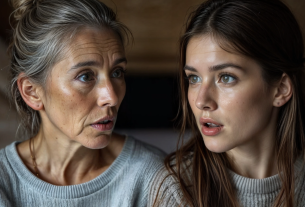
Valentina pushed the apartment door open with her shoulder, two heavy pharmacy bags digging into her hands. Autumn rain drummed against the windows, keeping a steady beat that would normally soothe her after a hard day at the hospital. A twelve-hour shift in the intensive care unit had wrung her out completely, yet she felt a quiet satisfaction—her paycheck had come on time, which meant her father would get every medication he needed.
She’d barely peeled off her wet jacket when the living room filled with the crackle of the TV and the familiar click of a remote. Igor was slouched in an old armchair with his feet up on the coffee table. Three empty beer bottles stood beside him, and chip crumbs littered the floor. He didn’t even look up when his wife walked in.
“Igor, I bought all of Dad’s medicines,” Valentina said, setting the bags down. “And I transferred some money to his card so he can pick up the prescription ones tomorrow.”
Igor snapped his head around. The remote slipped from his hand and hit the floor.
“What did you say?” His voice climbed. “How much did you send?”
“Ten thousand. That will cover a month of treatment.”
He shot out of the chair so abruptly he knocked over one of the bottles. It clattered and rolled across the floor.
“I don’t give a damn about your sick father—put the money on the table for me every month!” Igor screamed, flailing his arms. “Have you lost your mind? I had plans for that money!”
Valentina’s brows drew together, but she didn’t raise her voice. Her face flushed with restrained anger. Thirty-five years of nursing had taught her how to keep her emotions in check even when everything inside was shaking.
“What plans, Igor?” she asked evenly. “Another crate of beer?”
“None of your business!” he snarled. “I’m the head of this family, and the money should be in my hands!”
Without a word, Valentina bent over the bags and began pulling out small white boxes of medicine. The receipts rustled as she laid them out carefully on the coffee table beside the packages. Igor watched her every move; his breathing grew heavier.
“These are the medicines that keep my father alive,” Valentina said, gesturing to the pills. “And you think your beer belly matters more?”
Igor went still, blinking. He clearly hadn’t expected this. Usually Valentina listened in silence and went to cook dinner. Now she stood upright, met his eyes, and her voice held none of its usual submission.
“W-who… who do you think you are talking to?” he muttered, but the confidence was gone.
“I’m talking honestly,” Valentina replied. “Look at yourself, Igor. When was the last time you worked? When was the last time you brought even a kopeck into this house?”
He opened his mouth to argue, but nothing came out. For the past six months Igor had stayed home, explaining that it was impossible to find a decent job. Valentina had supported the household alone—paid the bills, bought groceries—and now she was also helping her sick father.
“How dare you!” Igor finally forced out. “I am looking for work! The job market is terrible right now!”
“The job market is terrible,” Valentina repeated, “and the couch is comfortable. Understood.”
She picked up a box of an expensive heart medication from the floor. A price sticker stared back—four thousand rubles for one package.
“This lasts Dad a week,” Valentina explained, showing it to him. “Without it, he goes into arrhythmia, and it could trigger a heart attack. But you don’t think about that, do you?”
Igor tried to find words to justify himself, but Valentina kept going.
“And these,” she said, taking another box, “are to stabilize his blood pressure. Not cheap, but essential. Want me to explain what happens if he misses even one dose?”
“Stop lecturing me!” Igor exploded. “I’m not stupid—I get it! But why should I starve because of your old man?”
Valentina looked at the crumbs on the floor and the empty bottles.
“Starve?” she repeated. “Are you serious?”
A thick silence settled over the room. Igor stood in the middle of the living room, fists clenched, but he didn’t dare raise his voice again. Something in Valentina’s manner made him uneasy. She had never argued this openly—normally she would just go quiet and retreat to the kitchen.
“Sit down,” Valentina said, pointing to the armchair. “Let’s talk calmly.”
Reluctantly, Igor dropped back into the chair, watching her like he didn’t recognize her.
“I’m exhausted, Igor,” Valentina began, sitting on the edge of the sofa. “Exhausted from working for two people, supporting this family alone, and then having to listen to complaints.”
“I’m not complaining,” he grumbled. “I’m just saying you should think about your own family first, and relatives second.”
“Our family?” Valentina tilted her head. “And what exactly do you do for our family besides spending my paycheck?”
Igor turned red and stayed silent.
“I’ll answer for you,” Valentina continued. “Nothing. Absolutely nothing. Yet your demands get bigger every day.”
“I’m looking for work!” Igor repeated, but it sounded unconvincing.
“Looking,” Valentina nodded. “From the couch, remote in hand. Very productive.”
Igor sprang up and paced the room.
“You’re mocking me!” he shouted. “I didn’t choose to be unemployed!”
“Whether you chose it or not, the facts don’t change,” Valentina replied calmly. “I work. You don’t. I earn money. You spend it. And then you tell me what I’m allowed to do with my own salary.”
Igor stopped by the window and stared at the rainy street. Valentina watched him, waiting. For the first time in years she had said out loud everything that had been piling up inside her.
“Tomorrow I’m going to the employment office,” Igor muttered without turning around.
“Tomorrow?” Valentina echoed. “Why not yesterday? Or a month ago?”
“Because I didn’t feel like dealing with that nonsense,” he snapped.
“But you felt like lying on the couch and criticizing how I spend money.”
Igor turned and looked at her. Something like uncertainty flashed in his eyes.
“Valya… why are we talking like strangers?” he tried to soften his tone. “Let’s stop with the reproaches and discuss it calmly.”
“There’s nothing to discuss,” Valentina said, standing. “Everything has been clear for a long time. My father will get his medicine, because this is life and death. And you can either find a job and contribute to the household, or you can keep sitting at home—and keep quiet.”
“So you’re giving me an ultimatum?” Igor frowned.
“I’m stating facts,” Valentina corrected. “No ultimatums. I’m simply telling you how things will be from now on.”
She gathered the medicine and receipts from the table and placed them neatly back into the bag.
“I’m going to make dinner,” Valentina said. “And you can think about what we just talked about.”
Igor watched her leave, then sank back into the armchair. He sat in silence, occasionally glancing toward the kitchen door. The clink of dishes and the hiss of a frying pan told him Valentina had gone back to her usual routines.
For the first time in a long while, Igor was alone with his own thoughts. Normally he drowned out any uncomfortable reflections with television or alcohol, but tonight he wanted the quiet. Valentina’s words kept circling in his head, and it made him uneasy.
She really did work without rest, brought her entire salary home, never spent money on herself. And Igor… He tried to remember the last time he had done something genuinely useful for the family. He barely helped around the apartment either, convinced it was “women’s work.”
“Am I really worse than everyone else?” he muttered to himself. “All men live like this.”
But even to him, the words sounded weak.
That evening Valentina placed all the receipts in a special folder and locked the documents away in the wardrobe. Every movement she made was measured and deliberate, as if underlining the seriousness of a decision she’d finally made. Igor watched from behind a newspaper he was holding upside down.
“What are you hiding documents for?” he grunted. “I’m not your enemy.”
“Not an enemy,” Valentina agreed, turning the key in the lock. “But you’re not the owner of my money either.”
Igor mumbled something about what a “real man” should be in the house, but the conviction was gone. It sounded more like a desperate attempt to protect what little pride he had left than an actual belief.
The next morning, as Valentina got ready for work, Igor tried to return to yesterday’s topic.
“Valya, about the money…” he began, scratching his unshaven cheek. “Maybe we can still work this out like normal people?”
Valentina buttoned her white coat and looked at him.
“If you need money—get a job,” she said plainly. “I decide what happens with my earnings. No deals. No compromises.”
Igor sagged and turned his gaze to the window. He understood arguing was pointless. There was a new firmness in Valentina’s voice—the kind nurses use with especially stubborn patients.
“And what about the family budget?” he tried weakly.
“A family budget is made from the family’s income,” Valentina replied, slipping into her work shoes. “Your income is zero. Do the math.”
After her shift Valentina called her mother to check on her father.
“Mom, how’s Dad? Did he take his pills this morning?” she asked, settling into a seat on the bus.
“He did, sweetheart, thank you,” her mother answered. “He even walked a little in the yard today. He says he feels better.”
“That’s wonderful. I bought everything for the month and transferred the money. I’ll come by soon to see him.”
“And how did Igor react to the spending?” her mother asked carefully.
Valentina was silent for a couple of seconds.
“Igor shared his opinion,” she said diplomatically. “But the decision is mine.”
“I see,” her mother sighed. “Be careful, dear. Men don’t like it when women become independent.”
“Then let them learn responsibility,” Valentina said firmly.
That evening Valentina settled on her position for good. No one would dictate to her anymore where her hard-earned money should go. She had spent enough years obeying someone else’s demands and being scolded over every ruble she spent without her husband’s approval.
Igor grew gloomy and withdrawn, but he stopped starting open fights. He understood his wife was serious, and that more pressure could lead to consequences he didn’t want. For several days he trudged around the apartment with a sour expression, sighing dramatically and throwing meaningful looks her way, but Valentina refused to react to his performances.
“Maybe we could at least buy a new TV?” he suggested one evening, timidly. “This one’s barely hanging on.”
“We will,” Valentina agreed. “As soon as you bring home a paycheck from your first month of work.”
Igor grimaced but didn’t argue.
A week later he actually went to the employment center. He came back irritated and complained that they offered only low-paid positions. Valentina listened without comment.
“It’s all garbage,” Igor grumbled. “Loading work for peanuts, or bicycle courier. That’s not a man’s job.”
“A man’s job is any honest job that brings in income,” Valentina replied, not looking up from the medical journal she was reading.
“You’re humiliating me,” he said, offended.
“I’m telling you the truth,” she corrected. “There’s a difference.”
Igor tried to act wounded, but it didn’t look convincing. He knew she was right—he just didn’t want to say it out loud.
In her mind, Valentina made herself a firm promise: if Igor ever tried to demand money through force or threats again, the next conversation would happen through a lawyer. She was tired of living under constant tension and was ready to defend her rights by any means available.
“And what if I don’t find work right away?” Igor asked, clearly trying to probe for weakness.
“Then you’ll keep looking longer,” Valentina said calmly. “But the rules won’t change.”
“You’ve become completely heartless,” he muttered.
“Practical,” Valentina corrected. “Finally practical.”
From that day on, Valentina’s priorities were set for good. Her father’s health, the household’s stability, and her own peace of mind mattered more than Igor’s whims and baseless demands. She stopped justifying every single expense—and the relief she felt was almost physical.
Igor still hoped she would change her mind and return to her old, obedient self, but with each passing day it became clearer: those days were gone for good. Valentina was no longer willing to sacrifice the people she loved for the illusion of “family peace.”
A month later Igor got a job as a security guard at a shopping center. The pay was small, but it was the first honest money he’d earned in a long time. He came home with an envelope, placed it on the table in front of his wife, and looked at her expectantly.
“Good,” Valentina said without even glancing at the envelope. “Now you can buy your beer with your own money.”
“That’s it?” Igor blinked. “No apology for being so harsh?”
Valentina lifted her head from her book and studied him.
“What would I apologize for?” she asked. “For making you act like a responsible adult? Or for saving my father’s life?”
Igor realized he had no answer. And he also realized Valentina would never again be the quiet, compliant wife who tolerated being blamed for every independent decision. Times had changed—and new rules had appeared in their home, built on mutual respect and personal responsibility from both sides.