The first warning signs appeared in mid-March, when Oleg came home earlier than usual with a cardboard box in his hands. Marina could tell from his face at once—what they’d both secretly dreaded for the past six months had finally happened.
“They cut me,” he said flatly, setting the box of personal items down in the entryway. “The entire department. ‘Cost optimization,’ apparently.”
Marina stepped toward him, wanting to hug him, but Oleg pulled away, went straight to the kitchen, and took a beer from the fridge. It was three o’clock on a Wednesday afternoon.
“Oleg, we’ll survive this,” she said carefully. “My paycheck is stable—we’ll manage. The main thing is not to give up. You’ll start looking for a new position…”
“Don’t pity me,” he snapped. “I know what I’m doing.”
Except, from the way things went, he wasn’t going to do anything at all. During the first week Marina blamed it on shock—on needing time to come back to himself. Oleg slept late and spent most of the day at the computer. Maybe he was sending out résumés, maybe he was playing games; Marina didn’t check. She worked as a manager at a construction company, left at eight in the morning, came home at seven in the evening, and every day she hoped to see at least some sign of movement.
But the changes she noticed weren’t the ones she’d been hoping for.
By the end of the second week the apartment looked nothing like itself. Oleg cooked and never cleaned up—pans with dried egg stuck to them sat on the stove until night, crumbs blanketed the table, and empty beer bottles lined up neatly on the windowsill. Marina came home exhausted and immediately started putting everything back in order.
“Oleg, could you at least wash the dishes?” she tried one evening, keeping the reproach out of her voice.
“Was busy,” he muttered without lifting his eyes from the screen. “I’ll do it later.”
Later never came.
A month after he was laid off, Marina realized the shift wasn’t only about mess. Oleg had become sharp and irritable, snapping at any remark, turning rude over nothing. When she timidly asked how the job hunt was going, he blew up.
“What, you’re going to keep tabs on me now? Am I some little kid? I’ll find work when I find it!”
“I’m just asking,” Marina tried to explain. “I’m worried…”
“Worried?” he mocked. “Then don’t stick your nose in it. I’ve got enough problems.”
Marina fell silent. She wanted to say the problems were theirs now, that she was tired too, that it would be nice to feel like a team. But she swallowed it—because she was afraid of making him even angrier.
And then the real thing happened.
In early May, Marina came home from work yet again and found piles of dirty dishes. Oleg wasn’t alone in the kitchen. His younger brother, Sergey, was sitting at the table beside him, surrounded by beer bottles and bags of chips.
“Marinka, hey!” Sergey shouted. “I’m going to crash here for a bit—hope you don’t mind?”
Marina looked at her husband. Oleg stared off to the side.
“Meaning…?” she asked carefully.
“Olga and I—my wife—we had a little argument,” Sergey said casually. “Figured I’d give her time to cool down. Oleg offered me your place. Just a couple days, no more.”
A couple days turned into two weeks.
Sergey took over the couch in the living room and turned it into his personal territory. His things were everywhere. He watched TV late into the night and didn’t care about the volume. The brothers sat together drinking beer, laughing at their own jokes, and Marina felt like a stranger in her own home.
A home she’d bought with her own money, by the way—before marriage. Oleg moved in only after the wedding, but somehow everyone had decided that detail no longer mattered.
“Oleg, we need to talk,” Marina said on another day off, when Sergey went out to the store.
“About what?” Oleg didn’t even lift his head from his phone.
“About your brother. He’s been here two weeks. When is he leaving?”
“Soon. Why are you freaking out?”
“I’m not freaking out. I just want to understand what’s happening. This is my apartment, Oleg, and I didn’t agree to anyone else living here.”
That made him look up. Something ugly flickered in his eyes.
“Your apartment?” he repeated slowly.
“Yes. Mine. I bought it—you know that.”
Marina knew she’d stepped onto dangerous ground, but she couldn’t stop. Everything she’d been holding in finally spilled out.
“Oleg, I’m exhausted. I work all day, I come home, and instead of resting I clean up after the two of you. There’s dirt everywhere, dishes piled up, cigarette butts on the floor…”
“Cigarette butts?” Sergey snorted—he’d just walked in with a bag of beer. “Marinka, come on. The ashtray just overflowed.”
“I’m not talking to you, Sergey,” she cut him off.
“Well excuse me, madam,” he rolled his eyes and headed to the living room.
Oleg stood up. Marina saw his jaw tighten.
“Listen, Marina,” he began in a low voice, anger barely contained. “I get it—you’re tired. But my brother and I aren’t sitting here for fun. I’m going through a hard time, in case you missed it. I need support, not your complaints.”
“Support—like me paying for you for two months?” Marina blurted.
Silence dropped between them. From the living room came the sound of the TV turning louder—Sergey’s idea of being “polite.”
“Paying for me?” Oleg smirked, but there was nothing amused in it. “You’re really bringing that up?”
“Is it not true?” Marina felt her voice trembling, but she kept going. “I pay for everything—utilities, groceries, all of it. And you can’t even wash your own dishes.”
“I’m looking for work!” he shouted.
“You’re drinking beer and playing tank games!” she snapped. “I see you, Oleg. I’m not blind.”
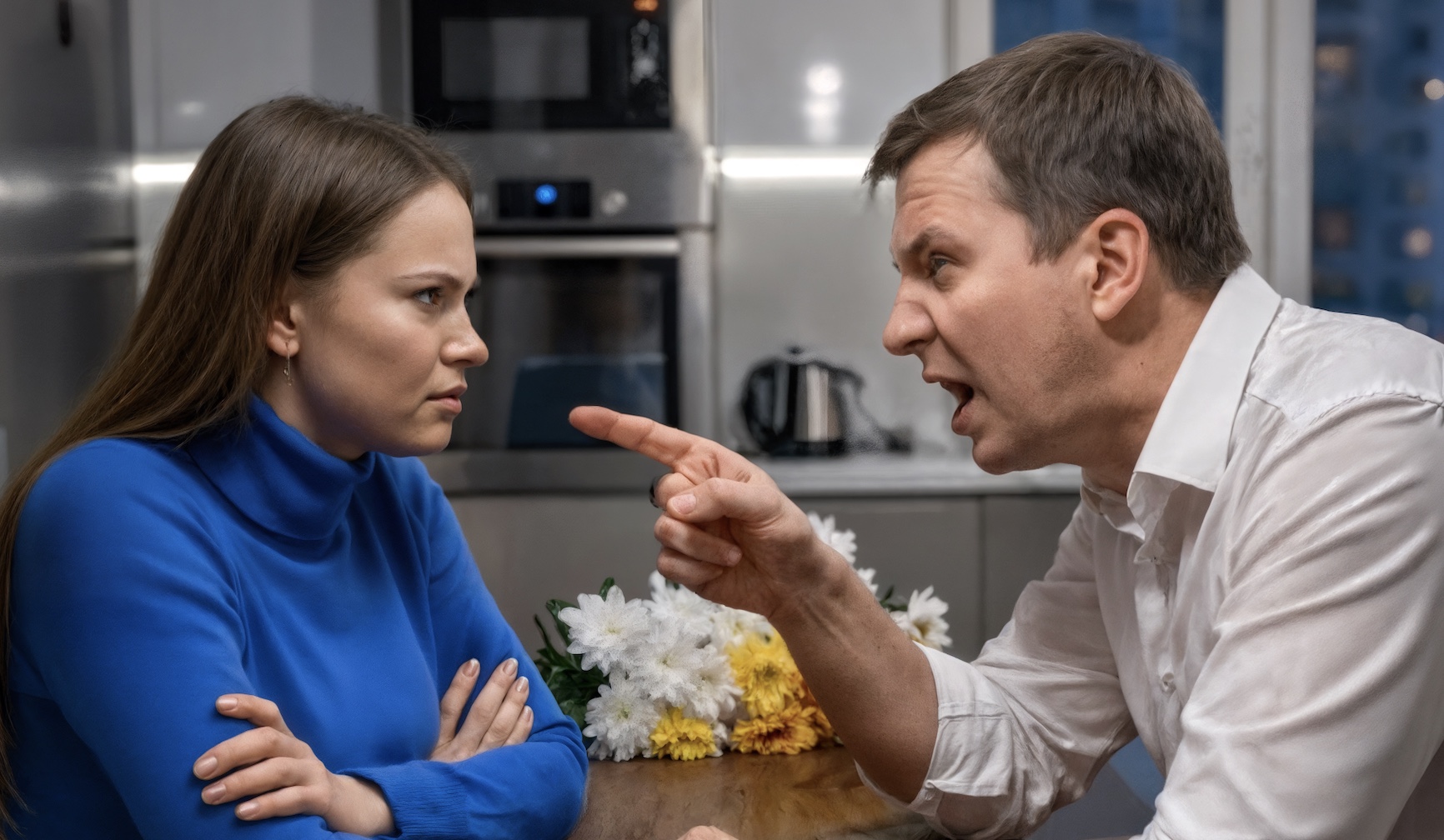
He stepped toward her, and for a second Marina thought she didn’t know him at all. A stranger stood in front of her—angry, bitter.
“You know what, Marina?” he hissed through clenched teeth. “I’m sorry I’m not living up to your expectations. But I’m sick of your nagging. You act like I owe you something.”
“You owe me at least basic respect,” she said softly. “You’re living in my apartment, I’m feeding you…”
“In your apartment,” he cut in. “Ah. So you’re going to hold that over my head forever now?”
“I’m not holding it over your head. I’m stating a fact. And I don’t like what’s happening here. I want your brother out, and I want you to start doing at least something at home if you’re not working yet.”
Oleg turned away, paced the kitchen, then whirled around.
“What does it matter whose apartment it is?” he blurted. “I’m the man, which means I’m the master of everything. And I’ll do what I think is right in here. If I need my brother’s support, he’ll live here. If I want to rest, I’ll rest. And you…”
He didn’t finish, but Marina didn’t need him to.
“You know what, Oleg?” Her voice turned unexpectedly calm. “You’re right. You’re a man. And as a man, you can be the master of a house. Just not of this one.”
“What?” He blinked, not understanding.
“Pack your things,” Marina said clearly. “You and your brother. Pack up and get out. Today.”
“Are you insane?” Sergey sprang into the doorway.
“Shut up,” Marina said without looking at him. “This has nothing to do with you.”
“Marina, you can’t kick me out,” Oleg tried to smirk, but it came out weak. “That’s ridiculous.”
“I can. And I am,” she said. “You said it yourself—what does it matter whose apartment it is, you’re the man and the master of everything. Perfect. Go be the master somewhere else. Move in with Sergey—let Olga clean up after both of you, since you’re such ‘lords of life.’”
“You’ve completely lost it,” Sergey muttered.
“Sergey, if you’re not out of here in an hour, I’m calling the police,” Marina said quietly, in a tone that made arguing feel pointless. “You can test whether Olga will let you in. Or go to your mom’s. I don’t care.”
“Marina, we can talk this through,” Oleg said, clearly not expecting her to go this far. “Don’t do anything rash.”
“There’s nothing to talk through,” she said, yanking open the closet, grabbing a bag, and tossing it at him. “I’m tired of being a cleaner in my own home. Tired of your rudeness. Tired of watching you turn into someone I don’t recognize. Leave. Think about how you’ve been acting.”
“You don’t have the right,” Oleg started, but she cut him off.
“I do. This is my apartment—my home. And I decide who lives here. You wanted to be the master? Go be one somewhere else.”
The brothers exchanged a glance. Marina could see they didn’t believe she meant it. They were waiting for her to cry, to back down, to take it all back.
But she wasn’t taking anything back.
“One hour,” she repeated. “And I don’t want to see either of you here.”
They left within forty minutes, shoving their things into bags, muttering about hysterical women and “bitter witches.” Marina stood at the window and watched them load Sergey’s car. Her hands trembled, her throat tightened, but she refused to cry.
When the door finally closed behind them, the apartment felt painfully silent.
Marina sat at the kitchen table, both hands wrapped around a mug of cold tea, and only then allowed herself to cry—not out of self-pity, not out of hurt, but out of relief. It felt like she’d set down a weight she’d been carrying too long.
The first three days were strange. She came home from work and instinctively expected chaos, but everything stayed clean—exactly as she’d left it that morning. The quiet felt unfamiliar, almost ringing in her ears. No late-night TV, no drunken talk, no empty bottles.
She wandered from room to room as if meeting her own home again. It was pleasant—and oddly sad at the same time.
Oleg called on the second day. Marina didn’t answer. He texted: “You realize you went too far, right? I’m at Sergey’s. Olga’s not happy at all. Maybe stop messing around?”
She didn’t reply.
On the third day he called five times. Marina kept ignoring him.
On the fourth day, he showed up. He rang the bell, and Marina, sighing, opened the door. Pretending she wasn’t home felt stupid.
“Marina, come on,” Oleg looked rumpled and unshaven. “Enough already. Olga kicked us out. Said she won’t carry two freeloaders on her back. Now I’m literally on the street.”
“And Sergey?” Marina asked.
“Sergey’s at Mom’s. But there’s only one spare spot, and he already took it.”
“So there’s a spot for you too.”
“Mom lives in a two-bedroom! Where am I supposed to go?”
“On the couch. On the floor. Not my problem, Oleg.”
He stared at her like he didn’t recognize her.
“Marinochka, please,” he pleaded. “I get it. I was wrong. Let me come back, and we’ll talk calmly.”
“There’s nothing to talk about,” she said, folding her arms. “You haven’t changed. You’ve just run out of options.”
“I have changed!” he rushed out. “I realized I was wrong, I swear. I get it now.”
“You realized Olga didn’t tolerate your rudeness either?” Marina asked quietly. “That being ‘master of everything’ only works where people allow it?”
His jaw clenched.
“So what—now I’m supposed to live on the street?”
“Live with your mother. Find a job. And when you do—then we’ll talk.”
“Marina, this is absurd!”
“No, Oleg. What was absurd was tolerating what you allowed yourself to become. Go. And don’t call me until you have a job. I mean it.”
She shut the door. He stood there a moment longer, then she heard slow, heavy footsteps fade down the hallway.
Marina went back to the kitchen, sat down—and realized she was smiling. For the first time in weeks, she felt genuinely light.
The next weeks were peaceful. Marina worked, came home, tidied up—only after herself now, and it was almost enjoyable. She cooked dinner, watched shows, read the books she’d been meaning to start for ages.
Sometimes she felt lonely. Sometimes she caught herself listening for the sound of keys in the lock. But then she remembered the last months—the mess, the rudeness, that line: “What does it matter whose apartment it is?”—and being alone didn’t seem so frightening.
Oleg called once a week. She didn’t pick up.
And then, a month and a half later, he texted: “I got a job—sales manager for security systems. Three-month probation, but they promise good pay. Can I come by?”
Marina stared at the message for a full fifteen minutes.
Then she typed: “Come Saturday at two. We’ll talk.”
On Saturday, Oleg arrived exactly at two. He wore a clean shirt, was freshly shaved, and held a bouquet.
“Come in,” Marina stepped aside.
They sat in the kitchen. Oleg set the flowers on the table, folded his hands, and looked her in the eyes.
“Marina, I want to apologize,” he said quietly. “For everything. I acted like a complete idiot.”
She stayed silent, waiting.
“When I got fired, I just… broke,” he continued, choosing his words slowly. “I felt useless. Like a loser. And instead of pulling myself together, I dumped my anger on you—the one person who was supporting me.”
“You weren’t dumping anger,” Marina corrected gently. “You were trying to feel powerful at my expense. To be ‘the boss’ somewhere.”
He nodded.
“Maybe you’re right. It was easier to play ‘the master’ than to admit I was scared—that I couldn’t handle it, that I felt like dirt.”
“Oleg, I would’ve supported you,” Marina said. “If you’d just talked to me. If you didn’t treat me badly, didn’t turn the apartment into a dump, didn’t drag your brother in here.”
“I know,” he said, rubbing his face. “God, I know. When Olga threw both of us out—me and Sergey—I suddenly saw myself from the outside. Two grown men with no jobs, behaving like pigs. And I thought… is that really me?”
“And what did you answer?” Marina asked.
“That it was me,” he admitted. “And I hated it.”
He told her he’d lived with his mother for three weeks, how she scolded him daily—called him an idiot, said he’d thrown away a good wife, said he was acting like an infant. He admitted he’d wanted to snap back, then realized she was right.
Marina listened and felt something inside her slowly thaw.
“I started looking for work for real,” Oleg went on. “Sending ten résumés a day. Going to interviews. And I found something. The pay’s lower than before, but it’s a start. And I’ll work hard.”
“Why didn’t you do that earlier?” she asked. “When you lived here?”
He hesitated, then answered honestly.
“Because I didn’t have to. Because you fed me anyway. You stayed anyway. Why strain myself if I could just sit and play tanks?” He gave a bitter half-smile. “I was living off you, Marina. I understand that now. And I’m ashamed.”
“Good,” she said softly, lifting the bouquet and breathing in the scent. “Chrysanthemums. My favorite. You remembered.”
“Of course I did.”
They were quiet for a moment. Outside, a couple walked past with a dog; somewhere nearby kids laughed loudly.
“So… what now?” Oleg asked. “I want to come back. I want to start over. But I understand if you don’t. If I burned every bridge.”
Marina looked at him. Her husband sat across from her—tired, humbled, unsure. Nothing like the cocky man who’d shouted about being “the master of everything.”
“Rules,” Marina said. “If you come back, there will be rules.”
He nodded, bracing himself.
“First: chores are fifty-fifty. Cleaning, cooking, all of it—shared.”
“Agreed.”
“Second: your brother is never staying here longer than an evening. If he’s fighting with his wife, he can solve it himself.”
“Agreed.”
“Third: no disrespect. Not to this home, and not to me. If you’re struggling, we talk about it. But you don’t get to take it out on me—or turn my apartment into a landfill.”
“Marina, I agree. I agree to everything,” he said, reaching across the table and covering her hand with his. “I’ll be different. I swear.”
She looked at their hands, then at his face.
“And if you ever go back to that behavior,” she said slowly, “there won’t be a second chance. Do you understand?”
“I do.”
“Then… alright,” she said, giving a small smile. “You can come back.”
Oleg stood, walked around the table, and hugged her. Marina closed her eyes and rested her forehead against his shoulder. She knew this wasn’t the end of their problems. There would be hard days. Trust didn’t rebuild overnight.
But it was a beginning. The start of something new.
“Thank you,” he whispered. “Thank you for not leaving me for good.”
“I didn’t leave you,” she corrected. “I left the person you became. And this one,” she pulled back slightly and met his eyes, “this one… I think I still remember.”
He smiled—truly smiled—for the first time in months.
And Marina thought that sometimes people really do have to hit bottom to understand how far they’ve fallen. Sometimes you have to lose everything to value what you had.
And sometimes you simply have to find the strength to say, “Enough,” and not be afraid of being alone—if the alternative is living in constant humiliation.
That evening they cooked dinner together. Oleg chopped salad; Marina fried chicken. They talked—carefully, avoiding the sharpest corners, but they talked. The sun set outside, the kitchen smelled of garlic and spices, and for the first time in a long while Marina felt that things might be okay.
Not immediately. Not magically.
But in time—okay.