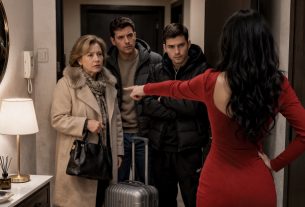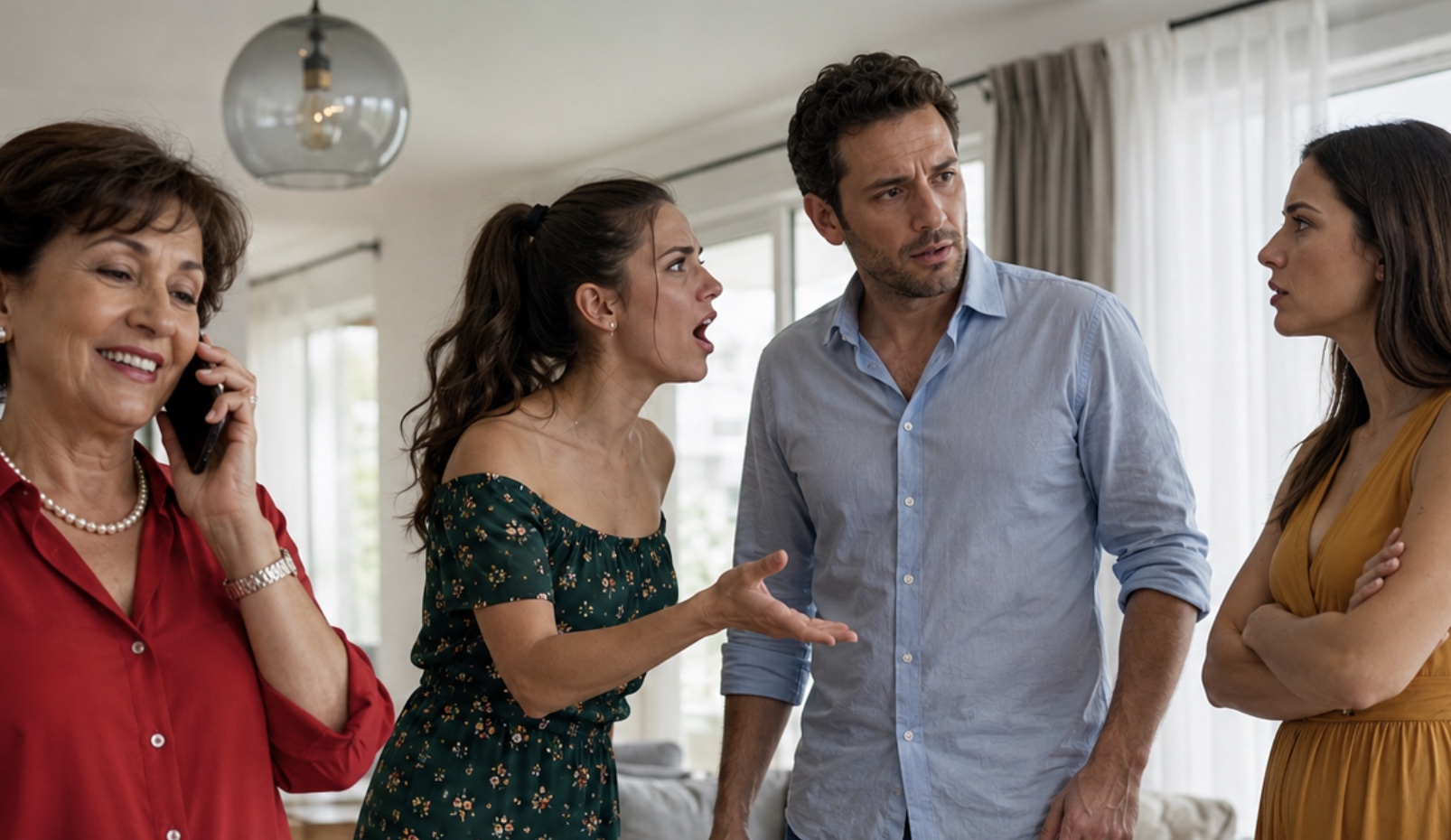
“Olga, sweetheart, don’t worry about anything. We’ll take care of everything ourselves. You know how much I love you. You’re like a daughter to me.”
Tamara Petrovna’s voice was so soft and velvety over the phone that a chill ran down Olga’s spine. Her mother-in-law always used that exact tone when she wanted something.
Not when she wanted to ask for something.
When she intended to take it.
Olga stood on the steps outside the notary’s office, watching yellow leaves fall from the linden trees. September had been gloomy that year, and the wet leaves covered the pavement like a heavy carpet.
She had walked out of the office barely three minutes ago. The notary probably hadn’t even had time to put her folder away.
“Tamara Petrovna, how did you… how do you know?”
“Oh, come on, darling! News travels fast. Anyway, I’ve already thought everything through. The house shouldn’t stand empty. That would be wasteful. I’ll move there and look after the property. As for the money, you know how young people are—you don’t know how to save. We’ll put it somewhere safe, and I’ll keep an eye on it. And Oleg really needs a decent car. It’s embarrassing watching him drive around in that wreck. We’re getting together tonight, so I expect you and Oleg there. Transfer thirty thousand for the food. I’ve already made the shopping list.”
The call ended.
Olga slipped the phone into her pocket and stared at the wet leaves for a long time.
 
Then she took out her car keys, got behind the wheel, shut the door, and simply sat there.
How had she found out?
Oleg didn’t even know yet. Olga had deliberately said nothing to him before meeting the notary. She had wanted to understand everything herself first.
But apparently he had heard something, guessed something, or casually mentioned something to his mother.
Later Olga discovered the truth.
Tamara Petrovna had a close acquaintance working in that very notary’s office—a quiet woman in glasses whom Olga had noticed behind the reception desk. The woman had photographed the documents and sent them to Tamara Petrovna before Olga had even made it outside.
So much for privacy.
She hadn’t even been allowed a few minutes alone in her car to cry.
When Olga returned home, everything was already prepared for “the conversation.”
That was exactly what it felt like: prepared.
Tamara Petrovna sat in Olga’s husband’s favorite armchair in their living room with the expression of someone who had already made every important decision on behalf of everyone else.
Oleg was sitting nearby on the sofa in sweatpants, staring at his phone.
He didn’t even stand up when Olga entered.
“Finally,” her mother-in-law said. “We’ve been waiting forever.”
Olga put down her handbag and looked around.
 
She always noticed details.
There was a cup with someone else’s lipstick on the rim sitting on Olga’s favorite serving tray.
Tamara Petrovna’s shoes had been abandoned in the middle of the hallway exactly where she had stepped out of them instead of being placed neatly against the wall.
Her mother-in-law herself was wearing an old faded housecoat. Judging by the look of it, she had left her own apartment wearing it and had arrived at theirs without bothering to change.
Her hair wasn’t brushed.
A grocery bag sat on the coffee table. Tamara Petrovna had brought food from her own refrigerator and was now arranging it on Olga’s dishes as casually as if this were her own home.
Olga noticed things like that.
She had always been observant. Her work as a landscape designer encouraged it. You looked at a piece of land and immediately understood what someone had wanted to create, what had actually worked, and what had been neglected beyond repair.
This situation had been neglected for a very long time.
“Olga, sit down,” Oleg finally said, pulling his eyes away from his phone. “Mom explained everything. It makes sense. We don’t need the house because we live in the city. Mom can stay there and take care of it. And the money… think about it. What are you going to do with all that money anyway?”
“What am I going to do with it?” Olga repeated calmly.
“Well, you’ll probably waste it on things. You’re not exactly good at managing a budget.”
He said it without anger, as though he were pointing out an obvious fact.
 
“Mom says it’s better to save it.”
Tamara Petrovna nodded with the solemn expression of a wise adviser.
“Olga, darling, you’re an orphan. You don’t have anyone except us. We’re your family. Who else is going to help you? Don’t be selfish. Oleg has done so much for you. He turned down other women because of you.”
Olga looked at her husband.
He was staring at his phone again.
Something inside her—something silent that she had protected for years—suddenly went cold.
Not angry.
Just cold and clear, like the autumn air outside the window.
“All right,” she said. “I need some time to think.”
“What is there to think about?” Tamara Petrovna threw up her hands. “Send the thirty thousand. We’re celebrating tonight. And I want to go to the house this weekend and look around.”
“Tomorrow,” Olga said. “We’ll talk tomorrow.”
She left early the next morning while Oleg was still asleep.
Her father’s country house stood about forty minutes outside the city. The property was modest, with old apple trees and a separate workshop.
Arseny Mikhailovich had been an artist—a difficult, stubborn man.
Sometimes he and Olga could go weeks without speaking to each other. And yet neither of them could truly live without the other.
She had inherited his stubbornness.
And his habit of falling silent when something hurt the most.
 
As she approached the property, she saw an unfamiliar car parked near the gate.
There was also a man she didn’t recognize, carrying tools.
Olga stayed in her car for a few moments and watched.
The man was working on the lock of the gate, calmly and professionally, like someone who had been hired for a straightforward job and had no reason to hurry.
“Who are you?” Olga asked after getting out.
“A locksmith. I’m changing the locks.”
“Who hired you?”
He gave her the name.
Tamara Petrovna had called him the previous evening.
Olga stood there watching him work.
Then she took out her phone and called her mother-in-law.
“Tamara Petrovna, you hired a locksmith to come onto my property.”
“Well, obviously! The house needs to be secured. Anyone could break in. I’m practically the owner already, so naturally I have to take care of things.”
“You are not the owner.”
“Oh, Olga, don’t be ridiculous. Oleg and I already decided everything.”
Olga ended the call.
“Pack up your tools,” she told the locksmith. “The job is canceled. I own this property. If the locks need changing, I’ll decide when and how.”
The man shrugged.
It made no difference to him.
Olga entered the house and locked the door behind her.
The workshop smelled of turpentine and old wood.
 
That smell had followed her through her entire childhood.
On a shelf, behind a row of dried-out paint jars, stood a small metal box.
Olga had seen it many times before, but she had never opened it.
Her father had once told her, “Not yet.”
Now, apparently, it was time.
Inside she found an envelope and several folded documents.
She sat down on a stool without even taking off her jacket and began to read.
The further she read, the quieter everything became inside her.
But it wasn’t an empty silence.
It was solid, grounded, like earth after rain.
Her father had known.
He had known everything.
He understood Oleg’s family.
He understood what people could become when they smelled money.
Arseny Mikhailovich hadn’t simply left his daughter an inheritance.
He had left her a task.
 
And protection.
Olga remained in the workshop for a long time.
Outside, the apple trees rustled in the wind, dropping the last of their leaves.
She held her father’s letter and thought about how, for most of her life, she had considered him difficult and inconvenient.
Now she realized he might have been the smartest person she had ever known.
When Olga drove back toward the city, she felt like a different person.
Not furious.
Not vengeful.
Simply focused.
Something inside her that had spent years drifting without support had finally fallen into place with a quiet click.
The documents were in her bag.
She had read her father’s letter three times in the workshop, surrounded by the smell of turpentine and autumn.
Arseny Mikhailovich had written the way he always spoke: briefly and without sentimentality.
“Olga, you’re smart. You’ll figure it out. I arranged things so that you wouldn’t have a choice—in a good way.”
In a good way.
She almost smiled.
Under the terms of the will, both the house and the six million rubles had a strict designated purpose.
Within one year, a private art studio for local children had to be opened on the property.
The six million constituted a fund to pay teachers, purchase materials, and buy equipment.
If the studio did not open within the required period, the property and money would automatically pass to the state.
No lawsuit.
No appeal.
The notary had already been instructed.
Her father had protected the arrangement from every possible angle.
 
He knew exactly what he was doing.
By the time Olga reached the city, dusk had already fallen.
She called Oleg.
He didn’t answer.
She sent him a message.
“I’ll be home in twenty minutes. We need to talk.”
No reply.
Tamara Petrovna opened the apartment door before Olga even managed to take out her keys.
She stood in the doorway wearing the same housecoat as before, except this time she had put Olga’s oversized gray sweater over it.
Her mother-in-law wore other people’s belongings with the confidence of someone who believed everything around her belonged to her by default.
“So you finally decided to show up,” she said instead of greeting her. “We’ve been waiting for you all day. Oleg is worried sick.”
Oleg was sitting in the living room in almost exactly the same position as the day before.
It was as though he hadn’t moved.
Phone.
Sofa.
The uncomfortable expression of a man who knew something was wrong but had no idea what to do about it.
“Where were you?” he asked.
“At my father’s house.”
Tamara Petrovna immediately brightened.
“Good! So you’ve seen it. It needs repairs, just like I said. What about the roof? Is it leaking? And that land should be turned into a vegetable garden. I’m retired anyway, so I can take care of…”
“Tamara Petrovna,” Olga said. “Please sit down.”
Something in her tone made the older woman stop talking.
Only briefly.
 
But she stopped.
Olga opened her handbag and placed copies of the documents on the table in a neat stack.
“I went to the property because the locksmith you hired was changing the locks on my gate. I sent him away.”
Tamara Petrovna didn’t even blink.
“I was only doing what was best! Someone had to…”
“There’s more,” Olga interrupted. “In my father’s workshop, I found a letter and some documents. Here they are. You can read them yourselves.”
Oleg reached for the papers first.
He scanned them slowly, moving his lips slightly as he worked through the more complicated legal language.
Tamara Petrovna read over his shoulder.
Olga watched her expression change.
Confusion first.
Then irritation.
Then anger, which she was still trying to hide.
“What is this supposed to mean?” her mother-in-law demanded at last. “What art studio? Is this even legal?”
“Completely legal,” Olga replied. “The notary certified it. A lawyer reviewed everything when the will was written. The house and the money have a designated purpose. Either the studio opens, or everything goes to the state. There is no other option.”
Silence.
Oleg stared at the documents.
Tamara Petrovna straightened.
“Well,” she said slowly, “we could open the studio on paper. Just officially register it, and the money could still be…”
 
“No,” Olga said. “There are annual financial reports and inspections. It’s serious.”
Her mother-in-law stared at her for several seconds.
Then red patches began to spread across her face.
“So that’s how it is.”
Her voice changed completely.
The velvet softness vanished.
So did the sweetness.
What remained was sharp, rough, and genuine.
“So your father did this on purpose, didn’t he? He made sure the family got nothing! Wonderful man, raising a daughter like you! And now you’re doing the same thing—hiding things and acting as if you’re smarter than everyone else.”
“I didn’t hide anything. I just showed you the documents.”
“Oleg!”
Tamara Petrovna turned toward her son.
“Do you hear what she’s saying? Is she your wife or not? She’s going against the family! Because of her we’re getting nothing! Divorce her. Why live with a woman like that? A penniless wife with nothing but problems—what do we need that for?”
Oleg slowly raised his head.
Olga looked at him.
She had stopped expecting very much from him a long time ago.
For years, he had been his mother’s son first and her husband second.
But now Olga still waited.
 
She simply waited to see what he would say.
He remained silent for a long time.
Tamara Petrovna kept talking, louder and angrier by the second.
She listed everything she had ever done for him.
How much she had sacrificed.
How she had raised him alone.
How much he owed her.
How Olga didn’t appreciate him and never had.
And then Oleg stood up.
Just stood.
He didn’t interrupt his mother.
He picked up the papers, looked at them once more, then placed them back on the table.
“Mom,” he said, “enough.”
Tamara Petrovna froze.
 
“What do you mean, enough?”
“Enough.”
His voice remained quiet.
“You hired a locksmith without permission. You sent him to someone else’s house. Olga’s house. That’s… that’s not normal.”
“I was doing it for you!”
“No.”
Oleg looked at his mother as if he were seeing her for the first time.
Or perhaps as if he had finally given himself permission to see her clearly.
“You were doing it for yourself. You always do things for yourself. I just used to call it caring.”
Tamara Petrovna opened her mouth.
Closed it.
“Oleg…”
“I’m staying here with my wife,” he said, turning away.
Tamara Petrovna left.
She slammed the door so hard that the dishes rattled inside the cabinet.
For a while they could still hear her angry voice from the stairwell, though the words were impossible to make out.
Only the tone remained.
Offense.
Fury.
And the absolute conviction that she had been betrayed.
The apartment became quiet.
Oleg stood in the middle of the living room, staring at the floor.
Olga sat on the sofa with the documents on her lap.
Outside, the trees roared in the wind.
 
September drove dry leaves down the street, sending them spinning along the buildings and catching them beneath windowsills.
“I didn’t know about the locksmith,” Oleg said eventually.
“I know.”
“That was…” He paused. “That was too much.”
Olga didn’t answer.
She looked down at her father’s documents and thought about the fact that she had one year.
A whole year to make his dream real.
A studio.
Children.
A workshop that was alive again instead of being turned into a memorial.
She could already picture it.
Large windows.
Light everywhere.
The smell of paint.
Maybe a garden in front of the entrance.
She knew how to create gardens.
“Olga,” Oleg said quietly.
She looked up.
“Can I help? With the studio. I don’t know how, exactly, but maybe we can figure it out together?”
She studied him for a long moment.
 
Then she nodded.
For the next two weeks, Olga lived as though her life had split into two separate worlds.
During the day there were calls, measurements, contractors, meetings.
She drove to her father’s property every other day and walked through the rooms with a notebook, writing down what had to be done immediately and what could wait.
The workshop was large.
Arseny Mikhailovich had built it with more space than he personally needed, almost as if he had always known someone else would use it one day.
The light was perfect.
A large north-facing window.
High ceilings.
Olga stood in the middle of the room and imagined where everything would go.
A long watercolor table here.
Shelves for supplies there.
Children’s easels near the window.
Slowly, she felt something inside herself straighten.
In the evenings, messages from Tamara Petrovna arrived.
At first they were wounded and dramatic—long paragraphs listing everything she had ever done for the family, everything she had sacrificed, and how nobody appreciated her.
Then the messages became demanding.
Oleg needed to come see her.
He needed to explain himself.
 
He needed to “come to his senses.”
Eventually the messages became openly hostile.
Short sentences.
No punctuation.
Random capital letters in the middle of words.
Oleg read them.
Put down his phone.
Said nothing.
Olga didn’t ask questions.
She had already understood something important.
Some conclusions had to be reached alone.
Otherwise they meant nothing.
One Sunday, Olga and Oleg drove out to the property together.
Oleg spent most of the journey looking through the window at fields, tree lines, and the road growing narrower as they moved farther from the city.
When they entered the workshop, he stood there for a long time, taking everything in.
He picked up one of her father’s old paintbrushes from the shelf.
Its bristles were stiff, and the wooden handle had dried and cracked with age.
“Did he build all this himself?”
“The workshop, yes. He used to say hired workers always create someone else’s space.”
Oleg turned the brush in his hand and carefully put it back.
 
Then he looked at the walls.
They had once been white, but over the years they had turned yellow and developed damp stains in the corners.
“Should we start with those?” he asked.
“With those.”
They stopped at a hardware store on the way into the village and bought matte white paint, rollers, trays, and masking tape.
Oleg had never painted a wall in his life.
It was immediately obvious.
He held the roller awkwardly, pressed too hard, and left uneven lines.
Olga showed him how to do it.
Steady pressure.
Even strokes.
No rushing.
He tried again.
“Better?”
“Almost.”
They worked quietly for several hours.
The air smelled of fresh paint and autumn creeping in through the gaps around the old window frame.
The apple trees rustled outside.
Olga kept thinking about her father.
About how he had stood here, in this very room, looking at his paintings and probably seeing something in them that no one else could see.
He had been a difficult man.
He had never known how to say “I love you” directly.
Instead, he had left her the best thing he knew how to give.
A place where something real could be created.
That had been his way of saying it.
Oleg’s phone vibrated in his pocket.
Once.
Twice.
Then a third time.
He took it out, looked at the screen, and Olga saw something close off in his face.
Not anger.
Not resentment.
Just exhaustion.
“Mom,” he said.
 
“Answer if you want to.”
“I don’t.”
He put the phone away and picked up the roller again.
Messages from Tamara Petrovna continued for several more days.
Olga occasionally caught a glimpse of the notifications but didn’t read them.
Eventually Oleg stopped reading them too.
Olga couldn’t say exactly when it happened.
One day she simply noticed him scrolling through his phone, seeing his mother’s name appear in the notifications, and continuing past it.
No visible struggle.
No pain.
Just moving on.
That, perhaps, meant more than any speech ever could.
In October, Olga posted an announcement in the village.
First on the noticeboard outside the local shop.
Then in the community’s online group.
She kept it simple.
A children’s art studio was opening.
Classes would be free.
Materials would be provided.
Enrollment would begin in November.
 
She searched for teachers through friends and professional contacts and eventually found two.
One was Nina Stepanovna, an older woman who had taught art at a school her entire working life before retiring.
The other was Artem, a young watercolor artist from the city who had wanted to participate in something meaningful for years but had never known where to begin.
They came to see the studio on the same day.
Olga showed them around the workshop.
The walls had been repainted.
New shelving had been installed.
Easels stood ready.
Nina Stepanovna walked slowly through the room, running her hand across the tabletops and studying the daylight coming through the north-facing window.
She stopped in the middle of the studio.
“This is a good place,” she said. “People will work well here.”
Olga nodded.
Her throat suddenly tightened.
She hadn’t expected such a strong reaction, so she turned away and pretended to look outside.
Artem, messy-haired and slightly distracted, immediately began moving the easels and checking the angle of the light.
Oleg had come along to help with the furniture and watched him with obvious curiosity.
“You’re an artist?” Oleg asked.
“I’m trying to be.”
“Can you teach someone? An adult? From zero?”
 
Artem looked at him seriously.
“Adults are harder. They’re always afraid of doing things wrong. But yes, they can learn.”
Oleg was silent for a moment.
Then, as though it meant nothing at all, he said:
“Maybe I’ll sign up someday.”
Olga heard him.
She said nothing.
But she heard him.
The first children arrived in November.
There were seven of them, between eight and twelve years old.
They were all different.
Some shy.
Some noisy.
One girl with long braids immediately demanded to be taught how to draw horses.
Only horses.
Nothing else.
Nina Stepanovna seated everyone, handed out sheets of paper, and asked them to draw whatever they wanted.
Olga stood in the doorway and watched.
This had once been her father’s space.
His light.
His smell.
His walls.
Now unfamiliar children sat at the tables, guiding pencils across white paper.
And it felt right.
 
Exactly right.
Olga took out her phone and snapped a photograph.
Not of the children.
Of the light.
The way it fell through the north-facing window across the tables, the white sheets of paper, and the concentrated faces bent over them.
For a second she wanted to send the picture to someone.
Then she realized there was no one to send it to.
Her father was gone.
But he would have appreciated that exact photograph.
She knew he would.
So she saved it for herself.
That evening, she and Oleg drove back to the city together.
Dark fields passed outside the windows, broken occasionally by the lights of distant villages.
Oleg drove quietly.
At one turn he slowed down and glanced at her.
“Olga.”
“Yes?”
“I was an idiot for a long time.”
She didn’t tell him he wasn’t.
That would have been a lie, and both of them knew it.
 
“You were,” she agreed. “But at least now you know how to paint walls properly.”
He gave a small smile.
Not a cheerful one.
But an honest one.
“That counts as progress.”
“Serious progress,” she said.
They fell silent again.
A road sign flashed by.
Forty kilometers to the city.
Olga watched the road ahead and thought about the coming year.
There would be paperwork.
Repairs.
Children.
Paint.
Inspections.
Probably dozens of new problems she hadn’t even imagined yet.
And strangely enough, she wasn’t afraid.
Her father had written only one thing.
“You’ll figure it out.”
No instructions.
No explanations.
Just confidence.
You’ll figure it out.
And she had.
A new message appeared on the phone resting near the dashboard.
Tamara Petrovna.
Oleg glanced at the screen, then returned his eyes to the road.
Olga picked up the phone and placed it inside her bag.
Outside was the dark autumn highway.
Ahead were the lights of the city.
For that moment, it was more than enough.
The gallery officially opened in February.
There was no grand ceremony.
No speeches.
One morning Nina Stepanovna simply hung a small sign on the workshop door.
The children had chosen the name themselves.
“Brushstroke.”
When Olga saw it, she laughed.
For the first time in a very long while, she laughed loudly and freely.
By spring, twenty-three children were attending classes.
The girl with the braids who had insisted on drawing nothing but horses had completed an entire series by March.
Eight watercolor paintings hung from a clothesline along one wall, clipped up with wooden pegs.
Nina Stepanovna said the girl had a good eye.
Artem said she had character.
Olga thought both were true.
And that perhaps having both mattered most.
Oleg enrolled in January.
 
Quietly.
Without making an announcement.
One Saturday he simply came with Olga, sat down at one of the tables beside the children, and accepted the paper and pencil Artem handed him.
Artem gave him the same instructions he gave every beginner.
“Draw whatever you want. There’s no such thing as doing it wrong.”
Oleg drew a house.
It was awkward and uneven.
But recognizable.
Olga saw the picture.
She didn’t say anything.
She took a photo of it and saved it on her phone beside the picture of autumn light falling across blank white sheets of paper.
In spring, a letter arrived from Tamara Petrovna.
A real paper letter in an envelope, written in neat handwriting.
Perhaps she believed writing it by hand would make her words feel more important.
She wrote about her health.
About loneliness.
About how her son had forgotten his mother.
There were no demands this time.
Only resentment carefully wrapped in respectable language.
Oleg read it.
Then he sat for a long time with the letter in his hands.
Eventually he wrote a reply.
It was short and calm.
Olga didn’t read it.
She didn’t ask what he had written.
It was his relationship.
His conversation.
His path.
A long one, and not an easy one.
She respected that.
The small metal box remained in her father’s workshop exactly where it had always been.
Olga returned his letter to it, carefully folded.
On top she placed a small pencil drawing she had discovered there earlier.
A sketch of a girl’s profile.
At first she hadn’t realized who it was.
Then she understood.
It was her.
Ten or eleven years old.
Her father had drawn her and never told her.
 
That was how he had always been.
He left so many things unsaid.
But in the end, he had left her everything she truly needed.
Olga didn’t hide the box.
She placed it openly on a shelf between the jars of paint.
Let it stay there.