Irina came home from the grocery store carrying two heavy bags. One was for her own household, the second was for her mother-in-law. The October evening had already swallowed the city in twilight, and the courtyard lamps were glowing earlier than usual. She climbed to the third floor, unlocked the apartment, and immediately took the bag meant for her mother-in-law into her room.
Valentina Ivanovna sat by the window in her armchair, absorbed in a TV series. When she noticed Irina, she gave a curt nod.
“Oh, you brought it. Good girl. Put it on the table.”
Irina set the bag down, pulled the items out, and started arranging them on the shelves of her mother-in-law’s fridge. Bread, milk, cottage cheese, chicken, vegetables—same routine as always.
“Valentina Ivanovna, tomorrow after work I’ll stop by the pharmacy. Are you out of your medicine?”
“Yes, I’m out. Buy the same ones as last time. And make sure they’re not fake.”
Irina nodded. Her mother-in-law had been living with their family for two years. After her husband died, Valentina Ivanovna sold her apartment and moved in with her son. She put the money into a bank deposit, saying she was saving it for a “rainy day.” Her pension wasn’t large, and she constantly complained that she didn’t have enough.
“Irishka, could you help me a little,” Valentina Ivanovna started as Irina turned to leave. “My pension is small, I can’t keep up with my medicine. It won’t hurt you.”
Irina paused in the doorway. Her mother-in-law looked as if she were begging for her last piece of bread.
“Valentina Ivanovna, I already buy your groceries. And I pay for your medicine. What else?”
“Well… little things,” the older woman said. “A woman at my age needs a lot. Cosmetics, for example. Or a new scarf.”
Irina didn’t answer. She left the room and went to the kitchen to make dinner. Her husband Oleg was in the living room in front of the TV, scrolling on his phone. Their son Dima was doing homework at the table.
“Mom, I’m almost finished,” the boy said. “Just need to do the math, and I’m free.”
“Good job. Don’t drag it out—we’ll eat soon.”
Irina started chopping vegetables for a salad, thinking about how her mother-in-law was becoming more demanding with each passing day. First it was groceries, then medicine, and now cash for cosmetics. Irina understood that living on a pension was hard—but there was a deposit. Why didn’t Valentina Ivanovna withdraw from it if she truly needed money?
At dinner, Valentina Ivanovna brought up money again, this time addressing her son directly.
“Oleg, maybe you can help me? My pension is pennies. I can’t make it through the month.”
Oleg nodded immediately.
“Of course, Mom. We’ll help. Ira, will you give Mom a little?”
Irina looked at him. Oleg didn’t notice the tension in her eyes. He just chewed his chicken and waited.
“Oleg, we already help. Groceries, medicine. What else does she need?”
“Well, Mom’s asking. We can’t refuse.”
Irina said nothing. She finished her meal and went to wash the dishes. Valentina Ivanovna looked pleased. That evening, Irina handed her five thousand rubles.
A week later, Dima was preparing for his birthday. He was turning ten, and his parents had promised him a computer. But there wasn’t enough for a brand-new one, so Irina suggested he save part of it himself.
“Dima, Dad and I will cover some of the cost. The rest you can collect. Grandma will give birthday money, your grandfathers too. You can put it aside.”
The boy agreed enthusiastically. He dug out an old metal cookie tin and placed inside the first thousand rubles he’d received at an earlier holiday. After that, he began adding coins he found in jacket pockets and small bills his parents gave him for snacks or minor expenses.
The tin sat on the top shelf in Dima’s closet. He counted his savings regularly, proud of every new bill. Irina was happy—her son was learning to value money and understand how hard it was earned.
Valentina Ivanovna knew about the savings too. One day she walked into Dima’s room while he was showing his mother his latest “deposit.”
“Well look at you—growing up so thrifty,” she said, leaning closer and peering into the tin. “Picked a secure spot—might as well open a bank.”
Dima laughed. Irina smiled too, but something inside her flinched. Her mother-in-law’s tone felt oddly insincere. Still, she pushed the thought away. Valentina Ivanovna was the boy’s grandmother—she couldn’t possibly want him harm.
A few days later Irina came home from work and decided to see whether Dima had tidied his room. She stepped inside, glanced at the shelves, and opened the closet. That’s when she noticed the tin wasn’t where it usually was. Normally Dima kept it closer to the edge, but now it had been shoved deeper in.
Irina pulled the tin out and opened it.
Empty.
Not a bill. Not a coin.
Her forehead creased. Maybe Dima had moved the money elsewhere? She searched the room—under the bed, through desk drawers, along the shelves.
Nothing.
Dima returned from school an hour later. Irina met him in the hallway.
“Dima, where’s your money? The tin is empty.”
The boy stared at her in disbelief.
“How empty? I put another two hundred in there yesterday.”
“There’s nothing inside. Are you sure you didn’t move it?”
“No, Mom. I always put it on the shelf.”
Dima rushed into his room, grabbed the tin, and looked inside. His face fell.
“Mom… someone took it…”
Irina sat down beside him. She examined the tin—no damage, no forced lid. That meant someone had simply opened it and removed everything.
“Dima, did you tell anyone about your savings?”
“Only you and Dad. And Grandma saw it.”
Irina froze. Valentina Ivanovna. But it couldn’t be… who would steal from their own grandson?
“Maybe Dad took it?” Dima whispered.
“We’ll ask him tonight.”
Oleg came home late. Irina waited until he finished dinner and then approached him.
“Oleg, did you take money from Dima’s tin?”
“From what tin?” he asked, lifting his eyes from his phone.
“His savings tin. It’s empty.”
“No, I didn’t. What happened?”
“The money disappeared. All of it—everything he saved for a computer.”
Oleg shrugged.
“He probably hid it somewhere. He’ll forget and then find it later. Kids do that—they’re always losing stuff.”
Irina stared at him. Oleg had already returned to scrolling through the news. For him, the conversation was over.
“Oleg, there was over eight thousand rubles in there. Dima saved for six months. You really think he just ‘lost’ that kind of money?”
“I don’t know, Ira. Search the apartment. You’ll find it.”
Irina turned and walked out of the room, boiling inside. Her husband hadn’t even tried to help. He brushed it off like an annoying fly.
She went back to Dima. He sat on the bed with his knees hugged to his chest, his face pale.
“Mom, I swear I didn’t take it. I really saved it.”
“I know, sweetheart. We’ll figure it out.”
But deep down, Irina already knew who did it. Valentina Ivanovna. Only she could have walked into Dima’s room without raising suspicion, opened the tin, and taken the money. There was no one else.
That evening Irina went to her mother-in-law. Valentina Ivanovna was in her room knitting a scarf. When she saw Irina, she looked up.
“Something happen?”
“Valentina Ivanovna, have you seen Dima’s tin? His savings?”
“I’ve seen it. So what?”
“The money is gone.”
Her mother-in-law’s brows drew together.
“And you think I took it?”
“I’m just asking. Maybe you accidentally—”
“Accidentally?!” Valentina Ivanovna’s voice shot up. “Are you accusing me of stealing?”
“No, I’m trying to understand where the money went.”
“I don’t know where your son lost it! Maybe he spent it on sweets! And you immediately blame me!”
Valentina Ivanovna jumped up, tossed the knitting onto the chair, and stormed out, slamming the door. Irina stood in the middle of the room, hands trembling. Her mother-in-law hadn’t even tried to explain or help search—she just got angry and walked away.
Irina returned to her son. Dima lay face-down in his pillow. She sat beside him and stroked his back.
“Dima, it’ll be okay. We’ll figure something out.”
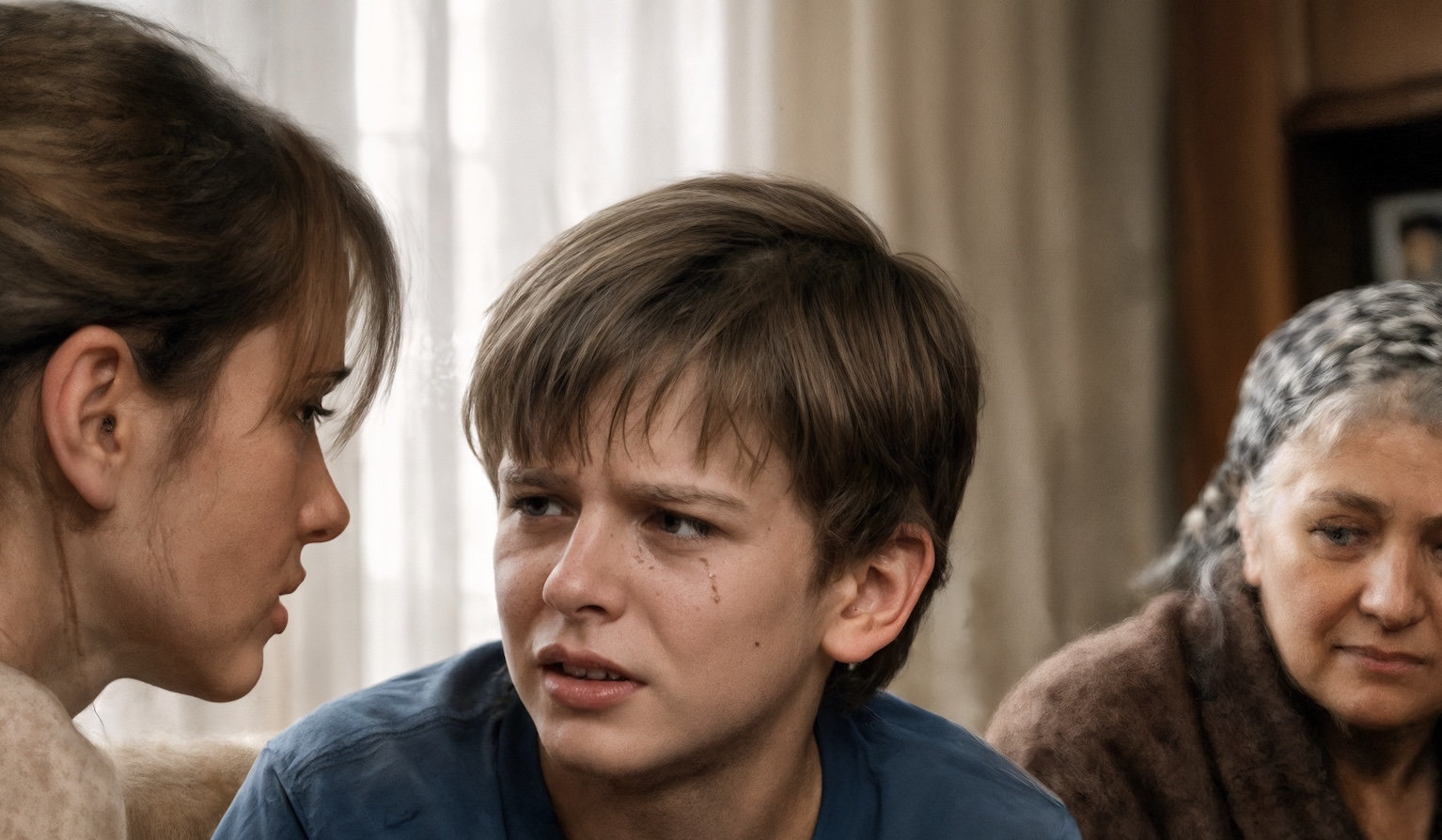
He turned toward her, eyes red.
“Mom… it was Grandma, wasn’t it?”
Irina didn’t know what to say. She didn’t want to poison her son against his grandmother, but she also couldn’t lie.
“I don’t know, Dima. But we’ll find out.”
The next morning Irina raised the subject again at breakfast. Oleg chewed a sandwich, getting ready for work. Valentina Ivanovna sat across from them, drinking tea.
“Oleg, we need to talk seriously about Dima’s money,” Irina began.
“Ira, we already talked about this,” her husband said tiredly.
“No, we didn’t. You brushed me off.”
“What do you want me to do? Search the whole house? I don’t know where it is.”
“Maybe you should ask your mother again?”
Valentina Ivanovna slammed her cup down.
“Oleg! Do you hear how she talks to me? She’s accusing me of theft!”
“Ira, enough,” Oleg said, lifting a hand for silence. “Mom didn’t take anything. Stop it.”
“How do you know?”
“Because she’s my mother! And I trust her!”
Irina clenched her fists under the table. Oleg stood, grabbed his bag, and headed for the door. Valentina Ivanovna shot Irina a triumphant look and returned to her tea.
Irina sat there, bitterness swelling in her chest. Her husband hadn’t even tried to understand—he immediately took his mother’s side. And his mother behaved as if nothing had happened.
Irina stood, cleared the table, and went to Dima’s room. He was getting ready for school, looking crushed.
“Dima, are you feeling okay today?”
“Yeah, Mom. Just upset.”
“I understand. But we will buy you that computer. I promise.”
He nodded, but there was no light in his eyes.
That evening, after everyone retreated to their rooms, Irina heard Dima go into the kitchen. She followed him. He stood by the window, staring into the dark courtyard.
“Dima, what’s wrong?”
He turned around. His face was serious—too serious for a child.
“Mom, Grandma took it. I know.”
“How do you know?”
“She told me. When you left for work. She said she’d borrow it for a while and pay it back when she got her pension. I didn’t want to say yes, but she said she really needed it. That she had problems. And that I should help her because she’s old.”
Irina went still. So Valentina Ivanovna really had taken the money—and she’d made her grandson keep quiet.
“Why didn’t you tell me right away?”
“I thought she’d return it. But a week passed and she said nothing. And when you asked, Grandma started yelling. I got scared.”
Irina hugged him. Dima pressed against her, and she felt his shoulders shaking.
“You’re not to blame, sweetheart. Grandma did something wrong. And we’ll fix it.”
“How?”
“I’ll talk to her. And to Dad. I promise.”
Dima nodded. Irina walked him back to his room and put him to bed. Then she returned to the kitchen and sat at the table, hands trembling with anger. Valentina Ivanovna hadn’t just taken the money—she’d manipulated a child, forced him into silence, then threw a tantrum and accused Irina of slander.
Irina got up and went to her mother-in-law’s room. She knocked. Valentina Ivanovna opened the door, scowling.
“What now?”
“Dima told me. You took the money and promised to return it.”
For a split second her mother-in-law’s face twitched, but she recovered quickly.
“So what? I’ll take it and I’ll return it. What’s the problem?”
“The problem is you lied to a child. And made him keep quiet.”
“I didn’t make him do anything! I asked for help! I needed money urgently!”
“For what?”
“That’s none of your business!”
“Valentina Ivanovna, you have a deposit. Withdraw from it if you need cash.”
“The deposit is for old age! I’m not touching it!”
“But you can touch a child’s money?”
Valentina Ivanovna folded her arms.
“I’ll return it when my pension comes. It’s only a week—what’s the big deal?”
“You’ve already been ‘waiting a week.’”
“My pension was delayed! Not my fault!”
Irina turned and went to the bedroom. Oleg was lying on the bed watching TV. When he saw her, he raised his eyebrows.
“What happened?”
“Your mother took Dima’s money. She admitted it.”
Oleg sat up.
“Took it how?”
“She asked him for a loan. Promised to return it when she got her pension. A week has passed—nothing.”
Oleg was quiet for a moment, then sighed.
“If she said she’ll return it, she will. Mom doesn’t lie.”
Irina stared at him. Did he really think this was fine?
“Oleg, she took money from a child. From a ten-year-old. Is that normal to you?”
“Ira, Mom isn’t rich. She needed help. Dima is her grandson. He could help.”
“He saved for six months! For his dream! And your mother simply took it all!”
“She’ll pay it back.”
“When?”
“I don’t know. Soon.”
Irina exhaled slowly. The conversation was going nowhere. Oleg couldn’t see the problem. In his world, his mother was always right—no matter what she did, he would justify it.
Irina lay down with her back to him, facing the wall. Oleg kept watching TV like nothing had happened. And Irina lay there thinking about what to do next. Her mother-in-law wouldn’t return the money—Irina could feel it. Valentina Ivanovna would invent one excuse, then another, and Oleg would protect her, as always.
Irina realized the only solution was to act on her own.
The next morning she woke up early, while Oleg and Dima were still asleep. She got dressed, took her bag, and left the apartment. She headed to the building where Valentina Ivanovna used to live. The apartment had been sold two years ago, but the neighbors were still the same. Irina climbed to the fifth floor and rang the bell of the apartment across from Valentina Ivanovna’s old place.
A woman in her seventies opened the door. She recognized Irina and smiled in surprise.
“Oh, Irочка! What brings you here? Come in, come in!”
“Hello, Tamara Fyodorovna. Sorry it’s so early. Could I talk to you?”
“Of course, dear. Come on in—I’ll put the kettle on.”
Irina sat at the small kitchen table. Tamara Fyodorovna set the kettle on the stove and brought out cookies.
“How are you? And how’s Valentina Ivanovna?”
“That’s exactly what I wanted to ask,” Irina paused. “Tamara Fyodorovna, you lived next door to her for a long time. Tell me honestly—did Valentina Ivanovna ever have money problems?”
“Problems?” the neighbor raised her brows. “What problems? Valya always had money. Your father-in-law—may he rest in peace—earned well. And she sold the apartment for a good price too. Two and a half million, I think.”
Irina nodded. That matched what she knew.
“And did she ever complain about not having enough?”
“Oh please!” Tamara Fyodorovna laughed. “She used to brag about how much she’d saved. Said she’d have a comfortable old age.”
“Then why does she keep asking us for money?”
The neighbor hesitated, then leaned closer.
“I’ll tell you straight, Irina. Valya is used to living off other people. Always has. If she can avoid spending her own money and take someone else’s—she will. I remember one neighbor lent her money. Valya promised to return it, but never did. Just kept making excuses.”
Irina clenched her hands. So it wasn’t the first time. Her mother-in-law simply took what she wanted and hid behind pity.
“Thank you, Tamara Fyodorovna. You really helped me.”
“Anytime, dear. Take care of yourself. And keep an eye on Valya—she’s not an easy person.”
Irina said goodbye and left. Now it was clear. Valentina Ivanovna wasn’t a poor pensioner—she was saving her own money while feeding off the kindness of her son and daughter-in-law.
Irina went home. Oleg had already left for work; Dima was getting ready for school. Irina walked him out, then went into her mother-in-law’s room. Valentina Ivanovna was in her chair, knitting.
“Valentina Ivanovna, we need to talk seriously.”
“About what now?” the older woman didn’t even look up.
“About money. Yours and Dima’s.”
“I told you—I’ll return it when I get my pension.”
“You already got your pension. Two days ago. I saw you leaving the bank with an envelope.”
Valentina Ivanovna froze. The needles stopped moving. She lifted her head slowly.
“So what? My pension is small. I need it for medicine.”
“Valentina Ivanovna, you have more than two million on deposit. Tamara Fyodorovna told me.”
Her mother-in-law’s face flushed red.
“So you were spying on me?!”
“I wanted the truth. And now I have it. You’re not poor. You’re just used to taking other people’s money.”
Valentina Ivanovna sprang up.
“How dare you! I’m your husband’s mother—I have a right to help!”
“Help is for someone who truly needs it. You’re taking advantage of us.”
“Get out of my room!”
“This isn’t your room. It’s a room in our apartment. And I want you to return Dima’s money. Today.”
“Not a chance!”
Irina stood gripping the edge of the wardrobe. Her hands shook, her face went pale—but her voice stayed firm.
“Valentina Ivanovna, if you don’t return the money, I’ll make sure you no longer have access to our home.”
“What?! I live here!”
“You lived here. Until today.”
Irina turned and walked out. Her mother-in-law shouted after her, but Irina didn’t listen. She went to the bedroom, opened the drawer, and took out the spare set of apartment keys—the ones Valentina Ivanovna had. She slipped them into her pocket.
That evening, when Oleg came home, Irina met him in the hallway.
“We need to talk. Seriously.”
“Ira, I’m tired. Tomorrow.”
“Today. Now.”
Oleg sighed, walked into the bedroom, and sat on the bed. Irina closed the door.
“Oleg, your mother is not going to give Dima’s money back.”
“How do you know?”
“Because she has no reason to. She has more than two million rubles on deposit. She isn’t poor.”
Oleg was quiet, then shrugged.
“So what? It’s her money. For old age.”
“But taking money from a ten-year-old is fine?”
“Ira, it’s only eight thousand. It’s not the end of the world.”
“For Dima, it is. He saved for six months. He dreamed of that computer. And your mother just took it—and made him keep it secret.”
“Mom will return it. Just wait.”
“She won’t, Oleg. Not ever. She’s used to taking what belongs to other people. She’s lived like that her whole life.”
Oleg stood and went to the window, staring into the dark courtyard. Irina kept going.
“I’m taking her keys. Valentina Ivanovna will no longer enter our apartment without being invited.”
“Ira… are you serious?”
“Completely. Your mother stole from our son. And you’re excusing it.”
“I’m not excusing it! It’s just… she’s my mother.”
“If she wants to come over, she can ask first. Like a guest.”
Oleg turned to her.
“And if I don’t agree?”
“Then I’ll buy our son a computer with my own money. And you can handle your mother yourself. But she won’t get another ruble from me. Not one.”
Oleg looked at her for a long moment. Then he lowered his gaze.
“Fine. Do what you think is right.”
Irina walked out and went to Dima. He was at his desk doing homework. When he saw her, he looked up.
“Mom, did something happen?”
“No, sweetheart. Everything’s okay. Tomorrow after school we’re going to the store. We’ll buy you your computer.”
Dima’s eyes lit up.
“Really?!”
“Really. You earned it.”
“And the money? Grandma still didn’t return it?”
“She didn’t. But that’s not the point. The point is you should know your effort matters. And I will always stand up for you.”
Dima hugged her. Irina stroked his hair and held him close. The resentment inside her still burned, but seeing her child smile felt like relief.
The next morning, before work, Irina went to her mother-in-law again. Valentina Ivanovna sat in the kitchen drinking coffee. She frowned at Irina.
“What do you want now?”
“The keys to our apartment. Give them to me.”
“What is that supposed to mean?”
“It means that starting today, you won’t enter our home without an invitation. If you want to visit, you ask in advance.”
“Have you lost your mind? Oleg will never forgive you for this!”
“Oleg agrees. Ask him yourself.”
Valentina Ivanovna turned pale. She handed over the keys.
“You’ll regret this.”
“I don’t think so.”
Irina turned and left the kitchen. Valentina Ivanovna stayed at the table, her face twisted with rage.
That evening Irina took Dima to an electronics store. He chose carefully, comparing specs, asking the salesperson questions. In the end he picked a solid mid-range model. Irina paid, and they came home with a large box.
Dima was over the moon. He unboxed the computer, connected the wires, installed programs. Irina stood nearby watching. He turned to her.
“Mom, thank you! You’re the best!”
“Dima, remember this: your effort and honesty will always matter more than other people’s promises. You saved for your dream on your own—and that has value. Someone stole your money, but what matters is that you didn’t give up.”
Dima nodded and hugged her again. Irina smiled and patted his head.
Oleg came home late. He saw the new computer in Dima’s room and stopped in the doorway.
“You bought it?”
“Yes. With my money.”
“Ira…”
“Oleg, don’t. I did what I thought was right. Your mother stole from our son, and I won’t let it happen again.”
Oleg stayed silent, then nodded.
“Okay. Maybe you’re right.”
Irina didn’t respond. She went to the kitchen to cook dinner. Oleg remained in the hallway, staring at the closed door of their son’s room.
For a few days Valentina Ivanovna sulked. Then she tried to act as if nothing had happened.
“Irishka, maybe that’s enough pouting? I didn’t do it out of malice. I just needed money.”
“I’m not pouting,” Irina replied. “I set boundaries. You won’t take anything without permission again.”
“I didn’t take anything! I borrowed it from my grandson!”
“You took it without my consent. From a child. That’s wrong.”
“Fine—I’ll return it!”
“Don’t. Consider it the last money you ever take in this house.”
Valentina Ivanovna started to argue, but Irina turned back to the stove, making it clear the conversation was over. Her mother-in-law lingered, then left.
From that day on, Irina stopped giving her mother-in-law cash. She bought groceries only for her own family. She no longer paid for Valentina Ivanovna’s medicine. The older woman complained, cried to her son—but Oleg stayed quiet. He had finally understood that his wife was right, and for the first time in a long while, he didn’t take his mother’s side.
Dima treated his new computer like treasure. He no longer kept savings in a tin. Irina bought a small safe and put it in her bedroom. If Dima received money as a gift, he placed it there—behind a secure lock, under his mother’s key.
Months passed. Valentina Ivanovna stopped asking for help. She realized her daughter-in-law wouldn’t fall for pity anymore. When she needed something, she began withdrawing from her deposit. Irina saw her come back from the bank with shopping bags, but said nothing. Let Valentina Ivanovna live on her own money—fair is fair.
Dima grew older and more independent. He learned a hard lesson: don’t entrust money to people who don’t respect someone else’s work—and that a mother will protect her child, even if she has to stand against everyone.
Irina no longer felt guilty. She had done the right thing. She protected her son and refused to let her mother-in-law manipulate their family. It was difficult—but necessary.
Oleg began spending more time with his son. He finally understood that he couldn’t always shield his mother and pretend not to see the truth. The family atmosphere improved. Valentina Ivanovna stopped being the center of the universe that everyone revolved around.
And Irina learned how to say no—not angrily, not cruelly, just firmly. Because she knew that if she didn’t protect her family, no one else would.