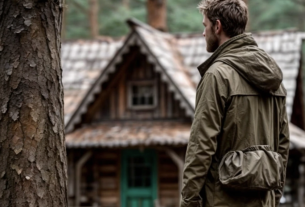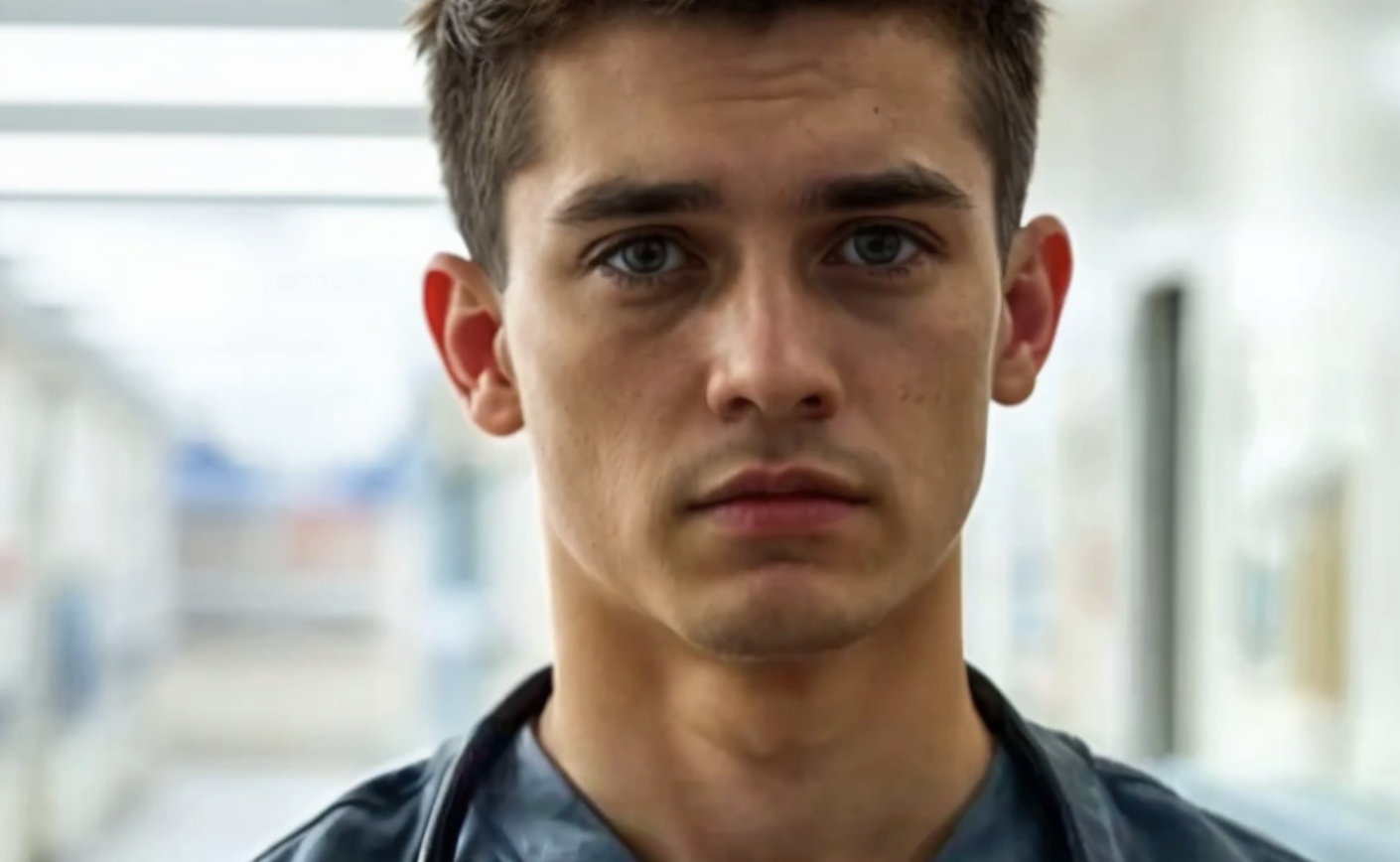
Dad, are you serious? I’m not going to work here!”
“You are, Pasha. And don’t even think about resisting. If you keep this up, I’ll just turn my back and leave you to deal with it yourself. Think about how much trouble you’ve already caused.”
Pavel snorted and looked away. What had gotten into his father? Before, everything had been simpler: he could pull stunts knowing his dad would always bail him out—even if it meant calling the chief of police, the family’s best friend. But now the old man had gone completely off the rails.
This time Pashka really had overdone it: he’d broken a cop’s nose and taken a patrol car for a joyride that ended in a crash. Apparently, his father had worked out some kind of special punishment with the police chief.
Pasha sighed, staring at the hospital’s gray building. Once—five years ago—he’d graduated from medical school. But his final year had turned into one long party: his father’s money gave him total freedom to drink, celebrate, and waste time. His childhood dream of becoming a doctor had faded into nothing, replaced by mindless fun.
“So what am I supposed to be here? I hope at least the chief physician?” he tried to joke.
“Wrong, son. You’ll start at the very bottom—as an orderly. Maybe you’ll even find yourself a nice local girl who’ll teach you something worthwhile, not just how to have a good time.”
“What?! Dad, are you kidding me? Carry bedpans or something?”
“If you have to—then bedpans. Ever since you started spending your life on bar glasses, you haven’t done a single useful thing. Remember: one complaint from the department head—and you’ll end up behind bars. By the way, your mother still doesn’t know what you’ve become… and it’s better she never finds out.”
Those words hit Pasha like a bolt from the blue. He could feel anger and resentment boiling inside him.
“So you think there’s no fixing me? That I’m hopeless?”
“Exactly. You’re not just lazy—you’re a stupid lazy man. You don’t have real friends, only freeloaders. I never thought my son would turn out to be such an empty person.”
Ivan Nikolaevich turned around and drove off, leaving his son stunned. Hurt mixed with confusion—how had their formerly warm relationship turned into cold condemnation?
Nina Sergeyevna, who had accidentally overheard the conversation through a window, fell into thought. She hadn’t meant to eavesdrop, but when she heard Ivan Nikolaevich’s name, she stayed. In exchange for arranging this “employment,” he had donated new equipment to the hospital.
“Another rich spoiled brat who wants everything right away,” she thought. People like that had always baffled her: endless opportunities, and total indifference to life. He could have studied abroad, built a business, become somebody. Instead, he chose an idle, party-filled existence.
Nina herself had clawed her way up through hardship her whole life. She’d grown up in poverty, with parents who drank, while she took care of her younger sisters and brothers. She worked, studied evenings, saved even on food. Now, at forty, she was the hospital’s chief physician—but she’d paid a steep price: no family, no close relationships.
“Fine. Let him work. Though he won’t last long,” she decided, watching the new employee. He was around thirty, and apart from parties and entertainment he didn’t seem to understand anything. What was the difference between their stories? Just their choices.
The workday ended. Nina took off her white coat and glanced down the calm hospital corridors. The day had passed without incident. She’d noticed the new orderly a few times—young, confident, and already drawing the attention of several nurses. “Another pretty boy who’ll turn naive girls’ heads,” she thought with a faint sadness. Men like him rarely became reliable husbands.
Her longtime friend Olga was waiting for her at a café. They often met there after work to talk through everything that had piled up over the week. Olga, like Nina, had devoted her life to her career: she studied, worked relentlessly, and had become a well-known lawyer in the city. Neither of them had found time for a personal life or children. Olga often joked that they were somehow “the wrong kind” of women.
Pulling on her fur coat, Nina stepped out of her office. She hadn’t even taken two steps when someone suddenly slammed into her, nearly knocking her over. She gasped—but strong hands caught her.
“I’m sorry!” a voice rang out—far too cheerful for an accidental collision.
Nina подняла глаза and met the gaze of two bright brown eyes that didn’t show a hint of remorse. If anything, they looked at her with undisguised interest.
“What do you think you’re doing?” she snapped.
It was Pasha—the new orderly. He slowly looked her up and down and even let out a low whistle.
“Who would’ve thought you could meet beauties like you in a backwater like this! My name’s Pasha—what’s yours?”
Nina flushed at his nerve. His hands were still holding her too tightly.
“Let go of me. Now!”
She pulled free and was about to scold him, but he just smiled.
“First time I’ve seen anger make a woman prettier. Your eyes—someone could get burned. So what are you doing tomorrow evening?”
Nina froze. She was the chief physician! How dare he talk like that? But then she remembered: she was wearing an expensive fur coat and high heels, and she didn’t have a badge showing her position.
“Go do your job,” she said coldly, hurrying toward the exit, feeling his stare on her back.
—
Olga noticed her embarrassment immediately.
“What happened, Nina?”
“Nothing special,” Nina tried to wave it off.
“Don’t lie to me. I know you. Your eyes are sparkling, your cheeks are on fire… Looks like you fell in love!”
Nina laughed.
“Olya, are you out of your mind?!”
“Alright, maybe I got carried away,” Olga smiled. “But that’s exactly what it looks like.”
Nina told her about meeting the new orderly.
“So what? At least is he handsome?” Olya asked.
“Oh, please… He’s barely thirty,” Nina snorted.
“So what? These days ten years is nothing. Besides, no one would ever guess you’re over thirty.”
“Olya, stop it. I don’t even want to think about it.”
“You’re wrong. We’re not that young anymore. It’s time to take everything you can from life while you still can.”
The next day Nina had a day off. Usually she spent them at the hospital—checking paperwork, planning, staying on top of everything. Her family had long since scattered: her siblings had settled in different cities, and her parents died early, worn out by endless problems with alcohol. Work had become the only meaning in her life.
That morning Nina woke up with a strange feeling. For the first time in ages, she didn’t want to run to work. Olga’s words floated through her mind: “You need to live for yourself too.” And she decided that today would be that day.
She went to a beauty salon in the morning and finally did something she’d wanted for years—changed her hairstyle. Then she headed to a mall and bought a few things she’d been dreaming about: a playful dress, a bright blouse, and a couple of little extras. Walking out of the store with three big bags, she nearly ran into Pasha.
“Miss, where are you looking?” his voice sounded right behind her.
Turns out she’d gotten distracted and stepped into the roadway instead of staying on the sidewalk. When Nina turned around, she saw his wide grin.
“It’s you? I didn’t recognize you! Something happened since yesterday… You’ve become even more gorgeous,” he declared, grabbing her shopping bags.
Before she could object, Pasha was already walking beside her carrying everything.
“How were you even hauling all this? This is a whole wardrobe!”
Nina felt flustered. They reached her car, but her Beetle was tightly boxed in by other vehicles. No owners in sight.
“Call a taxi?” Pasha offered.
“No, I’ll manage,” she tried to refuse.
But he said firmly, “I’ll drive you.”
When Nina tried to take her bags back, he looked her straight in the eyes and asked, “What—are you afraid of me?”
Heat rushed over her like a wave.
“What are you even talking about!”
And somehow she was already sitting in his SUV, not understanding how she’d ended up in this situation.
“Maybe we’ll have dinner?” Pasha suddenly suggested.
“No,” she answered shortly.
“Why? Is it really that scary?”
She hesitated, not knowing what to say. He stopped by a restaurant, and after her uncertain little wave of the hands, they went inside.
—
Three months later Nina watched Pasha sleeping and marveled at how much he had changed her life. The nine-year age difference now felt insignificant. He’d become an inseparable part of her world, though a quiet anxiety always glowed inside her: what would his strict father say?
At work, colleagues whispered, but Nina didn’t care. The only thing that worried her was Ivan Nikolaevich’s reaction. Pavel had said his father could be stubborn—and even dangerous—when he was angry.
And yet Pasha turned out not to be such a bad person. He kept working as an orderly despite his status. Patients loved him for his kindness and easy conversation; he’d become the heart of the hospital.
In a month his “punishment” was supposed to end. Nina understood that maybe their story would end with it. But she was grateful to fate for letting her feel something real.
And recently she’d learned something else: she was going to be a mother. Pressing a hand to her stomach, Nina smiled. Now she had something priceless—something that would stay with her forever.
The goodbye was short and awkward. Pasha appeared in her office unexpectedly.
“Nina, I filed everything. I’m ready to leave.”
“Alright. I wish you luck,” she answered, trying to keep her voice steady.
He looked at her intently.
“You’re saying it like we’ll never see each other again.”
Nina barely held back tears.
“Won’t we? Your correction period is over. We have different lives, Pasha.”
“Ninochka…”
“Just go. Don’t make this harder. Long goodbyes don’t help anyone.”
Pasha left in silence, and Nina sank into her chair, hiding her face in her hands.
—
Two days later, in the evening, the doorbell rang. Ivan Nikolaevich stood on her doorstep, his gaze harsh.
“What happened to Pasha?” Nina asked anxiously, letting him inside.
“Pasha is fine. Except that he’s lost his mind and decided to marry a woman old enough to be his mother,” he snapped.
Nina froze, trying to process what she’d heard. Her heart started pounding.
“I don’t understand… Who are you talking about?”
“Don’t pretend you don’t know! You’re a grown, experienced woman, and he’s just a boy. Why are you playing these games? For money? Or just for fun?”
Her indignation flared into anger.
“How dare you?!”
But Pasha’s father cut her off.
“If I ever see you next to my son again, you’ll lose your job. And no one will ever hire you again!”
Nina felt the world spin. She swayed—and fainted.
—
She came to from a gentle touch on her cheek. Pasha was in front of her, eyes full of worry.
“Hi. How are you? Dad and I almost fought. He tried to help, but I thought he was hurting you.”
“He’ll never forgive you,” she whispered.
“He already did. He admitted he thought there was nothing serious between us. He promised he’d come by later and apologize to you personally.”
Nina managed a weak smile, but doubts still tore at her.
“Why are you here, Pasha?”
“To be with you,” he said without hesitation. “Marry me.”
She shook her head.
“That’s impossible. We’re too different.”
“Is nine years really a reason to refuse love?”
“When you’re forty, I’ll be fifty,” she argued.
He laughed.
“Then I’ll grow a beard so I look older!”
Despite how serious the moment was, Nina couldn’t help smiling.
“Pasha…”
“Yes?”
“I’m pregnant. We’re going to have a baby.”
He stared at her for a long time, then quietly said:
“I’ll do everything to make you the happiest woman. I promise—I’ll be the perfect husband