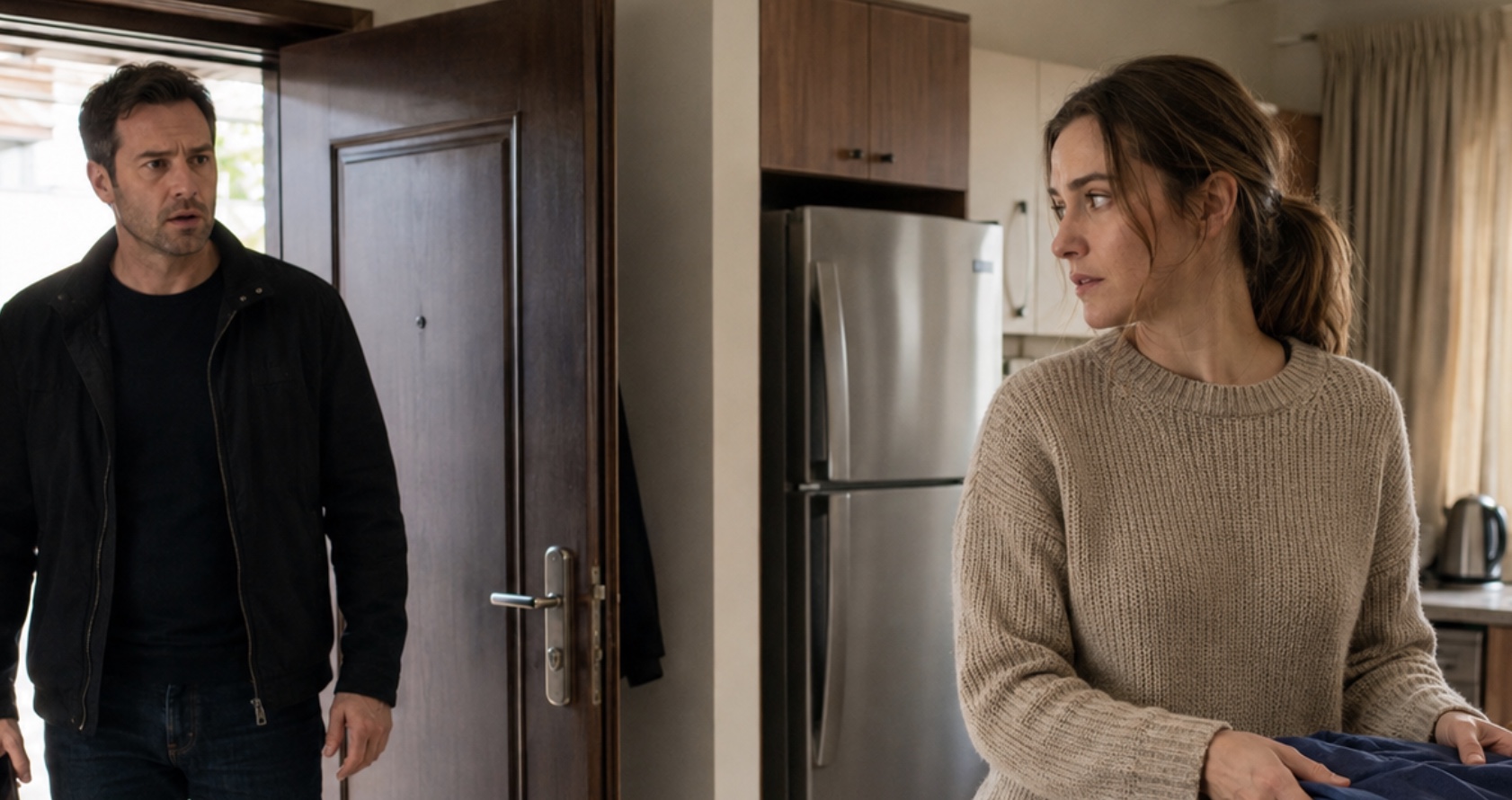
Marina hadn’t slept all night. The key finally turned in the lock at seven in the morning. By then, she had already made up her mind, and the breakfast waiting on the table was no longer just breakfast.
Marina heard the neighbors’ dog barking through the wall. The clock on the microwave read 3:17 a.m. His side of the bed was empty, the sheet cold, the pillow untouched.
She rolled onto her side and stared at her phone. Not a single new message. The last one from Gleb had arrived at nine the previous evening:
“I’ll be late. Don’t wait up.”
Two short sentences. He hadn’t even bothered with punctuation.
But she had waited. Of course she had. After twelve years, waiting for him had become a habit, and breaking that habit seemed harder than giving up cigarettes—the cigarettes she had quit when she became pregnant with Polina.
She got out of bed at five. Not because she had rested, but because lying there had become unbearable. Her body ached from staying still, and the same thoughts kept circling in her head like a scratched record.
Where was he?
Who was he with?
Why hadn’t he called?
A small night-light glowed above the stove in the kitchen. Orange. Marina had bought it on sale the previous year, and Gleb had laughed.
“Why do we need a night-light in the kitchen? What is this, a restaurant?”
She hadn’t argued. She had simply hung it up.
Now that same little light kept her company at three in the morning while her husband was nowhere to be found.
She switched on the kettle without thinking. The rushing water sounded deafening in the silent apartment.
Polina was asleep in her room with the door closed. She was eleven now. She no longer woke at every little sound the way she once had.
Or maybe she did wake up and simply pretended she hadn’t.
Children learned to pretend very quickly.
Marina opened the refrigerator.
Eggs. Milk. A packet of butter.
There was flour in the cupboard.
She took out an old mixing bowl with a chipped rim, the one Gleb had brought back from a business trip to Kazan eight years earlier. Back then, he still brought things home from his trips. Magnets, mugs, once even a scarf.
Then he stopped.
Her hands began making batter almost on their own.
Flour. Egg. Milk. A pinch of salt.
The whisk tapped rhythmically against the sides of the bowl.
Marina wasn’t thinking about the recipe.
She was thinking about what she would say when he finally came home.
If he came home.
The first pancake came out crooked. She tossed it onto a plate and poured another ladleful of batter into the pan.
The pan hissed. Butter crackled. Soon the kitchen filled with the warm smell of pancakes—the kind of smell that, when she was a child, had made her run straight to the table.
The second pancake was perfect.
So was the third.
By the sixth, Marina had settled into a rhythm: ladle, turn of the wrist, hiss, pause, flip.
She counted.
Not the pancakes.
She counted how many times during the past three months Gleb had come home after midnight.
Seven.
No. Eight.
If she included that Tuesday when he had claimed he had stayed the night at Kostya’s place because they had been drinking.
Later, Kostya’s wife, Lena, had written to Marina in the mothers’ group chat:
“Your Gleb isn’t here. My Kostya is at home with a fever.”
Marina hadn’t challenged her.
She had simply replied, “My mistake. Thanks.”
Then she closed the chat.
She hadn’t confronted Gleb either.
He came home around lunchtime that day smelling of someone else’s fabric softener.
Not theirs.
At home they used lavender Lenor.
This was citrusy and sharp, almost like the smell inside a hair salon.
“How are you?” he had asked casually while taking off his sneakers in the hallway.
“Fine. There’s soup on the stove.”
“Where’s Polina?”
“At Sveta’s.”
He nodded and went to take a shower.
Marina remained in the hallway, staring at his sneakers.
White.
Clean.
He never cleaned his sneakers.
But that day they were spotless.
The stack of pancakes kept growing.
Marina took sour cream from the refrigerator, then the cherry jam she had made in August, followed by a jar of honey.
She sliced an apple into thin pieces and arranged them carefully like a fan.
Then she set out two cups.
No.
Three.
Polina would be having breakfast too.
A moment later, Marina reconsidered and put the third cup back in the cupboard.
Polina did not need to witness what Marina was planning to say.
Outside, dawn slowly began to brighten the sky.
A gray February morning, reluctant and colorless.
A street cleaner scraped a shovel across the pavement. Somewhere farther away, a garbage truck rumbled.
Marina poured herself tea and sat down.
The table looked beautiful.
She hadn’t set it like this in years.
There was a white tablecloth—the one she usually saved for birthdays and New Year’s Eve. A plate stacked high with pancakes sat in the middle. Beside it were three small bowls filled with sour cream, jam, and honey.
The apple slices were arranged perfectly.
Napkins were folded neatly.
She had even placed a candle on the table, a tiny one in a ceramic holder Polina had made in an art class in third grade.
She didn’t light it.
The candle holder simply stood there.
Marina drank her tea and waited.
Her throat felt dry even though the tea was hot.
Her hands smelled of batter and melted butter.
She caught sight of her reflection in the dark window and hardly recognized herself.
A woman with her hair tied back, dressed in a gray robe, dark circles under her eyes.
She was thirty-five.
At that moment she looked forty.
Or maybe that was just how she felt at five in the morning.
A souvenir magnet from Kazan was stuck to the refrigerator.
The Kul Sharif Mosque, its bright blue domes against a white background.
The colors had faded over the years.
But the magnet still held firmly.
Just like she had.
At six-thirty, Polina woke up.
Marina heard the slap of bare feet against the laminate floor, then the bathroom door creaking, followed by running water.
“Mom? Why are you awake?”
Polina stood in the kitchen doorway, squinting against the light.
Her dark hair stuck out in every direction. Her unicorn pajamas had become too small for her, exposing her ankles.
“Couldn’t sleep. I made pancakes. Want some?”
“Wow. Why?”
Marina smiled.
Or tried to.
“No reason. I just felt like it.”
Polina sat down and picked up a pancake. She rolled it into a tube, dipped it into sour cream, and ate quietly while looking over the table.
“It looks nice. Like New Year’s.”
“Yeah.”
“Is Dad coming home?”
The question remained suspended between them.
Marina took a sip of tea that had already gone cold and placed the cup carefully inside the faint circular stain on the tablecloth.
“He’ll come.”
“When?”
“Soon.”
Polina studied her mother with that look that always made Marina uncomfortable.
A grown-up look in a child’s face.
Polina understood a lot.
Probably more than a child should.
“Mom, your eyes are red.”
“Allergies.”
“In February?”
“It happens.”
Polina didn’t ask anything else.
She finished her pancake, took another, and covered it with cherry jam.
Juice ran down her fingers, and she licked it off the way she had when she was five.
Some gestures never disappeared.
Marina sent her daughter to get ready for school.
She cleared away the third cup she had eventually taken out again when Polina woke up and returned it to the cupboard.
She wiped the table around the plates.
Straightened a napkin.
Then she opened a drawer in the dresser and took out a blue folder with a snap button.
It had been lying there for three weeks.
Marina placed it on the chair beside the table.
Not on the table itself.
On the chair.
She didn’t want him to see it immediately.
There were four things inside.
A divorce petition.
A copy of their marriage certificate.
An official household registration extract.
And a letter.
Not a legal document.
Just an ordinary sheet torn from a notebook, covered in her handwriting.
It had taken her two nights to write it.
She tore up the first version because it sounded too angry.
She destroyed the second because it sounded pathetic.
The third was exactly what she wanted.
Calm.
Like the body temperature of a healthy person.
Thirty-six point six degrees.
“Gleb, I’m not going to ask where you were. I already know. And you know that I know. We both stay silent, and because of that silence, this apartment has started to feel too small. Polina hears it too, even though we convince ourselves she doesn’t. I don’t want her growing up in a home where silence means more than words. I don’t hate you. I just can’t keep pretending anymore.”
Marina had read the letter at least twenty times.
Every time, she found a word she wanted to change.
But she left it untouched.
Because once you began changing words, you could keep changing them forever.
Polina left for school at 7:45.
Marina heard the front door close and then the elevator humming as it descended.
Silence returned.
Thick and sticky, like the honey in the jar on the table.
Marina sat in her usual place and waited.
This waiting felt different.
It wasn’t anxious like the night had been.
She had already made her decision, and that made her calmer.
It felt like waiting outside an exam room after learning everything you possibly could.
Nothing could be changed anymore.
Either you knew the answers or you didn’t.
Marina knew.
She knew Gleb was seeing Oksana from another department.
Short, red-haired, with a small mole above her upper lip.
Marina had seen her at the company party in December.
They had stood together beside a tray of canapés.
“Your Gleb is so funny,” Oksana had said. “He’s always joking.”
And Marina had thought:
He doesn’t joke at home.
At home he stays quiet, stares at his phone, and goes onto the balcony for a cigarette every half hour.
Marina hadn’t discovered the affair by checking his phone or reading his messages.
She discovered it through smell.
That citrus fabric softener.
At first it appeared on his shirts once a week.
Then twice.
Then three times.
Marina washed his clothes herself.
Every time she caught that unfamiliar scent, she said nothing.
Eventually, she stopped washing them.
She simply folded his shirts and left them on the armchair.
Gleb didn’t notice.
Or maybe he did but chose not to mention it.
On Sunday he finally put them in the washing machine himself, silently, without looking at her.
That was the worst part.
Not the cheating.
Not even the lies.
It was the fact that he had stopped making an effort to lie convincingly.
The key turned in the lock at 7:12.
Marina heard him moving around in the hallway, taking off his shoes and hanging up his jacket.
Then came footsteps.
Heavy.
Slow.
The footsteps of a man walking toward something while trying to decide what to say.
Gleb appeared in the kitchen doorway.
His shirt was wrinkled, the collar bent on one side.
Dark shadows sat beneath his eyes.
Two days’ worth of stubble covered his face.
He was six feet tall, but that morning he somehow looked smaller.
As if the night had compressed him.
“Hi,” he said.
“Hi.”
“You didn’t sleep?”
“No.”
His gaze moved to the table.
Pancakes.
Jam.
Honey.
Apple slices arranged like a fan.
White tablecloth.
His expression changed.
Not suddenly.
Slowly, the way a cloud passes in front of the sun.
“What’s all this?”
“Breakfast.”
“I can see that. What’s the occasion?”
Marina stood.
She pulled out the chair for him—the same chair where the folder had been.
While he was taking off his shoes, she had quietly moved the folder to the windowsill.
Not yet.
It was still too early.
“Sit down. The pancakes are getting cold.”
He sat.
He took one pancake and placed it on his plate.
Added sour cream.
Took a bite.
He chewed while watching her.
Marina watched his hands.
Large hands with short fingers.
A scratch across the knuckle of his index finger.
She knew those hands by heart.
Twelve years.
“They’re good,” he said.
“I know.”
“Are you angry?”
She didn’t answer.
She poured him tea and placed the cup carefully in front of him, turning the handle to the right the way he preferred.
“Marina.”
“What?”
“I stayed at Kostya’s. We had drinks. It got late.”
She leaned back in her chair.
Kostya.
Again.
Reliable old Kostya, always ready to provide an alibi without even knowing he was being used as one.
“Okay,” Marina said.
“You don’t believe me.”
“I said okay.”
Gleb put down his fork.
The sound of metal against ceramic was sharp and brief.
“What’s wrong with you?”
“Nothing. Eat.”
So he ate.
Quietly.
Concentrating on his food like a man who knew something was wrong but couldn’t quite understand how serious it was.
Marina sat opposite him, holding her cup with both hands.
The tea had long gone cold, but she didn’t pour herself another.
She needed something to hold.
Outside, morning had fully arrived.
Gray February light filled the kitchen, making everything look sharper.
The creases in his shirt.
Crumbs on the tablecloth.
The scratch across the tabletop they had repaired together when Polina was four and had decided to draw on the table with a fork.
“Do you remember when Polina scratched the table?” Marina suddenly asked.
Gleb looked up.
“What table?”
“This one. With a fork.”
He looked down and ran one finger across the mark.
“Oh. Yeah. I remember. You cried.”
“Not because of the table.”
“I know. Because we had just finished renovating.”
“No. Not because of the renovation either.”
He waited.
Marina said nothing.
Behind the wall, the neighbors’ dog barked again, muffled and short, almost as though it were barking in its sleep.
Marina had cried that day because she had suddenly understood:
This was happiness.
A little daughter.
A new kitchen.
A husband filling a scratch with putty while complaining that the color didn’t match.
An ordinary evening.
Polina eating pasta and swinging legs too short to reach the floor, singing some silly song about a hedgehog.
And Marina had cried because it felt so good.
Almost frighteningly good.
Because somewhere inside, she knew moments like that could not last forever.
She had been right.
“Gleb.”
“What?”
“I’m not going to ask where you were.”
He froze.
The cup stopped halfway to his mouth.
“I don’t have to ask because I already know. And you know that I know.”
Silence.
That same thick silence.
The honey sat heavy inside its jar.
Polina’s candle remained untouched.
“Marina, listen—”
“No. I’m talking now. You’re going to listen. For the first time in three months, you’re going to listen to me.”
He slowly placed the cup down.
Handle facing right.
Just as he always did.
“I didn’t sleep tonight. I also didn’t sleep three nights last week when you were ‘working late.’ Or the Friday before that. And then there was that Tuesday I never mentioned, when Lena messaged me and said Kostya was at home with a fever.”
His face changed.
He didn’t exactly go pale.
His mouth did.
His lips tightened until almost all their color disappeared.
“I wash your shirts, Gleb. Every week. And every week they smell like citrus fabric softener. We don’t use citrus fabric softener. We use lavender Lenor. Maybe you forgot.”
He said nothing.
The fingers of his right hand tightened around the edge of the table.
His knuckles turned white.
“I’m not going to make a scene. I’m not going to scream or smash plates. I didn’t make these pancakes for some dramatic performance. I made them because I couldn’t sleep and my hands needed something to do.”
Marina stood, crossed to the windowsill, and picked up the blue folder.
She placed it on the table beside the cherry jam.
“What’s that?”
“Open it.”
He opened the folder.
Marina watched him read.
First the divorce petition.
Then the copy of their marriage certificate.
Then the registration extract.
He spent a few seconds staring at each page as if he recognized the words individually but couldn’t connect them into meaning.
Then he took out the letter.
One notebook page covered in her small handwriting.
The handwriting he used to say he loved.
“Your letters look like beads,” he once told her. “Round and neat.”
He read for a long time.
Longer than one page required.
He must have read it twice.
When he finally looked up, his eyes were red.
Not from tears.
Something else.
Shame, perhaps.
Or anger at himself.
Marina didn’t know.
And she no longer wanted to know.
“Are you serious?”
“I stopped joking a long time ago. You just didn’t notice.”
“Marina, we can talk about this.”
“We are talking.”
“I mean really talk.”
“What’s unreal about this?”
He leaned back and rubbed his face with both hands.
Marina knew that gesture.
He always did it when he had no idea what to do.
“I don’t want a divorce.”
“And I don’t want to wash shirts that smell like another woman’s home.”
He flinched.
As if she had slapped him.
Yet she had spoken softly.
Almost in a whisper.
Sometimes quiet words hurt more.
“It isn’t what you think.”
“Gleb. Don’t.”
“Listen to me.”
“I’ve been listening to you for twelve years. Enough.”
She sat back down.
The pancakes were cold now.
A white film of hardened butter covered the pan she had left on the stove.
The honey glowed amber in the morning light.
It was beautiful.
And somehow that beauty made her want to howl.
“I’m not doing this to punish you,” Marina said. “I’m doing this because Polina asked me this morning when you were coming home. I told her ‘soon.’ And suddenly I felt disgusted with myself because I realized I’m lying to her the same way you lie to me.”
Gleb lowered his head.
His broad shoulders folded inward, as though he were trying to make himself smaller.
“She doesn’t have allergies in February,” he suddenly said.
“What?”
“You told her your eyes were red because of allergies. She asked, and you said allergies. But you don’t have allergies.”
“Were you listening?”
“I was outside the door. I came at seven, but I didn’t come in right away. I stood on the landing.”
Something shifted.
Not inside Marina.
Inside the situation itself.
He had been standing outside.
While she sat in the kitchen waiting for him, he had been on the other side of the door, waiting too.
“Why?”
“I didn’t know what to say.”
“And did you figure it out?”
“No.”
Marina let out a small laugh.
There was nothing joyful in it.
It tasted like cold tea.
“Well, neither did I. That’s why I wrote it down.”
She nodded toward the letter still in his hands.
He placed it on the table beside the jam.
A drop of cherry syrup slid from the spoon onto the white tablecloth and spread into a dark stain.
“I don’t need Oksana.”
Marina said nothing.
“I don’t need anyone. I’m an idiot, Marina. Just an ordinary idiot who doesn’t know what he’s doing with his life.”
“You’re a grown man, Gleb. You’re thirty-seven. ‘I don’t know what I’m doing with my life’ might have worked when you were twenty.”
“I know.”
“So what?”
“I don’t know what comes next. I really don’t.”
She looked at him.
At his hands lying flat on the table like the hands of a man surrendering.
At the crooked collar of his shirt.
At the stubble covering the scar on his chin from his military service—a story he had once shared only with her.
Twelve years.
Thousands of dinners.
Four renovations.
One daughter with dark hair and his habit of squinting at bright light.
One scratch across the kitchen table.
One faded magnet from Kazan.
“I can’t decide for you, Gleb. I’ve already decided for myself.”
“What did you decide?”
“The petition is in that folder. I’m filing it on Monday. If you have something you want to say, you have the weekend.”
He remained silent.
The dog behind the wall barked again.
Or maybe it was a dog in another apartment.
Sounds blurred together in the morning stillness.
“Two days,” he said.
“Two days.”
“What am I supposed to do in two days?”
“Decide who you are. My husband, or a man who spends nights with Oksana from another department and lies about being at Kostya’s.”
His jaw tightened.
The muscles along his cheeks became visible.
“How long have you known?”
“Long enough.”
“Why didn’t you say anything earlier?”
“What would you have done? Apologized, promised it would never happen again, and then started all over a month later?”
He didn’t answer.
Because they both knew the answer.
Yes.
That was exactly what would have happened.
Polina called from school at ten.
Marina stood beside the window, watching Gleb walk across the courtyard.
Without his jacket.
He had left it in the hallway.
Maybe he had forgotten it.
Or maybe he had simply walked outside without thinking about jackets, or cold, or the fact that it was February and nine degrees below zero.
“Mom, I forgot my Russian notebook. Can you bring it?”
“I can. Which lesson?”
“Third.”
“I’ll make it.”
Marina put the phone down on the windowsill beside the Kazan magnet.
Blue domes against white.
Faded, but still holding.
The kitchen table looked untouched.
Pancakes.
Jam.
Honey.
Apple slices.
The blue folder was back on the chair.
He hadn’t taken it with him.
But the letter was gone.
Marina didn’t notice at first.
Only when she began clearing the plates did she realize the notebook page was nowhere to be found.
Not on the table.
Not on the chair.
Not on the windowsill.
Gleb had folded it and put it into his pocket.
Probably his back pocket, the way he always did with scraps of paper he considered important.
Marina stood beside the table.
She ran her finger over the scratch in the wood.
Seven years earlier.
Polina with a fork.
“Mommy, look! I’m drawing!”
Pasta on a plate.
A song about a hedgehog.
Her husband holding a tube of filler.
Marina carried the dishes to the sink.
Washed the pan.
Wiped the table.
Removed the white tablecloth, folded it carefully, and returned it to the cupboard.
She put Polina’s ceramic candle holder back on the shelf.
The candle was never lit.
The rest of the day passed normally.
Marina took Polina’s notebook to school, came home, and went grocery shopping.
She bought bread, milk, and a package of ordinary pasta—the kind Polina liked with cheese.
At the checkout, the woman ahead of her took forever counting coins.
Marina stood there waiting.
But this kind of waiting was different.
Empty.
Mechanical.
At home, she started the washing machine.
Her clothes.
Polina’s jeans.
Towels.
None of Gleb’s shirts were in the laundry basket.
For the first time in twelve years, the basket felt like it belonged only to her.
It was a strange sensation.
Not relief.
Not grief.
Something somewhere in between.
Something without a name.
After lunch, a message came from Gleb.
Just one.
No question mark.
“I read it.”
Marina stared at the screen for a long time.
Two words.
Just like the message from the night before.
“I’ll be late. Don’t wait.”
But today those two words contained more than everything he had said during the entire past year.
She didn’t reply.
She placed the phone face down and went to iron Polina’s school uniform.
That evening, Polina sat at the kitchen table doing homework.
The scratch in the wood was still visible under the lamp.
Marina cooked dinner.
A simple chicken soup.
Carrots, potatoes, onion, half a chicken.
The smell of broth filled the kitchen.
It felt right.
That was what a home smelled like when someone was still living in it.
“Mom.”
“Yes?”
“Is Dad coming today?”
“I don’t know, Polya.”
Polina was quiet.
Her pencil tapped against the notebook.
A light, irregular tapping, like rain on metal.
“Did you two have a fight?”
“No.”
“Then what happened?”
Marina turned away from the stove.
Polina sat with her cheek resting in one hand.
She wasn’t looking at the notebook.
She was watching her mother.
“We’re trying to figure things out.”
“What things?”
“How we’re going to live from now on.”
Polina blinked once.
Slowly.
Then she looked back down at her notebook.
She didn’t ask anything else.
But Marina noticed the slight trembling of her daughter’s hand as she wrote.
Marina walked over and rested her palm on the top of Polina’s head.
Her hair was warm and soft and smelled of the children’s shampoo she still refused to replace with an adult one.
“Everything will work out the way it’s supposed to. I promise.”
“You don’t know how it’s supposed to work out.”
Marina removed her hand.
“No. I don’t. But I’ll figure it out.”
Gleb came back Saturday morning.
He didn’t call.
He simply unlocked the door with his key.
Marina was in the kitchen.
This time there was no tablecloth.
No pancakes.
Just an ordinary checked table covering, a half-finished cup of coffee, and her phone lying face down.
He entered and sat opposite her.
Clean-shaven.
Fresh shirt.
And he smelled like their own fabric softener.
Lavender Lenor.
Marina noticed.
She said nothing.
“I read your letter about fifteen times.”
“And?”
“And you were right. Every word.”
She waited.
“I wasn’t away all night because I was with Oksana. I was with her the night before, yes. But that night I was driving around the city. Just driving. One hour, then two, then three. Around the ring road, then along Leningradskoye Highway, then back again. I ran out of gas near Dmitrovka, filled the tank, and kept driving.”
“Why?”
“I couldn’t stop. Because if I stopped, I’d have to think. And I didn’t want to think.”
“You still don’t.”
“I do now. You made me.”
He reached into his jacket pocket and pulled out the notebook page.
He unfolded it.
The paper was crumpled, and one corner had torn.
He had clearly held it, squeezed it, reread it, folded it, opened it again.
“This part,” he said, pointing to one sentence. “‘I don’t want her growing up in a home where silence means more than words.’ That’s about Polina.”
“Yes.”
“I grew up in a home like that too.”
Marina knew.
His parents had spent thirty years barely speaking.
Then one day his father left.
His mother’s only reaction had been:
“It was about time.”
That was all.
No tears.
No screaming.
No dramatic scenes.
As though she had simply cut a thread that had already been hanging loose.
“I don’t want us to become like them,” Gleb said.
“We already have.”
He swallowed.
His Adam’s apple moved sharply.
“Marina, give me some time.”
“I gave you three months. You spent them on Oksana.”
“One month. Give me one month. I’ll move in with my mother.”
“What will you tell Polina?”
“The truth.”
“What truth, Gleb? That you were sleeping at another woman’s place and now you want another chance?”
“That I screwed up. And that I’m trying to fix it. She’s eleven. She’ll understand.”
“She’s eleven. She’ll understand more than you’d like her to.”
He was quiet.
Then he folded the letter and placed it on the table between her coffee and her phone.
“One month. If after that month you still want to file for divorce, I’ll sign everything. No arguments. No lawyers. No fighting over property.”
“The apartment is mine.”
“I know. It’s yours.”
“And Polina stays with me.”
“I’m not going to take Polina away from you.”
He left an hour later.
He packed a bag.
Shirts.
Jeans.
His razor.
A charger.
Not much.
Like he was leaving on a week-long business trip.
But business trips didn’t usually smell like this.
Like guilt mixed with lavender fabric softener.
At the front door, he stopped.
“The pancakes were good.”
Marina stood with one shoulder against the wall.
Barefoot on the cold laminate.
Her toes were freezing, but she didn’t move.
“I know.”
“You always say that.”
“Because it’s true.”
He left.
The door closed gently.
No slam.
Almost as though he were afraid of waking someone, even though everyone was already awake.
Marina stood in the hallway and listened to the elevator descend.
The same sound she had heard when Polina left for school.
The same elevator.
The same hum.
But this time it sounded completely different.
She returned to the kitchen.
A mug on the table.
Her phone face down.
The letter between them.
She picked up the page and reread her own words.
“I don’t hate you. I just can’t keep pretending anymore.”
The Kazan magnet was still attached to the refrigerator.
Blue domes against white.
Faded, but strong.
Marina removed it.
Held it in her palm.
Small.
Light.
Plastic.
Nothing special.
Just a souvenir from a trip that belonged to another life.
Then she placed it back on the refrigerator.
Not in the same spot.
A little farther to the left.
Closer to the edge.
In a place where even a strong draft might knock it down.
But for now, it held.