Petka gripped the steering wheel of the brand-new company-issued Niva and felt almost like a government minister. And why wouldn’t he? Driving Vasily Sergeyevich, the head of the local settlement, was nothing like hauling silage across fields on an old tractor. Everyone in the district administration knew Petka. Officials at the village council shook his hand, and whenever he drove down the main street, the village girls never failed to follow him with long, admiring looks.
Every now and then, Petka glanced at himself in the rearview mirror. He was quite a catch: tall, broad-shouldered, always wearing a clean, freshly ironed shirt. Naturally, he was in no hurry to get married. Why willingly put a noose around his own neck? There were plenty of girls to choose from, and he was free to enjoy himself.
“You ought to settle down already, Petka,” Granny Grunya kept telling him as she poured strong thyme tea into their mugs. “You’re twenty-five years old, but you still flutter from one girl to another like a moth. You have a respectable job, money in your pocket, and connections with important people, yet there’s no woman taking care of your home.”
“Grandma, I’ve still got plenty of time to stick my head into that trap,” Petka replied dismissively, popping a small dried bread ring into his mouth. “I’m perfectly happy as I am. There are girls everywhere, and I’m a free man.”
“Girls everywhere, he says,” Granny Grunya grumbled, leaning on her cane. “Those girls of yours are empty-headed dolls. All they know how to do is paint their faces.”
She narrowed her eyes at him.
“You need a serious wife, one who can manage a household instead of shaking her backside at dances. Take Varya, our new veterinarian. What’s wrong with her? She’s intelligent, graduated from university, and everyone in the district respects her. I spoke to her myself. She’s modest, polite, and well-mannered. Marry a woman like that, and you’ll never know hardship. Don’t embarrass me. Go and visit her this evening.”
Petka did not argue with the old woman. Even Vasily Sergeyevich himself was a little afraid of Granny Grunya. She was strict, but everyone knew she was fair.
That same evening, Petka reluctantly wandered over to the veterinary station.
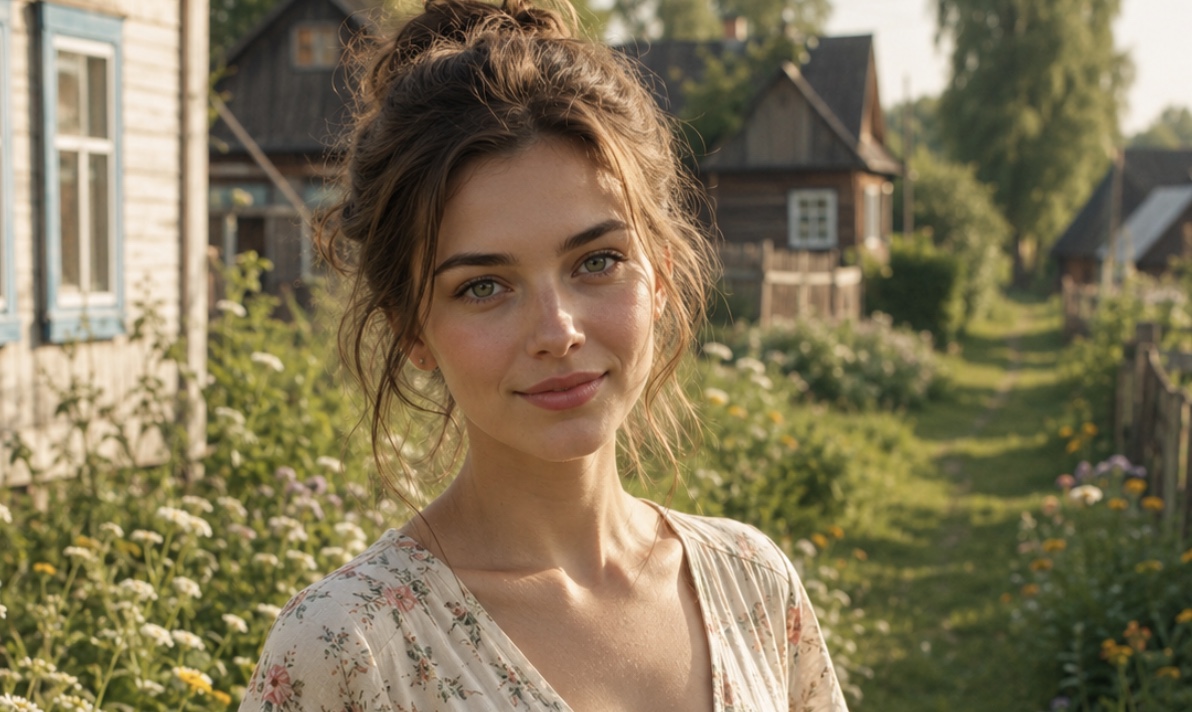
Varya had just finished work and was washing her hands beneath the outdoor washbasin in the yard. She wore a modest cotton dress, her long light-brown hair was braided down her back, and her large eyes were gentle and kind.
Petka approached and looked her over from head to toe. She was pretty, certainly, but far too quiet. She lacked the kind of fire that made a man lose his head at first glance.
“Hello, Varya,” Petka said. “Would you like to take a walk?”
Varya looked at him, and her cheeks immediately turned pink. She gazed at him as though he were not simply Petka, a village driver, but a prince who had come to carry her away.
“All right, Petya,” she agreed. “Let’s go for a walk.”
Their wedding was celebrated according to every village tradition. There was accordion music, long tables set up directly in the yard, and crowds of drunken guests. Granny Grunya sat at the head of the table, happily wiping tears from her eyes with the corner of her headscarf.
The village men envied Petka. Varya looked like a white swan in her wedding dress, and her profession was valuable. No village could manage without a veterinarian.
Petka also enjoyed listening to the congratulations and hearing everyone call him a lucky man. But he did not love her. He married Varya because his grandmother had insisted and because everyone said the time had come.
They lived together for two years.
Varya became exactly the kind of wife Granny Grunya had promised she would be. The house was always spotless. Hot cabbage soup waited on the table, along with fresh bread and pies filled with wild berries. People praised Varya at work, and at home everything seemed to flourish in her capable hands.
A year after the wedding, she gave birth to a son, little Vanechka. Petka adored the boy and could not get enough of him.
Yet his feelings for Varya never grew. They lived under the same roof, but she still seemed like a stranger to him. She did everything for him, and her eyes were filled with quiet devotion, but instead of warming him, that loyal gaze made him uncomfortable.
Then Ninka arrived to work at the village shop.
Ninka was made of entirely different material. She was lively and bold, wore bright-red lipstick, styled her hair into a voluminous cloud, and her shop coat barely closed across her chest.
The moment a man entered the village store, she greeted him with a smile as though she had spent the entire day waiting for him alone. She would tilt one shoulder, lean over the counter, and toss out a suggestive remark in a low, playful voice.
There was something wild and intoxicating about her, a sense of reckless freedom.
Petka began visiting the shop every day. Sometimes he claimed he needed cigarettes. Other times he said he was buying mineral water for Vasily Sergeyevich.
Ninka was delighted to flirt with the settlement head’s personal driver.
“Petya,” she said one day, drawing out his name sweetly, “could you drive me to the district center this evening? The bus has been cancelled, and I desperately need to visit a friend.”
Petka drove her there.
At first, he took her only to the district center. Then he began driving her home to the edge of the village. Before long, the Niva was regularly turning into the quiet lane beside Ninka’s little fenced garden.
At home, Varya waited with a hot dinner and their small son. Meanwhile, Petka sat in Ninka’s kitchen, drinking homemade liqueur and listening as she told him what a magnificent man he was and how terribly unlucky he had been to marry that “boring veterinarian.”
“Divorce her, Petya,” Ninka whispered, wrapping her arms around him. “Why do you need a woman like that? She’s only good for twisting cows’ tails. You’re a handsome, impressive man. We’ll live together and never have a care in the world.”
In a village, secrets never remain hidden for long.
Petka believed he was conducting the affair discreetly, but village women had eyes and ears everywhere.
One evening, he returned home slightly drunk, reeking of Ninka’s perfume from several yards away. Varya met him in the entryway.
“Petya, is it true what people are saying?” she asked quietly. “Have you been visiting Ninka from the shop?”
Fueled by vodka and Ninka’s constant praise of his irresistible charms, Petka exploded.
“So what if I have?” he shouted. “Yes, I’ve been seeing her! What are you going to do about it? I’m sick of you and your endless perfection! Living with you is like living in a tomb!”
Varya looked at him with disgust, as though the man standing before her were not her husband but some repulsive stranger.
Blinded by anger and frustration, Petka raised his hand and shoved her. Varya struck the doorframe painfully. Fighting back the pain, she turned away and went into the room where their son was sleeping.
Petka awoke the following morning with his head pounding.
The house was silent.
There was no hot tea, no Varya, and no Vanechka.
A neatly folded note lay on the table.
“I will never forgive you for this. I’m taking our son and going to my mother.”
Petka merely grunted.
“Good riddance,” he thought. “Now I’m my own master. Ninka and I can finally live properly.”
He moved his belongings into Ninka’s house that very day.
When Granny Grunya learned about the disgrace, she chased him out of her home with her cane and cursed him furiously.
“You’re a complete fool, Petka! You traded gold for a cheap piece of glass! You’ll come crawling back one day, but by then it will be too late!”
Petka only laughed.
At first, life with Ninka made his head spin. In bed, she was pure fire.
But everyday life quickly exposed the cracks in their relationship.
Varya had always risen before the roosters, and everything she touched seemed to fall into place. Ninka, on the other hand, thought only about her clothes and appearance before going to work.
She was too lazy to cook dinner. Dirty dishes piled high in the sink. Whenever Petka complained, she waved him away.
“I’m not your servant. You have hands of your own.”
Nearly a year passed.
Petka grew tired of the constant mess, the unwashed shirts, and Ninka’s endless demands for new gifts. Still, he comforted himself with the same thought: at least she was passionate.
One day, Vasily Sergeyevich let him leave work early because he was traveling to the regional capital with district officials.
Delighted by the unexpected free time, Petka bought a box of expensive chocolates in the district center and hurried home to Ninka.
The front door was locked from the inside.
Petka pulled the handle and knocked.
There was silence. No one opened the door.
He knocked harder, then began pushing against it with his shoulder.
At last, he heard movement inside. Ninka opened the door wearing an unfastened robe, her hair tangled and disheveled.
“Why are you trying to break the door down?” she muttered irritably.
Petka stepped into the room and froze on the threshold.
A thickset man in a leather jacket was sprawled across their bed with his boots still on, smoking a cigarette. Petka recognized him immediately. He was the district inspector who occasionally came to examine the village shop.
“Petya, don’t make a scene,” Ninka said calmly as she fastened her robe. “This is Kolya. He’s taking me to the district center and giving me a position as manager of the central department store. So I’m sorry. You’re a decent enough man, but village life is beneath me. I’ve already packed your things into a bag.”
Petka stood speechless.
The man on the bed did not even bother to rise. He merely smirked and blew a ring of cigarette smoke into the air.
For the next two months, Petka drank without stopping.
At first, he took time off work. Then he nearly lost his position as Vasily Sergeyevich’s driver altogether. The settlement head spared him only out of respect for Granny Grunya.
Sitting alone in the cold, empty house, Petka replayed his life over and over again.
What a fool he had been.
He had exchanged a clean, bright home, a loving wife, and his own son for Ninka’s false affection and a little excitement in bed.
He was so disgusted with himself that he wanted to howl like a wounded wolf.
At last, he went to Granny Grunya, dropped to his knees before her, and begged her to give him Varya’s address.
The old woman sighed heavily and shook her head.
“I don’t have an address for you, Petya. Varya is building a new life, and you have no right to drag the past back into it. She’s married now. The man is decent and worthy. He’s everything you were not.”
Petka refused to believe her.
He convinced himself that his grandmother was saying it only to punish him.
“She loved me,” he thought. “Her eyes used to shine whenever she looked at me. She couldn’t possibly have fallen in love with someone else in only a year. I’ll go to her, get down on my knees, and beg for forgiveness. She’ll forgive me. I’ll embrace Vanechka, and we’ll all return home together.”
Through acquaintances at the district veterinary service, Petka eventually discovered where Varya had been transferred. She was living in a large village in the neighboring district, on the central farm of a state agricultural estate.
On Saturday morning, he climbed into the Niva and raced there.
He found the correct street and an attractive brick house surrounded by a white picket fence and a beautifully maintained flower garden.
Petka parked farther away, hiding the vehicle behind some willow bushes, and began to wait.
His heart pounded. He rehearsed his speech again and again, imagining how he would tell Varya that he finally understood everything and that he loved her more than life itself.
Close to midday, a shiny new pickup truck pulled up in front of the house.
A tall, broad-shouldered man wearing a work shirt with the sleeves rolled up stepped out. Judging by his appearance, he was probably the chief engineer or perhaps the director of the entire farm.
The man walked around the truck and opened the passenger door.
Varya stepped out.
Petka’s breath caught in his throat.
She had completely changed.
The old Varya was gone.
She wore a beautiful summer dress, and her hair fell over her shoulders in soft, full waves. Her face glowed with feminine beauty and a happiness Petka had never once seen while she was living with him.
The man said something quietly to her.
Varya laughed brightly, threw her arms around him, and he gently pulled her close and kissed her.
At that moment, the rear door of the pickup opened, and Vanechka jumped out.
His little son had grown so much.
“Papa Styopa, look at the beetle I found!” the boy shouted, running toward the man.
The man easily lifted Vanechka into his arms and raised him high above his head. The boy squealed with delight, wrapping his arms tightly and trustingly around the stranger’s neck, exactly as he had once embraced Petka.
The man carefully lowered the child to the ground, placed one arm around Varya’s waist, and the three of them walked toward the house together, talking and laughing.
He held Varya so tenderly, as though she were the most precious treasure in the world.
Petka remained in the Niva, gripping the steering wheel with both hands.
Tears filled his eyes.
He reached for the ignition, started the engine sharply, and pressed the accelerator without looking back.
He wanted to get away as quickly as possible, before anyone noticed his humiliation or witnessed the terrible, belated pain tearing him apart.
Only now, after losing everything forever, did Petka finally understand.
Two years earlier, Varya had seemed like a stranger only because he had been too foolish to recognize her worth.
Now she truly belonged to someone else.
She was another man’s wife, and nothing could be restored or rewritten.
No one in his life had ever been closer to him than Varya and his son.
And now, perhaps, no one ever would be again.