Part One. Silver Emulsion
The studio smelled of fixer and old dust—that peculiar scent of time itself which Nadezhda valued so deeply. She was not one of those wedding photographers who clicked away mechanically, producing the same polished smiles over and over again. Her specialty was fine-art photography: complex portraits, intricate plays of light and shadow, layered exposures.
Here, surrounded by softboxes, backdrops, and expensive lenses, she felt like the mistress of captured moments.
The doorbell rang with irritating persistence.
Nadezhda frowned and looked away from the photograph she was retouching. On the screen, the face of a model seemed to emerge through the rough texture of tree bark.
Lyudmila Petrovna stood outside the door.
Her mother-in-law looked exactly as she always did: lips pressed into a thin line, sharp eyes already scanning the room for evidence of what she considered “wasted money.”
“Hello, Nadya. Am I interrupting you?”
The question was purely ceremonial. Lyudmila Petrovna had already stepped inside and was inspecting the expensive camera lenses on the shelf as though she owned the place.
“Hello. I’m working, but I have about ten minutes. Has something happened?”
Lyudmila Petrovna lowered herself into the client chair and straightened the hem of her coat.
“There is something I wanted to discuss, Nadya. It’s a delicate matter. You know how my Larisa—Anton’s sister—has been struggling lately. Her salary at the shop is laughable, especially considering her expectations. And that husband of hers, God forgive me, is hardly capable of reaching for the stars.”
“And?” Nadezhda asked.
She could already guess where the conversation was heading.
“I heard that the deputy mayor came here for a photo session last week. You made some grand official portrait for him.”
“He was here. It was a professional commission, Lyudmila Petrovna.”
“Exactly!”
Her mother-in-law raised one finger triumphantly.
“You have a connection with him. Put in a good word. A position is opening in the city administration’s cultural department. It is comfortable, respectable, and not too demanding. The salary is good, and there are benefits. It would be perfect for Larisa.”
Nadezhda sighed.
It was an old and painfully familiar tune. Her husband’s family believed that every professional contact she made automatically became a shared family resource.
“Lyudmila Petrovna, I am a photographer. I take photographs and make people look their best. I am not a recruitment agency. I never ask my clients for personal favors. Never. It would be unprofessional. Besides, Larisa does not have the necessary education or qualifications.”
Red blotches appeared across her mother-in-law’s face.
“Education! Pieces of paper! What matters is having the right people around you. Are you not interested in behaving like a proper member of this family? Anton breaks his back on construction sites and burns his eyes welding, while you sit here in the warmth painting pretty pictures. Yet you cannot bring yourself to help your own sister-in-law.”
“Anton is a highly skilled argon welder. He earns very well, and he enjoys his work. I am not refusing out of contempt. I am protecting my professional principles. My answer is no.”
Lyudmila Petrovna rose abruptly.
The studio no longer seemed to smell of chemicals. The air had become charged with the electricity of an approaching storm.
“So you are principled now. Proud, too. Be careful, Nadya. Pride rarely leads to anything good. You returned to this studio awfully quickly after giving birth. And your daughter…”
She paused deliberately.
“She is a strange child. She does not look like Anton at all. Her eyes are so dark and foreign-looking.”
“What did you just say?”
Nadezhda slowly rose from behind her desk.
“You heard me. Just remember that your precious principles may come back to hurt you.”
Her mother-in-law left, slamming the door behind her.
Nadezhda returned to the computer, but she could no longer concentrate. The seed of suspicion had already been planted in the fertile soil of family resentment, and it had begun to grow.
Part Two. Slag on the Soul
Anton came home late that evening.
He smelled of scorched metal and, faintly, alcohol. That was unusual. He rarely drank during the working week.
He struggled with his boots in the hallway for several minutes, muttering curses under his breath.
Nadezhda met him in the kitchen. A pot of stew was growing cold on the table, while their little daughter, Sonya, slept in the nursery.
“You’re late,” she said calmly.
“I stayed in the garage with the guys,” Anton grumbled, avoiding her eyes. “We were talking about life.”
He went to the sink and began scrubbing his hands furiously, trying to wash away the black grime embedded in his skin.
“You know, Nadya, Sergey told me a joke today,” he said, his voice unnaturally bright. “He said some men love their wives so much that they sleep with other women—prostitutes and the like. Do you know why? So they do not wear out the woman they love. They preserve the resource. Funny, isn’t it?”
Nadezhda froze with a towel in her hands.
“Was that supposed to be funny?”
“Well, there is some truth in it. We also talked about how clever women have become. A husband tries not to wear his wife out, and meanwhile she goes looking for adventures elsewhere. Especially when he is away working shifts or spending all day at the factory.”
He turned around.
Nadezhda saw a cloudy gleam in his eyes that had never been there before.
It was not the alcohol.
It was suspicion, thickened by other people’s words.
“What exactly are you trying to say, Anton?”
“Nothing in particular. Mother called. Larisa called too. They said they saw you in town with some fancy-looking man when you were pregnant. You had your camera with you.”
“He could have been an assistant or a client. You know what my work involves.”
“I know.”
He stepped closer and loomed over her.
“I also know that Mother says Sonya looks nothing like me. I have a broad nose. My father had ears like cabbage leaves. Yet our daughter looks like a little aristocrat. Too beautiful for an ordinary welder, don’t you think?”
Exhaustion from sleepless nights with the baby, anger at his mother, and the sheer absurdity of the accusation tightened into a hard knot inside Nadezhda.
She did not cry.
Instead, a cold fury settled over her.
“She is not your daughter? You think I slept around? Is that what I am hearing?”
Nadezhda did not care what her mother-in-law might say next. She wanted to hear her husband’s answer.
“Are you repeating your mother’s words now, Anton? Do you have no thoughts of your own left? Has your entire mind become covered in welding slag?”
“Do not talk about my mother like that!”
Anton slammed his palm against the table.
“She wants what is best for us! She says you refused to help Larisa and keep turning your nose up at the family. That means you do not consider us your own. And when people are not your own, perhaps you have something to hide from them. I want the truth.”
“The truth?”
Nadezhda narrowed her eyes.
“Are you certain you can handle it?”
“I want a DNA test. If you are innocent, you have nothing to fear. But if you are not…”
He left the sentence unfinished, though his clenched fists completed the threat for him.
Nadezhda stared at the man with whom she had shared her home and her bed.
She no longer recognized him.
Before her stood a weak, easily controlled man who had allowed his mother’s poison to destroy their family.
“All right,” she said quietly.
Her tone made Anton flinch.
“You will have your test. But remember this, Anton: every piece of knowledge comes at a price.”
Part Three. The Sculptor’s Workshop
Marina, Nadezhda’s closest friend, worked with clay and plaster.
Her workshop was always in a state of creative chaos, but Marina’s thoughts were arranged with perfect precision. She kneaded a heavy lump of clay and repeatedly slammed it against the workbench while Nadezhda told her what had happened.
“And you agreed?” Marina asked, wiping her hands on a cloth.
“Did I have a choice? Refusing would only confirm his ridiculous suspicions.”
“Nadya, listen to a woman with extensive experience in divorce.”
Marina lit a cigarette and blew smoke toward the ceiling.
“The moment a man demands a DNA test, the family is already dead. Even when the results prove he is the father, the worm has already eaten through the apple. He betrayed you. He believed his mother’s gossip instead of believing you. That is not something you can cure.”
Nadezhda sat on a tall stool, looking at the unfinished bust of some ancient hero.
“I know, Marina. I understood it the moment he opened his mouth. But I do not simply want to leave. I want him to understand. I want him to realize exactly what he has done.”
“Anger is excellent fuel,” Marina said with a nod. “But anger alone will not take you far. You need a plan. Who owns the apartment?”
“I do. I bought it before the marriage with money from a European exhibition, and I paid off the rest of the mortgage myself two years ago. Anton only has temporary registration there.”
“Excellent. Where will he go?”
“To his mother’s apartment. A cramped two-room place in an old Soviet building, where his mother already lives with Larisa, Larisa’s useless husband, and their bull terrier.”
Marina laughed, the sound both dark and delighted.
“That will be a magnificent jar of spiders.”
Nadezhda did not smile.
A composition was already forming in her mind, the way a photograph took shape before she pressed the shutter.
In the foreground: humiliation.
In the middle: proof.
In the background: the emptiness in which Anton would eventually be left standing alone.
“I am not merely going to throw him out, Marina. I am going to give him a demonstration he will never forget. He wanted a performance? He will get one. My mother-in-law was desperate for the truth to surface. It will surface.”
Nadezhda’s eyes grew cold.
“And they will be the ones who drown in it.”
Part Four. The Exclusion Zone
The appointed day arrived two weeks later.
Nadezhda had deliberately invited everyone.
That had been her condition.
“You want the truth? Then all of you can come and hear it together. I am not going to report to each of you separately.”
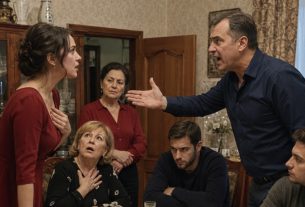
The so-called family council gathered in the spacious, sunlit living room of her apartment.
Lyudmila Petrovna sat on the sofa with the expression of a public prosecutor.
Larisa flipped through a magazine while chewing gum, making no attempt to hide her contempt.
Anton paced nervously from one corner to another.
Nadezhda stood near the window, holding a thick envelope from the medical laboratory.
“Well?” Lyudmila Petrovna finally demanded. “How much longer are we supposed to watch this circus? Open it, Nadya. Or are your hands shaking?”
“They are perfectly steady.”
Nadezhda walked over to the table and dropped the envelope in the center.
“You read it, Anton. You ordered the banquet and paid for it. You may announce the result.”
With trembling fingers, Anton tore open the envelope.
He unfolded the document and scanned the lines.
His face first turned pale, then flushed with relief.
“Probability of paternity… 99.9 percent,” he croaked. “She is mine. Sonya is my daughter.”
Silence fell over the room.
Larisa stopped chewing.
Lyudmila Petrovna pressed her lips together, clearly disappointed that the scandal had not developed in the direction she had hoped.
“Well, there you are,” she said first. “You see, Antosha? Thank God. Now we can all be calm. Nadya, do not sulk. We are family. Families should trust one another, but there is nothing wrong with checking. You know what the world is like these days.”
Anton looked up at his wife with a guilty, pathetic smile.
“Nadya, forgive me. I was an idiot. They got into my head. Let us forget the whole thing, all right?”
He stepped toward her, intending to embrace her.
“Stay where you are.”
Nadezhda’s voice cracked through the room like a whip.
She did not shout, yet the coldness in her tone stopped Anton immediately.
“What do you mean?” he asked.
Nadezhda picked up the laboratory report and slowly tore it in half.
“You have received exactly what you wanted. You now know that I did not betray you. You have satisfied your mother’s and sister’s curiosity. Now you are all going to listen to me.”
She looked at them as though she were studying them through the lens of her camera, exposing every flaw in their character.
“Anton, the moment you demanded this test, you destroyed our marriage. You believed the filth these two women poured into your ears instead of believing the woman who lived beside you. You betrayed both me and your daughter. A man who doubts his own child simply because his mother whispered something poisonous to him is not a man. He is a helpless little boy tied to his mother’s skirt.”
“Oh, stop making such a drama out of it,” Larisa scoffed. “It was only a test. People do them all the time.”
“Perhaps it is ordinary for you. For me, it was an unforgivable insult,” Nadezhda replied. “And now we come to the consequences. Anton, I am filing for divorce.”
“What?”
Anton dropped heavily into a chair.
“Because of a piece of paper? Nadya, what are you doing? We have a child!”
“I have a child. You have doubts.”
Nadezhda picked up a folder of documents from the chest of drawers.
“There is something else. The apartment belongs to me. You have exactly two hours to pack every one of your possessions and leave.”
“You have no right!” Lyudmila Petrovna shrieked. “This is marital property!”
“You are mistaken. I bought it before the marriage. I have all the documents. So, Lyudmila Petrovna, you may take your precious son home. You were so worried that he was unhappy with me. Now he can be happy with you.”
“Nadya, do not be ridiculous!”
Anton sprang to his feet.
His anger was rising again, but now it was the anger of an animal cornered by its own actions.
“Where am I supposed to go?”
“Back to where you came from. To your mother and sister. To your close, loving family built on trust. You can help Larisa find a job, listen to your mother, and enjoy one another’s company.”
“You will regret this! You will come crawling back—” Lyudmila Petrovna began.
“No.”
Nadezhda cut her off.
“Save the crawling-back speech for a cheap television drama. All of you, get out. Otherwise I will call the police and have you removed as trespassers.”
The determination in her eyes was icy and unbreakable.
Anton understood that it was over.
He knew that expression.
It was the same look she gave a failed photograph before pressing the Delete button.
Part Five. A Cramped Corner
Three months passed.
The air in Lyudmila Petrovna’s apartment was heavy and stale, saturated with the smell of medicine and cheap boiled food.
Anton sat in the kitchen, staring blankly at a plate of cold pasta.
The television roared behind the wall. Larisa’s husband, Vitaly, was watching football.
Larisa herself was shouting at her mother because someone had moved her cosmetics.
“When are you bringing home your salary?” Larisa demanded as she swept into the kitchen wearing a greasy housecoat. “Vitaly needs to repair the car, and Mother has fallen behind on the utility bills again.”
“I gave Mother everything a week ago,” Anton replied dully.
“Then it was not enough! You live here, you eat our food, and you use electricity. Those child-support payments of yours ruin everything. You could pay less. Make some arrangement. So what if the court ordered it? You are pathetic.”
Anton squeezed his fork so hard that it bent.
Pathetic.
That was what he had become.
He slept on a folding cot in the same room as his mother because Larisa and Vitaly occupied the second bedroom.
Every evening began with another argument: who had failed to wash a cup, who had spent too long in the bathroom, whose turn it was to buy bread.
Lyudmila Petrovna, who had once seemed to him like a figure of authority, had turned into a bitter old woman who criticized him from morning until night.
“This is all your fault!” she shouted now. “You let a woman with an apartment slip through your fingers! You should have been smarter! Now you are sitting on my neck!”
Anton went onto the balcony and lit a cigarette.
Driven by a habit that bordered on self-punishment, he took out his phone and opened Nadezhda’s social-media page.
She had built a new life.
There were photographs from her latest exhibition.
The title immediately caught his eye:
Distortion of Trust.
He scrolled through the images.
They were portraits taken through cloudy glass, water, and warped filters. The faces remained recognizable, yet each one was grotesquely transformed.
Then Anton saw himself.
The photograph had captured the moment he stood in the kitchen shouting at Nadezhda and demanding the DNA test.
His face was twisted with rage, his mouth open, his eyes utterly empty.
The caption read:
A Man Who Listened to the Echo Instead of the Music.
The image had received thousands of likes and enthusiastic comments. Art critics described it as a powerful representation of jealousy consuming the human soul.
Below it was another announcement:
Congratulations to Nadezhda on winning the international competition and receiving a grant for an artistic residency in Italy!
The balcony door flew open.
“Antosha, how long are you going to stand out here stinking up the place?” his mother rasped. “Take the rubbish outside. Larisa is tired. And Aunt Lyuba called. She says there may be layoffs at your workplace. You had better make sure you do not lose that job, because if they dismiss you—”
Anton looked at his mother.
At her eternally dissatisfied expression.
At the greed in her eyes.
“She slept around, did she?” he asked quietly. “Not your granddaughter?”
“What are you mumbling about? Go and take the rubbish out!”
Anton suddenly laughed.
It was a dry, choking, frightening sound.
“You know something, Mother?” he said, watching the cigarette smoke curl through the air. “Nadya was right that day. I really did sleep around.”
His smile became twisted.
“I went out and created this life for myself. A life with all of you.”
Then something happened that Anton had not expected.
His phone chimed with a bank notification.
A withdrawal.
A court penalty.
The amount was enormous.
“What the hell is this?”
He opened the banking application.
Enforcement proceedings. Reimbursement of legal costs and damages awarded in a defamation and reputation-protection claim.
Nadezhda had not merely divorced him.
True to her precise and methodical nature, she had also filed a lawsuit over the slander spread against her.
She had submitted recordings of the conversations as evidence. As a photographer, she had surveillance cameras in both her studio and her home—cameras Anton had completely forgotten about.
The recordings captured Lyudmila Petrovna insulting her and spreading false accusations.
Because Nadezhda’s professional reputation depended on public trust, the court had recognized the harm caused by the defamatory statements and ruled in her favor.
Now Anton owed her money.
Money he did not possess.
He would have to sell his garage, the only refuge he had left.
“What is it?” his mother asked, leaning toward the screen.
Anton looked at her with pure hatred.
It was sharp and crystalline, purified of every trace of a son’s affection, like metal separated from slag.
“I am selling the garage, Mother. We have debts to pay.”
He held her gaze.
“Debts caused by your poisonous tongue.”
Anton returned to the suffocating kitchen and lowered himself onto a wobbling stool.
It creaked beneath his weight.
He realized that the sound was the only music remaining in his life.
He was trapped inside a cage he had welded with his own hands, seam by seam, following the blueprint drawn by his family.
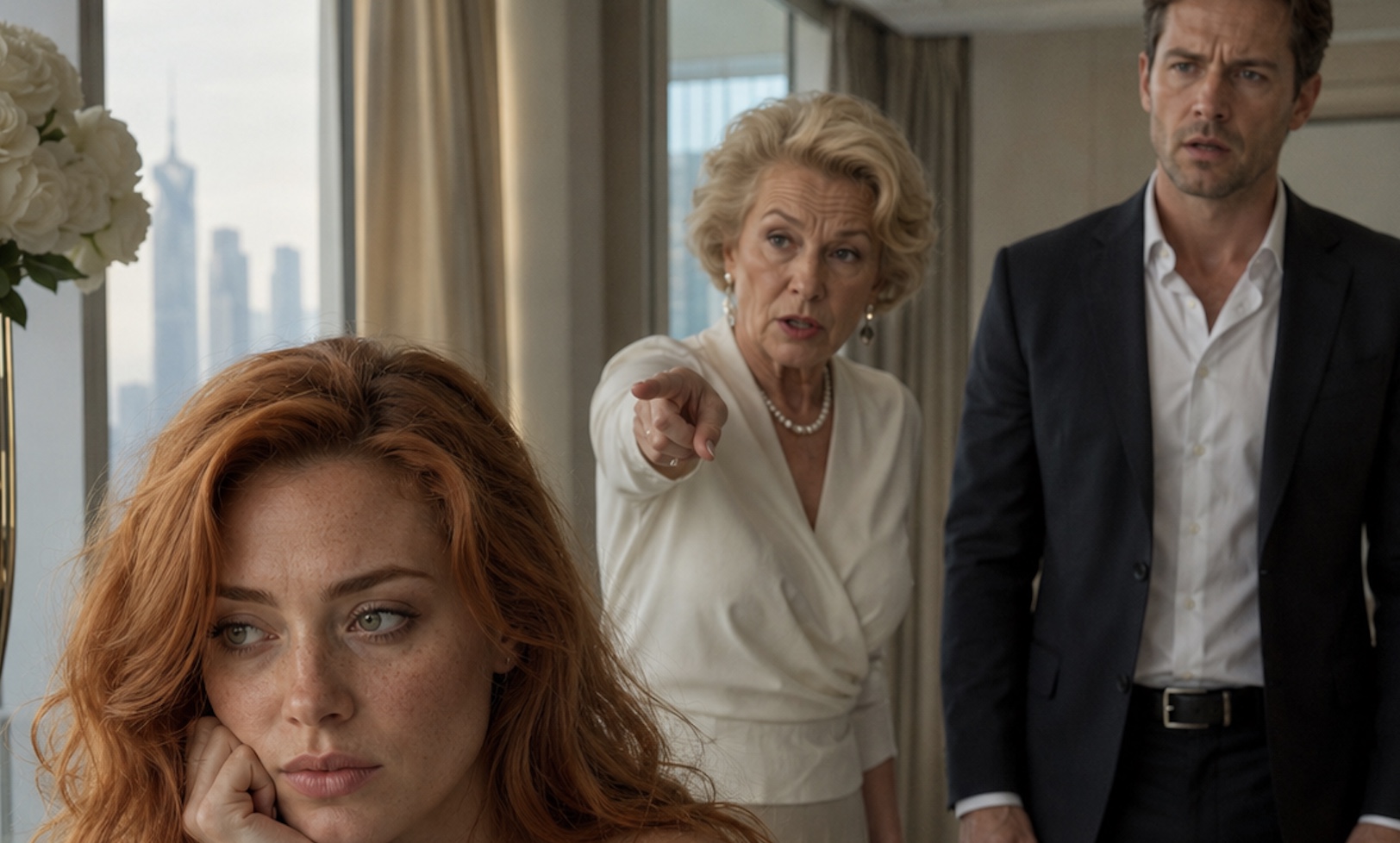
Nadezhda — the central character, a professional fine-art photographer.