Thick, sweet notes of argan oil and fresh citrus drifted through the spacious salon with its panoramic windows. The loft, designed in strict shades of graphite and raw concrete, glowed under neon signs. There were no glamorous pink chairs here, no gold-framed mirrors. Kira, the twenty-seven-year-old owner, preferred bold street style not only in the way she dressed, but in the way she built her business.
She stood near the reception area in an oversized black hoodie, wide cargo pants, and chunky sneakers, thoughtfully sorting through printed appointment schedules booked for the month ahead. Her greatest pride and signature feature was an incredible mass of unruly, springy curls that fell freely over her shoulders in a wild cascade.
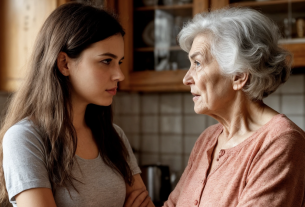
And yet, only five years earlier, as a third-year economics student, Kira had barely been able to make ends meet. Her scholarship was painfully small, and asking her mother, Tamara Vasilievna, for money was always more trouble than it was worth. Every ruble came with a long lecture about how hard bread was to earn and how ungrateful Kira was.
Back then, watching her classmates take manicure courses one after another and file nails in rented apartments surrounded by choking dust, Kira also began thinking about that kind of side job. She had even saved a little money for a starter set of gel polishes and a UV lamp. But one morning, standing in the cramped bathroom of her dormitory and trying to tame her frizzy, stubborn hair with a harsh comb, she suddenly froze. She looked at her curls — curls that every hairdresser in ordinary salons had always mercilessly straightened with flat irons, burned with aggressive treatments, and thinned out until they looked like a mangy cat.
That was the exact moment the plan was born.
Kira realized there was a huge gap in the beauty industry: almost no one knew how to work with natural curls. She abandoned the manicure idea and threw herself into studying foreign methods of curly hair care. She bought dozens of jars of specialized gels, creams, and mousses.
Her first clients were girls from her university course who also had curly hair. Kira saw them in a tiny rented room on the outskirts of the city, a place that required three transfers to reach. She cut their hair dry, taking into account the natural shape of each curl, taught them how to wash their hair properly, scrunch it, and dry it with a diffuser.
Word of mouth worked instantly. Girls who had hated their hair their whole lives left Kira with tears of happiness in their eyes, staring at their bouncy, shiny curls. Within a year, Kira could no longer handle the flow of clients alone. By the time she received her economics degree, she had opened her first real salon. Two years later, the business had grown again: she had to expand the space, hire a team of like-minded professionals, and train them in her own method. The salon, called “Curl Architecture,” became the trendiest place in the city, with appointments booked two months in advance.
That was when Tamara Vasilievna triumphantly appeared on the horizon.
Kira’s mother had worked her entire life in the accounting department of a state institution and sincerely believed that no one could earn serious money honestly. When she found out that her daughter had opened a salon, she twisted her lips for a long time and called it “nonsense” and “service work.” But after she accidentally saw Kira’s bank statement and understood the scale of the renovation in the studio, her tone changed immediately.
One rainy Tuesday, the doors of the salon burst open noisily. Tamara Vasilievna stood on the threshold, and behind her shifted Aunt Valya, a heavyset woman whose hair had been burned by cheap red dye until it resembled lifeless straw. There were no curls to speak of.
“Kirochka, hello!” her mother announced loudly, ignoring the receptionist. “We were just passing by. Valya urgently needs her haircut freshened up. She has an anniversary celebration at work tomorrow. Come on, arrange a chair for us.”
At that moment, Kira had been discussing the purchase of a new styling product line with her art director. She stared at them in disbelief.
“Mom, this is a specialized salon. We only work with curly hair.”
“Oh, stop making things up!” Tamara Vasilievna waved her hand and walked into the salon like she owned it, settling herself on the black leather guest sofa. “Hair is hair. Are you really refusing to trim your own aunt’s ends? She fed you pies when you were little! Don’t embarrass me in front of the family. Make her look beautiful.”
Kira clenched her teeth. She did not want to cause a scene in front of the clients. Denis, a stylish stylist in a hoodie with a bright print, gave her an understanding nod and took Aunt Valya. The haircut took twenty minutes, but afterward Aunt Valya proudly stood up, adjusted her sweater, and headed for the exit.
“That will be fifteen hundred,” the new receptionist said timidly.
Tamara Vasilievna spun around sharply, her eyes flashing.
“What money? You charge your own people? Kira! What kind of robbery is this? I’m your mother, and this is your aunt!”
To avoid a scandal, Kira nodded to the receptionist, letting her know not to take payment.
That was her fatal mistake.
She had opened the door just a crack, and through it poured a whole stream of numerous, shameless, and completely tactless relatives.
Tamara Vasilievna decided that her daughter’s salon was now her personal territory. She took on the role of unofficial distributor of free services. Relatives who had not called Kira for years, not even to wish her happy birthday, suddenly overflowed with love for her. And the worst part was that none of them had curly hair.
First came Milana, a cousin. The girl had hair as straight as a string and demanded a complex airtouch coloring, a procedure that took at least six hours and required expensive materials.
“Aunt Toma said you’d do it for me like family,” Milana declared, batting her extended eyelashes. “I don’t have money right now. I bought a new phone on credit. But it’s not like you’ll go broke, right? I saw the prices on your website. You’re raking it in.”
Kira had to seat Milana with a trainee and pay for the materials out of her own pocket. Milana still left unhappy, complaining that her coffee had not been made with lactose-free milk and that the music in the salon was too “young” and “pounded her brain.”
Then came an endless stream of uncles with bald patches demanding clipper cuts, distant aunts asking for chemical perms — which the salon did not do on principle because they damaged the hair structure — and even her mother’s neighbors from the stairwell.
The salon turned into a public walkway. The relatives behaved horribly: they talked loudly on the phone while sitting in the chairs, devalued the stylists’ work, left trash behind, and of course, never left a single coin in tips. They sincerely believed Kira owed them. After all, they had “worried about her” when she entered university, and besides, family was sacred.
Their arrogance grew at a terrifying speed. The stylists began to complain.
“Kira, I can’t do this anymore,” Denis said one evening after the last clients had left, tossing his comb onto the table. “Your Aunt Zina nearly drove me to a nervous breakdown today. She demanded that I straighten her hair with keratin, which we don’t even have. When I refused, she called me a ‘clumsy little boy,’ then drank three cups of cappuccino and spilled sugar all over the sofa. Because of her, I lost time with a real paying client. Either we stop this, or I’m quitting.”
Denis’s words hit Kira like a bucket of cold water. She opened the accounting program and calculated the results for the last three months. The amount of lost income and money spent on free clients was astronomical. Because of relatives occupying the most valuable slots in the schedule, the salon had started losing loyal, paying clients.
But the final straw — the one that caused the grand scandal — came on a Saturday morning at the end of November.
The salon schedule was completely full. At twelve o’clock, a top client was booked: a well-known blogger with a luxurious afro mane, whose social media tag could bring dozens of new appointments. Kira was supposed to work with her personally. The salon was alive with busy movement, rhythmic hip-hop playing in the background, and diffuser dryers buzzing.
At exactly eleven thirty, the glass door opened, and a delegation poured inside. At the front, moving like an icebreaker, was Tamara Vasilievna. Behind her came Kira’s distant cousin Snezhana, Snezhana’s mother, and two unfamiliar middle-aged women.
“Come on, girls, make room!” Tamara Vasilievna commanded, chasing a waiting client off the sofa. “Snezhanochka is getting married today! We need three hairstyles, makeup, and something festive on the bride’s head. Quickly, quickly, the registration is at three!”
A heavy silence fell over the salon.
Kira, holding a bowl with a freshly mixed hair mask, slowly lowered it onto the trolley. Inside her, a tight spring seemed to coil. She looked at Snezhana, a girl with thin bleached hair tied into a mouse-like ponytail. Of course, there was no appointment.
“Mom,” Kira said, walking to the reception desk and trying to keep her voice as calm as possible. Her bold image in an oversized hoodie now contrasted sharply with her furious mother in a flashy lurex dress. “We don’t have any available stylists. We are fully booked. Besides, we don’t do wedding hairstyles on straight hair. And we don’t have a makeup artist. I’ve told you this a hundred times.”
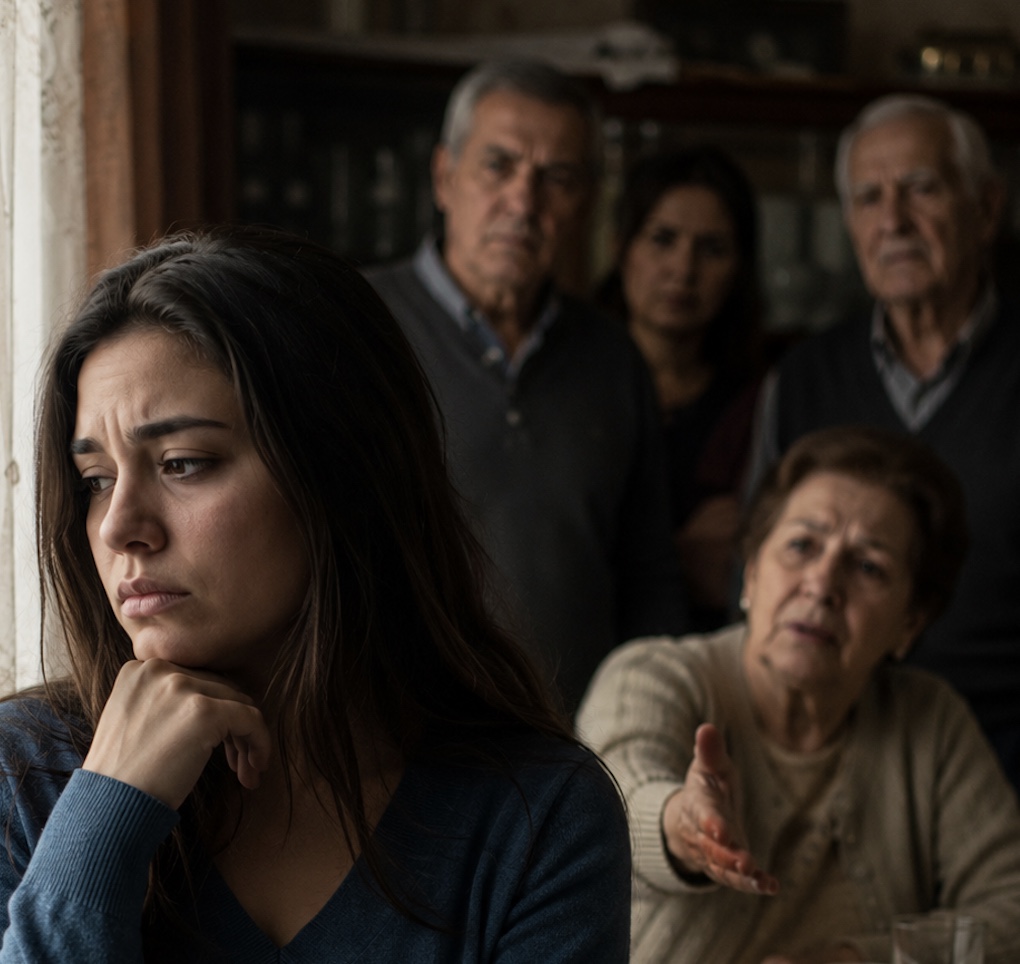
“Are you mocking me?!” Tamara Vasilievna’s voice rose an octave, drawing the attention of everyone in the salon. “Your sister has a wedding! You must drop everything right now, send away those curly ones of yours” — she waved her hand dismissively toward the clients — “and take care of your family! What kind of attitude is this? We come to her with open hearts, and she turns up her nose! You’ve become arrogant, you ungrateful brat!”
Snezhana let out a theatrical sob. The unfamiliar women nodded threateningly.
“Kick them out,” her mother ordered, pointing at the girl in Denis’s chair. “They can wait. Family is more important! I told everyone my daughter would serve us for free at the highest level, and now you’re embarrassing me!”
“My mother decided that I should work for free for our entire family because I’m supposedly obligated to help now that I’ve ‘made something of myself,’” Kira said loudly, cutting each word clearly. Her voice was cold and firm, like steel. The spring had snapped. “But you forgot one small detail. When I was at university and ate plain pasta because I didn’t have enough money for transport, no one from this ‘great family’ offered me a single coin. When I opened this salon, taking loans at insane interest rates and going sleepless night after sleepless night, you all pointed at me and predicted I would go bankrupt.”
“How dare you speak to your mother like that?!” Tamara Vasilievna shrieked, red blotches spreading across her face. “I gave birth to you! I didn’t sleep at night because of you!”
“And I will always be grateful for that. But my business is not a charity fund for people who love freebies,” Kira said, stepping out from behind the desk and standing directly in front of the relatives. In her loose clothing and with her huge cloud of curls, she suddenly looked twice as powerful as the overdressed aunties. “You come here and demand services we don’t provide. You insult my stylists. You scare away my clients. You drink my coffee and complain that it isn’t good enough. And do you know what the most disgusting part is?”
Kira took her phone out of her pocket.
“I saw your family chat. Aunt Valya accidentally left the tab open on our guest tablet. You call my salon a ‘dump for freaks,’ and you call me a ‘cash cow’ that should be used before she goes broke.”
Snezhana’s face stretched in shock. One of the aunties coughed nervously and stepped back toward the door. Tamara Vasilievna opened her mouth, but no words came out. The evidence was undeniable. The scheme the relatives had been weaving behind Kira’s back — enjoying free service while throwing dirt at the owner — had been exposed at the worst possible moment.
“Now listen to me carefully,” Kira said, looking over the frozen relatives. “You are going to turn around and leave right now. Snezhana, you can go to the hair salon around the corner. They do excellent backcombing for five hundred rubles. As for this salon, the entrance is now permanently closed to our entire extended family. I will not serve any of you again. Not for money, and certainly not for free.”
“You… you’ll be cursed!” her mother screamed, losing the last of her self-control. “You’re turning your back on your family over your pathetic money! None of us will ever speak to you again! You’ll be left alone with your mop of hair!”
“That is a price I’m ready to pay for the peace of my team and my business,” Kira answered calmly. She turned to the receptionist. “Anya, if these people don’t leave the premises in thirty seconds, press the panic button. We’ll call security.”
At the word “security,” the aunties turned pale. A scandal with the police on a wedding day was the last thing they needed. Tamara Vasilievna drilled her daughter with a look full of hatred, then spun around on her heels.
“I will never set foot here again!” she threw over her shoulder.
“Excellent. The air will be cleaner,” Kira replied.
The door slammed shut behind the relatives.
For a moment, silence hung over the salon. Then the blogger — the very VIP client who had arrived a little early and had been watching the entire drama with interest from the waiting area — slowly began to clap. Denis joined her uncertainly but with visible relief. Then the other stylists started clapping too.
Kira exhaled loudly. Her hands were trembling slightly from the adrenaline, but inside her spread an incredible, intoxicating sense of freedom. It felt as though she had thrown a massive stone off her shoulders, one that had been dragging her down for far too long.
“I apologize for this improvised performance,” Kira said to the clients with a smile, adjusting her magnificent curls. Her gaze became professional and confident again. “Denis, continue your work. Anya, offer all our guests champagne on the house as compensation for emotional damage.”
She walked over to the mirror and looked at her reflection: the oversized hoodie, the neon lights behind her, the perfect salon she had built through struggle and sacrifice.
No one would ever again be allowed to devalue her work. She had built this empire herself, curl by curl. And she would not let anyone destroy it — not even those who called themselves family.
Life went on, and from now on, there would only be room in it for those who respected her rules and her art.
And art, as everyone knows, does not tolerate parasites.