“What’s happening with the house?” Igor asked. “I can’t wait to move into that little place of ours.”
He pushed away his plate with the half-eaten cutlet and leaned back in his chair. Anna was clearing the table, while Dasha dragged her fork through the last bit of mashed potatoes on her plate.
“Let’s go there this weekend,” Anna said, setting the dishes in the sink. “We’ll see what needs fixing, or whether we can move in as it is.”
“Now that sounds like a plan.”
Dasha lifted her head.
“Mom, are there swings there?”
“There are, sweetheart. They’re old, but they’re strong.”
“Hurray!” the girl jumped up from her chair. “And will you make my room with pink wallpaper and unicorns? Like Sveta’s room at kindergarten?”
Anna smiled, but the smile came out sad.
The house in the village of Izumrudny had come to her a month ago. The paperwork had finally been completed after six months of waiting. Her godmother, Antonina Grigoryevna, had passed away the previous autumn. The same godmother who had practically replaced Anna’s mother when her real mother left, abandoning ten-year-old Anya to be raised by her grandmother.
Antonina Grigoryevna used to come every weekend. She took Anna to the lake, taught her how to bake apple cake, and pushed her on those very swings in the garden. She never had children of her own. Her husband, an engineer, had died young, and she had remained alone in the big house. Then, a year before her death, she called Anna over and placed the documents in front of her.
“This is for you, Anyuta. So you’ll always have somewhere to come back to.”
Anna cried then. She cried again at her godmother’s funeral. And when she finally received the certificate of ownership, she stood in the middle of the empty house and did not know what she felt. Four rooms, fifteen hundred square meters of land, an apple orchard. And silence — a silence in which she could still hear Antonina Grigoryevna’s voice:
“Put the kettle on, Anyuta. I brought a pie.”
On Saturday, the three of them arrived together. Dasha immediately ran off to the swings. Anna opened the shutters and let April sunlight pour into the rooms. The house smelled of old wood and something faintly sweet — dried apples, perhaps, or memories. In the kitchen stood the same porcelain sugar bowl with blue flowers, the one her godmother had used to spoon sugar into Anna’s tea.
Igor returned from inspecting the property about fifteen minutes later.
“It’s a good house,” he said, brushing off his hands. “Solid. But the floors need replacing. They’re rotten by the entrance. And the windows should go too. The carved frames are pretty, sure, but they’ve had their time. They’re dried out.”
“That’s expected,” Anna nodded. “My godmother couldn’t keep up with everything in her last years.”
“And these apple trees…” Igor waved his hand toward the garden.
“What about them?”
“They’re done, Anya. No use keeping them. Half are dead, the other half will probably give nothing but tiny fruit, good only for compote. You know what this place needs? A proper gazebo. A barbecue area. Friends can come over, we’ll sit outside, relax like normal people.”
Anna looked at him and suddenly felt as if she did not recognize him. He was standing in the middle of the garden — her garden — already cutting it apart in his mind. Those apple trees, under which she had read books when she was twelve. The ones her godmother had planted with her husband.
“Igor, this is memory…”
“Memory belongs in your head,” he cut her off. “Old dry trees are firewood. I’ll bring my guys here, and we’ll clear everything fast.”
Dasha ran over and tugged on Anna’s sleeve.
“Mom, can I go on the swings?”
“Yes, sweetheart. Just be careful.”
“And those swings too,” Igor added, looking after the girl. “We’ll replace them with metal ones. The wooden ones are rotten.”
Anna said nothing. She did not feel like arguing. And in a way, he did sound practical.
In a way.
Two weeks later, Igor brought a crew — two guys from the construction company where he worked as a foreman. They worked quickly. In three days, they replaced the floors in the hallway and kitchen, then started on the windows. The old carved frames were stacked by the fence. Igor said they would be used as firewood.
Plastic windows were installed instead. Practical, warm, no drafts.
Anna came by in the evening, after the workers had already left. She stepped into the house and stopped. It was clean, bright, and smelled of fresh wood. But something had changed. It was as if the house’s soul had been taken out and replaced with double glazing.
A week later, they moved their things out of the rented apartment where they had lived for all three years of their life together. Finally, a place of their own. No more чужие walls, no more landlord calling once a month. Dasha ran from room to room, choosing where her bed would go. Anna looked at her and thought: this was the happiness her godmother had wished for her.
Igor’s mother, Zinaida Fyodorovna, showed up the very first weekend after the move. Without warning, of course. She called only when she was already on the way.
“Well, what a mansion you’ve got now,” she said, settling herself in the kitchen and looking around. “Antonina Grigoryevna was generous, may she rest in peace. Four rooms — you’re living richly now.”
“Antonina Grigoryevna always did everything thoughtfully,” Anna replied, putting the kettle on.
“And my Igor has golden hands!” her mother-in-law said, nodding toward the new windows. “He redid the floors, changed the windows. All by himself, all with his own effort. You’re lucky, Annushka.”
Anna only smiled.
The flooring materials had cost thirty-two thousand. The windows, forty-seven. The crew, another twenty. All of it came from Anna’s savings — money she had put aside for three years from her salary as a shop assistant. But she did not argue. It was not worth it.
Zinaida Fyodorovna picked up the godmother’s sugar bowl from the shelf and turned it in her hands.
“Is this antique or something?”
“Yes. It belonged to my godmother’s mother before her.”
“So fragile.” Her mother-in-law put the sugar bowl back, carelessly, right on the edge of the shelf. “Listen, Annushka, I was thinking… My Yulka, my niece, is starting technical college this year. It’s close by here, in Izumrudny. And I only have a one-room apartment, you know that. Where am I supposed to put her?”
Anna felt something tighten inside her.
“What are you suggesting?”
“What do you mean? Let her stay here for a while. You have four rooms, plenty of space. She’s a quiet girl. She won’t bother anyone.”
The kettle began to whistle. Anna turned off the gas and stood with her back to her mother-in-law.
“Zinaida Fyodorovna, I’ll think about it.”
“What’s there to think about?” irritation slipped into the older woman’s voice. “She’s family. Not some stranger.”
That evening, after her mother-in-law left, Anna went out into the garden. She stood near the apple trees and touched the rough bark. Then she walked over to the swings, where Dasha had left her doll.
Igor came out of the house and lit a cigarette on the porch.
“Mom’s right,” he said. “Yulka needs to study, and she has nowhere to live. You know what kind of family she has. Troubled. If we don’t help, no one will. Poor girl.”
Anna did not answer. She looked at the sky, which was filling with sunset gold — exactly like it had twenty years ago, when she used to sit here with her godmother.
“So you’ll always have somewhere to come back to,” she remembered.
And for the first time, she felt it clearly: the house that had been left to her alone was already being divided without her.
On Friday evening, Anna came home from work and picked Dasha up from kindergarten on the way. She opened the gate and froze.
The apple trees were lying along the fence. All four of them, cut into logs, neatly stacked as if they were firewood for sale. The Antonovka tree under which she used to read. The White Transparent tree from which her godmother made jam. Everything — on the ground.
Igor came out from behind the house with a chainsaw in his hands.
“Oh, you’re here! See? I cleared it. Now there’s tons of space. We’ll put up the gazebo — it’ll look great.”
Anna stood without moving. Something inside her snapped.
“We hadn’t decided anything.”
“What do you mean we hadn’t decided?” he frowned. “I told you I was going to remove them. You nodded.”
“I didn’t nod. I said I would think about it.”
“Anya, don’t act like a child. They were dead trees. What was the point of keeping them?”
“This is not your house,” her voice trembled, “for you to make decisions without me.”
Igor set the chainsaw on the ground. His face darkened.
“Not my house. Got it. I work here like a dog, and it’s not my house. Thanks, Anya. Nice to hear.”
He turned around and went into the shed, slamming the door so hard that old roof tiles rattled loose.
Anna stood by the cut trees.
Dasha tugged at her hand.
“Mom, why are the apple trees lying down?”
“Dad removed them.”
“Why?”
Anna did not answer. She did not know what to say.
A week later, Igor brought up the idea of a bathhouse.
“What kind of house doesn’t have a bathhouse?” he said, showing her a picture on his phone. “Look, a barrel sauna. Good quality, compact. I can arrange it through some people I know. We’ll take it on credit.”
Anna looked at the picture.
“How much will it cost?”
“Around one hundred twenty thousand. Maybe one hundred thirty with delivery and installation.”
“We don’t have that kind of money.”
Igor scratched the back of his head.
“Listen, I’m short this month. The construction project is frozen for now, the client is delaying payment. You take out the loan in your name, and then we’ll pay it off together. I’ll be working.”
Anna was silent.
The floors — her money. The windows — her money. Now the bathhouse — her loan.
But she did not want to argue.
“All right,” she said. “I’ll apply.”
The bank approved one hundred forty thousand for two years. The monthly payment was almost seven thousand.
The bathhouse was delivered and installed in three days. The first sauna night happened on Saturday. Igor invited Uncle Vitya and two friends. They brought a crate of beer and meat for grilling. They sat outside until midnight, laughing, blasting music.
Anna sat in the kitchen with Dasha, reading her a bedtime story. Outside, lights glowed, voices carried, bottles clinked.
“Mom, why are they so loud?”
“They’re relaxing, sweetheart. Go to sleep.”
Uncle Vitya was the last to leave. Anna had just stepped out onto the porch to turn off the light in the bathhouse when she heard him slap Igor on the shoulder.
“Well done, nephew. You’ve arranged life nicely for yourself. A house, a bathhouse, land — just live and enjoy.”
Igor chuckled with satisfaction.
Anna went back inside.
Arranged life nicely for himself.
Not “you two did well together.”
Not “your wife did well, taking out the loan.”
Just — arranged life nicely.
Her mother-in-law came by a few days later. Without calling. That had become a tradition. She brought a potted flower as a housewarming gift. Then she walked from room to room, giving advice: change the curtains here, put a rug there, hang a shelf on that wall.
When they were alone in the kitchen, her tone changed.
“Annushka, there’s something I’ve been meaning to say for a long time. I didn’t know how to bring it up, but I can’t keep quiet anymore. My son does everything for you. He turned this house into a dollhouse, installed that bathhouse, spoils you. There’s nothing to complain about.”
She paused, as if gathering her thoughts.
“But one thing bothers me. Why is the house registered only in your name?”
Anna did not immediately understand where this was going.
“Because it’s my inheritance. My godmother left it to me.”
“I understand that. But you’re a family. And family means trust.” Her mother-in-law lowered her voice. “Don’t you respect your husband?”
“What does respect have to do with it?”
“Everything. He tries for you, works, invests his effort. And on paper, he’s nobody. That’s not right, Annushka. The property should be divided equally. Put it in both your names. Then your marriage will be stronger — built on trust.”
Anna wrapped both hands around her cup.
“Zinaida Fyodorovna, I’ll think about it.”
“There you go again,” her mother-in-law pressed her lips together. “Always thinking. Meanwhile Igor is nervous. Men feel these things when they aren’t trusted.”
A week later, Anna came home from work and saw unfamiliar sneakers in the hallway. Pink, with white laces.
“Igor?”
He came out of the kitchen.
“Oh, you’re back. Listen, Mom brought Yulka. Her prep courses at the technical college started. It’s too far for her to travel every day. She’ll stay for now.”
Anna froze.
“We didn’t agree to this.”
“Anya, what’s the big deal? I told you we needed to help her. You didn’t exactly say no.”
“I said I would think about it. That is not the same as yes.”
“Well, you thought about it.” Igor shrugged. “The girl needs to study. What should she do, sleep at the train station?”
Yulia appeared in the doorway — thin, with long dyed hair and headphones in her ears. She nodded at Anna and disappeared back into the room.
Two days later, Yulia came home at three in the morning. Anna woke up from the slam of the door and voices in the yard — Yulia was saying goodbye to someone and giggling. Then she clattered around the kitchen, opening and closing the refrigerator.
In the morning, Dasha asked:
“Mom, is Yulia going to live with us forever?”
“I don’t know, sweetheart.”
“She woke me up last night. And she ate my yogurt.”
Anna said nothing.
Inside, something was slowly beginning to boil — like a kettle on low heat. Quiet for now. Tolerable for now. But the lid was already trembling.
That week passed like that. Yulia came home late, made noise, took food from the fridge. Igor pretended everything was normal. Anna stayed silent, storing it all inside like pressure building in a sealed jar.
On Sunday morning, her mother-in-law arrived. Anna had just poured herself coffee — the first peaceful hour of the week.
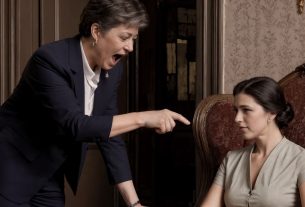
“Annushka, we need to have a serious talk,” Zinaida Fyodorovna said, sitting at the table and folding her hands in front of her. “I’ve kept quiet for a long time, but I can’t anymore.”
“About what?”
“About the house. About fairness. My son does everything for you, and you won’t even give him a share.”
“What share?”
Her mother-in-law tightened her lips.
“What’s unclear? A share in the house. Register half of it in his name, as it should be. So everything is honest. And don’t forget — he took you with a child. He’s been carrying you all this time.”
Anna felt something inside her break.
Took you with a child.
As if she were some burden he had picked up out of pity.
“He isn’t carrying me. I work too.”
“Oh, she works,” her mother-in-law scoffed. “Selling clothes in a boutique. But Igor is a man. A foreman. He works with his hands. Who fixed this house? Who put in the bathhouse?”
“I took the loan for the bathhouse. And the floors and windows were paid for with my money.”
“Money!” Zinaida Fyodorovna threw up her hands. “Everything is money with you. What about gratitude? What about respect for your husband?”
Igor appeared in the hallway. He stood leaning against the doorframe, listening.
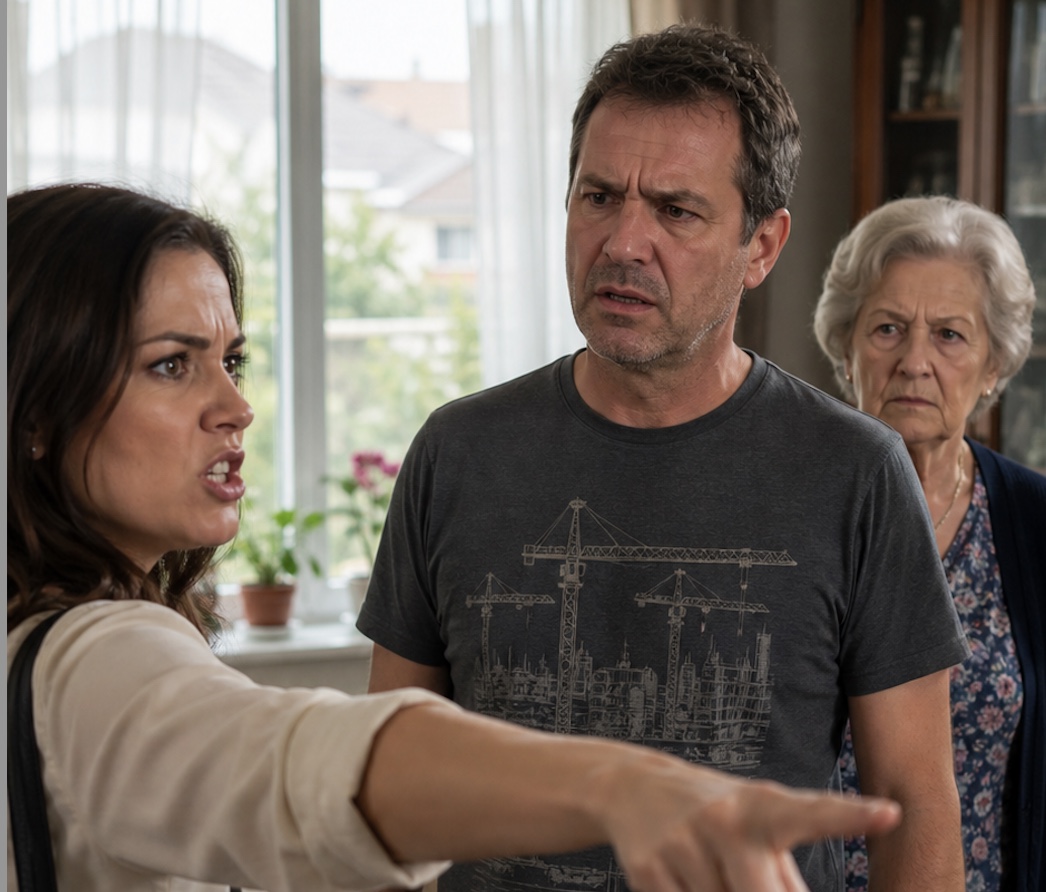
“Igor, tell her,” his mother turned to him. “Tell her how much you’ve done for them.”
He was silent for a moment. Then he looked at Anna, and there was nothing in his eyes but irritation.
“Mom is right. I do everything for you, and what do I get? You’re stingy with some house. You got it for free, through inheritance. And you act as if you spent your whole life saving up for it.”
Anna stared at him and did not recognize him.
Three years ago, he had been different. Completely different. When they had first started living together in that rented apartment with shabby walls, he spent hours with Dasha. He read her books, carried her on his shoulders, taught her how to ride a bike. Dasha reached for him, laughed with him, called him dad. Anna looked at them and thought: there it is, finally — a family.
And then something broke.
Not all at once. Slowly.
He started coming home later, talking less. He stopped playing with Dasha, as if he no longer noticed her. And after the inheritance, it was as if he had become another person entirely. His mother, who used to visit only a couple of times a year on holidays, suddenly started coming every week, as if on schedule. And with every visit came new demands, new complaints.
“I didn’t get this house for free,” Anna said quietly. “My godmother left it to me. Me. Not you. Not your mother.”
“So that’s how it is,” Igor twisted his mouth. “That means I’m nobody here. Three years together — and I’m nobody.”
“You made yourself that.”
Zinaida Fyodorovna jumped up from the chair.
“How dare you speak to him like that! After everything he has done for you!”
Anna stood too. Her hands were shaking, but her voice was not.
“Pack your things. You and your mother can get out of my house. And take your wild niece with you.”
Silence.
Even the clock on the wall seemed to stop ticking.
“What did you say?” her mother-in-law hissed. “What has Yulka done to you? The girl is studying, trying her best!”
“Trying her best? She roams around at night, comes home at three in the morning, and empties the whole fridge. Is that how she tries?”
“You little…” Zinaida Fyodorovna choked with anger.
“This is my house. And no one will give orders here anymore.”
Igor stepped toward her.
“You’ll regret this. Tomorrow you’ll regret it.”
“I won’t.”
“Then don’t call me later,” he grabbed his jacket from the hanger. “You chose this yourself.”
His mother was the last to leave. At the threshold, she turned around as if she wanted to say something, but Anna closed the door.
Then she stood in the hallway with her back against it. Her heart was pounding. Her hands were still trembling. Outside, Igor’s old Lada rumbled to life, car doors slammed, and the vehicle drove away. The sound of the engine faded somewhere around the bend.
And then something strange appeared inside her.
Not pain.
Not fear.
Relief.
Yulia moved out that same day. She packed her things into two bags, muttered something about Anna being “crazy,” and left. That evening, Anna changed the locks. She called a locksmith and paid him fifteen hundred. She placed the new keys on the shelf where her godmother used to keep the spare ones — tied with a red ribbon.
The next day, Igor called.
“Listen, we need to talk. About my things.”
“Come and get them.”
“Wait,” he was silent for a moment. “Maybe we both overreacted. Let’s forget it and start over. Three years together, Anya.”
“I don’t want to.”
“Why?”
Anna looked out the window at the swings, at the apple trees — the ones that remained.
“Because I knew a different Igor. And now you’ve shown me who you really are.”
“You misunderstood everything. Mom said too much, I was stressed…”
“Come for your things,” she interrupted. “Don’t count on anything else.”
He kept talking, but Anna ended the call.
Dasha came out of her room and walked over to her mother.
“Mom, is Dad mad at us?”
“No, sweetheart. We’re just going to live together now. Just the two of us.”
“Okay,” Dasha nodded, as if she understood everything, and went back to her room to play.
That evening, they sat on the veranda. Anna brewed tea in her godmother’s old teapot — the one with the blue flowers. Dasha swung on the swings, quietly humming to herself.
Silence.
No voices. No advice. No demands.
Only the wind moving through the apple trees — the ones that had survived.
Anna looked at her daughter and felt tears rolling down her cheeks. Not from grief, but from relief. After the inheritance, everything in her life had gone wrong. It was as if the house had been testing her — to see whether she would endure.
And she had.
“Mom, are you crying?” Dasha stopped the swing.
“They’re good tears, sweetheart.”
Dasha came over and hugged Anna around the knees.
“I like it here. I like the swings. And I like you.”
Anna hugged her daughter and pressed her close.
“Thank you, Godmother,” she whispered.
A car passed beyond the fence. Somewhere nearby, a neighbor’s dog barked. A quiet evening.
Their first quiet evening together.
No one else’s plans.
No one else’s voices.
Her home.
Her life.