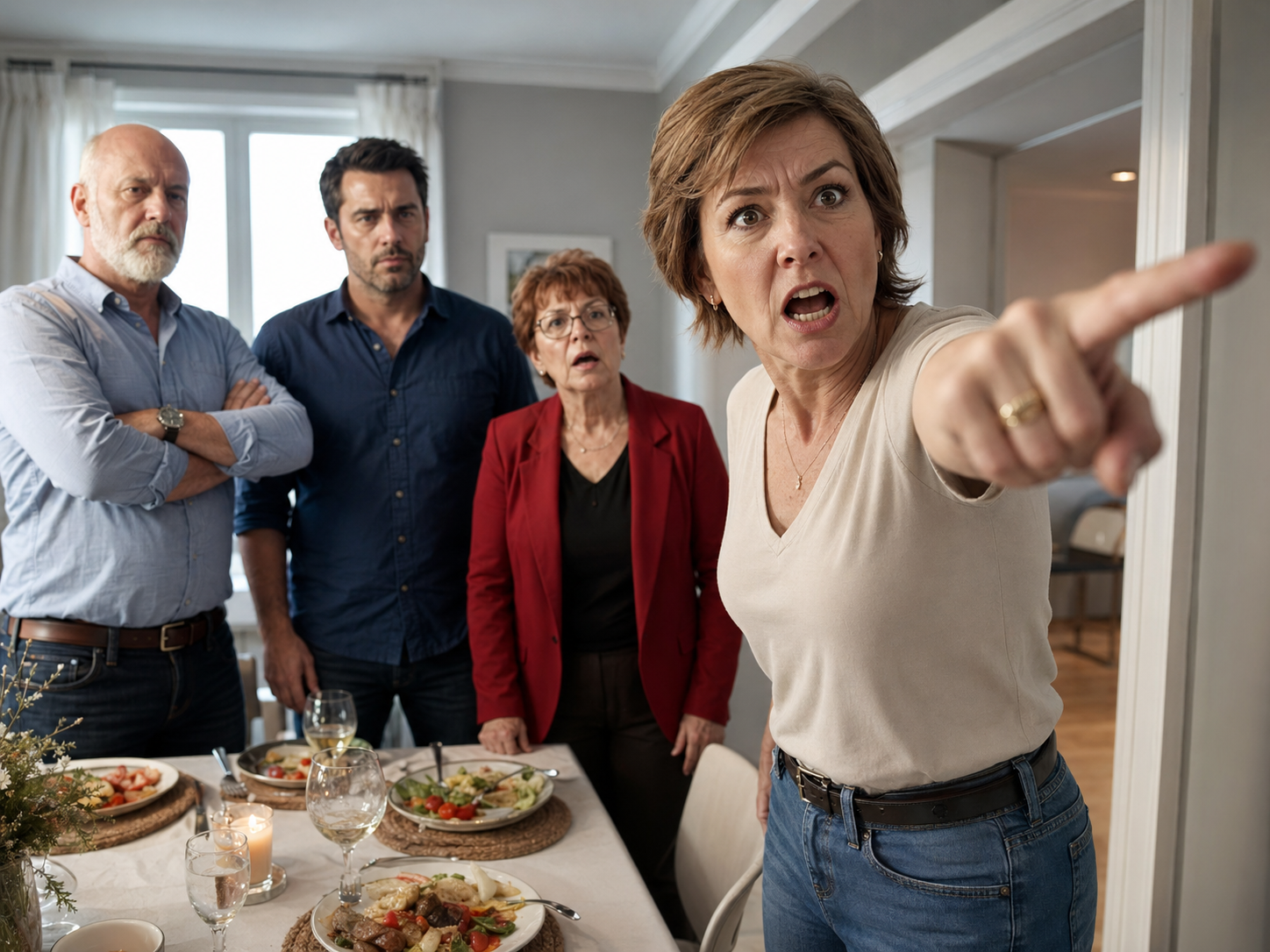
“Are you kidding me?!” Alina’s voice rang out so sharply that the glass doors of the cabinet trembled slightly. “Igor, explain to me why your mother has barged in here again without calling.”
He stood in the hallway, buttoning his jacket as if he were preparing to escape, looking at her with the eyes of a beaten puppy.
“Alinochka, please don’t shout… Mom just came by to help…”
“Help?” She raised her eyebrows. “Is it considered ‘help’ when she uses up all the food I carried home from the supermarket yesterday by myself? While you were sitting on your phone, by the way.”
“They were hungry…”
“Oh, really?” Alina crossed her arms. “And you weren’t hungry? Or did your mother bring you a snack along with herself?”
Igor sighed and turned away, pretending he had not heard her.
But Alina was boiling — and that boiling had not started today, or yesterday, or even the day before. It had been building for months, like an old radiator in a November apartment building: technically still working, but barely holding on.
Let’s go back a couple of weeks — to the moment when everything began falling apart so quietly and ordinarily that, at first, it almost seemed funny to notice.
It was deep autumn, the middle of November. Outside the windows, everything was gray, damp, and gloomy. The courtyard was covered in puddles and fallen leaves, as if the city itself were trying to hide its flaws under mud.
That evening, Alina was coming home from work completely exhausted. Her head was pounding, the air outside was cold, and the bus had been packed with people. All she dreamed of was a hot cup of tea and silence.
She opened the door.
And froze.
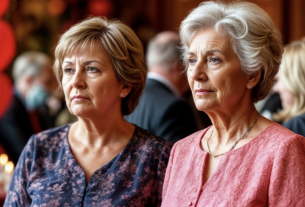
Olga Petrovna was standing in the kitchen, confident as a department head who knew perfectly well she had mixed up all the documents but would still fire someone else for it. She was slamming cabinet doors, moving groceries around, setting pots on the stove, and she smelled of perfume, fried onions, and authority.
“Good evening,” Alina said, secretly hoping she was imagining things.
“Evening,” her mother-in-law replied without even looking at her. “Igor gave me the keys and told me to stop by. The men will be here soon, so I need to get everything ready. Otherwise, they’ll get hungry and eat some nonsense again.”
“The men.”
The way Olga Petrovna said that word made it sound as if she were not talking about grown adults, but about some rare endangered species that would die out on the spot without her.
Alina stood in the doorway, gripping her bag with both hands, feeling like a guest in her own apartment.
A guest no one had invited.
“Could you maybe… at least have warned me?” she asked carefully.
“What’s there to warn you about?” her mother-in-law waved her off. “We’re family. Family can come whenever they want. Besides, judging by the empty table, you haven’t cooked anything yourself yet. So don’t get in the way.”
Alina clenched her teeth.
The table was empty because she had just come home from work. But there was no point explaining that. Olga Petrovna did not use logic — she used the sacred privilege of “I’m the mother, therefore I’m automatically right.”
An hour later, as if summoned by a signal, Igor’s father and three brothers arrived — Dima, Sasha, and Petya. All of them large and loud, like wardrobes with walking functions.
They did not even greet her properly. They simply walked in, took over the armchairs, turned on the TV, and began waiting for the table to “set itself.”
Alina sat quietly on a stool while her mother-in-law handed everyone portions as if it were her kitchen, her apartment, her groceries, and her rules for life.
A jar of pickles disappeared in five minutes. A container of boiled potatoes was gone in seven. The cheese vanished mysteriously, as if it had never existed at all.
Alina sat there thinking, “Why do I even bother?”
When that entire army finally left, there were only two eggs and half a pack of butter left in the refrigerator.
That was it.
When Igor walked into the kitchen that evening, he did not even understand why she was sitting in front of the open fridge, breathing as if she had just run a marathon.
“Alinochka, what happened?” he asked innocently.
“Nothing,” she replied dryly. “I’m just trying to figure out what we’re going to have for breakfast tomorrow. And with what.”
He shrugged.
“We’ll buy more. Mom worked so hard…”
“Worked hard.”
She almost laughed. But she held it in.
Then came another visit. And another. And another.
That was what their family weekends had become: the refrigerator losing food, Alina losing her nerves, and Igor gaining another reason to ignore everything.
Olga Petrovna either arrived without calling or called only when she was already standing outside the door. The brothers brought nothing with them except their appetites. Her father-in-law brought a newspaper.
Help? Zero.
Normal conversation? Zero.
Respect for someone else’s labor and personal space? Negative ten thousand.
Alina tried to talk to Igor several times, but his answers were always copies of one another:
“They’re family.”
“They just want to eat.”
“You’re a woman, it’s not hard for you to cook.”
“You’re overreacting.”
Every time, she wanted to ask what about him being a man, and what about him cooking something for once. But Igor acted as if he did not understand the meaning of the words “shared responsibility.”
And then, after two weeks of silence — a rare gift from fate — that very Saturday arrived.
Alina woke up early, even before the alarm. The cold, leafy November light lay across the ceiling as if the month itself were trying to make everything in the apartment a little grayer. She got dressed, drank coffee on the go, and went grocery shopping.
She bought everything they needed for the week: meat, vegetables, dairy products, grains. She carried the bags until her hands went numb, but she kept thinking, “At least we’ll live peacefully now. No guests. At least for a week.”
She climbed to the fourth floor, barely breathing, put the bags down, reached for her key…
Opened the door — and went still.
Everyone was sprawled across the living room.
The whole group.
The brothers, her father-in-law, her mother-in-law. Igor was sitting beside his mother, discussing something with her, looking as if this were a perfectly normal Saturday.
Napkins were on the table. Shoes were thrown messily near the entrance. In short, they had made themselves comfortable as though they had lived there their whole lives.
And the first thing Alina heard was:
“Where have you been wandering around?” Olga Petrovna snapped coldly, without even looking at her.
Not even “hello.”
Not even “good afternoon.”
Just: “Where have you been wandering around?”
Alina placed the bags on the floor.
“I was at the store,” she said evenly.
“Well, finally,” her mother-in-law continued with irritation. “We’ve been waiting for an hour. Come on, set the table. The men are hungry.”
Alina closed her eyes for a second.
Then opened them.
She looked at all of them at once.
And in that instant, Alina understood: if she stayed silent now, her entire life would turn into an endless Saturday feast against her will. One more year, and she would no longer even understand who was the hostess here, who was the guest, and who had the right to speak at all.
She opened her eyes, lifted her head, and said:
“No.”
The room became so silent it was as if someone invisible had pulled the plug from the wall.
Olga Petrovna blinked, as though she had misheard.
“What do you mean, ‘no’? Maybe you could explain yourself like a normal person? People are sitting here hungry…”
Alina slowly straightened and repeated:
“I am not setting the table. And actually, all of you are leaving now.”
And that was when the performance of the century began.
“Have you lost your mind?!” her mother-in-law barked, jumping up so sharply that the armchair shook. “Who do you think you’re talking to?! This is FAMILY! We have the right to come here whenever we want! How many times do I have to tell you?”
“And how many times do I have to remind you that this is my apartment?” Alina asked calmly, even surprising herself with how steady her voice sounded. “I am not obligated to feed your entire battalion.”
“Battalion?!” Olga Petrovna shrieked. “So that’s what you think of us! Igor, say something to her! What is she even talking about?”
Igor stood up, nervously rubbing the bridge of his nose.
“Alina… come on, what are you doing? People are sitting here… They’ve been waiting for an hour… Mom is hurt…”
“Igor,” Alina interrupted him, “if your mother’s feelings matter more to you than my work and my health, then you can leave with her. There’s the door.”
The brothers exchanged glances — partly shocked, partly offended. Petya even raised his hand as if he wanted to say something, then thought better of it. Viktor Sergeevich frowned like a teacher who had suddenly realized the class was disrupting the lesson and he could do nothing about it.
But Olga Petrovna was not about to give up her position.
“Alina, I have only one question,” she said, crossing her arms and leaning forward. “When are you, young lady, going to learn to respect your husband and his family? Or do you think family means only you?”
Alina laughed quietly.
Not cruelly.
Bitterly.
“Family means closeness, responsibility, and reciprocity. But here there is only closeness. None of the rest.”
“Are we your enemies?” Olga Petrovna sighed. “We only wanted the best! We came so you wouldn’t live like strangers!”
“You came to eat,” Alina clarified. “And you left when the refrigerator was empty. What is that supposed to be called? Care?”
“You are ungrateful!” her mother-in-law flared up even more. “We came to you with open hearts, and you…”
“You came to me with open appetites,” Alina shot back. “And you know what? Enough.”
She walked to the door and threw it wide open.
“That’s it. Leave. I will not discuss this anymore. I warned you. I asked you to call in advance. I explained that I work. You ignored me. Now it’s over. Goodbye.”
A pause followed.
Heavy, thick, tense — like the air before a thunderstorm.
Viktor Sergeevich was the first to stand.
“Come on, Olya,” he said.
He said it calmly, without shouting, but that “come on” sounded as if he himself had grown tired of all these visits and silent tables.
“But… Viktor…”
“Come on. We’ll talk later.”
He took his wife gently by the elbow. The brothers reluctantly stood, pulled on their jackets, muttered their own displeased little “yeah, fine,” and followed their parents out.
As Olga Petrovna passed Alina, she hissed:
“You’ll regret this.”
“Maybe,” Alina replied. “But definitely not today.”
When the door closed and the key turned from the outside, the apartment emptied so abruptly it felt as if someone had switched off a loud television.
Only the two of them remained.
Alina and Igor.
And that silence was the worst part.
Igor stood in the middle of the hallway, his fists clenched.
“Do you understand what you just did?” he asked at last.
“Yes.” Alina took off her jacket and carefully hung it on the hook. “I put an end to it.”
“An end?!” Igor shouted. “You call that putting an end to it? That was a disaster! You insulted my mother, my father, my brothers!”
“I protected myself,” Alina replied calmly. “In this apartment, I did everything myself. I cooked. I cleaned. I bought the groceries. I endured it. And no one in your family ever asked whether it was convenient for me. They simply came and took. Everything. Without limits.”
“Because they’re your family!”
She looked him straight in the eyes — carefully, intensely, without hysteria.
And for the first time, she saw it clearly: he did not consider her family. She had simply been assigned a role, and he expected her to accept it silently.
“Igor,” Alina said quietly, almost in a whisper, “then who am I to you?”
He flinched as if the question had stunned him.
“You’re my wife.”
“And?” She took a step closer. “Then why does no one consider my boundaries, my wishes, my time? Why does ‘family’ only mean them to you? Why are their feelings more important than mine?”
Igor turned away.
“They’ve always been with me. They’re my roots.”
“And I’m not?” Her voice broke. “We’re family too, aren’t we? Or does that only work in one direction?”
He did not answer.
And Alina finally understood: he was not evil. Just incapable. Incapable of building his own life without his mother’s permission. Incapable of protecting his own home. Incapable of becoming an adult.
She took a deep breath.
“Igor, if you want to go to your parents, go. I’m not holding you back. Truly.”
He grabbed his jacket sharply, almost angrily, and pulled it on as though fleeing from a fire.
“You wanted this yourself!” he shouted. “You destroyed everything yourself! Don’t complain later!”
“I won’t,” Alina replied.
The door slammed so loudly that it felt as if the whole stairwell exhaled in relief.
After he left, a strange silence settled over the apartment — not frightening, but freeing, as though all the noise that had been building for months had finally been switched off.
Alina went into the kitchen.
The bags were still standing in the hallway — heavy, full, sweating from the cold. She calmly unpacked the groceries: meat into the freezer, vegetables into the drawer, dairy products onto the top shelf. The refrigerator hummed softly, as if approving the restored order.
And for the first time in a long while, there was plenty of food inside.
And it belonged only to her.
She put the kettle on, poured herself strong black tea, sat at the table, and stared at the cup, feeling something strange — a mixture of relief, sadness, and unexpected peace.
She thought:
“Was it supposed to be like this from the beginning?”
“Did I put up with it for too long?”
“Should I have said ‘no’ earlier?”
But those questions no longer mattered.
The important thing was that she had finally said it.
Her phone vibrated.
Igor.
Alina did not answer.
Let him cool down.
Then came a message from Olga Petrovna: long, angry, filled with accusations and predictions about “how her life would turn out.” Alina deleted it without reading.
Then one from Petya: a short, “Mom asked me to tell you that you’re wrong.”
She smiled — and deleted that too.
Then another from Igor: “We’ll talk.”
She did not even open it.
Late that evening, Alina sat by the window. Rain drizzled against the glass. Streetlights reflected in the wet asphalt, and the neighbors’ cars splashed through puddles. The city was living its own life, and she — for the first time in a long time — was living hers.
No footsteps in the hallway.
No loud laughter from the brothers.
No grumbling from her mother-in-law.
The apartment was quiet, spacious, peaceful.
She finally allowed herself to breathe out.
It did not feel like victory.
It felt like she had taken back her home.
Taken back the silence.
Taken back her right to decide.
Taken back her life.
And somewhere deep inside, a new certainty began to grow:
Yes, what came next would be difficult.
But it would definitely be better than what had been.
Because she would no longer allow anyone to enter her home, her life, or her soul without permission.
And with that, at last, she could put a period.
Or, if she were being honest — a beautiful, bold ellipsis.