The zipper on my autumn boot had jammed solid. I yanked the pull in irritation, nearly snapping a nail, when my phone started vibrating in my jacket pocket. Olga Nikolaevna’s name flashed on the screen—the quiet music teacher renting out my little one-bedroom apartment on the avenue.
“Zhenya, for heaven’s sake, I’m so sorry,” she said, her voice trembling while a neighbor’s dog barked hysterically in the background. “I wouldn’t call at nine at night unless it was serious… but your mother came by half an hour ago. Nina Vasilyevna.”
I froze, still wearing my second boot. The damp leather smelled of cold rain and сырость.
“And why exactly did she come?”
“She told me to start packing my boxes. She said the apartment is urgently needed for your brother Matvey because he’s about to become a father. She gave me three days to move out. Zhenya, we only discussed replacing the utility meters yesterday… Where am I supposed to go right now with a piano and a cat?”
A hot pressure rose beneath my ribs. I pressed my forehead against the cold hallway mirror, trying to steady my breathing.
“Olga Nikolaevna, take your medicine and don’t worry about anything. We have a formal lease. Tomorrow morning I’ll call a locksmith and change the locks. And I’m going to speak to my mother right now.”
I hung up and dialed my parents’ number. The call was answered instantly, as if someone had already been holding the phone.
“Mom, have you completely lost your mind?” I burst out, stepping over the shoes tossed in the hallway. “What right do you have to show up at my tenant’s place and threaten to throw her out?”
“Don’t you dare speak to me like that!” Nina Vasilyevna snapped at once. Her voice rang sharp and commanding, the kind that expected obedience. “I was actually planning to surprise you. Matvey and Dasha filed their marriage application.”
“Congratulations. What does that have to do with my property?”
“Your brother is getting married, so give him the apartment!” my mother declared. “Dasha is pregnant. I’m not going to drag my future daughter-in-law into our cramped little house in the village. You and Anton live in a big three-room apartment, you have plenty of space. Your place is just sitting empty anyway.”
“It is not empty. People live there. They pay me rent. That is my income.”
“Oh, income,” she scoffed. “So your own brother is supposed to drag himself from one rented room to another while you profit off strangers? Your Anton makes decent money at the auto shop, you won’t starve. Matvey needs a start in life. I already promised Dasha’s mother the young couple would move to the city.”
“Then take your promise back. I’m not giving him the keys. Matvey is thirty years old. Let him get a job.”
I ended the call and tossed the phone onto the padded bench. A bitter lump rose in my throat. Matvey needs a start in life. That song had been playing in our family for the last ten years.
Seven years earlier, when our grandfather died, Matvey and I had inherited equal shares from the sale of his old house and land.
I was twenty-one then. I took my share and bought a tiny room in a run-down communal apartment on the outskirts of town. At night I pasted wallpaper, and during the day I worked as a cashier in a construction store. I always smelled of dust and cheap vending-machine coffee. In the next room lived an elderly woman, half-deaf and completely alone. I bought her kefir, changed her lightbulbs, and when she became too weak to manage on her own, I looked after her and helped with everything. Before she died, she left her room to me. I sold both rooms, added my savings, took out a small loan, and bought that very one-bedroom apartment.
And what did Matvey do with his “head start”? He bought a used SUV to impress girls. Two months later, he skidded off an empty highway into a ditch. The car was totaled beyond repair. Whatever money he had left disappeared into new phones and nights out in bars.
That evening Anton came home from work. He listened quietly while I poured out the whole story in a jumble, chopping cheese in the kitchen.
“Your mother is an extraordinary woman,” my husband sighed, sliding a mug of tea toward me. “Matvey got a girl pregnant, and somehow you’re the one expected to pay for it. Did you tell her anything about what’s going on with us?”
“I didn’t get the chance. She wouldn’t even listen.”
“Then you’ll tell her in person. She’s not going to let this go easily.”
Anton was right.
On Saturday morning, after he had gone off to the tire shop, the doorbell started ringing insistently. I looked through the peephole and nearly groaned out loud. My mother and Matvey were standing on the landing. My brother shifted awkwardly from foot to foot, holding a large plaid market bag.
I unlatched the door and opened it partway.
“Come in,” I said flatly.
My mother swept into the hallway first. Her coat smelled faintly of smoke, probably from standing outside near the entrance. Matvey squeezed in behind her, carefully avoiding my eyes.
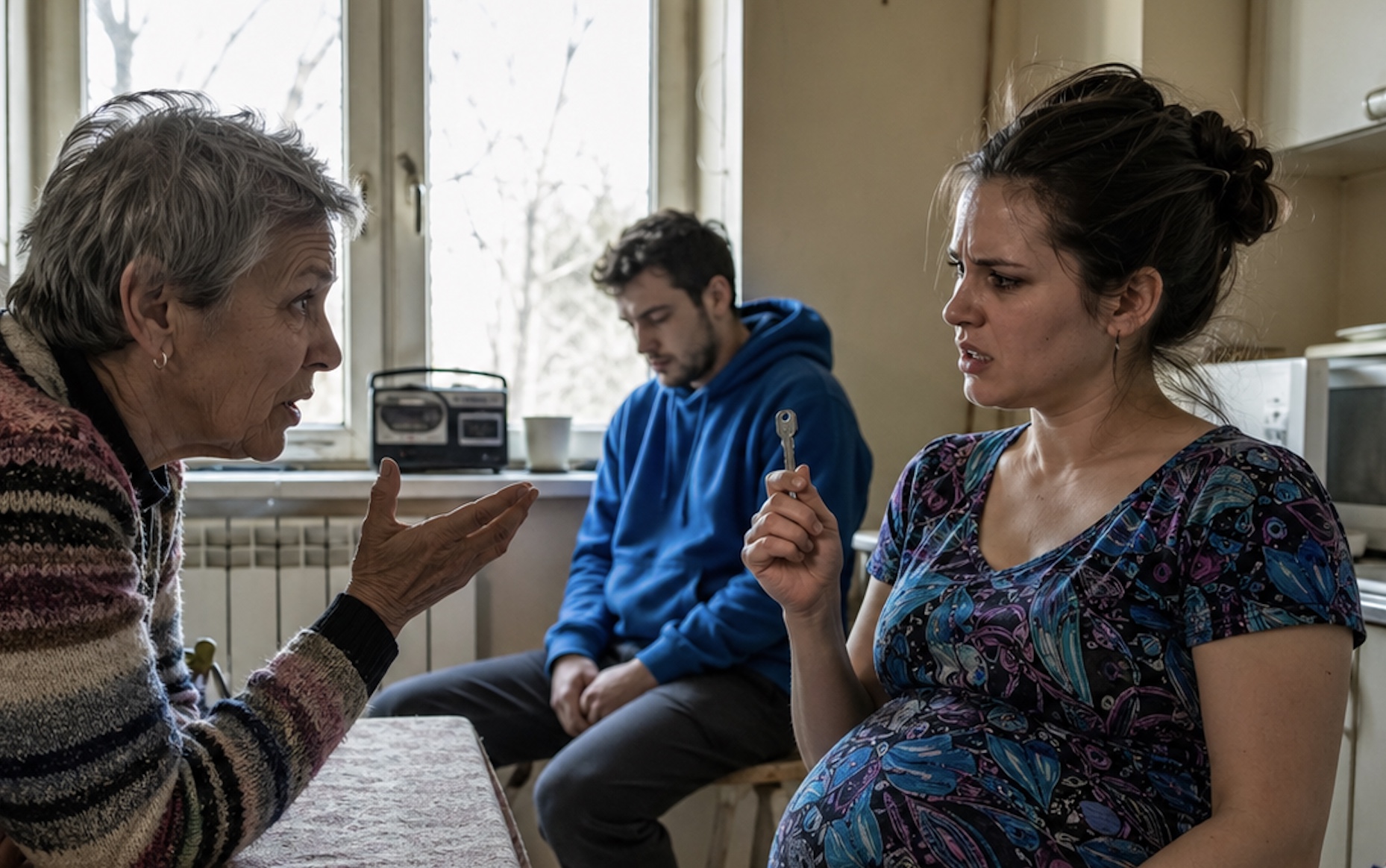
“Let’s skip the drama, Zhenya,” my mother said, slipping off her shoes and marching straight into the kitchen, where she pulled out a stool as though she owned the place. “Zinaida—Dasha’s mother—has been wearing me out. She doesn’t like the idea of her daughter wandering from one rented apartment to another. So hand over the keys. Matvey will move his things in today, and you can sort out your tenants yourself.”
I leaned against the kitchen doorway and folded my arms. Then I looked at my brother. He was perched on the edge of the chair, nervously fiddling with his watch strap.
“Matvey, how does this feel to you personally?” I asked. “Are you really comfortable sitting there while Mom begs for someone else’s home on your behalf? Doesn’t anything about this bother you?”
He flushed, but lifted his chin stubbornly.
“Zhenya, why are you making this such a big deal?” he muttered. “You and Anton have two cars and a huge apartment. You’ll make more money. Dasha and I barely have a penny. She needs fruit, calm, stability. What, you begrudge your own nephew that much?”
The sheer shamelessness of it knocked the ground out from under me. I stepped right up to the table and planted both hands on the countertop.
“It’s not my future nephew I begrudge!” My voice cracked and rang through the whole kitchen. “What I refuse to hand over is what I earned with my own back to a thirty-year-old man who has spent his entire life riding on other people’s shoulders! I spent years caring for a helpless old woman and saving every ruble. And while I was doing that, you were blowing Grandpa’s money in repair shops and clubs!”
“Don’t you dare throw that in your brother’s face!” my mother shouted, slamming her palm against the table so hard the cups rattled. “He made a foolish mistake when he was young! That is exactly what family is for—to help each other through hard times!”
“This is not hard times, Mom!” I shot back, my knees trembling, though by then I couldn’t have stopped if I wanted to. “These are the consequences of his laziness! And have you asked me even once in the last month why I look pale? Why I left my job?”
She twisted her mouth with disdain.
“Oh please. You got tired of pushing papers around in an office. Don’t be ridiculous.”
I turned, went into the hallway, pulled a folded A4 sheet from my bag, and came back into the kitchen. I placed it directly in front of her.
“Look at it. Read it out loud, if your eyesight still allows.”
My mother pressed her lips together in annoyance and dropped her gaze to the paper. It was my ultrasound report and a doctor’s note stamped by a private clinic. Her eyes darted across the lines. For a second she blinked as if she thought there had to be some mistake in the print. The skin on her face suddenly seemed to sag, turning gray.
“Sixteen weeks,” I said quietly, but with perfect clarity. “Four months. I felt so awful I could barely get out of bed. The doctors forbade any stress or physical strain. I had to leave my job. And the money Olga Nikolaevna sends me every month is my only safety net. I need it to pay for the clinic, buy a stroller, a crib, baby food.”
Then I looked at my brother.
“You and Mom came here to take money away from my future child and hand it to you. Because, Matvey, you don’t feel like breaking your back unloading freight cars or working double shifts.”
The kitchen fell so silent that I could hear the refrigerator humming. My mother swallowed hard.
“Zhenya…” she whispered, not lifting her eyes. “Why didn’t you tell me?”
“Did you ask?” I laughed bitterly. “Did you call even once just to ask how I was sleeping? No. You only call when Matvey needs rescuing again.”
Matvey suddenly shoved his chair back. He didn’t argue. He didn’t defend himself. He just grabbed the plaid bag from the floor. Red blotches spread across his face.
“Come on, Mom,” he rasped. “That’s enough.”
“Matyusha, sweetheart, wait—” my mother fluttered helplessly between him and me.
“I said let’s go!” he shouted so loudly that she flinched.
They put their shoes on in complete silence. My mother tried to say something to me before leaving, but the words died in her throat. The door slammed shut. My legs turned weak, and I sank to the floor, covering my face with my hands. It had been a brutal blow—but at the same time, I felt unbelievably light.
Two days later, a long message came from my brother. No apology. No extra words. He wrote:
Dasha and I rented a room on Mira Avenue. I got a job at an electronics warehouse and I’m taking night shifts. Don’t listen to Mom. Live your life in peace.
After that, Zinaida—Dasha’s mother—never tried calling or stirring up drama again. Apparently Matvey shut those conversations down hard. He and his wife live modestly now, counting every coin until payday, but for the first time in his life, my brother is carrying his own weight.
My tenant, Olga Nikolaevna, still pays her rent on time. Recently she even sent over two pairs of tiny wool baby socks she had knitted herself through Anton.
My mother calls often now. She no longer gives orders or makes demands. She speaks softly, carefully asks about my test results, offers to come over and make soup. I answer politely, but I do not let her get close. Distance is the healthiest medicine for relationships like these.
I rest my hand on my rounded belly and know one thing for certain: my child will grow up surrounded by love and care. But I will never become the kind of mother who tears food from one child’s mouth to feed another. The most important thing is to teach your children, in time, to take responsibility for their own choices. Otherwise life will teach them instead—and it will be far harsher.