Tired of Happiness
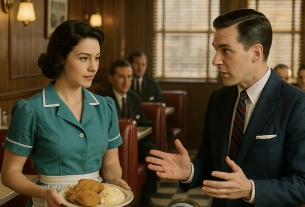
More and more often, Maksim found himself haunted by a strange thought: it was as if he were living someone else’s life.
On the surface, everything had turned out exactly the way it should have. A spacious three-bedroom apartment with a wide balcony where, in summer, his wife grew flowers in pots. A wife—Vera—calm, caring, never demanding too much, pretty in her own quiet way, even if not striking. Two children, a boy and a girl. At work, he was respected: management valued his reliability, colleagues listened when he spoke. Sometimes his friends even envied him.
“You’re lucky, Max,” one of them would say over a beer. “You struck gold with your wife.”
Maksim would smile back, but his smile always looked faded. Deep down, he felt unhappy. He could not fully explain why. It was as though some stubborn, silent sadness lived inside him, gnawing at him day after day, never letting him rest. Even in the evenings, when the apartment felt warm and inviting—when the smell of fresh pastries drifted through the rooms, when the lamp cast a soft glow over the neatly laid table, when laughter rang out from the children’s room—even then, there was an emptiness in his chest.
Vera tried in every way she could. She kept the home so perfectly that there was nothing to criticize: the shelves shone with cleanliness, the kitchen always smelled of borscht or pies, the children were spotless and well dressed, as if they had stepped out of a magazine. Even when Maksim came home tired and irritable, Vera greeted him without reproach. She seemed never to allow herself weakness: she hid her exhaustion behind a smile, set a hot meal on the table, and asked in her quiet, even voice:
“How was your day?”
What more could a man want?
And yet it was in those very moments that Maksim felt most sharply that something was missing.
He felt it especially when Vera dared to disagree with him. On the surface, it was always something small. He would suggest a summer trip to the sea, and she would object that it was too expensive and that it would be wiser to buy the children new jackets and pay for their activities. He would start talking about buying a new car, and Vera would wave it off: “Let’s wait until we finish paying off the current loan.” And every time, irritation would boil up inside him. He was used to the idea that his word should be the final one.
And then, from the deepest corners of memory, Tamara would return.
His first love.
His unreachable dream.
Toma had been completely different. She never argued. She accepted every word he said as truth, looked at him as if he were the center of her universe—the smartest, strongest, most important man in the world. Beside her, he had felt like a real man. Maksim often thought that if fate had unfolded differently, if Tamara had become his wife, his life would be entirely different now. No petty disappointments. No endless disputes or objections. He would be bathed in her unconditional admiration and agreement, as if floating in a warm sea.
As the years passed, those memories only grew brighter. The older he got, the more often the image of Tamara rose in his mind—just as she had been in youth: luminous, delicate, almost otherworldly.
Sometimes, lying on the wide bed at night, he would close his eyes and imagine that it was not Vera beside him, but Toma. At that hour, Vera would still be busy in the kitchen—washing dishes, preparing food for the children for the next day. He heard the clink of plates, the creak of the refrigerator door. He wanted his wife to come to him beautiful and light, in lace lingerie, to lie down beside him and press herself against him. But instead, Vera would quietly enter the bedroom in her simple cotton nightgown with its tiny floral print, trying not to make noise so she would not wake the children. And Maksim would barely conceal the grimace on his face. It seemed to him as if he had somehow been thrown back into another century. Cotton, modesty, endless fatigue—nothing feminine, no passion. In moments like those, he found himself thinking more and more clearly that his wife was not a woman at all, only a housekeeper.
And that irritation grew like a weed pushing through cracked stone.
At first, Maksim paid it no real attention—he blamed it on fatigue, on a bad mood. But over time he began noticing little things that once would have escaped him entirely: she dressed “like a village woman,” wore outdated makeup, styled her hair in an intentionally old-fashioned way, only put on heels for special occasions. Yet a woman in heels was a completely different story—her posture changed, her walk changed, the whole woman seemed to bloom. With quiet longing, Maksim imagined that Tamara would surely have worn elegant shoes every day, dresses that flattered her figure, a fashionable haircut, sparkle in her eyes. Everything about her would have been modern, beautiful, effortless. Beside Vera, by contrast, he felt as though he were slipping back into some dull gray past.
More and more often, he caught himself comparing his wife to that first youthful love, and every single time, Vera lost.
“What if I met Toma again?” he would think, lying in the dark and listening to his wife’s steady breathing. “What if fate gave me one more chance to start over? I wouldn’t hesitate. I’d leave Vera for her. Then I’d finally really live. I’d live the kind of life a man could envy himself for.”
Meanwhile, life went on as usual. Days stretched into years, the children grew older. Vera, as always, stayed by his side—caring, patient, attentive. She did not complain, did not demand the impossible, did not ask for too much. She seemed to dissolve herself into the family, guarding their peace. But that, too, began to weigh on Maksim. Her endless care, her constant decency, no longer felt like support to him. It felt like a noose.
He retreated more and more into his fantasies.
He would sit at the table in the evening, nodding while Vera talked about the children’s school, or the neighbor who had borrowed money yet again, but his mind was elsewhere. Inside, he lived another life: one in which Tamara was beside him. In that imagined world, there was no routine, no exhaustion, no endless burden of daily worries. There, she looked at him with admiration, laughed at his jokes, agreed with every word he said. There, he was a hero, a king, the one and only.
Sometimes Maksim began to believe it was real. That all he had to do was want it badly enough, all he had to do was find her, and everything would change.
“What if her life didn’t work out either?” he thought. “Maybe she’s been waiting for me too.”
But the more he fed those fantasies, the colder his heart became toward Vera. He looked at his wife and saw only disappointment, only inadequacy. Everything seemed wrong: her clothes, her words, her smile… even she herself—simply not the one.
And in his dreams, Tamara lived on.
The same Tamara with those huge, trusting eyes that had once gazed up at him as though his whole being held her entire world. The one who listened to his every word, nodding in wonder as though his thoughts were carved in stone. In his memory, Tamara remained what first love always becomes—perfect, flawless, almost untouchable. His dreams of her warmed him and tormented him at the same time, turning into a sweet ache that he himself mistook for real happiness.
Then one day, autumn seemed to arrange the whole world to match his mood.
The sky hung low and heavy, pressing down from above. Gray clouds dragged themselves across the horizon. The air was damp and biting. Fallen leaves clung to the sidewalks. The few passersby wrapped in scarves hurried along without lifting their heads, eager to disappear into the warmth of their homes.
Maksim wandered slowly, almost as if he were deliberately postponing the moment of returning home. His thoughts tangled together, and there was a hard pressure in his chest. He had no desire at all to go back—to face the same thing again: Vera with her signature borscht, stuffed cabbage, or fish pie; Vera with her familiar questions—“How was your day?” “What are we doing this weekend?” “Should we go to the cottage?” It all sounded unbearably familiar, unbearably ordinary, like a dream that repeated itself night after night with no escape.
“I’m sick of it,” he muttered aloud.
And suddenly his feet carried him in another direction.
He boarded an old bus route he had not taken in years. Half an hour later he stepped off at a stop that felt achingly familiar. His heart began to beat faster: this was where Tamara had once lived. This was where he had been truly happy—or so he believed—once, long ago.
He walked slowly through the nearly empty streets, and memories came over him in waves: standing in the cold by her building in winter, shivering but patiently waiting just for the chance to see her smile; walking her to the door; dreaming that one day she would say yes and become his wife.
And now, here he was again in front of that same building.
Almost the same. The paint was peeling now, and most of the old wooden window frames had been replaced by plastic ones. Maksim sat down on the bench by the entrance and suddenly felt a surge of joy, a thrill he had not known in years. But along with it came sorrow. Bitter, prickling sorrow.
“I should have fought harder,” he thought. “I should have insisted.”
Tamara had refused him only once. She had said firmly that she would not marry him. And he, too proud to try again, had turned away, wounded, and never tried to win her back. He had stormed off, slamming the door behind him—and regretted it ever since.
He sat there lost in thought when suddenly he heard a quiet voice he recognized so instantly it made him shiver.
“Maksim?..”
He jolted as if someone had laid a hand on his shoulder. Slowly he looked up—and froze.
There she was.
Tamara. The very woman he had dreamed about for years, the one he had rebuilt in his imagination night after night. And now she was exactly as he had pictured her: a carefully made-up face, but subtle and tasteful; a stylish haircut; fashionable clothes that fit perfectly. Femininity, elegance, lightness—everything about her suggested that the passing years had only made her more beautiful.
“Tamara…” he breathed, barely able to force the word out.
She looked at him in surprise, but a second later her lips curled into a warm smile.
“Well, this is something!” she exclaimed. “How many years has it been? What are you doing here?”
Maksim frantically searched for an answer. He could hardly confess that he had come because of memories of her. So he lied. He said he had been nearby on business and had decided to walk through the old neighborhood, to remember his youth.
“What a coincidence,” Tamara laughed, the sound bright and familiar. “Come upstairs. We’ll have tea and catch up.”
And he went.
Her apartment was full of the kind of comfort that enveloped a person at once. A bright living room, modern furniture, light curtains, carefully chosen details that gave everything a sense of harmony. Maksim caught himself thinking that this was exactly how he imagined a “proper home” should look—beautiful, airy, effortless. Tamara knew how to create an atmosphere. Once, that had enchanted him, and now it struck him all over again.
They sat in the kitchen the way they had long ago—only now they were no longer teenagers, but grown people carrying years of life behind them. And yet the words flowed easily, as if no time had passed at all. They reminisced about classmates, neighbors, evening walks, ridiculous old stories. Maksim felt young and carefree again. His heart beat faster, his cheeks flushed from laughter, and everything felt simple and bright.
Then, at some point, he could not hold it in any longer.
Looking at her—beautiful, alive, right there before him—he finally said what he had carried inside himself for years.
“You know, Toma… I never really forgot you. So many years have passed, and I still think about you. Often. Too often. I dreamed of seeing you again, of sitting beside you like this.”
She lowered her eyes, but smiled—a sad smile, touched with regret.
“And I, Maksim… do you know, I regret it too. I was married, but it didn’t work out. And all that time, I kept thinking of you. I kept wondering what would have happened if I’d said yes back then. I’ve regretted not marrying you all these years.”
His breath caught in his throat.
Her words sounded like music, as if the whole world had fallen silent just so he could hear them. His heart hammered so hard he thought it might leap from his chest. He looked at her, overwhelmed by happiness, not knowing what to do with it.
They talked for a long time after that. They laughed, grew wistful, shared memories, and the whole evening felt miraculous. But the hands of the clock edged toward midnight, and at last Maksim rose reluctantly.
“Well then, Max,” Tamara said, walking him to the door, “don’t disappear again.”
As he went down the stairs, he could barely stop himself from leaping like a fool. He felt so light it was as if wings had grown on his back. Scenes of the future unfurled in his mind: he leaves Vera, he starts a new life with Toma, he is finally happy—truly happy—exactly as he had always dreamed. He even imagined how he would tell Vera: Vera, you’re a good woman, truly, but Toma is better. Forgive me. Then he winced. No, perhaps something gentler, he thought.
But as he stepped out of the building, he nearly collided with Andrei, a former classmate and Tamara’s old neighbor. Andrei was still tall and broad-shouldered, though early gray had begun to touch his hair.
“Max?” Andrei said, startled. “Why do you look so pleased with yourself? Like you just won the lottery. Where are you coming from?”
Maksim, so full of joy that he could hardly contain it, smiled—and before he even realized what he was doing, he let the truth slip.
“I was at Toma’s. We were sitting, remembering old times…”
Andrei narrowed his eyes, then gave a crooked smirk and clapped him on the shoulder.
“Oh? At Toma’s?” he drawled. “Still wasting no time, that one.”
“Watch your mouth, Andrei,” Maksim said sharply.
“No, you’d better think about who you’re getting tangled up with again,” Andrei shot back. “She got rid of her husband by sending him off to a care home, and now she’s back on the hunt.”
“What?” Maksim stared at him. “What are you talking about?”
Andrei’s face darkened.
“Exactly what I said. She married my friend Sergei. Took her time reeling him in, but in the end she got what she wanted. He was a good man, Max. A truly good man. Never once did I hear anyone say otherwise. She didn’t want children—said caring for anyone wasn’t for her. And he put up with everything. Doted on her. Gave her whatever she wanted. She didn’t even work—why would she, when her husband worked himself to the bone so she could have everything?”
Maksim listened, and the smile slowly vanished from his face.
“And then what?” he asked quietly.
“And then…” Andrei let out a heavy sigh. “Then disaster struck. Sergei had an accident at work. The doctors said he’d never walk again. And do you know what she did? First she cried and fussed for appearances, but then she quickly arranged to put him in a care home. Out of sight, out of mind. No conscience. No pity. Then she went right back to living easily, as though nothing had happened.”
“That can’t be true,” Maksim whispered.
“It is true. We’re neighbors. We saw it happen. Hardly anyone in the building even says hello to her now. People understand exactly what kind of person she is.”
Andrei waved a hand and walked away, leaving Maksim standing in the middle of the courtyard as though he had been struck.
The happiness that had been filling him only moments earlier vanished in an instant. All that remained was emptiness and cold. It was as if he had fallen from the sky to the ground—hard and painful.
Maksim began to walk.
He crossed the city on foot, his thoughts colliding, tangling, fighting for space inside his head.
“So that’s who Tamara really is. So that’s the dream of my life.”
And then another image rose before him.
He remembered that terrible year when he himself had been in the hospital. On a ski trail, he had fallen badly and injured his spine. The doctors did not hide the truth: the odds were poor. He would most likely never walk again.
He had lain there thinking his life was over. Dark thoughts circled relentlessly.
And Vera had been beside him.
She never left. She sat by his bed for days at a time, pleaded with doctors, searched for money for surgery, drove from place to place asking, persuading, begging—doing whatever she could to save him. And when he lost all hope, she was the one who lifted him up. When he refused to do his exercises, she pushed him, almost by force. She helped him stand, held him up, taught him to walk again.
Back then he had even been angry with her. Why are you torturing me? Let me lie here in peace.
But she never backed down. She believed he would walk again.
And in the end, he did.
He walked. He worked. He lived.
Because of her. Because of her stubborn love.
And if Tamara had been there instead?
He imagined her beside a hospital bed. Imagined her wrinkling her nose at the smells, recoiling from the burden of caring for him, resenting that the whole household would fall on her. No. She never would have endured it. She would have done exactly what she had done to Sergei—sent him away to some institution and gone on with her life. And he would still be there now, helpless, alone, forgotten.
Maksim shuddered.
“And I dreamed of her for all these years? I wanted to leave Vera for that? God, what a fool I’ve been…”
He walked through the autumn city without seeing the rare passersby, the wet shop windows, the traffic. His thoughts crowded in. His soul felt as though it were being turned inside out.
Vera. The very woman who welcomed him every evening with dinner, who cared for the children, for the home, for him. Yes, sometimes she argued. Yes, sometimes she stood her ground. But were those flaws? Was that any reason to call her lacking?
And he—ungrateful fool that he was—had spent years comparing her to a ghost from the past. To a woman who, in reality, had turned out to be hollow, selfish, cruel.
His heart clenched.
He felt so ashamed he wanted the earth to swallow him whole.
He kept walking through the evening city, in no rush to take a bus or call a taxi. He needed the walk. He needed time to face himself. The cold air cleared his head a little.
Then, on the way, he noticed a flower kiosk. An elderly woman behind the counter sat there in boredom, lazily scrolling through her phone. Maksim stopped.
In that moment, he understood that he had to do something—something now—to show Vera, even a little, how much she meant.
“I’ll take that one,” he said firmly, pointing to the largest bouquet there—a lush arrangement of red and white roses.
The florist came to life at once, wrapping the flowers in crisp paper. Maksim took the bouquet in his hands and felt his heart beating differently now—not with false exhilaration, but with something real, something that had apparently lived inside him all along, though he had refused to see it.
The key turned in the lock with its usual scrape.
Maksim opened the door—and nearly froze.
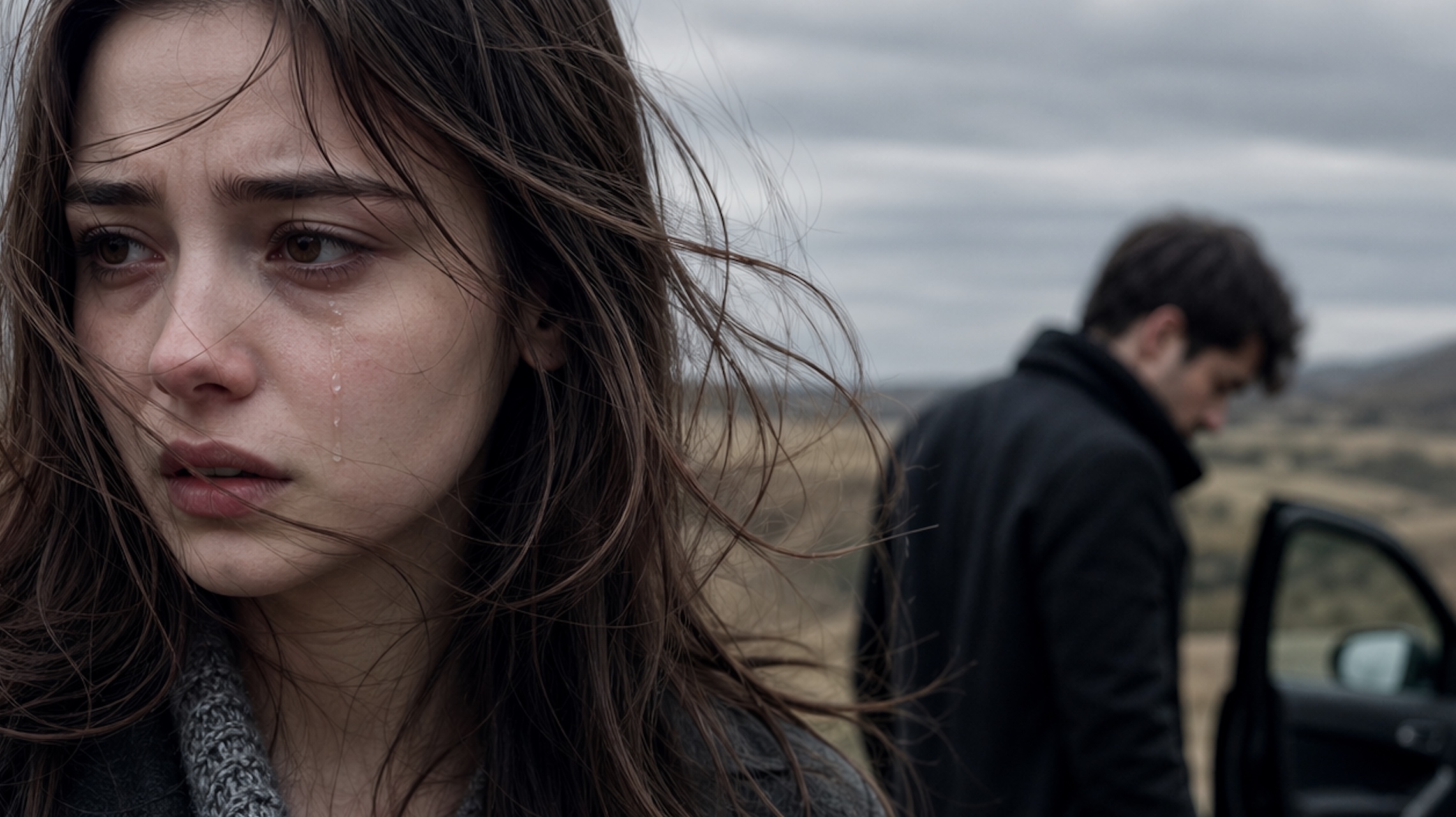
The apartment smelled of valerian drops. The kitchen light was blazing. Vera came running toward him. Her face was tear-streaked, her eyes red, her hands shaking. She threw herself against him as though afraid he might disappear again.
“Where were you?” she cried. “I called and called! Your phone was unreachable! I was beside myself… I thought something had happened to you…”
Only then did Maksim remember: before going off to chase that meeting with the past, he had turned off his phone so no one would disturb him. And he had never turned it back on.
He wrapped his arms around her, holding her as though he wanted to gather all her fear into himself and soothe it away.
“Forgive me, Vera… forgive me, my love…” he said in a rush, stumbling over the words. “I was wrong. I didn’t think. I was a fool. I never want you to cry because of me again.”
She pulled back for a moment and looked straight at him. Fresh tears shone in her eyes.
“I was so scared, Maksim. I asked the children, and they didn’t know anything. I was about to start calling hospitals…”
“It’s all right. I’m here. And it won’t happen again. Never again, do you hear me?”
He held out the bouquet.
“These are for you. For all my mistakes. For putting up with me for so many years. For always being there. You are the best wife in the world.”
Vera took the flowers, pressed her face into them, and began to cry again—but more softly this time, not from hurt, but from relief.
Maksim sat beside her, stroking her shoulder, her hair. And he said the things he had never said before.
“I’m a fool, Vera. A complete fool. I spent years looking for happiness everywhere except where it really was. And all this time it was right beside me. You… you are my home, my strength, my joy. Only now do I understand how lucky I am.”
She gave a tearful laugh and smiled through the tears.
“What’s gotten into you?” she asked quietly. “It’s like you’re a different person.”
“I’ve finally opened my eyes,” he said seriously. “And I promise you: I will never hurt you again.”
Vera said nothing. She only leaned into him more tightly.
And Maksim felt as though some enormous weight had fallen from his soul. All his dreams of the past dissolved like smoke. None of that had ever been real.
What was real was here—in this kitchen that smelled faintly of valerian, with this tired, tearful, beloved woman sitting beside him.
Here was the truth.
Here was home.