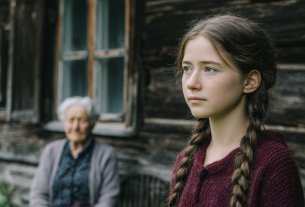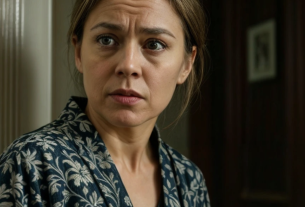
My dacha had always been a deeply special place to me, almost sacred. I inherited that little property from my father. He had built the house there brick by brick with his own hands, planted every apple tree himself, and cared for every patch of land with incredible devotion. After he was gone, I did everything I could to preserve the place exactly as it had been when he was alive.
I brought in rare new flowers, decorated the veranda with wicker chairs, and dreamed that one day this peaceful corner would become a true family haven for my children. My husband, Vadim, had always been indifferent to country life. He preferred relaxing in the city under air conditioning, but he never objected to my trips out there or to the endless attention I gave the garden.
That Thursday had been especially long and exhausting. I had spent nearly ten hours on my feet, handling one endless work issue after another and answering calls all day, and I wanted only one thing: to get back to my veranda, brew some fresh mint tea, and sit in complete silence listening to the crickets. Vadim had stayed in the city, saying he had important business to take care of, so I expected total peace and solitude.
But when I finally drove up to the old wrought-iron gate, my heart sank. Two unfamiliar cars were parked by the fence, and behind the house thick black smoke was rising into the air, nothing like the gentle curl from a stove pipe.
I opened the gate with trembling hands and froze.
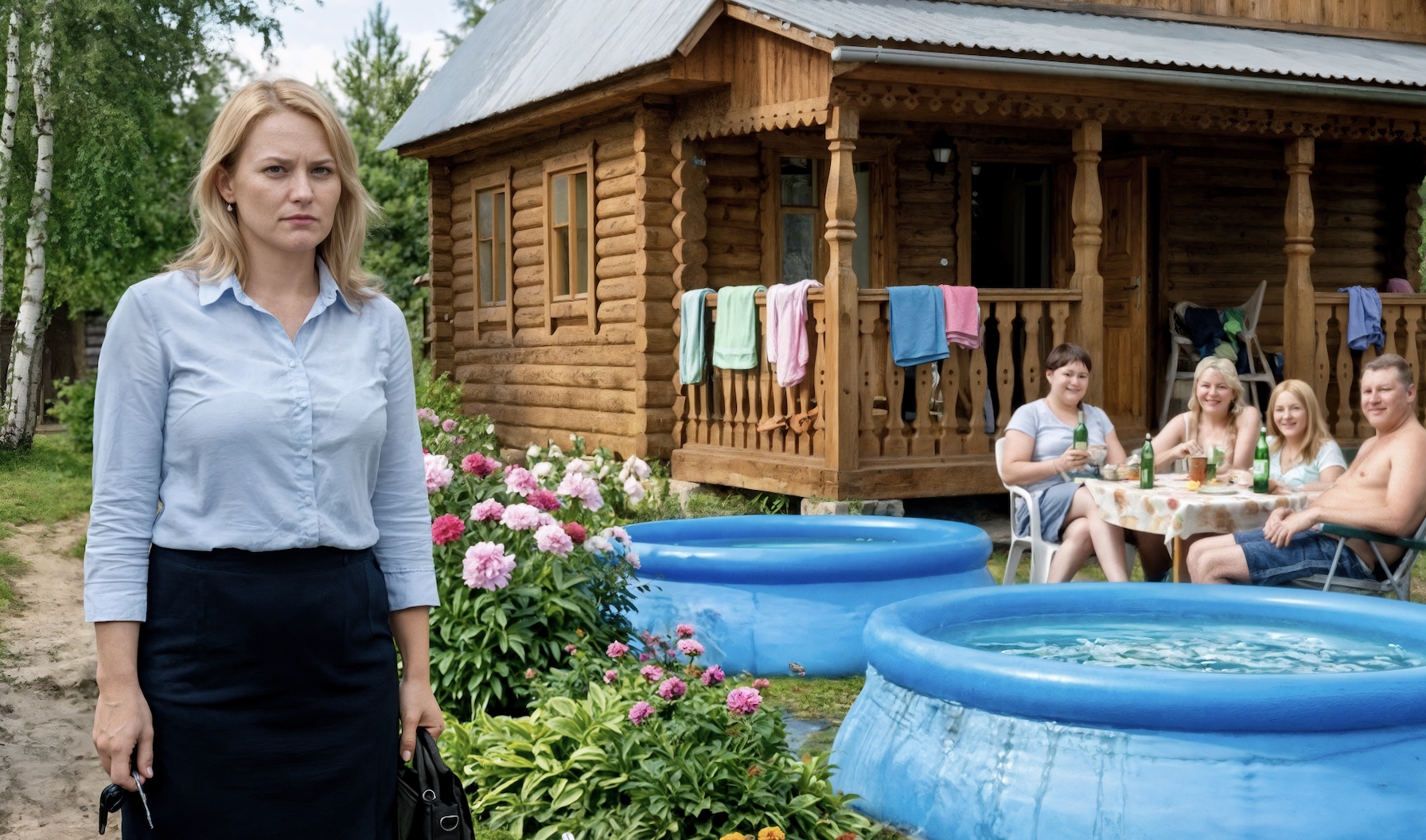
On my neat, carefully weeded flowerbeds, where I had only recently planted rare varieties of lilies from a nursery, stood several huge inflatable children’s pools. Water was spilling out onto the fragile stems of the flowers, turning the dark soil into muddy slush.
All over the yard lay empty chip bags, bright plastic toys, and half-eaten food. On the veranda, sitting in my favorite wicker chair, was Vadim’s mother, Antonina Petrovna. She was cheerfully drinking juice and loudly giving instructions to her daughter Sveta, who was trying to hang wet towels directly on the branches of my young apple trees.
“Marina, there you are! Speak of the devil. We decided to surprise you and come relax in the fresh air. Vadik said you’d be at work until late anyway, so we thought there was no point bothering you with calls. Come in, sit down. Just tidy up the big room in the house first, the children made a bit of a mess while playing hide-and-seek,” my mother-in-law said briskly, without even thinking of standing up to greet me properly.
I could feel an icy rage rising inside me.
Without a word, I walked into the house and found an even worse scene. On my tiny kitchen, which I always kept spotless, Sveta’s husband Sergey had completely taken over. He was frying something in a huge pan, and greasy splatters were flying in every direction, staining the pale curtains I had lovingly chosen just last month. On the table stood a mountain of dirty dishes covered in oil, and the floor was scattered with crumbs, scraps of paper, and sticky stains from spilled juice.
“How did you even get in here? And why are you touching my personal things without my permission?” My voice was frighteningly quiet, but Antonina Petrovna, who had followed me inside, paid no attention and kept smiling.
“Oh, Marina, honestly, enough with this talk about permission. We’re family, one blood. Vadik gave us the keys himself. He said the dacha sits empty on weekdays anyway, and the children needed fresh air and vitamins. So we came. Why let the place go to waste? By the way, I sorted through some of your old boxes in the storage room and threw out a bunch of junk to make space for our things. And we already used the bathhouse too, though your firewood was damp and hard to light, so we had to pour on some gasoline,” she went on casually, still sipping her tea and looking at me as if I were a spoiled child.
On shaky legs, I walked to the storage shed and saw the one thing I had dreaded most. The boxes containing my father’s tools, his old blueprints, and the notes he had carefully preserved were lying out on the wet ground in a corner of the yard, under a light rain that had just started to fall.
That was the last straw.
In that moment I understood clearly that if I did not stop this chaos right then and there, my home would never feel like my refuge again. It would become nothing more than a place people could invade whenever they pleased.
“Antonina Petrovna, Sveta, Sergey, listen to me very carefully. You have exactly twenty minutes to pack your bags, drain those pools, and leave my property completely. I will not listen to excuses, shouting, or lectures about family ties for one more second,” I said, looking straight into my mother-in-law’s eyes as she finally began to grasp how serious I was.
“How dare you speak to your husband’s mother like that! We came here with good intentions, with gifts, and you throw us out like stray dogs! Vadik gave us permission. This is his dacha too, and he’s just as much the owner as you are!” Sveta shrieked, rushing to her mother’s side as if to shield her.
“No, Sveta, you are very mistaken. This dacha belongs to me alone. I inherited it from my father, and Vadim has absolutely no legal claim to it. He made a huge mistake when he handed you the keys without my knowledge. And you made things even worse by violating my private space and trampling on my father’s memory. You destroyed my rare flowers, turned my house into a pigsty, and threw out things that belonged to my father and mean everything to me. Your time starts now. If your cars are not gone in twenty minutes, I will call the police and report unlawful entry onto private property and damage to my belongings.”
I spoke so coldly and firmly that for a moment none of them knew what to say.
Antonina Petrovna tried to launch into complaints about my ingratitude and how she had only been trying to help by cleaning up, but when she met my stare, she quickly realized that this time her usual manipulation would not work. They began packing in angry silence, tossing wet pools, dirty clothes, and scattered belongings into the cars. Sveta muttered bitterly that she would never look at me again and would never let me through her door, while Sergey silently carried the heavier bags, clearly trying to avoid attracting my attention.
When the last car finally disappeared around the bend in the road, I locked the heavy gate and sank onto the veranda steps. I wanted to scream over what they had done to my father’s things and cry over my trampled lilies, but at the same time I felt an overwhelming, almost physical relief.
Late that evening Vadim called. He tried to explain himself, his voice shaking. He said he had meant well, that his mother had begged him to let the children get some fresh air, and that he had not been able to say no.
“Vadim, if you ever again allow anyone into my home without my explicit permission, the next conversation will happen through lawyers. Your family crossed every possible line of decency, and I am not going to tolerate it for one more second. Either you respect my rules and my home, or you can go live somewhere else with your mother and her outrageous sense of entitlement,” I said, and hung up before he could continue making excuses.
I spent that night alone at the dacha. I scrubbed the grease out of the kitchen, washed the curtains, and carefully gathered up my father’s papers, drying each damp page gently with a hairdryer. The silence that finally settled over the property felt healing in a way that was almost indescribable.
That night I realized something important: too much politeness and the foolish urge to be good for everyone can leave you with nothing that is truly yours. Personal boundaries are not some fashionable phrase. They are a sacred right to your own world, a world no one has the right to destroy for the sake of their own convenience.
What do you think—can a husband be forgiven for this kind of carelessness, or after such a betrayal of trust do relationships never fully recover?