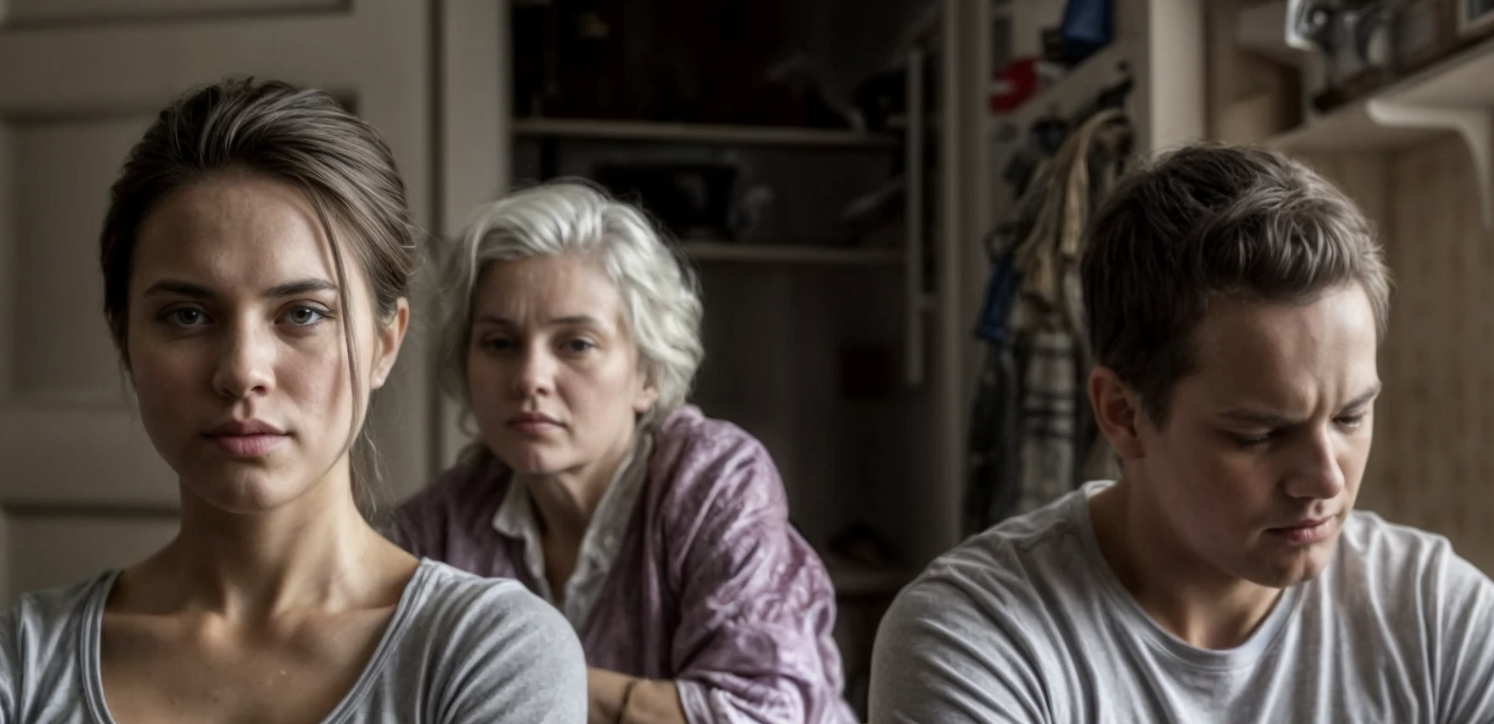
— Are you serious? — Liza stopped in the kitchen doorway, staring at the sink piled with dirty dishes. — Anton, you promised you’d at least wash the plates.
— I’m tired, — her husband muttered without looking up from his phone. He was sprawled on the living-room couch, feet propped on the armrest. — On my feet all day, hauling furniture. My hands are falling off.
Liza dropped her bag onto a chair and silently turned on the water. Friday, the end of the workweek—you want to just collapse and not move. But first you have to deal with this mountain of plates, pots, and pans. You have to make dinner. You have to hang up the laundry that’s been sitting in the washer for two days now.
— Liza, what’s for dinner? — came his voice from the living room.
She closed her eyes and counted to ten.
— I don’t know yet. I just got home.
— Well, I’m hungry. Maybe make pasta? It’s quick.
Liza started washing the dishes. The hot water burned her hands. One thought kept looping in her head: When did this start? When did Anton stop asking how she was? When did he start treating everything as a given?
They’d bought this place a year ago—more precisely, an apartment in an old two-story building on the outskirts of town. Small, but theirs. Liza had been so happy then. They’d picked out wallpaper together, driven together to the hardware store for paint. Anton had paid the down payment—thirty thousand, all his savings. Liza had added ten, whatever she’d managed to put away. The rest they’d taken out as a loan.
— I’ll pay the loan, Anton had said back then. — My salary’s higher. And you’ll cover groceries, little stuff. Deal?
Liza had agreed. It seemed fair. Anton really did earn more—fifty thousand a month to her thirty. He worked as a foreman at a furniture plant, carried heavy loads, came home exhausted.
But a year ago, he at least helped. He could vacuum, take out the trash, run to the store. Now none of that happened.
Her phone chirped. Liza wiped her hands and glanced at the screen. Her mother-in-law.
— Liza, sweetheart, — Valeria Romanovna’s voice was overly sugary. That always meant she wanted something. — How are you? Is Anton home?
— Yes, he’s home. Do you want to talk to him?
— No, no, I wanted you. Listen, Yurko and Kristina and I decided we’ll all gather at your place on Saturday. We need to discuss something important. You make something for lunch, okay?
Liza pressed her lips together. Again with “make something.” Again with “at your place.” They could have met at Valeria Romanovna’s—her apartment was bigger.
— Valeria Romanovna, maybe Sunday would be better? On Saturday I—
— No, Saturday. Yurko only has Saturday off. So we’ll be there at twelve. Alright, kisses!
The line went dead. Liza stared at her phone, then at the pile of dishes. So now she had to spend Saturday cooking for the entire Pavlov family too.
— Anton, your mom called! — she shouted into the living room. — She says everyone’s coming over on Saturday.
— So what? — He didn’t even turn his head.
— So I have to cook. Set the table.
— Then cook. Mom wouldn’t call everyone over for nothing. Must be something important.
Liza went back to the dishes. A dull irritation swelled in her chest. She’d worked until six, then spent an hour getting home on two buses. Her feet ached no less than Anton’s. But did anyone ask about that?
By the time she’d finished the dishes, peeled potatoes, and put a pan on the stove, it was already eight. Anton ate in silence, glued to his phone. Liza sat across from him, picking at the fried potatoes. She wasn’t hungry at all.
— Anton, — she began carefully, — maybe sometimes you could do at least something around the house? At least wash your own dishes?
He looked up, surprised.
— Seriously? Here we go again. Liza, after work I’m like a squeezed lemon. I need to rest, not run around doing chores.
— I work too.
— You sit behind a counter in a store. That’s not work—that’s boredom. I haul furniture, set up machines. Feel the difference?
Liza swallowed. She wanted to argue, but the words stuck in her throat. Anton was already getting up, leaving his half-eaten plate behind, and heading back to the couch.
She sat alone in the kitchen, staring out the window. It was getting dark. A car passed somewhere, a neighbor’s dog barked. An ordinary evening. An ordinary day. It would be like this tomorrow, the day after, in a month, in a year.
On Saturday Liza got up at seven. Anton was still asleep, sprawled across the whole bed. She dressed quietly and went to the market. She had to buy meat, vegetables, something for salad. She had four thousand in her wallet—everything left until payday.
She came back weighed down with heavy bags. Anton was in the kitchen, scowling.
— There’s no coffee, he said instead of hello.
— Sorry, I forgot to buy it. I’ll make tea now.
— I don’t want tea. I’m going to the garage—meeting Vovka. I’ll be back by lunch.
Liza froze.
— The garage? Anton, we have guests. Your family.
— So what? You’ll manage. I’ll be back by twelve.
He left, slamming the door. Liza stood there with the bags in her hands and felt something tighten inside her. You’ll manage. Of course you will. You always do.
She cooked for three hours. Chopped salad, fried meat, made appetizers. She covered the table with a white tablecloth, set out plates. At eleven thirty Valeria Romanovna arrived, and right after her Kristina and Yura. Anton still wasn’t home.
— So, is everything ready? — her mother-in-law asked, scanning the table. — And where’s the hot dish?
— It’ll be ready soon. It’s on the stove.
— And where’s Anton?
— He was at the garage. He should be back any minute.
Valeria Romanovna pursed her lips.
— At the garage. Well, at least not fishing. Yura, help Liza carry things out.
Yura, Anton’s younger brother, hovered awkwardly in the kitchen doorway. He was quiet and shy—nothing like his older brother. Liza felt sorry for him. Yura always lived in Anton’s shadow, the “ideal” son in their mother’s eyes.
— Liza, let me take it, — he mumbled, taking the pot of roast from her.
Kristina sat at the table studying her nails. She was the youngest—spoiled and capricious. Liza had disliked her from day one.
— The salad’s too salty, — Kristina remarked after trying a spoonful.
— It’s fine, — Yura muttered. — Stop nitpicking.
Anton showed up at twelve twenty, when everyone was already seated. He was in a good mood, smelling of motor oil.
— Well, miss me? — he joked, patting his mother’s shoulder, winking at Kristina. He didn’t even greet Liza.
— Sit down, son, — Valeria Romanovna slid a plate toward him. — We need to talk.
They began eating. Liza sat there barely touching her food. Her stomach twisted with tension. She knew that tone. Something was coming.
— So here’s the situation, — Valeria Romanovna set down her fork and looked around the table. — Yura’s been offered a good job. In Kaluga. Driver for a big company. Salary twice what he makes here. They’ll help with renting a place.
Yura nodded without raising his eyes.
— That’s great, — Liza said cautiously. — Congratulations, Yura.
— Don’t celebrate yet, — Valeria Romanovna cut her off. — Moving takes money. First payment for housing, paperwork… At least two hundred thousand.
Silence fell. Anton chewed his meat, looking at no one.
— I’ll work, — Yura said quietly. — I’ll pay it back later.
— Later, sure, but we need the money now, — Valeria Romanovna turned to Anton. — Son, I think you and Liza could help. Take out a small loan.
Liza felt cold spread through her.
— Wait, — she started. — We already have a loan. For the apartment. We can’t take another.
— You can, — her mother-in-law said sharply. — You have an apartment—you can take it as collateral. Lower interest that way.
— No, — Liza shook her head. — No, it’s too risky. If something goes wrong, we could lose our home.
Kristina snorted.
— Listen, who’s even asking you? Anton bought the place. He decides.
— What do you mean Anton? — Liza turned to her. — We bought it together!
— Oh please, — Kristina waved a hand. — On your salary you couldn’t even have handled the down payment. It’s all Anton. He pays the loan.
Liza stared at her husband, waiting for him to say something—for him to defend her. But Anton stayed silent, studying his plate.
— Anton, — Liza called him. — Say something.
He shrugged.
— Well, they’re right. I pay the loan. Twenty thousand every month.
— And me? — Liza’s voice trembled. — I don’t do anything? I pay for groceries, utilities, repairs when something breaks. I spend at least fifteen thousand a month!
— That’s not the same, — Valeria Romanovna cut in. — A loan is serious. Groceries are little stuff.
— Little stuff? — heat surged in Liza. — Without groceries, what, we’ll live on air? And I cook, clean, do laundry! I get up at six to make it all work before my shift! Anton won’t even carry his mug to the sink!
— Oh, here we go, — Kristina rolled her eyes. — Cleaning, laundry. Is that work? Anyone can do that.
Yura tried to intervene, uncertainly:
— Guys, let’s calm down. Maybe we really shouldn’t take a loan. I can—
— You can’t decide anything on your own, — his mother snapped. — Be quiet.
Liza stood up. Her hands were shaking.
— I won’t agree to a loan against the apartment. It’s our home. We can’t risk it.
— Our? — Valeria Romanovna looked at her with open contempt. — What “our”? Anton bought it. You think your contribution means anything? You think you can pay with borscht? With scrubbing floors?
— I work too, — Liza’s voice dropped, but grew firm. — I get up at six, make breakfast, hang laundry, wash floors. Then I stand on my feet all day at the store. Then I spend two hours on buses. Then I cook again, clean, wash clothes. When Anton comes home, he collapses on the couch and never gets up again. And I’m doing things until eleven at night. And you say that’s not a contribution?
— Those are your duties, — her mother-in-law snapped. — You’re the wife. You’re supposed to do that.
Anton suddenly jerked his head up. His face was flushed.
— You know what, enough! — he shouted. — I’m sick of your whining! You didn’t put a single kopeck into this place, so shut up!
Silence. Liza stood as if she’d been hit. Valeria Romanovna nodded with satisfaction. Kristina smiled, watching her. Yura stared at his plate, clearly uncomfortable—but silent.
— I’m tired of your tantrums, — Anton went on, words spilling out like a busted dam. — You think cleaning and cooking is hard? Anyone can do it. I earn money—real money! I’m on my feet all day, breaking my back, hauling furniture. And you sit behind a counter in a warm store and still complain!
Liza turned and walked toward the door.
— Where are you going? — Anton called after her.
She didn’t answer. She went into the bedroom, opened the wardrobe, pulled an old travel bag down from the top shelf. She started packing. Jeans, sweaters, underwear. Her hands moved mechanically.
Anton appeared behind her.
— What are you doing? Is this some kind of performance?
— I’m leaving, — Liza said without turning around.
— What do you mean, leaving?
— Exactly that. I’m packing and leaving. — She zipped the bag. — If I didn’t put a single kopeck into this place, then I’ve got nothing to lose here.
— Liza, don’t be stupid. — Uncertainty crept into Anton’s voice. — Where will you go?
— None of your business. — Liza lifted the bag and faced him. — Live here with your family. Decide what loans to take. Only you’ll cook and clean for yourselves.
— Liza, wait—
But she was already heading out. In the dining room Valeria Romanovna, Kristina, and Yura were still sitting at the table. Her mother-in-law watched with barely hidden triumph.
— Good. Women like you don’t belong in a decent family.
Liza stopped in the doorway. Looked at her mother-in-law, then at Anton standing in the hallway—lost and angry at the same time.
— You know what, — she said calmly. — You’re right. I don’t belong here.
She walked out without looking back. The door slammed behind her. Liza went down the stairs and out onto the street. It was evening, already darkening. The bag was heavy, pulling at her shoulder. She reached the bus stop, sat on the bench, pulled out her phone, and found her friend’s number.
— Vera? It’s me. Can I come to you? Just for a while—overnight.
— Liza, what happened? — Vera’s voice was anxious.
— I’ll tell you later. Can I?
— Of course. Come. Wait, I’ll text you the address.
An hour later Liza stood at Vera’s door. Vera opened immediately—home clothes, wet hair, as if she’d just stepped out of the shower.
— Come in, quick, — Vera pulled her inside. — What happened?
They sat in the kitchen. Vera put a mug of hot tea in front of Liza and sat across from her, waiting. Liza stayed silent, not knowing where to begin. Then the words spilled out on their own. She told her about Anton’s family, the loan, the sentence her husband had thrown at her. She spoke quietly, calmly—but everything inside her shook.
— And you just left? — Vera clarified.
— I just left, — Liza nodded.
— Good for you, — Vera covered Liza’s hand with her own. — Good for you, Liz. A lot of women would’ve kept enduring it.
— I endured it for five years.
— And now it’s enough. You’ll stay with me as long as you need. I’ve got a two-bedroom—there’s room.
Liza finally cried. Not from self-pity, not from hurt—out of relief. She felt the weight sliding off her shoulders, a weight that had pressed so long she’d forgotten what it felt like to breathe freely.
— Thank you, — she whispered through tears. — Thank you.
The first days were strange. Liza woke up in someone else’s apartment, on someone else’s couch, and didn’t immediately remember where she was. Vera left for work early and gave her keys. Liza went to her store, stood behind the counter, talked to customers. Her coworkers didn’t notice anything—she was used to keeping her emotions to herself.
Anton called on the third day. Liza stared at the screen for a long time, then finally answered.
— Liza, it’s me.
— I know.
— So… how are you?
— Fine.
— Listen, maybe you’ll come back? The place is a mess. I can’t find my shirts.
Liza gave a small smile.
— In the closet. Second shelf on the left.
— And the washing machine… it’s acting weird.
— Press the “intensive wash” button.
— Liza, let’s not… I mean, maybe we can talk like normal?
— What is there to talk about, Anton? You said it all. I didn’t put a single kopeck into this place—so I have no say.
— I got carried away that day.
— No. You said the truth. What you’ve thought all along. And your family thinks the same.
— Liza…
— Don’t call me anymore, — she ended the call.
The phone rang again immediately. Liza muted it.
At the store, the director, Tatyana Sergeyevna, noticed Liza was coming in earlier and leaving later.
— Liz, are you okay? — she asked one morning. — You look pale.
— I’m fine, — Liza lied. — Just slept badly.
— You look exhausted. Maybe take a day off?
— No, no, thank you. Work is what I need right now.
Tatyana Sergeyevna studied her thoughtfully, but didn’t press. A few days later she called Liza into her office.
— Sit down. I’ve been thinking. We’ve got an opening for senior manager. Tamara Ivanovna is retiring. Want to try?
Liza blinked.
— Me? Senior manager?
— Why not? You’ve been with us four years—customers love you, you know the inventory. It’s a five-thousand raise. Think about it.
— I… I accept, — Liza blurted out. — Thank you.
When she left the office, her hands were trembling. Five thousand wasn’t much, but it was something. The first step toward independence.
That evening she told Vera. Vera was thrilled and suggested celebrating. They sat in the kitchen with tea and cookies, and suddenly Liza caught herself thinking: I feel good. Calm. For the first time in a long while no one told her she was doing something wrong. No one threw dirty socks on the floor. No one shouted that dinner tasted bad.
— You know, — Vera said, — when I left my ex, I also thought I wouldn’t survive. It felt like everything had collapsed. And then I realized it wasn’t the end—it was the beginning.
— I’m scared, — Liza admitted. — I’m already twenty-eight. Starting from scratch.
— Not from scratch. You have a job, experience, a brain in your head. That’s already a lot.
Liza nodded, but the тревога still sat in her chest.
A week passed. Anton called every day, but Liza didn’t pick up. Then he started texting. First angry: “Are you out of your mind? A grown woman acting like a child.” Then confused: “Liz, can we at least talk?” Then almost desperate: “Everything’s falling apart here. Help me.”
Liza read and deleted.
Valeria Romanovna wrote too—one short message: “Didn’t think you were like this. Destroying a family over nonsense.” Liza blocked her number.
Then a photo came from Kristina—inside their home. A mountain of dirty dishes in the kitchen, clothes scattered in the living room. Caption: “This is what you caused. Happy?”
Liza looked at the picture and felt a strange satisfaction. Let them live like that. Let them try.
Yura messaged two weeks later, timid and uncertain: “Hi, Liza. It’s Yura. I wanted to say… I think everything was wrong. What Mom said, and Anton. You did a lot—I saw it. I’m sorry I stayed silent then.”
Liza reread it several times. She answered briefly: “Thank you, Yura. That means a lot to me.”
— At least one normal person in that family, — she muttered, showing the chat to Vera.
— Mm-hm. Only he stayed silent at the crucial moment, — Vera noted. — But at least he admitted it later. That’s something.
Liza settled into her new position. There was more work, but she didn’t complain. On the contrary—she liked being busy. Less time to think. Tatyana Sergeyevna praised her and said she hadn’t been wrong.
One day Tamara Ivanovna, a neighbor from the building where Liza and Anton lived, came into the store. An older woman, a pensioner who always greeted Liza in the courtyard.
— Lizzie, — she said in surprise. — I thought you didn’t work here anymore. Haven’t seen you in ages.
— I do, — Liza smiled. — My schedule changed.
— And you’re not home much either. Where’d you disappear to?
Liza hesitated, then decided not to lie:
— I don’t live there anymore, Tamara Ivanovna.
— What do you mean you don’t live there? — the old woman threw up her hands, eyes wide. — What happened?
— Anton and I separated.
— Oh, my dear, — Tamara Ivanovna shook her head. — You know, I’m not surprised. I saw you hauling bags into the house alone, digging around the garden in spring by yourself. And he was always wandering off to those garages. You were a good wife—that’s what I’ll tell you.
— Thank you, — Liza said softly.
— And if I see him, I’ll tell him he’s a fool. Lost a good woman.
After she left, Liza stood behind the counter thinking. So the neighbors had noticed. They’d seen her carrying everything alone. And she had thought it was normal—that it was how it was supposed to be.
That evening Anton called again. This time Liza answered.
— What do you want?
— Liz, let’s meet. We need to talk.
— There’s nothing to talk about.
— There is. I… I’ve thought a lot. Maybe I was wrong.
— Maybe? — Liza gave a short laugh. — Anton, you screamed at me in front of your family. Said I hadn’t put a penny into the house. Said my work meant nothing.
— I got carried away.
— No. You said what you really think. And your mother thinks the same. And Kristina.
— Mom… she just wanted to help Yura.
— At my expense. At the expense of our home. You decided for me without asking—like I didn’t exist.
Anton was silent. Then he sighed.
— It’s hard at home without you.
— You’ll manage.
— Liz, come on, just meet me. Coffee. Talk normally.
— I don’t want to.
— Why?
— Because I’m tired, Anton. Tired of being convenient. Tired of hearing that I do nothing. Tired that my work doesn’t count as work.
— I won’t say that anymore.
— And what about doing? Will you stop throwing socks on the floor? Wash dishes? Help with cleaning? Or will you keep collapsing on the couch after work and acting like you’re the only one who gets tired?
Silence on the line.
— There, you see, — Liza said quietly. — You can’t even answer. Because nothing will change.
— It will, — desperation crept into Anton’s voice. — I’ll help, I promise.
— Promises are worth nothing. A year ago you promised we’d decide things together. And in the end you didn’t even defend me in front of your mother.
— Mom calmed down later. She said she went too far.
— Went too far, — Liza echoed. — Nice phrase. And you? What did you say?
— I… I said we’d figure it out together.
— That’s not true. You stayed silent. Like always. Because silence is easier for you.
She ended the call. Her hands shook. Vera came out of the room and sat beside her.
— Him?
— Him.
— What did he want?
— To meet. To talk. He promises everything will change.
— And you?
— I don’t believe him, Ver. I don’t. He’ll stay the same. And his family will stay the same.
— Right, — Vera nodded. — People don’t change in a week. They need a real shock for that.
— What if I’m wrong? — Liza suddenly asked. — What if I’m exaggerating? Maybe I should’ve just kept quiet and lived on?
— Liz, are you serious? — Vera turned to her. — You carried everything for five years. Worked, cooked, cleaned, did laundry. What did he do? Went to work and collapsed on the couch. And then had the nerve to say you weren’t contributing. Is that normal?
— No, — Liza admitted. — It’s not.
— Exactly. So stop twisting yourself up. You did the right thing.
Another month passed. Liza found a room in an old building on the other side of town. Small but bright. Fifteen square meters, shared kitchen and bathroom. The landlady, a woman in her fifties, asked for little—ten thousand a month.
— Just live quietly, don’t make noise, — she said. — And everything will be fine.
Liza moved in on a Saturday. Vera helped her carry her things—there turned out not to be much, just three bags. They arranged shelves, hung up clothes, bought new bedding.
— There, — Vera looked around the room. — Your home.
— My room, — Liza corrected.
— For now a room. But it’s a beginning.
They sat on the floor, backs against the wall, drinking instant coffee from plastic cups. Rain hissed outside the window.
— Thank you, — Liza said. — Without you I wouldn’t have managed.
— You would’ve. You’re stronger than you think.
— I don’t feel strong.
— Because strength isn’t when you’re not scared. Strength is when you’re scared and you still move forward.
Liza thought about that. Vera was right. She was scared—scared to live alone, scared to start over, scared to look ahead. But she was moving forward. Every day she got up, went to work, came back to her room. Every day she took one small step.
At work things went well. Tatyana Sergeyevna trusted her more and more, gave her important tasks. One day the director called her in and said:
— We’re opening another store. In a new district. We need someone to set everything up there. Could you handle it?
Liza was stunned.
— Me? But I only became senior manager recently.
— That’s exactly why. You’ve shown yourself. You think I don’t see how you work? The salary will be forty-five thousand. Think about it.
Forty-five thousand. Fifteen more than she had now. Real money. Enough to rent not a room, but a proper apartment. Enough to save.
— I agree, — Liza said firmly. — When do I start?
— In a month. You’ll be ready?
— I will.
She walked out of the office, hands shaking—from excitement, from fear, from joy. It was her win. Small, but hers.
That evening she called Vera and told her. Vera squealed with happiness:
— Liz, I knew it! I knew you could do it!
— Ver, I’m scared, — Liza admitted. — What if I can’t handle it?
— You’ll handle it. You always have.
The next day Liza ran into Yura by the bus stop. He got out of a minibus, saw her, and froze.
— Liza, — he said uncertainly. — Hi.
— Hi, Yura.
They stood awkwardly, not knowing what to say.
— How are you? — Yura asked.
— Fine. And you?
— Okay, I guess. I didn’t move to Kaluga, — he added after a pause. — I turned down that job.
— Why?
— Realized I don’t want it. I don’t want anyone getting into debt because of me. Anton wanted to take the loan, but I wouldn’t let him. Told him I’d figure it out myself.
Liza looked at him with respect.
— Good for you, Yura.
— It’s nothing, — he shrugged. — Just the right thing. Liza, I also wanted to say… Anton can’t cope at all. Mom comes over to help, but she yells at him nonstop. Says he’s an idiot for losing a good wife.
— Valeria Romanovna says that? — Liza was surprised.
— Yeah. She finally realized how much you did. Kristina came by a couple of times too, but she got tired fast. Said it’s not her job to clean up after her brother.
Liza smiled. So they did understand after all—just too late.
— Tell Anton I’m not coming back, — Liza said. — Let him not hope.
— I know, — Yura nodded. — Just wanted you to know. Well… good luck, Liza.
— You too, Yura.
They parted ways. Liza got on the bus and stared out the window. She felt a little sorry for Anton—just a little. But not enough to return.
Two more weeks passed. The new store opened. Liza spent days there setting things up, training staff, talking to suppliers. It was hard, but interesting. She felt herself growing professionally.
One evening, walking home, she stopped and looked at her reflection in a shop window. Tired, but satisfied. A bag of groceries in her hands—and for the first time in a long while she’d bought something just because she wanted to. Chocolate, fruit, expensive cheese.
Before, she counted every penny, worried whether there would be enough for utilities, for the loan, for food. Now she had money. Not a lot—but enough not to deny herself small things.
At home, in her room, she sat by the window. Darkness was falling outside. Kids were playing somewhere, a car passed, someone laughed loudly. An ordinary evening in an ordinary courtyard.
Her phone buzzed. Anton. Again. Liza looked at the screen, thought for a moment. Then she typed a short message:
“Anton, don’t call anymore. I need to live my life. And you need to live yours. I’m sorry, but it’s final.”
She sent it. Blocked his number.
That was it. The end.
She leaned back in her chair and closed her eyes. Inside, there was calm. For the first time in many months—real calm.
Yes, she didn’t have a home. She didn’t have a family. She didn’t have the stability she’d dreamed of. But she had a job she liked. Friends who supported her. A small room where no one told her she wasn’t good enough. She had freedom.
And that was not so little.
The next morning Liza woke up early. Made herself coffee and sat by the window. The sun rose beyond the glass, turning the sky pink. A new day. A new life.
Was it scary? Yes. Hard? Yes. But she would manage. She already was.
And most importantly—she didn’t have children. No little people who would suffer because of the divorce, who would have to be “shared,” who would need explanations about why Mom and Dad weren’t together anymore. That was the one thing Liza was grateful for. Starting over alone was hard. But possible.
She finished her coffee, got dressed, and got ready for work. In the mirror she saw a different woman. Not the one who stayed quiet and endured for five years. Not the one who believed her work was worth nothing. But the one who knew her value.
Liza smiled at her reflection, took her bag, and walked out the door—into a new day. Toward herself