“Are you kidding me?” Oleg shook his phone in front of his wife’s face as if it were irrefutable evidence. “I’m trying to pay for a cab and it says ‘insufficient funds.’ What, did you withdraw all the money?”
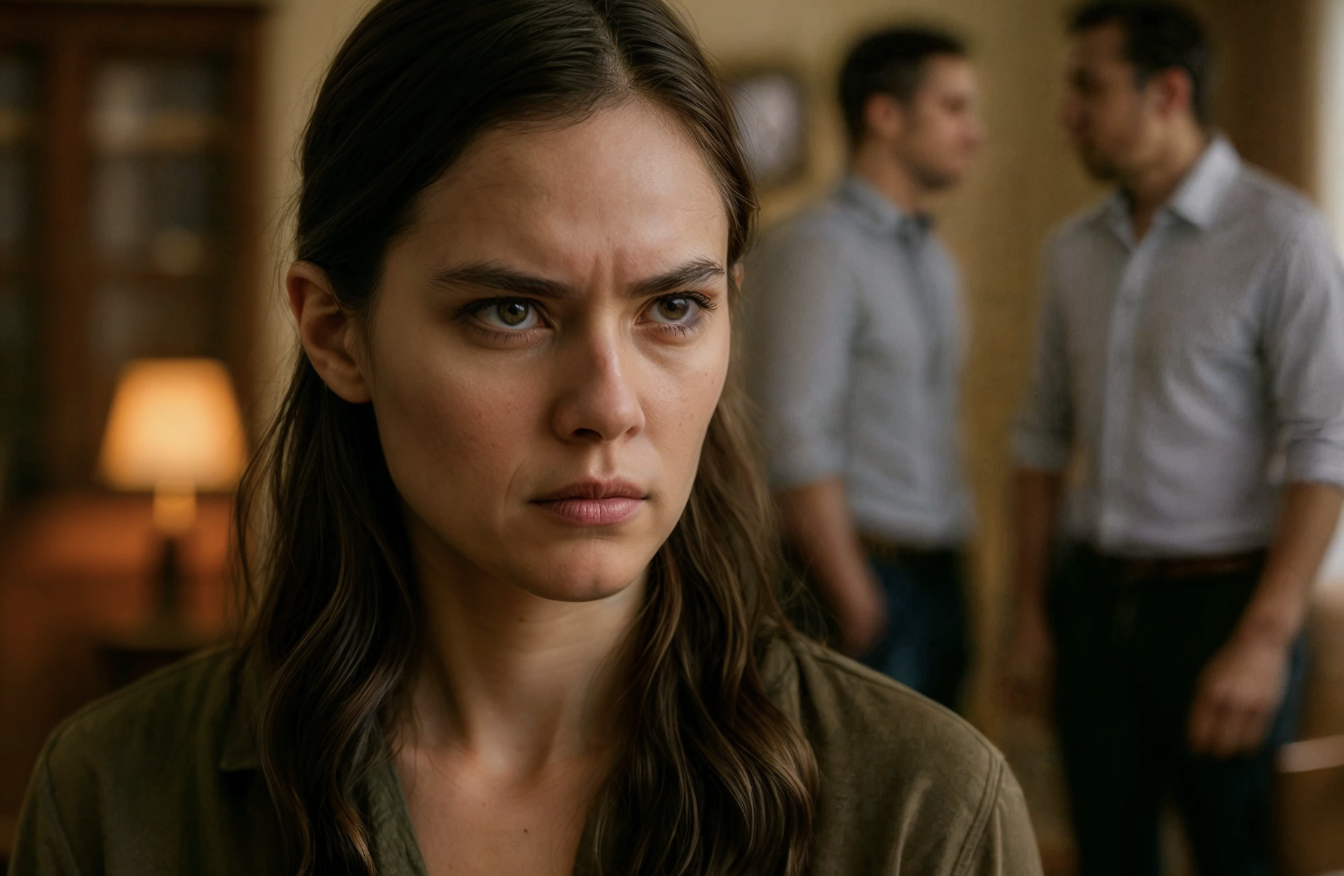
Anna slowly lifted her eyes from her book. Her face was calm, almost detached, and that calm frightened Oleg more than any shouting ever could. She casually slipped a bookmark between the pages, set the volume aside, and looked at her husband—not at the phone in his hand, not at his face twisted with anger, but straight into his eyes, with a cold, appraising curiosity.
“I didn’t withdraw anything, Oleg. I blocked your extra card. And the account it was linked to.”
He froze, lowering his hand. The air in the room thickened, turning dense and heavy. Every word Anna said fell into the silence like a stone into a deep well.
“What? Why?” His voice dropped into a hoarse whisper.
“I blocked the card and the account—enough spending my money without asking,” she said coldly. Her tone allowed no objections. This wasn’t a reproach, not the start of a fight. It was a verdict.
Oleg stared at her, and the familiar, cozy world he’d lived in began to collapse before his eyes. Anna—his Anya—his quiet, understanding wife of eight years—suddenly turned into a hard, unfamiliar person. He opened his mouth to argue, to shout that it was his money too, but the words stuck in his throat. He knew it wasn’t true. She had always been the main breadwinner in their family. He, a carpenter-cabinetmaker with golden hands but modest earnings, was more like a reliable rear guard and the maker of comfort. She, a financial analyst at a large company, was the provider. It had been that way from the start, and until today it hadn’t bothered anyone.
“But… I had money there. Mine,” he mumbled, clinging to his last straw.
“Your salary goes to a different account, and you have a card for that one. Use it,” Anna said, getting up and heading to the kitchen. “Tea?”
That question—so ordinary, so domestic—right after she’d effectively declared financial war on him, made something inside him explode.
“Tea? What the hell kind of tea, Anna?! You left me without a penny in the middle of the city! I had to ask the driver to wait while I ran home for cash! That’s humiliating!”
She turned back in the kitchen doorway, and for the first time that evening he saw not only coldness in her eyes, but deep, long-standing pain.
“And spending the money I was saving for our vacation on your secret affairs—that’s not humiliating to me? You think I don’t see thirty, forty, fifty thousand disappearing from the account? You think I didn’t try to talk to you?”
He said nothing. She had tried. A week ago, a month ago. Softly she’d asked: “Oleg, sweetheart, do we have some unexpected expenses?” “Do you need something and you’re embarrassed to say so?” And every time he waved her off, lied, muttered something about new tools, about expensive materials for the next job—though they both knew his rare orders barely covered the cost of the materials themselves. He lied because the truth was even more humiliating than begging the cab driver.
That truth had a name: Lena. His younger sister. A perpetual child—fireworks of failed business ideas and ridiculous troubles.
The night passed in oppressive silence. For the first time, they slept in separate rooms. Oleg tossed and turned on the living-room couch, breathing in the smell of resentment and his own helplessness. He felt cornered. On one side—his wife, whom he loved, but whose trust he’d betrayed. On the other—his sister, whom he also loved, but that love felt more like a chronic illness.
In the morning Anna left for work without saying a word. On the kitchen table stood a single cup of cold coffee and a five-thousand-ruble note. The note said: “For groceries.” Oleg stared at the money, and it felt like he’d been slapped in the face. She’d reduced him to the level of a freeloader being handed pocket change. He crushed the bill in his fist until it crackled. No. He wouldn’t take it.
Stubbornly he ate breakfast—yesterday’s bread washed down with tap water—and went to his little workshop set up on the insulated balcony. The smell of wood, the shavings underfoot, the familiar outlines of his tools—normally it soothed him. But today everything irritated him. He picked up a blank for a carved jewelry box, but his hands wouldn’t obey. His thoughts were far away.
At lunchtime the phone rang. Lena. Oleg rejected the call. A minute later the phone rang again. And again. On the fifth time he gave in.
“Yeah,” he snapped into the receiver.
“Olezhik, hi! Why aren’t you picking up? I’m worried!” Her voice, as always, was full of cheerful selfishness. “Listen, here’s the thing… So, remember that aerial-yoga studio I told you about? I found an absolutely killer space—rent’s basically nothing! But I have to put down the deposit today, by evening, or it’ll be gone! There’s a line of people who want it!”
Oleg listened in silence, eyes closed. Same old song. A month ago it was a “super-profitable” Korean cosmetics franchise. Before that—web design courses that were going to make her rich. Earlier—buying “eco-friendly” handmade string bags. Every idea required urgent cash and promised mountains of gold, and in the end turned into nothing but a puff of air and new debts.
“Len, I don’t have money,” he said in an even, lifeless voice.
“How do you not have money?” his sister asked, genuinely surprised. “I know your Anya’s salary is good. What, you feel sorry for your own sister? I’ll pay it back—the minute I make my first profit! Oleg, come on. This is the chance of my life!”
“I said no,” he cut her off. “And Anya’s money has nothing to do with it. I. Don’t. Have. Money.”
“What’s wrong with you today?” she whined. “Your Anya put you up to this, didn’t she? She’s always looking at me like I’m stealing her last crumbs! Your wife’s such a petty philistine—she only ever thinks about money!”
That was the last straw.
“Shut up,” Oleg hissed. “Do you even understand that my family is falling apart because of you? Anna blocked all the accounts. All of them, Len! Because I’m sick of lying to her about where our money goes! And it goes into your black hole!”
Silence hung on the line. Oleg thought she’d hang up, get offended—but suddenly Lena sniffled.
“Olezhik, I’m sorry… I didn’t know… honestly… I just wanted something—anything—to work out… so Mom could be proud of me, like she is of you…”
That was a forbidden move. He knew Lena was skilled at manipulating his guilt, but he couldn’t help himself. The image of their mother, Galina Ivanovna, living in a small town in the old family apartment, always disarmed him. She never complained, but he knew how much she worried about her hopeless younger daughter.
“Fine, Len. I’ll figure something out,” he exhaled and hung up, hating himself for the weakness.
“I’ll figure something out” turned out to be harder than he’d thought. Borrowing from friends was shameful. Going to the bank for a loan with his unstable income was pointless. One option remained—the worst one. In the back drawer of the dresser, under a stack of old T-shirts, he kept his grandfather’s cigarette case. Silver, with exquisite engraving. A keepsake. The only thing left from his grandfather—the man who had taught him to work with wood. Oleg took it out and turned the cold, heavy metal in his hands. Forgive me, Grandpa.
The pawnshop gave him twenty thousand for it. Insultingly little, but it should cover Lena’s deposit. He transferred the money to her and trudged home, feeling emptied out and filthy.
Anna came back late. Without a word she went into the bedroom and changed into house clothes. Oleg sat in the kitchen, staring dully out at the dark window.
“I sold Grandpa’s cigarette case,” he said into the silence without turning around.
Anna froze in the doorway.
“Why?”
“For Lena. She needed money urgently again. For ‘the project of her life.’”
He expected reproaches, shouting—anything. But Anna just came over, sat down across from him, and said tiredly:
“Oleg, why didn’t you just talk to me? Why did you decide that lying and taking money behind my back was the best solution? Do you think I’m a monster?”
“No,” he shook his head. “I think I’m a failure. You’re successful, smart, strong. And I… I’m just a guy who can’t provide for his family and fix his sister’s problems without reaching into his wife’s pocket. I was ashamed.”
“You shouldn’t be ashamed that you earn less. You should be ashamed of lying,” her voice wavered. “I didn’t marry your wallet. I married you. The man who could turn a piece of wood into a work of art. The man who felt warm and reliable to be with. Where did he go, Oleg?”
He didn’t know what to say. He didn’t know where that Oleg had gone either. He’d gotten lost somewhere between love for his wife and pity for his sister, between pride and shame.
The next few weeks their life became a strange cohabitation of two strangers in one apartment. They barely spoke. Anna threw herself into work, came home late, often ate dinner somewhere in the city. Oleg tried to work in the workshop, but nothing went right. He took a few small furniture-restoration jobs just to have some money. Life ran on a schedule—no spontaneous joys, no shared evenings and plans. The money he earned, he spent meticulously on groceries and utilities, leaving the receipts on the kitchen table. It was his silent proof that he wasn’t a freeloader. Anna silently gathered up the receipts, and that silence was worse than any words.
One Saturday Anna was getting ready to go somewhere. She wore comfortable jeans and a sweater, and in her hands she held a small travel bag.
“Where are you going?” Oleg asked, unable to hide his anxiety. Is she leaving?
“I’m going to see your mom,” Anna answered simply. “I think I need to talk to her.”
Oleg went cold. Mom. She’d tell her everything, and Mom… what would Mom do? She’d always been on his side, but in this situation… He imagined Anna complaining about him and Lena and felt a new wave of humiliation.
“Don’t. Don’t drag her into this,” he asked thickly.
“I’m a grown woman, Oleg. I’ll decide what I do,” Anna said, looking at him with a long, unreadable gaze, and walked out.
The two days she was gone were torture. Oleg couldn’t find a place for himself. He called his mother over and over, but she didn’t answer. Anna didn’t answer either. He imagined the worst: the two of them fighting, his mother accusing Anya of coldness, Anya in response spilling every ugly detail of Lena’s schemes.
Anna came back Sunday evening—quiet, thoughtful, with some new, hard expression in her eyes. She brought a bag of homemade pickles and little pies. From his mother.
“Well?” Oleg couldn’t stand it. “Pour a bucket of filth on me? Tell my mom what a worthless son she has?”
Anna set the bag on the floor and looked at him.
“No. Galina Ivanovna and I had a very good talk. She’s a wonderful woman, Oleg. Very wise. And very tired.”
She told him—not how she’d complained, but what she’d heard. Galina Ivanovna defended neither him nor Lena. She simply talked. About how Lena had been like this since childhood—charming and completely irresponsible. How in school she would “lose” the money given for lunches, and Oleg would give her his. How she got into college in another city and dropped out after half a year, spending a full year’s worth of money in three months. How Oleg, then still a student, went to work nights as a loader to pay off her debts. How Galina Ivanovna herself had spent years paying off loans for her until she went down with heart trouble.
“She said you’re not just her brother. You’re her function,” Anna said quietly. “A ‘rescue’ function. As long as you’re there, she doesn’t have to grow up. She’ll keep inventing projects, getting into debt, knowing her big brother will come and fix it all—even at the cost of his own life. His own family.”
Anna fell silent, then added, staring somewhere into the wall:
“And she also said: ‘Anya, don’t let him ruin your life too. I love my son very much, but I can see that this love of his for his sister isn’t kindness—it’s an illness. And he doesn’t want to be cured.’”
Oleg listened, feeling the ground shift beneath his feet. His mother’s words, repeated by his wife, struck sharper and more painfully than any reproach. His whole life—his whole “help” for his sister—appeared in a new, grotesque light. He wasn’t helping. He was crippling them all—Lena, himself, his family.
The next day he withdrew all the money from his salary card. He kept a little for living expenses and put the rest on the kitchen table in front of Anna.
“This is the first part,” he said hoarsely. “I’ll pay back every last kopek.”
Anna looked at the money, then at him.
“I don’t need that money, Oleg.”
“But I do,” he said firmly. “I don’t need to return money. I need to return a debt.”
He started working like a man possessed. Through acquaintances he found a way into a furniture factory and got a job in an experimental workshop. He worked twelve-hour shifts, came home wrung out like a lemon, collapsed, and fell asleep. Every two weeks he silently put another sum on the table. Anna silently took it away. The wall between them was still there, but a tiny crack had appeared in it. In her eyes he saw not contempt, but something like… observation. She was watching him.
Lena called a few more times. The aerial-yoga studio, of course, went under before it even opened. Now she needed money to “pay off gangster landlords.” For the first time in his life Oleg told her a firm, final “no” and hung up without listening to her screams and threats. He felt as if someone had pulled a rotten tooth. It hurt, it was empty—but it was right.
Three months passed. One evening, when he put yet another bundle of cash on the table, Anna covered it with her hand.
“Enough, Oleg.”
He looked up at her.
“I haven’t paid it all back yet.”
“It’s not about the money, and you know it. You paid it back.”
She paused, searching for words.
“I filed for divorce.”
He’d been expecting it. All those months he’d waited for the blow, and now it had come. But oddly, there was no anger, no resentment—only a dull, heavy ache and emptiness.
“I understand,” he said quietly.
“No. You don’t,” she looked straight into his eyes, and there was no coldness there now, no pity—only endless, cosmic exhaustion. “I love you, Oleg. The you I fell in love with once. But I can’t live with your sister anymore. She will always be between us, invisibly. I can’t be your warden, your banker, and your psychologist. I just want to be a wife. And you… you can’t be just a husband. You’ll always also be a rescuer.”
She stood up, went to the window, and looked out at the night city.
“Maybe someday you’ll handle it. Learn to live your own life. But I can’t wait anymore. My life is passing too. I’m leaving for a few months to another city—our branch is opening there. The apartment stays with you. The money you paid back…” she gave a bitter half-smile, “is sitting in the account. It’s yours. Consider it severance.”
She spoke evenly, almost without emotion, but Oleg saw her chin trembling. She wasn’t kicking him out. She was letting him go. And that was the most frightening thing of all.
He didn’t try to hold her back. He didn’t make promises. He understood that words meant nothing now. She’d taught him the cruelest and most important lesson of his life—and he had to learn it. Alone.
A week later Anna left. The apartment, which had recently felt cramped with tension, became huge and empty. Oleg was left alone with the scent of her perfume in the bedroom, her book on the nightstand, and the hollow silence in which he could clearly hear his old life collapsing. He didn’t know what would happen next. But he knew for certain he would never again let someone else’s trouble become more important than his own life. The lesson had been too expensive.